

Yes, many Graco car seats are FAA approved for use on airplanes. Look for a specific FAA approval label on the car seat itself or in the product manual. This guide will help you identify FAA-approved Graco models and understand the regulations for air travel with your little one.
Traveling with a baby or toddler can feel like a big puzzle, and figuring out car seat rules for planes is a common piece of that puzzle. Many parents wonder if their Graco car seat, which works perfectly in the car, can come along on their flight. It’s a fair question, as ensuring your child’s safety is always number one. You want peace of mind knowing your little one is secure, whether you’re driving to the grocery store or flying across the country. This guide is here to make that simple. We’ll walk you through exactly what you need to know about Graco car seats and air travel, so you can plan your trip with confidence. Get ready to learn how to easily check for FAA approval and what to expect when bringing your Graco seat on a plane.
Understanding FAA Approval for Car Seats
The Federal Aviation Administration (FAA) has specific guidelines for child restraint systems used on aircraft. These rules are in place to ensure the safety of all passengers, especially the youngest ones. Not all car seats are designed or tested for use in the unique environment of an airplane. Airplanes experience different forces and stresses than cars, and FAA approval means a car seat has met rigorous standards for use in this setting.
What Does “FAA Approved” Mean?
When a car seat is FAA approved, it means it has been tested and certified to meet the FAA’s safety standards for use on commercial aircraft. This approval is usually indicated by a label on the car seat itself. It signifies that the seat can be safely secured using the aircraft’s seat belt and will provide adequate protection for your child during flight.
Why is FAA Approval Important for Air Travel?
Using an FAA-approved car seat on a plane offers several key benefits:
- Enhanced Safety: Approved seats are designed to withstand the specific forces experienced during flight, including turbulence.
- Child Comfort and Familiarity: Your child can sit in a familiar seat, which can make the flight more comfortable and manageable for them.
- Reduced Need for Rental Seats: You can bring your own approved seat, avoiding the potential hassle and hygiene concerns of rental car seats at your destination.
- Compliance with Regulations: Using an approved seat ensures you are adhering to aviation safety regulations.
It’s important to remember that while manufacturers like Graco clearly label their FAA-approved seats, not every model they produce will be suitable for air travel. Always double-check the specific seat you own or plan to purchase.
How to Identify an FAA-Approved Graco Car Seat
Finding out if your Graco car seat is ready for takeoff is straightforward. The key is to look for specific markings and information provided by the manufacturer.
Checking for the FAA Approval Label
The most reliable place to find FAA approval is a label directly on the car seat. This label is usually small and may be found:
- On the side or back of the car seat shell.
- Underneath the seat padding.
- On a sewn-in tag.
This label will typically state something like: “This restraint is certified for use in motor vehicles and aircraft.” It may also include a specific FAA approval number. If you cannot find such a label, it’s best to consult your car seat’s user manual or the Graco website.
Consulting Your Graco Car Seat Manual
Your car seat’s user manual is a treasure trove of information. It will clearly state whether the specific model is approved for use on an aircraft. If you no longer have the physical manual, most manufacturers provide PDFs of their manuals on their official websites. A quick search for your Graco model number on Graco’s site should help you locate it.
Graco’s Official Website and Customer Support
Graco’s website often has dedicated sections or FAQs that address travel and FAA approval. You can usually find lists of car seat models that are approved for air travel. If you’re still unsure, contacting Graco customer support directly is an excellent option. They can provide definitive answers about your specific model.
To find resources related to aircraft use, you can also look for information from the FAA. Their website, faa.gov/travelers/fly_children, provides general guidelines for air travel with children and information on approved child restraint systems.
Common Graco Car Seat Models and Their FAA Approval Status
Graco offers a wide range of car seats, from infant to booster seats. While many are approved, it’s crucial to know that not all models will fit the FAA’s criteria for air travel. Generally, car seats that are designed to be used with a vehicle’s lap and shoulder belt, or those that can be securely fastened with a plane’s lap belt, are more likely to be FAA approved. Seats that require a LATCH system (which is not available on aircraft) are typically not approved for air travel.
Here’s a general overview, but always verify your specific model:
Infant Car Seats
Many Graco infant car seats, especially those designed for travel systems and that have a separate base, are often FAA approved. The seat itself, when not attached to its car base, can typically be secured to an aircraft seat using the airplane’s seat belt. This includes popular models like the SnugRide line. The key is that the seat can be used without the car’s base and can be secured by the aircraft’s lap belt.
Convertible Car Seats
Graco convertible car seats, which can be used rear-facing and then forward-facing, are frequently FAA approved. These seats are built to be secured with vehicle seat belts in both modes, making them adaptable to aircraft seat belts. Models like the Graco Extend2Fit and Graco Contender are often cited as being FAA approved.
All-in-One Car Seats
Similar to convertible seats, many Graco all-in-one car seats that transition through various stages (infant, toddler, booster) are also designed with FAA approval in mind. These seats often utilize the vehicle’s seat belt for installation rather than a LATCH system, which allows them to be used on planes. Always check the specific model’s labels and manual.
Booster Seats
Booster seats can be a bit trickier. Some high-back and backless booster seats may be FAA approved, allowing older children to use them on airplanes for a more comfortable and safe seating position. However, many boosters rely on the vehicle’s lap and shoulder belt to function properly and may not be designed for the specific restraints available on an aircraft. It’s essential to check the FAA approval label for these models.
A helpful resource for understanding car seat safety for children in transit is the National Highway Traffic Safety Administration (NHTSA). While they focus on roadway safety, their commitment to child passenger safety aligns with the FAA’s goals. You can find general information on their website: NHTSA Car Seats.
Graco Car Seats Not Typically FAA Approved
It’s equally important to know which types of Graco car seats are generally not FAA approved. This often comes down to their installation method or design features specific to vehicle use.
- Car Seats Requiring LATCH or ISOFIX Systems: Aircraft are not equipped with LATCH (Lower Anchors and Tethers for Children) or ISOFIX connectors. Therefore, any car seat that requires these systems for installation and cannot be securely installed using the aircraft’s seat belt is not FAA approved.
- Certain Booster Seats: Some combination booster seats or those that are very wide might not fit correctly on aircraft seats or may not be designed to be secured with the plane’s seat belt system.
- Travel Systems (Base Attached): While the infant car seat component of a travel system might be FAA approved (when used without its base), the base itself is absolutely not approved for aircraft use.
When in doubt, always err on the side of caution and verify the FAA approval label and your car seat’s manual. If a seat doesn’t have the explicit approval, you will likely need to purchase a separate seat for your child on the plane if you want them in a car seat, or rely on the airline’s seating recommendations for lap children.
How to Install and Use Your Graco Car Seat on an Airplane
Once you’ve confirmed your Graco car seat is FAA approved, the next step is knowing how to install it properly on the aircraft. Airlines typically have specific rules for child restraint systems, so it’s wise to check with your airline in advance.
Before You Fly: Preparation is Key
- Confirm with the Airline: Every airline has its own policies. Call ahead to confirm they allow your specific type of car seat and to understand any restrictions on seat placement.
- Check Seat Availability: You generally need to purchase a separate ticket for your child if they will be using a car seat. Some airlines may offer discounted fares for infants using an approved car seat.
- Understand Aircraft Seat Belts: Airplane seat belts are typically lap belts only. Your FAA-approved car seat must have a way to be secured firmly with a lap belt.
- Bring Portable Models: If you’re using an infant car seat, bring the seat itself, not the bulky base, as the base is not for aircraft use.
Installation Steps on the Aircraft
The installation process is similar to installing in a car, but with the aircraft’s lap belt.
- Choose the Right Seat: Ensure you have a seat that allows for car seat use (usually not in exit rows, bulkhead seats, or seats near emergency equipment).
- Position the Car Seat: Place the Graco car seat on the aircraft seat.
- Route the Seat Belt: Feed the aircraft’s lap belt through the designated belt path on the car seat. This path is usually clearly marked and is the same path you’d use for a lap-only belt installation in a car.
- Tighten the Seat Belt: Pull the aircraft seat belt snugly to secure the car seat. There should be very little movement from side to side.
- Attach the Top Tether (If Applicable and Available): Some aircraft seats may have top tether anchors, though this is rare. If available and your car seat has a top tether, use it according to your car seat’s manual. However, most installations will rely solely on the lap belt.
- Secure Your Child: Once the car seat is firmly installed, buckle your child into the car seat harness according to the car seat’s instructions.
Using Your Graco Car Seat as a Belted Booster (for Older Children)
If you have a booster seat that is FAA approved, the process is simpler. You will typically use the aircraft’s lap and shoulder belt to secure the child directly through the booster seat’s belt guides, similar to how you would secure the child with just a lap belt if the plane doesn’t have shoulder belts.
For detailed information on aircraft safety and child restraints, the FAA provides an excellent resource: FAA: Child Safety Seats.
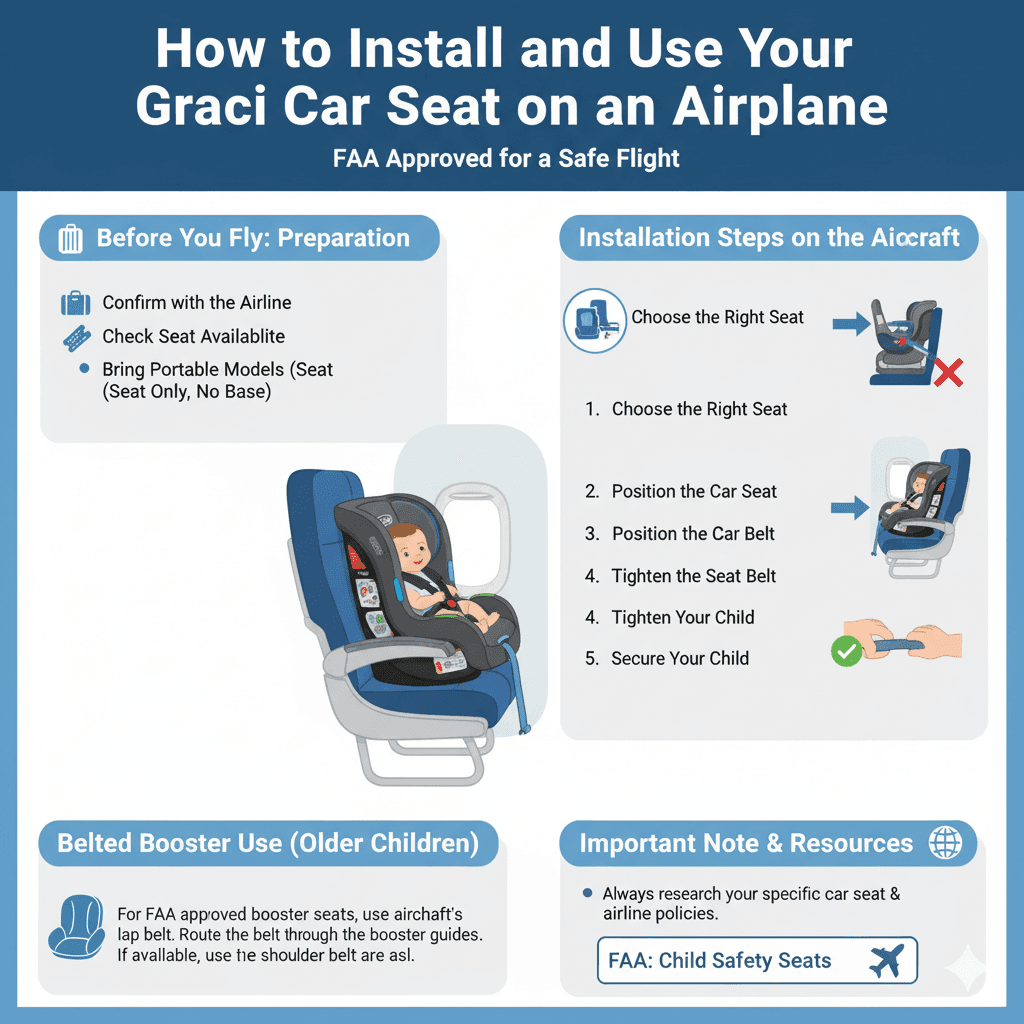
Table: Common Graco Car Seat Types and FAA Approval Likelihood
This table provides a general guideline. Always verify your specific model.
| Graco Car Seat Type | FAA Approval Likelihood | Key Consideration for Air Travel |
|---|---|---|
| Infant Car Seats (e.g., SnugRide) | High | Must be usable with airplane lap belt (without base). |
| Convertible Car Seats (e.g., Extend2Fit) | High | Must be securely installable with airplane lap belt. |
| All-in-One Car Seats | High | Should install easily with airplane lap belt path. |
| Harnessed Booster Seats | Moderate | Check label carefully; some may not be approved. |
| Backless Booster Seats | Moderate to High | Many are approved, but verify specific models. |
| Car Seats Requiring LATCH/ISOFIX | Very Low | Not approved as aircraft lack LATCH anchors. |
Alternatives to Using Your Graco Car Seat on a Plane
While using an FAA-approved Graco car seat can be convenient, there are other options to consider if you don’t have an approved seat, prefer not to travel with it, or if your child has outgrown car seat stages but still needs a safer option than just a lap belt.
Airline-Provided Seats (Child Restraint Systems)
Some airlines do offer their own child restraint systems, often referred to as CRS, that can be used on board. These are typically only available for infants or toddlers and may have limited availability. You usually need to request one in advance when booking your ticket.
Pros:
- Saves you from bringing your own seat.
- Ensures a safe seating option if yours isn’t approved.
Cons:
- Availability can be very limited.
- May not be your preferred brand or model.
- Hygiene concerns for some travelers.
Lap Infant (No Seat Purchased)
For infants under two years old, you have the option of having them sit on your lap for the duration of the flight. While this is the most common method for very young babies, it’s not the safest. The FAA strongly recommends using an approved car seat for infants if a seat is purchased.
Pros:
- No need to buy an extra ticket for the infant.
- No need to bring or rent a car seat.
Cons:
- Significantly less safe in turbulence or emergencies.
- The child has no secure restraint.
- Infants can become restless and uncomfortable on laps for long periods.

Ergo/Sling Carriers
Some parents find that using a soft, structured carrier or wrap can help keep infants close and somewhat secure during taxi, takeoff, and landing. However, the FAA generally advises against using carriers during critical phases of flight. They are not FAA approved as car seats. Once the seatbelt sign is turned off, some parents find them useful for comfort, but they offer no protection in turbulence.
Pros:
- Keeps baby close and comforted.
- Can be convenient for boarding and deplaning.
Cons:
- Not FAA approved for use during flight.
- Offers minimal safety in turbulence.
- May restrict movement or be uncomfortable for the flight attendant checking restraints.
Renting a Car Seat at Your Destination
If you’re renting a car upon arrival, many rental agencies offer car seats for rent. However, the quality, cleanliness, and safety standards of these seats can vary greatly, and they can be quite expensive daily. It’s often more cost-effective and safer to bring your own if possible.
Pros:
- Don’t have to transport it on the plane.
Cons:
- Can be expensive.
- Quality and cleanliness can be questionable.
- May not meet the same strict safety standards as your own.
Traveling Tips with Your Graco Car Seat
Traveling with a car seat can sometimes feel like an extra piece of luggage to manage. Here are some tips to make the process smoother.
Checking Your Graco Car Seat
Most airlines allow you to check your car seat at the gate or at the main check-in counter, free of charge, similar to a stroller. The seat will be put in the cargo hold. While this is convenient, it does mean that your car seat will be handled by baggage handlers, increasing the risk of damage.
Pros of Gate-Checking:
- Less to carry through the airport.
- Seat is available immediately upon deplaning.
Cons of Gate-Checking/Using Cargo Hold:
- Risk of damage to the car seat.
- Seat may be dirty or wet upon retrieval.
- You can’t use it for your child on the plane.

Hi, I’m Melvin, an automobile engineer with extensive experience in automobile equipment. I currently work for a local automobile firm, where I specialize in the car parts industry. I’ve had the opportunity to collaborate with seasoned inspectors, gaining invaluable hands-on experience that goes beyond just theory.
My passion for automotive care started at a young age, which led me to create CarSpareCare. Through CarSpareCare, I share the knowledge and skills I’ve acquired over the years to help others navigate the world of car maintenance and repairs.
My goal is to provide practical tutorials, essential safety advice, and the latest industry insights so that anyone—whether a beginner or an expert—can confidently tackle their automotive projects.

