Quick Summary:
Yes, frequent short trips can be hard on your car. They prevent the engine and exhaust system from reaching optimal temperatures, leading to moisture buildup and potential corrosion. This guide explains why and how to protect your car.
Hello there, car owner! Ever wondered if those quick drives to the store or the kids’ school are actually doing your car any harm? It’s a common question, and one that can leave you feeling a bit uneasy about your daily driving habits. You’re not alone if you’re finding it hard to get clear answers amidst all the car talk. But don’t worry, that’s exactly why I’m here! My goal is to make car care simple and stress-free for you. In this guide, we’ll break down exactly what happens during short trips, why it can be tough on your vehicle, and most importantly, what you can do to keep your car happy and healthy, no matter how short your journeys are. Let’s get started and demystify this a bit, shall we?
Understanding the Impact of Short Trips on Your Car
When you take your car for a spin, especially for shorter distances, it doesn’t always get a chance to reach its ideal operating temperature. This might not sound like a big deal, but it can actually lead to a few issues over time.
The Science Behind It: Heat is Key
Your car’s engine is designed to work best when it’s warmed up. Think of it like your own body – you need to warm up before a big workout, right? When your engine runs, it generates heat. This heat not only makes the engine run efficiently but also helps crucial components like the exhaust system to dry out.
Regular, longer drives allow the engine to heat up thoroughly and stay hot for a good while. This heat is essential for burning off moisture and byproducts of combustion that can otherwise accumulate. When trips are consistently short, the engine might start to warm up, but it never quite gets hot enough for long enough to perform these essential drying and cleaning functions.
Moisture: The Unseen Culprit
One of the main problems with short trips is moisture. As your engine burns fuel, it creates water as a byproduct. When the engine fully heats up, this water (along with other condensation) gets burned off or expelled through the exhaust system.
On short trips, this condensation can linger in the engine oil and the exhaust system. Imagine a little bit of dew forming inside your car overnight – it stays there until the sun dries it up. Similarly, this moisture can sit in your engine’s nooks and crannies. Over many short trips, this can contribute to:
- Sludge Formation: Moisture mixing with oil can create a thick, gummy substance called sludge. This sludge can block oil passages, making it harder for oil to lubricate the engine.
- Corrosion: Water is a key ingredient in rust! When moisture sits on metal parts, especially in cooler areas like the exhaust system, it can lead to corrosion and premature wear.
- Incomplete Combustion: A cold engine doesn’t burn fuel as efficiently as a warm one. This means you might be using more fuel than you need to, and potentially releasing more unburnt fuel into the exhaust.
The Exhaust System’s Struggle
Your car’s exhaust system, including the muffler and catalytic converter, is particularly vulnerable to moisture damage during short trips. These parts are designed to get hot enough to vaporize any condensation that forms.
When consistently exposed to moisture without adequate drying time, the internal components of the muffler can start to rust from the inside out. This can lead to a weaker muffler, potential leaks, and eventually, a need for costly replacement. The catalytic converter also needs to reach a certain temperature to work effectively at cleaning emissions. Short trips might not allow it to reach this optimal temperature, potentially impacting its efficiency over time.
Common Symptoms of Short-Trip Related Issues
So, how can you tell if your car is showing signs of struggle from frequent short trips? Keep an eye out for these clues:
- Engine Oil Concerns: Pull out your dipstick. If the oil looks milky or has a foamy appearance, it could be a sign of moisture contamination. This is something to get checked out by a professional.
- Exhaust Noise: A rumbling sound from your exhaust can sometimes indicate rust or a small hole developing, possibly accelerated by moisture.
- Check Engine Light: While a check engine light can be triggered by many things, if it comes on after a period of only short trips, it’s worth investigating if it’s related to emissions or engine efficiency issues exacerbated by cold starts.
- Sluggish Performance: If your car feels a bit less responsive, especially when you first start driving, it might be related to an engine that isn’t running at its peak due to cold components.
- Unusual Smells: Sometimes, you might notice a slightly “sweet” smell, which can be an indicator of coolant issues, but persistent damp or musty smells could also point to condensation issues.
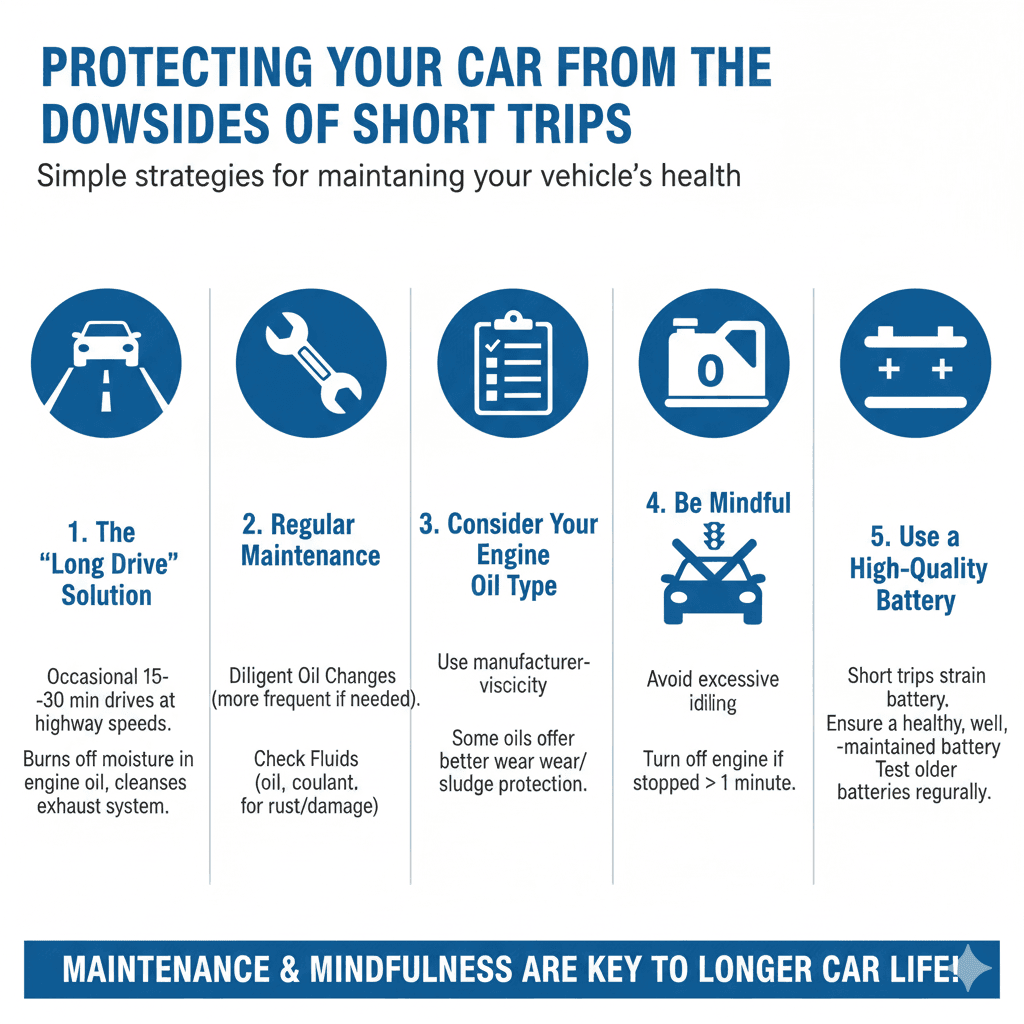
Protecting Your Car from the Downsides of Short Trips
The good news is you don’t have to overhaul your driving habits completely to protect your car. A few simple strategies can make a big difference:
1. The “Long Drive” Solution
The most effective way to combat the effects of short trips is to occasionally give your car a longer drive. Aim for at least once a week or every couple of weeks to drive your car for 15-30 minutes at highway speeds (or the fastest legal speed limit in your area).
This longer drive allows the engine to get fully up to temperature and stay there. This is crucial for burning off that built-up moisture in the engine oil and expelling it from the exhaust system. Think of it as giving your car a good “cleansing” breath.
2. Regular Maintenance is Your Best Friend
Sticking to your car’s recommended maintenance schedule is vital, especially if short trips are your primary mode of driving. This means:
- Oil Changes: Be diligent with your oil changes. If you’re doing a lot of short trips, you might even consider changing your oil and filter more frequently than the standard recommendation. Check your owner’s manual for the specific recommendation for your vehicle and driving conditions. Many manuals have specific intervals for “severe driving conditions,” which often includes frequent short trips. You can find official maintenance schedules and information on recommended oil grades at The American Automobile Association (AAA), a reliable source for automotive advice.
- Check Fluids: Regularly check your oil, coolant, and other fluid levels. Also, look for any unusual colors or textures, like the milky oil mentioned earlier.
- Inspect the Exhaust: Periodically look under your car to check the exhaust system for any signs of rust, holes, or damage.
3. Consider Your Engine Oil Type
The type of engine oil you use can play a small role. While not a replacement for longer drives or regular maintenance, some oils are formulated to offer better protection against wear and sludge, which can be beneficial for engines that experience frequent cold starts. Always use the oil viscosity recommended by your car manufacturer. You can confirm your car’s oil requirements by consulting its owner’s manual or checking resources from organizations like the American Petroleum Institute (API).
4. Be Mindful of Idling
While not directly related to short trips, excessive idling can also prevent your engine from reaching optimal temperatures. If you find yourself idling for long periods, it might be more beneficial to turn the engine off and restart it when you’re ready to go, especially if you know you’ll be stopped for more than a minute or two. Just be mindful of fuel consumption and traffic situations.
5. Use a High-Quality Battery
Frequent short trips put more strain on your car battery. Each time you start your car, the battery uses a significant amount of power to crank the engine. On a short trip, the alternator doesn’t have much time to recharge the battery fully before you shut the engine off again. Over time, this can shorten the battery’s lifespan. Ensuring you have a healthy, well-maintained battery is key. If your battery is older, it might be worth having it tested, especially before a season with extreme temperatures. You can find guides on battery maintenance and testing from resources like Battery University.
When Short Trips Might Be Okay (and When to Worry)
It’s not all doom and gloom! The “badness” of short trips depends on several factors:
- Frequency: One short trip a week is very different from five short trips a day.
- Outside Temperature: Cold weather exacerbates the moisture problem. Condensation forms much more readily when the engine and exhaust are cold.
- Vehicle Age and Condition: Newer cars or cars in excellent condition with robust sealing might handle short trips slightly better than older vehicles with potential leaks or wear.
- Your Driving Mix: If your short trips are the only type of driving you do, the risk factors are higher. If they are interspersed with occasional longer drives, your car can likely compensate.
In general, if your car is new and otherwise well-maintained, the occasional short trip won’t cause immediate catastrophic failure. However, making it the only way you drive your car, year after year, can contribute to premature wear and tear on specific components over the long run. It’s about cumulative effect.
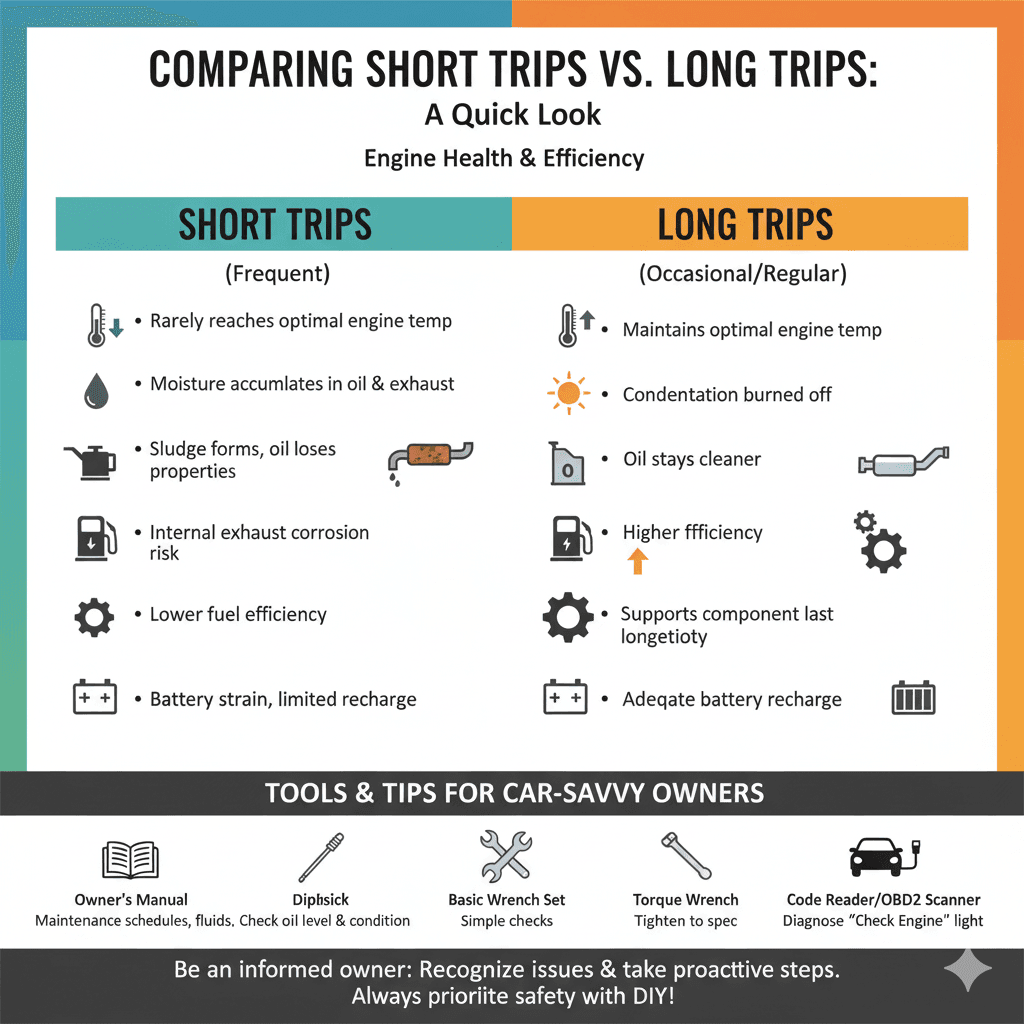
Comparing Short Trips vs. Long Trips: A Quick Look
To help visualize the differences, consider this comparison:
| Aspect | Short Trips (Frequent) | Long Trips (Occasional/Regular) |
|---|---|---|
| Engine Temperature: | Rarely reaches optimal operating temperature. | Reaches and maintains optimal operating temperature. |
| Moisture Buildup: | Condensation accumulates in oil and exhaust. | Condensation is burned off and expelled. |
| Oil Breakdown: | Higher risk of forming sludge and losing lubricating properties. | Oil stays cleaner and maintains its properties longer. |
| Exhaust System: | Increased risk of internal corrosion and damage. | Exhaust components stay drier and last longer. |
| Fuel Efficiency: | Lower, as engine is less efficient when cold. | Higher, as engine operates at peak efficiency. |
| Component Wear: | Can contribute to premature wear on engine and exhaust. | Supports longevity of engine and exhaust components. |
| Battery Strain: | Increased strain due to frequent starting with limited recharging. | Adequate time for alternator to recharge the battery. |
Tools and Tips for Car-Savvy Owners
While professional maintenance is key, a few simple tools can help you stay on top of your car’s health, particularly when dealing with the nuances of short-trip driving:
- Owner’s Manual: This is your car’s bible! It details maintenance schedules, fluid types, and specific driving condition recommendations.
- Dipstick: For checking oil level and condition.
- Basic Wrench Set: For simple tasks like tightening clamps or minor component checks under supervision.
- Torque Wrench: Essential for ensuring bolts are tightened to the manufacturer’s specification, preventing over-tightening or under-tightening. Accurate torque is crucial for many engine and suspension components.
- Code Reader/OBD2 Scanner: If your check engine light comes on, a basic scanner can help you understand the error code, guiding you or your mechanic towards the potential issue.
Remember, the goal is not to become a master mechanic overnight, but to be an informed owner who can recognize potential issues and take proactive steps. Resources like The National Highway Traffic Safety Administration (NHTSA) offer valuable safety and maintenance information for all car owners.
For those who want to learn more about specific maintenance tasks, visual guides and videos can be extremely helpful. Websites like YouTube host countless channels dedicated to car DIY, though it’s always wise to cross-reference information and ensure the advice is sound and safe for your specific vehicle. When tackling any DIY repair, always prioritize safety. Ensure the car is on a level surface, use jack stands if working underneath, and wear appropriate safety gear like gloves and eye protection.
Frequently Asked Questions About Short Trips and Your Car
Q1: Can short trips damage my car immediately?
No, short trips are unlikely to cause immediate, catastrophic damage. The issues they can contribute to are typically cumulative and develop over a longer period of consistent short-trip driving.
Q2: How often should I take a longer drive?
If you primarily take short trips, aim for a longer drive (20-30 minutes at highway speeds) at least once every one to two weeks. This helps clear out moisture and keep components functioning optimally.
Q3: What is “sludge” in my car’s engine?
Engine sludge is a thick, gummy deposit that forms when oil breaks down. It’s often caused by moisture, unburnt fuel, and contaminants mixing with the oil. It can block oil passages and significantly reduce engine lubrication, leading to wear and potential failure.
Q4: My car is older. Should I be more concerned about short trips?
Yes, older cars might be more susceptible. Seals can degrade, leading to more moisture ingress, and overall wear and tear can make components more vulnerable to the effects of condensation and incomplete combustion.
Q5: Can driving in very cold weather make short trips worse?
Absolutely. Cold weather means colder engines and exhaust systems. This leads to more condensation forming and less efficient evaporation, increasing the risk of moisture-related issues like corrosion and sludge.
Q6: Is it better to idle or turn the car off for short stops?
For stops longer than about 30-60 seconds, it’s generally more fuel-efficient and better for the engine not to idle. Idling keeps the engine cold, contributing to the same issues as short trips. Turning it off allows the engine to cool down naturally without prolonged idling on a partially warmed state.
Q7: How do I know if my car needs an oil change sooner than recommended?
If you have a car that mostly does short trips, especially in extreme weather, you might benefit from changing your oil every 3,000-5,000 miles instead of the typical 5,000-7,500 miles. Always check your owner’s manual for severe driving condition recommendations.
The Bottom Line: Keep Your Car Moving
So, to wrap it all up, are short trips bad for your car? Yes, they can be, if they are the only kind of driving you do and you don’t take steps to mitigate the effects. The primary concern is the buildup of moisture and the resulting potential for sludge formation and corrosion, especially in the engine oil and exhaust system.
But please, don’t let this information add to your car worries! The key to managing the impact of short trips is awareness and a little bit of proactive care. By incorporating occasional longer drives into your routine and staying diligent with your car’s maintenance schedule – especially oil changes – you can significantly reduce or even eliminate any negative consequences.
Think of it this way: your car is a complex machine designed to run best when it’s working at its intended temperature. Occasional longer drives are like a health boost, ensuring all its parts get the chance to dry out, perform efficiently, and stay protected. Regular maintenance ensures that even if some minor issues arise, they’re caught and addressed before they become big, expensive problems.
Your car is a valuable asset, and with a little bit of understanding and consistent care, you can keep it running smoothly and reliably for many years to come, no matter how many quick trips you need to make! Safe driving!

Hi, I’m Melvin, an automobile engineer with extensive experience in automobile equipment. I currently work for a local automobile firm, where I specialize in the car parts industry. I’ve had the opportunity to collaborate with seasoned inspectors, gaining invaluable hands-on experience that goes beyond just theory.
My passion for automotive care started at a young age, which led me to create CarSpareCare. Through CarSpareCare, I share the knowledge and skills I’ve acquired over the years to help others navigate the world of car maintenance and repairs.
My goal is to provide practical tutorials, essential safety advice, and the latest industry insights so that anyone—whether a beginner or an expert—can confidently tackle their automotive projects.