When I was a kid, I watched my first Formula 1 race on TV, wide-eyed as cars zoomed by like rockets. I thought, “Do all F1 cars have the same engine to make it fair?” That question stuck with me, and now, as a motorsport enthusiast, I’m excited to share the answer with you! This article dives into whether F1 cars share the same engines, why their power matters, and how teams make their cars unique. Whether you’re new to F1, a fan, or a gearhead, I’ll keep it simple and fun, like chatting with a friend. We’ll explore what F1 engines are, how they work, and cool facts to impress your buddies. Let’s hit the gas!
What Are F1 Engines?
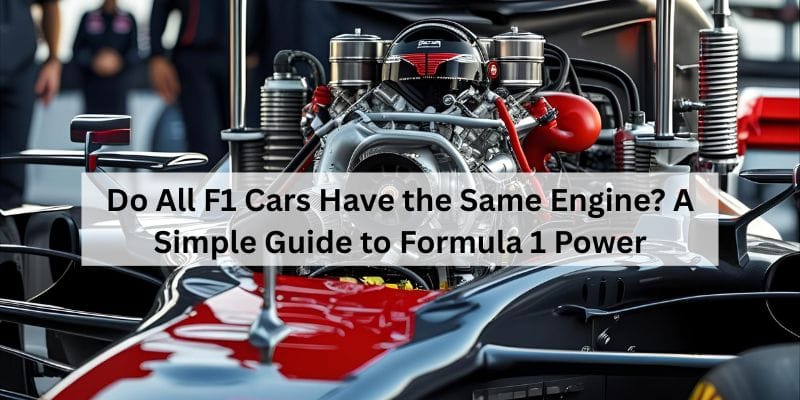
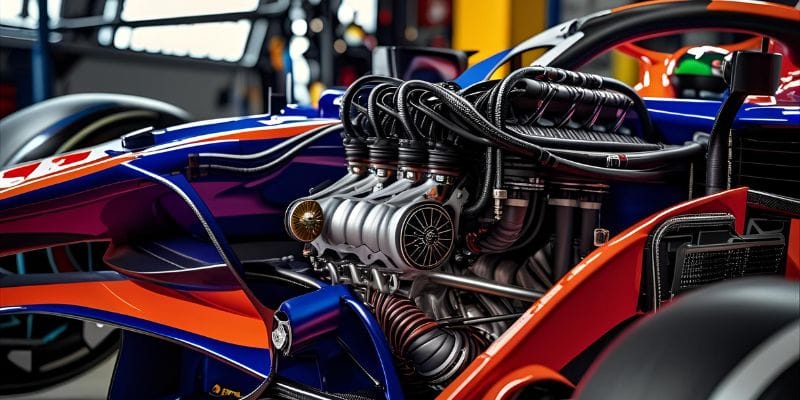
F1 engines, called power units, are the heart of every Formula 1 car. They’re not like the engine in your family car—they’re super high-tech! Since 2014, all F1 cars use a 1.6-liter V6 turbocharged hybrid engine. That means they’re small but mighty, mixing gas power with electric boosts for speeds up to 230 mph! The Fédération Internationale de l’Automobile (FIA), the F1 rule maker, sets strict rules so every engine starts with the same basic design. But here’s the kicker: teams tweak them to stand out!
These power units have two parts: a gas engine and an electric system called Energy Recovery Systems (ERS). The ERS grabs energy when the car brakes or heats up, then gives it a speed boost. Think of it like a video game power-up! This setup makes F1 engines crazy efficient, producing up to 1,000 horsepower. That’s like 10 times the power of a regular car!
Do All F1 Cars Have the Same Engine?
So, do all F1 cars have the same engine? Nope, not exactly! While every team follows the same FIA rules (1.6-liter V6 hybrid), different companies build these engines. In 2025, four manufacturers make F1 power units: Mercedes, Ferrari, Honda RBPT, and Renault. Each team either builds its own engine or buys one from these suppliers. For example, Mercedes powers its own team, plus McLaren and Williams, while Ferrari supplies its team, Haas, and Sauber.
Even though the engines follow the same rules, they’re not identical. Each manufacturer designs its power unit differently, focusing on things like power, reliability, or fuel efficiency. It’s like baking cookies with the same ingredients—everyone’s recipe tastes a bit different! Teams also fine-tune their engines with software and fuel, which can give them an edge. For instance, Mercedes engines are known for raw power, while Ferrari’s might shine in reliability.
How Do Teams Get Their Engines?
F1 teams get engines in two ways: they build them or buy them. Big teams like Mercedes and Ferrari make their own, called works teams. Smaller teams, like Haas or Williams, buy engines from these manufacturers and are called customer teams. The FIA makes sure customer teams get the same quality engines as works teams, but there’s a catch. Works teams design their cars around their engines from the start, like building a puzzle with all the pieces. Customer teams have to fit the engine into their car design, which can be trickier.
Here’s a quick look at who uses what engine in 2025:
| Team | Engine Supplier | Type |
|---|---|---|
| Mercedes | Mercedes | Works Team |
| Ferrari | Ferrari | Works Team |
| Red Bull | Honda RBPT | Works Team |
| McLaren | Mercedes | Customer Team |
| Williams | Mercedes | Customer Team |
| Haas | Ferrari | Customer Team |
| Sauber | Ferrari | Customer Team |
| Alpine | Renault | Works Team |
| RB | Honda RBPT | Customer Team |
| Aston Martin | Mercedes | Customer Team |
Table 1: F1 Teams and Their Engine Suppliers in 2025
This table shows how engines are split across teams. Notice how Mercedes and Ferrari power multiple teams? That’s because their engines are top-notch, but it doesn’t mean every car performs the same.
Why Don’t All F1 Cars Perform the Same?
If engines follow the same rules, why do some cars zoom past others? It’s not just the engine—it’s the whole car! Here’s what makes a difference:
- Aerodynamics: The car’s shape affects how it cuts through air. Better aerodynamics mean faster cornering and less drag. Red Bull, for example, nails this!
- Chassis Design: The car’s frame, or chassis, holds everything together. Works teams design their chassis to match their engine perfectly, giving them a leg up.
- Team Budget: Big teams like Mercedes spend millions on research, hiring top engineers, and testing. Smaller teams like Haas work with less cash.
- Driver Skill: A great driver, like Max Verstappen, can push a car to its limits. A good car with a bad driver? Not so fast!
When I first learned this, I was shocked! I thought engines were everything, but it’s like a recipe—great ingredients (engines) need a skilled chef (team and driver) to shine.
A Simple Example: Comparing Two Teams
Let’s compare two teams using the same engine: Mercedes (works team) and Williams (customer team). Both use Mercedes’ 1.6-liter V6 hybrid engine, which pumps out about 1,000 horsepower. But in 2024, Mercedes often fought for podiums, while Williams scrapped in the midfield. Why?
- Mercedes: Designs its car and engine together, like a custom suit. They tweak every detail for max speed and handling.
- Williams: Gets the same engine but builds its car around it. Their budget limits fancy aerodynamics, so they’re slower in corners.
It’s like giving two kids the same LEGO set—one builds a sleek spaceship, the other a clunky box. Same pieces, different results!
Tips to Understand F1 Engines Better
Want to sound like an F1 pro? Try these easy tips:
- Watch a Race: Notice how cars with the same engine, like McLaren and Williams, perform differently. Check out the Monaco Grand Prix for tight corners!
- Follow F1 News: Websites like PlanetF1 or Autosport explain engine updates in simple terms.
- Play an F1 Game: Games like F1 2024 let you feel the difference between teams. It’s fun and educational!
These tricks helped me go from confused to confident about F1 engines. No sweat, right?
Common Mistakes to Avoid
New fans often trip up on F1 engine facts. Here’s what to watch out for:
- Thinking Engines Are Everything: Engines matter, but aerodynamics and drivers are huge. Don’t just focus on horsepower!
- Assuming All Engines Are Identical: Same rules, different designs. Each manufacturer has its own flavor.
- Ignoring Rules: The FIA’s strict rules keep things fair. Teams can’t just slap a monster engine in their car.
My first F1 chat with friends was a flop because I thought engines were the whole story. Learn from my mistake!
Pros and Cons of F1 Engine Rules
The FIA’s engine rules make F1 exciting but tricky. Here’s a quick breakdown:
| Aspect | Pros | Cons |
|---|---|---|
| Same Engine Specs | Keeps races fair and competitive | Limits crazy innovation |
| Hybrid Technology | Eco-friendly, boosts speed | Super expensive to develop |
| Customer Engines | Helps smaller teams race | Works teams get a design edge |
Table 2: Pros and Cons of F1 Engine Rules
These rules balance fairness and tech, but they’re not perfect. Smaller teams struggle with costs, while big teams dominate.

Visual Ideas for Better Understanding
To make F1 engines clearer, imagine these visuals (not included, but great for reference):
- Diagram of a V6 Engine: Show the turbo and ERS parts, labeled simply. Think of a cartoon engine with arrows for energy flow.
- Team Engine Map: A chart showing which teams use Mercedes, Ferrari, etc., like Table 1 but colorful.
- Speed Comparison Graph: A bar graph comparing top speeds of teams with the same engine, like Mercedes vs. Williams.
These would make engine talk a piece of cake for beginners!
My Personal F1 Engine Story
When I dove deeper into F1, I visited a local car show with an F1 engine display. Seeing a Mercedes power unit up close blew my mind—it’s tiny but packs a punch! I chatted with an engineer who explained how teams tweak fuel and software for extra speed. That day, I learned that F1 is like a science experiment on wheels. Every team’s engine is a unique recipe, even if they follow the same rules. It’s why I love sharing this stuff with new fans like you!
What’s Next for F1 Engines?
Looking ahead, F1 engines will change in 2026. The FIA plans to use fully sustainable fuel and simplify the hybrid system, dropping part of the ERS for a KERS-style boost. This could make engines even more eco-friendly and keep races thrilling. New manufacturers like Audi and Ford will join, shaking things up! I’m stoked to see how these changes affect the grid. Will Mercedes stay on top, or will a new player steal the show?
Frequently Asked Questions
What is an F1 power unit?
A power unit is the engine in an F1 car. It’s a 1.6-liter V6 with a turbo and electric boost, making up to 1,000 horsepower. It’s like a super-strong heart for the car!
Do all F1 teams build their own engines?
No, some teams like Mercedes and Ferrari build their own, called works teams. Others, like Haas, buy engines from them, known as customer teams.
Why don’t all F1 cars go the same speed?
Even with similar engines, speed depends on aerodynamics, chassis, and drivers. Teams like Red Bull design better cars, while drivers like Hamilton push harder.
Are F1 engines the same as road car engines?
Nope! F1 engines are tiny (1.6 liters) but super powerful, with hybrid tech. Road car engines are bigger, less powerful, and built for daily driving.
Can teams cheat with engines?
The FIA checks engines to keep things fair. Teams must follow strict rules, and cheating risks big penalties, like losing points. It’s tightly controlled!
How much do F1 engines cost?
Engines cost about $15 million per team per season. That’s why smaller teams buy them instead of building their own. It’s pricey
What’s changing in 2026 for F1 engines?
In 2026, F1 will use sustainable fuel and simpler hybrid systems. New brands like Audi will join, making races even more exciting
Conclusion
F1 engines are a wild mix of tech and power, but they’re not all the same. While every team uses a 1.6-liter V6 hybrid, manufacturers like Mercedes and Ferrari add their own flair, and car design makes a huge difference. I hope this guide sparked your F1 curiosity! Try watching a race or checking out Motorsport.com for more. Share your favorite F1 moment with friends or tell me what team you’re rooting for. Let’s keep the F1 fun rolling

Hi, I’m Melvin, an automobile engineer with extensive experience in automobile equipment. I currently work for a local automobile firm, where I specialize in the car parts industry. I’ve had the opportunity to collaborate with seasoned inspectors, gaining invaluable hands-on experience that goes beyond just theory.
My passion for automotive care started at a young age, which led me to create CarSpareCare. Through CarSpareCare, I share the knowledge and skills I’ve acquired over the years to help others navigate the world of car maintenance and repairs.
My goal is to provide practical tutorials, essential safety advice, and the latest industry insights so that anyone—whether a beginner or an expert—can confidently tackle their automotive projects.