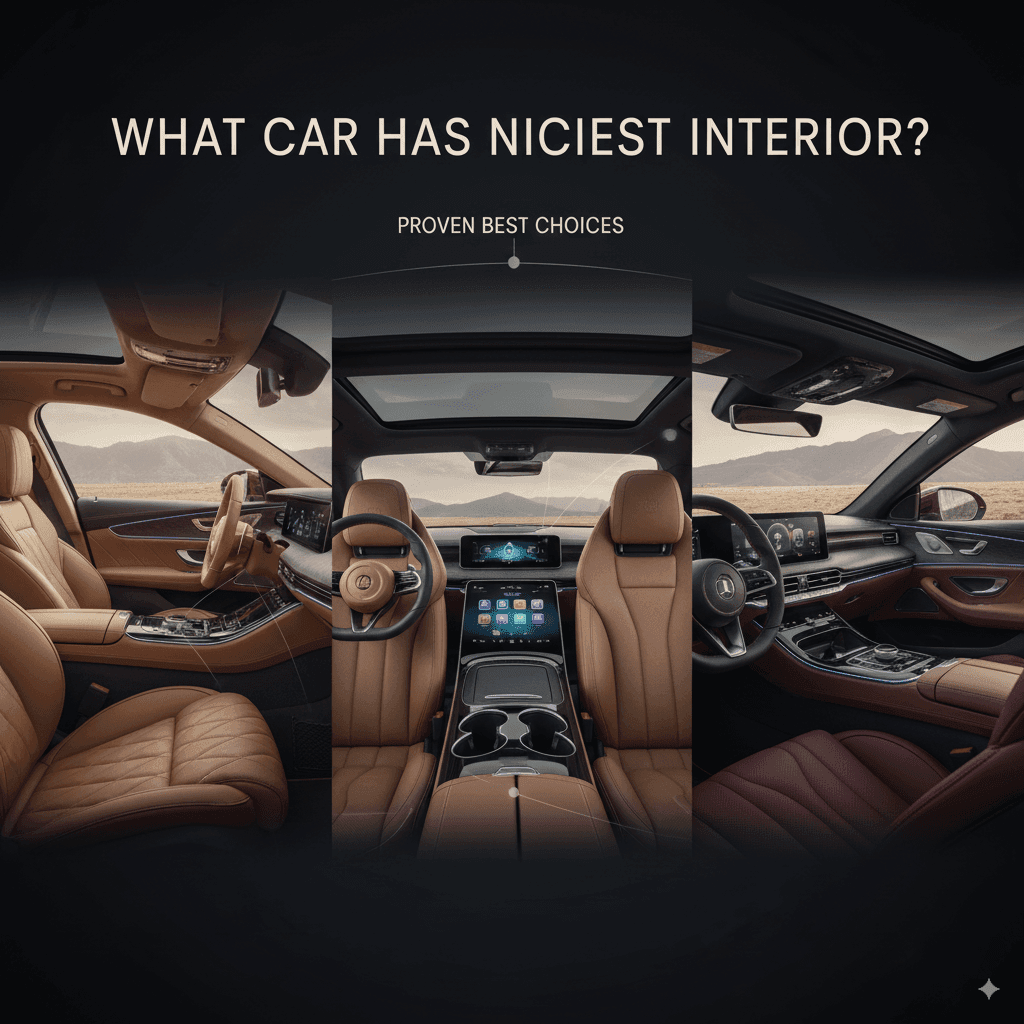
What car has the nicest interior? For a luxurious and comfortable driving experience, consider cars like the Mercedes-Benz S-Class, BMW 7 Series, Audi A8, Genesis G90, and Lucid Air. These vehicles excel in premium materials, advanced technology, spaciousness, and overall exquisite design.
Your car is more than just a way to get around; it’s your personal space on wheels. When you spend a lot of time driving, you want that space to be comfortable, stylish, and packed with features that make your journeys enjoyable. But with so many cars on the market, how do you know which ones truly offer the best interior experience? It can feel overwhelming trying to figure out what makes an interior “nice” – is it the leather? The fancy screens? Or something else entirely? Don’t worry; we’re here to simplify it all. We’ll guide you through what to look for and highlight some of the top choices that consistently impress drivers. Get ready to discover the cars that make every drive feel like a first-class experience!
Why Car Interior Quality Matters
You might think of horsepower and fuel economy first when choosing a car, and those are important. But the interior is where you’ll spend almost all your time. Think about it: every commute, every road trip, every quick errand happens inside the car. A beautifully crafted, comfortable, and functional interior can transform your driving experience from mundane to magnificent. It’s not just about looking good; it’s about how it feels, how it sounds, and how it contributes to your overall well-being while you’re on the road.
What makes an interior truly stand out? It’s a combination of factors:
Materials: The feel of the seats, the touch of the dashboard trim, and the quality of the carpeting all contribute to a premium sensation. Soft-touch plastics, genuine leather, real wood veneers, and brushed metal accents make a big difference.
Design and Layout: A well-designed interior is intuitive and aesthetically pleasing. Think about how easy it is to reach controls, how well everything flows together, and the overall visual harmony of the cabin.
Comfort and Ergonomics: Supportive seats with plenty of adjustment, ample legroom and headroom, and a quiet cabin create a more relaxing and less fatiguing ride.
Technology Integration: Modern interiors feature advanced infotainment systems, high-resolution displays, convenient charging options, and smart driver-assistance features. It’s about how seamlessly technology enhances your driving.
Ambiance: Details like interior lighting, the quality of the sound system, and even the scent of the cabin can impact the overall mood and luxury feel.
Proven Best Choices for Nicest Car Interiors
When it comes to the pinnacle of automotive interiors, certain brands consistently deliver excellence. These vehicles often set the standard for luxury, comfort, and cutting-edge technology. Let’s explore some of the top contenders that drivers and critics rave about.
1. Mercedes-Benz S-Class: The Benchmark of Luxury
The Mercedes-Benz S-Class has long been the gold standard for luxury sedans, and its interior is a significant reason why. It’s a masterclass in blending opulent materials with sophisticated technology and exceptional comfort.
Materials: Expect exquisite Nappa leather, finely polished wood trim (often customizable), and intricate metal detailing. The fit and finish are virtually flawless.
Design: The cabin feels airy and spacious, with a flowing dashboard design that incorporates a large, striking central display. Ambient lighting is a signature feature, offering a customizable mood for every drive.
Comfort: The seats are exceptionally comfortable, with extensive power adjustments, heating, ventilation, and even massage functions. Rear-seat passengers enjoy just as much pampering, with optional reclining seats and individual climate controls.
Technology: The MBUX (Mercedes-Benz User Experience) infotainment system is advanced yet intuitive, featuring voice control and stunning graphics. Burmester high-end surround sound systems provide an audiophile-grade experience.
For an in-depth look at Mercedes-Benz’s commitment to interior quality, you can explore their official pages on automotive design.
2. BMW 7 Series: Sporty Sophistication
BMW’s flagship sedan, the 7 Series, rivals the S-Class with an interior that balances sporty driver focus with executive-level luxury. It offers a high-tech sanctuary that’s both engaging and supremely comfortable.
Materials: High-quality leather, real wood inlays, and piano black finishes are standard. Options for even more premium materials like crystal glass controls elevate the sense of bespoke luxury.
Design: The cockpit is driver-oriented but doesn’t skimp on passenger comfort. A large, curved display dominates the dashboard, integrating the instrument cluster and infotainment. The overall aesthetic is clean and modern, with a focus on premium feel.
Comfort: The seats are supportive and comfortable, offering a wide range of adjustments. Rear-seat passengers can opt for executive lounge seating, which reclines and offers premium comfort features. Acoustic glass makes the cabin remarkably quiet.
Technology: BMW’s iDrive infotainment system is known for its user-friendliness and robust features. Connectivity is seamless, and advanced driver-assistance systems are seamlessly integrated.
3. Audi A8: Understated Elegance and Tech
The Audi A8 offers a more understated approach to luxury, focusing on clean lines, sophisticated technology, and impeccable build quality. It’s a refined choice for those who appreciate subtlety and precision.
Materials: Audi uses premium leather, tasteful wood or aluminum trim, and soft-touch materials throughout the cabin. The attention to detail in stitching and panel gaps is exceptional.
Design: The interior features a minimalist, horizontal design that emphasizes width and spaciousness. The dual-screen MMI touch response system is sleek and modern.
Comfort: Valcona leather seats are standard, offering excellent support and adjustability. Rear-seat comfort is a strong point, with options for massaging seats and footrests. The ride is exceptionally smooth, aided by advanced suspension systems.
Technology: The A8 boasts Audi’s Virtual Cockpit for the driver and a sophisticated dual-touchscreen interface for infotainment and climate control. Features like a head-up display and premium Bang & Olufsen audio enhance the experience.
4. Genesis G90: A Value-Packed Luxury Experience
Genesis, Hyundai’s luxury brand, has rapidly climbed the ranks, and the G90 sedan is a testament to their commitment to delivering lavish interiors at a compelling price point. It offers a surprisingly high level of luxury and refinement.
Materials: The G90 is generous with premium materials, often featuring open-pore wood, brushed aluminum, Nappa leather, and even a two-tone leather steering wheel.
Design: The interior design is elegant and modern, with a prominent central infotainment screen and a digital instrument cluster. The focus is on creating a serene and sophisticated atmosphere.
Comfort: Seats are designed for ultimate comfort, with numerous power adjustments, heating, ventilation, and massage functions for both front and rear occupants. The cabin insulation is excellent, ensuring a quiet ride.
Technology: A large touchscreen handles infotainment and vehicle settings, complemented by a digital driver display. A premium Lexicon audio system is standard. Genesis packs in high-end features that are often optional on competitors.
5. Lucid Air: The Electric Revolution in Luxury Interiors
For those looking at the future of automotive interiors, the all-electric Lucid Air is a groundbreaking contender. It reimagines cabin design, offering a spacious, minimalist, and technologically advanced environment.
Materials: Lucid uses sustainable and high-quality materials, including soft leathers (or premium vegan alternatives), polished metals, and unique wood veneers. The focus is on a clean, modern aesthetic.
Design: Thanks to its electric platform, the Lucid Air offers an incredibly spacious cabin with a lounge-like feel. The wraparound glass canopy enhances the sense of openness. The dashboard features a unique “Pilot Panel” composed of a retractable central screen and a driver-focused display.
Comfort: The seats are designed for long-distance comfort with extensive adjustability and massage functions. The cabin is exceptionally quiet due to its electric powertrain.
Technology: The infotainment system is state-of-the-art, and the car is packed with advanced connectivity and driver-assistance features.
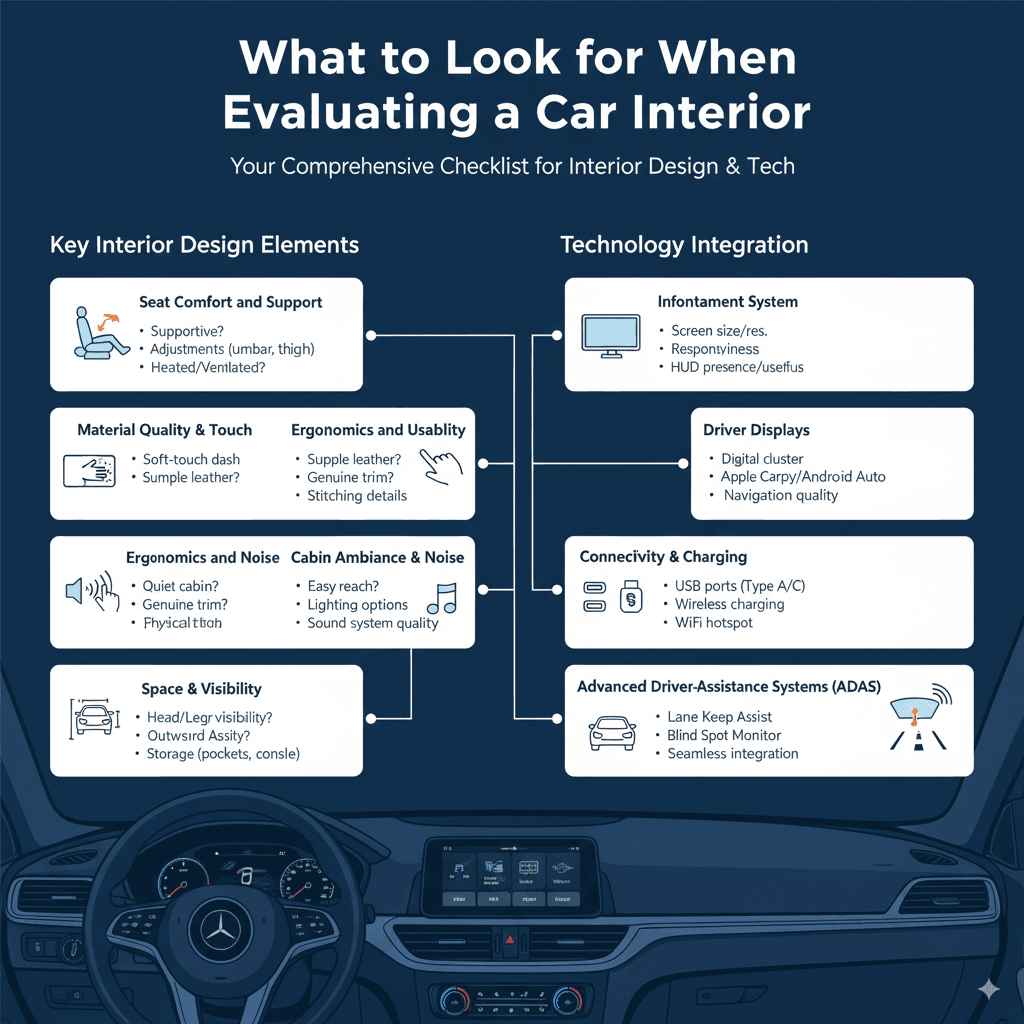
What to Look for When Evaluating a Car Interior
Beyond just the specific models, understanding the elements that make an interior great will help you evaluate any car. Here’s a checklist:
Key Interior Design Elements
Seat Comfort and Support:
How do the seats feel? Are they supportive for your back and legs?
Do they have enough adjustment options (headrest, lumbar, thigh support)?
Are heating and ventilation functions available and effective?
Material Quality and Touch:
Are there soft-touch materials on the dashboard, door panels, and center console?
Is the leather (if applicable) soft and supple, or does it feel synthetic?
Does the trim (wood, metal, carbon fiber) look and feel genuine?
Pay attention to stitching and grain patterns – fine details matter.
Ergonomics and Usability:
Can you easily reach all the essential controls without stretching or looking away from the road for too long?
Is the infotainment system intuitive? Are the menus easy to navigate?
Are there physical buttons for frequently used functions (like climate control or audio volume), or is everything buried in touchscreens?
Cabin Ambiance and Noise Levels:
How quiet is the cabin at highway speeds? Listen for wind noise and road noise.
Are the interior lighting options pleasant and functional?
Does the sound system deliver a good audio experience?
Space and Visibility:
Do you have enough headroom and legroom, both in the front and rear?
How is the outward visibility? Are there large blind spots?
How much storage space is available (door pockets, center console, glove box)?
Technology Integration
Infotainment System:
Screen size and resolution.
Responsiveness and ease of use.
Apple CarPlay and Android Auto compatibility.
Navigation system quality.
Driver Displays:
Digital instrument cluster clarity and customization options.
Head-up display (HUD) presence and usefulness.
Connectivity and Charging:
Number and type of USB ports.
Wireless charging pad availability.
Wi-Fi hotspot capability.
Advanced Driver-Assistance Systems (ADAS):
Adaptive cruise control, lane keeping assist, blind-spot monitoring, etc.
How seamlessly are these integrated into the driving experience?
Comparing Interior Luxury: Sedan vs. SUV
While many of the examples above are sedans, luxury SUVs also offer incredibly impressive interiors. The principles of quality materials, smart design, and advanced tech apply across both segments.
Here’s a quick comparison of what you might find:
| Feature | Luxury Sedan Interior | Luxury SUV Interior |
| :—————- | :—————————————————- | :——————————————————– |
| Focus | Executive comfort, driver engagement, serene ride | Versatile comfort, spaciousness, commanding view |
| Materials | Often the absolute highest grade, bespoke options | Very high quality, often with durable finishes |
| Design Flair | Can be more avant-garde or classic luxury | Often emphasizes robust yet refined aesthetics |
| Space | Generous, especially for rear passengers in flagships | Typically more overall passenger and cargo volume |
| Noise Isolation | Often exceptionally quiet, designed for refinement | Excellent, but potentially more road noise due to size |
| Technology | Cutting-edge, integrated seamlessly | Equally advanced, with large screens and feature sets |
| Examples | Mercedes-Benz S-Class, BMW 7 Series, Genesis G90 | Range Rover, Porsche Cayenne, Cadillac Escalade, BMW X7 |
This table helps illustrate that while the core pursuit of luxury is similar, the application can differ. A luxury sedan might offer a more intimate, chauffeur-like experience, while a luxury SUV provides a more expansive, command-center feel.
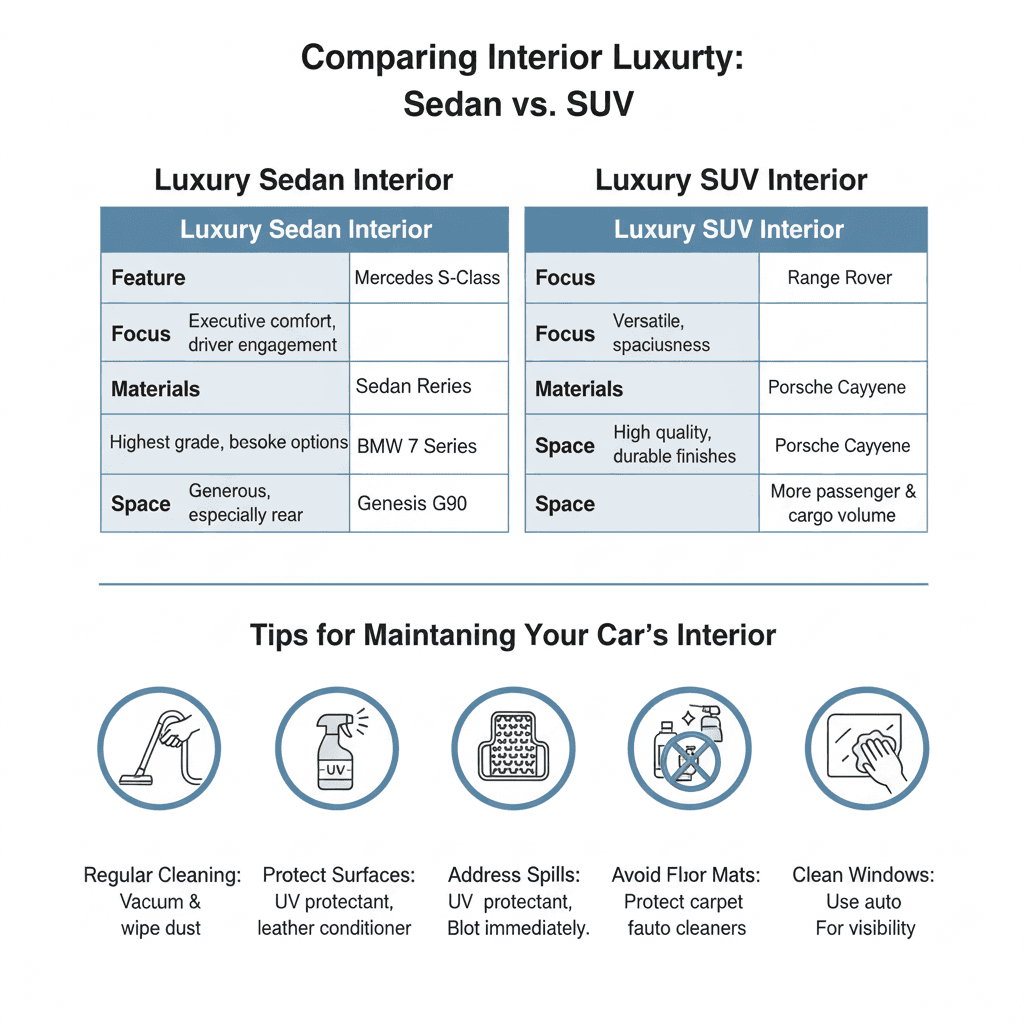
Tips for Maintaining Your Car’s Interior
Keeping your car’s interior looking and feeling its best will not only enhance your driving pleasure but also help maintain the vehicle’s resale value. Here are some easy tips:
Regular Cleaning: Vacuum carpets and seats weekly or bi-weekly. Wipe down surfaces with a damp microfiber cloth to remove dust.
Protect Surfaces: Use a good quality interior protectant spray with UV blockers on dashboards and other plastic surfaces to prevent fading and cracking. For leather, use a dedicated leather conditioner periodically.
Address Spills Immediately: Blot up spills as soon as they happen to prevent stains. Baking soda can help absorb odors from spills.
Use Floor Mats: Quality floor mats, especially all-weather ones, can significantly protect your car’s original carpet from dirt, mud, and spills.
Avoid Harsh Chemicals: Stick to cleaners specifically designed for automotive interiors. Harsh household cleaners can damage plastics and upholstery.
* Clean Windows: Keep your windows clean on the inside to improve visibility and prevent glare. A streak-free glass cleaner is your friend here.
For more detailed advice on cleaning and detailing your car’s interior, resources like the Environmental Protection Agency (EPA) occasionally offer guidance that can translate to effective and environmentally conscious cleaning practices.
Frequently Asked Questions (FAQ)
Q1: What are the best luxury car brands known for their interiors?
The brands most consistently praised for their interiors include Mercedes-Benz, BMW, Audi, Lexus, Genesis, and Porsche. These brands invest heavily in high-quality materials, sophisticated design, and advanced technology.
Q2: Is a large touchscreen essential for a nice car interior?
Not necessarily. While modern cars often feature large touchscreens, a nice interior is more about the overall experience. Some drivers prefer well-placed physical buttons for essential functions, while others appreciate the sleekness of integrated touchscreens. The key is usability and how well the technology integrates into the design.
Q3: How can I make my current car’s interior feel more luxurious?
You can enhance your current car’s interior by adding high-quality floor mats, using a leather conditioner on seats, adding an air freshener with a sophisticated scent, upgrading your phone mount, and keeping the interior impeccably clean and organized. Even small changes can make a difference.
Q4: What’s the difference between a premium and a luxury interior?
A premium interior offers good comfort, decent materials, and standard modern features. A luxury interior goes a step further with superior materials (like Nappa leather, real wood, real metal), more advanced technology, exceptional craftsmanship, and a focus on creating an exclusive and comfortable ambiance.
Q5: Do electric cars have better interiors than gasoline cars?
Electric cars often have the potential for very spacious and modern interiors due to their flexible platform (no large engine or transmission tunnel). Brands like Lucid and Tesla have embraced minimalist, tech-focused designs. However, luxury electric and gasoline cars from established brands can both offer equally high levels of interior luxury.
Q6: How much should I expect to pay for a car with one of the nicest interiors?
Cars with the absolute nicest interiors are typically found in the luxury segment. Expect prices to start in the high $70,000s to $100,000+ for flagship sedans and SUVs from brands like Mercedes-Benz, BMW, Audi, and Porsche. Luxury electric vehicles can also fall into this range.
Conclusion
Choosing a car with a truly exceptional interior is about more than just aesthetics; it’s about enhancing your daily life on the road. The vehicles we’ve highlighted – from the timeless elegance of the Mercedes-Benz S-Class and BMW 7 Series to the forward-thinking design of the Lucid Air, the understated refinement of the Audi A8, and the value-rich luxury of the Genesis G90 – all offer compelling reasons to consider them.
Remember, the “nicest” interior is ultimately subjective and depends on your personal preferences for materials, technology, and overall ambiance. By understanding the key elements that contribute to a premium cabin experience and exploring these proven best choices, you’re well-equipped to find a car that not only gets you where you need to go but does so in unparalleled comfort and style. Happy driving!

Hi, I’m Melvin, an automobile engineer with extensive experience in automobile equipment. I currently work for a local automobile firm, where I specialize in the car parts industry. I’ve had the opportunity to collaborate with seasoned inspectors, gaining invaluable hands-on experience that goes beyond just theory.
My passion for automotive care started at a young age, which led me to create CarSpareCare. Through CarSpareCare, I share the knowledge and skills I’ve acquired over the years to help others navigate the world of car maintenance and repairs.
My goal is to provide practical tutorials, essential safety advice, and the latest industry insights so that anyone—whether a beginner or an expert—can confidently tackle their automotive projects.