Prep wheels for powder coating by taking them apart first, removing tires, valves, weights, and TPMS, then stripping to clean bare metal and masking every mating, threaded, and sealing surface before the shop coats them. Skip those steps and you can trap dirt, alter fitment, contaminate bearings or sensors, and pay for stripping and recoating. This guide covers wheel-specific prep for aluminum, chrome, and steel, plus masking, media choice, inspection, and defect checks.
Why thorough preparation matters for lasting results
Good prep does two jobs. It gives the coating a sound surface to grip, and it keeps the wheel’s fitment surfaces accurate after cure. Miss contamination, and the finish can fisheye, blister, or lose adhesion. Coat the wrong surfaces, and lug torque, hub centering, or wheel seating can change.
What can fail if prep is rushed?
Contamination usually shows up as fisheyes, pinholes, or weak adhesion. Poor masking shows up as torque issues on lug nut seats or a wheel that no longer sits cleanly on the hub. Damaged wheels are a separate problem: powder will not correct cracks, bends, or structural corrosion.
What you’ll need
- Tire machine or access to tire removal
- Valve core tool and TPMS-safe handling tools
- Wheel weight remover
- Inspection light and magnifier
- Degreaser safe for wheel refinishing
- Lint-free wipes
- Clean rinse water and drying air
- Media blasting cabinet or access to a blasting shop
- Aluminum oxide media for aluminum work
- High-temperature tape, silicone plugs, and masking disks
- Repair materials approved for wheel use
- Oven space with controlled curing
Wheel prep decision matrix
| Wheel type | Likely contamination or defect | Safest prep method | Masking priority | Red-flag rejection criteria |
|---|---|---|---|---|
| Cast aluminum | Brake dust saturation, porosity, old clear coat, outgassing | Strip to bare metal, blast with aluminum oxide, pre-bake 20 to 30 minutes | Hub bore, lug seats, valve stem hole | Cracks, severe pitting, bent flange, nonrepairable corrosion |
| Forged aluminum | Old finish, oil, road film, curb rash | Strip to bare metal, controlled blasting, thorough degreasing | Hub bore, lug seats, bead area if required | Cracks, deep gouges in stressed areas, wheel runout from bending |
| Chrome-plated | Adhesion failure under plating, corrosion at edges, flaking layers | Strip chrome completely or reject if removal is not practical | All fitment surfaces after stripping | Flaking chrome, pitting under the plating, hidden structural damage |
| Painted steel | Rust, brake dust, filler on old repairs, trapped moisture | Strip coating, blast to sound metal, remove corrosion fully | Hub face, lug seats, valve opening | Scaling rust, weld failure, bent wheel, perforation |
| Previously repaired | Old filler, weld repair, unknown coating stack, overspray | Inspect repair area first, then strip and refinish only if repair is sound | Repair zone and all mating surfaces | Any crack in a load-bearing area, poor weld, distortion, recurring damage |
How do you prep rims step by step?
Prep starts with disassembly, not sanding. Remove everything that cannot survive oven cure, strip the wheel to bare metal, inspect for damage, and then clean, blast, and mask the fitment surfaces. That order keeps contamination out and protects the wheel’s mounting and torque surfaces.
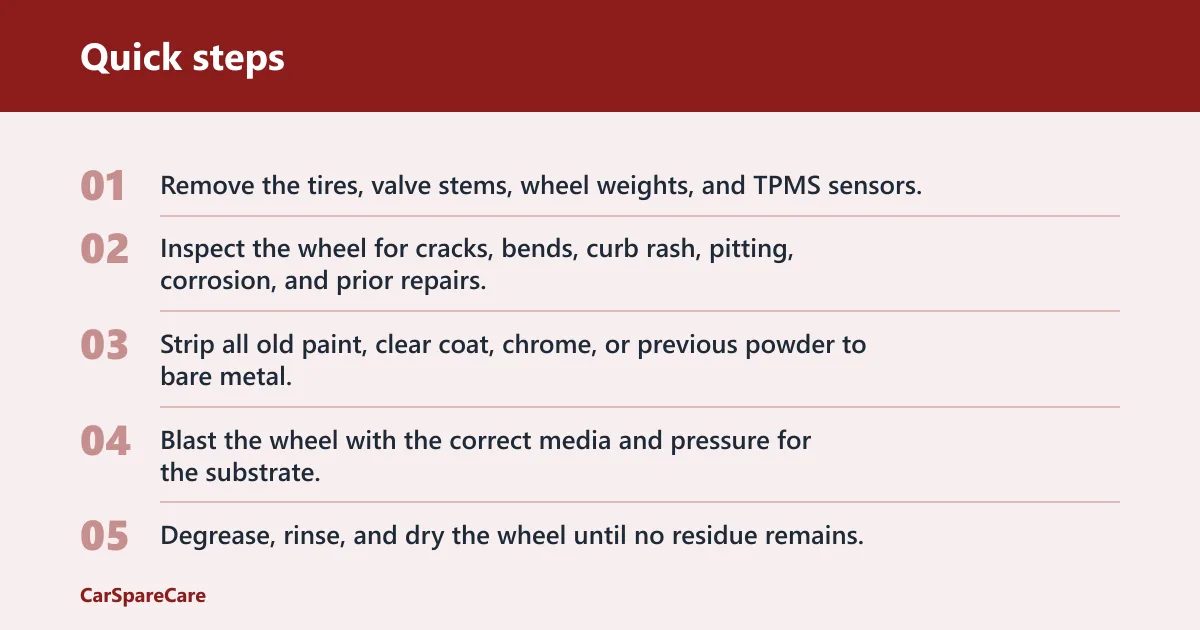
- Remove the tires, valve stems, wheel weights, and TPMS sensors.
- Inspect the wheel for cracks, bends, curb rash, pitting, corrosion, and prior repairs.
- Strip all old paint, clear coat, chrome, or previous powder to bare metal.
- Blast the wheel with the correct media and pressure for the substrate.
- Degrease, rinse, and dry the wheel until no residue remains.
- Pre-bake cast aluminum wheels to vent trapped gases before coating.
- Mask the hub bore, lug nut seats, valve hole, and any sealing or threaded surface.
Wheels go into a curing oven at roughly 400°F, so tires must come off first. Valve stems, wheel weights, and TPMS sensors should come off before coating. If a wheel carries sealant residue or silicone dressing, clean that off before blasting; those contaminants often cause adhesion loss or fisheyes later.
Cast aluminum often needs a pre-bake because porous castings can release trapped gases during cure. A common schedule is 20 to 30 minutes before powder application, long enough to drive out gas without starting the actual cure cycle. That step reduces bubbles and pinholes after the powder flows out.
Say your 18-inch cast wheel has heavy brake dust inside the barrel and a glossy black finish outside. If you strip the coating but leave dust in the spoke pockets, the barrel may still outgas or contaminate the powder film. Clean both sides, not just the face.
Can you powder coat over old paint or chrome?
No. Old coatings, factory paint, clear coat, chrome, and previous powder jobs should be stripped off before coating. Powder needs a clean, stable base. Leave the old layer in place, and heat can break it down and lift the new finish with it.
When stripping is mandatory
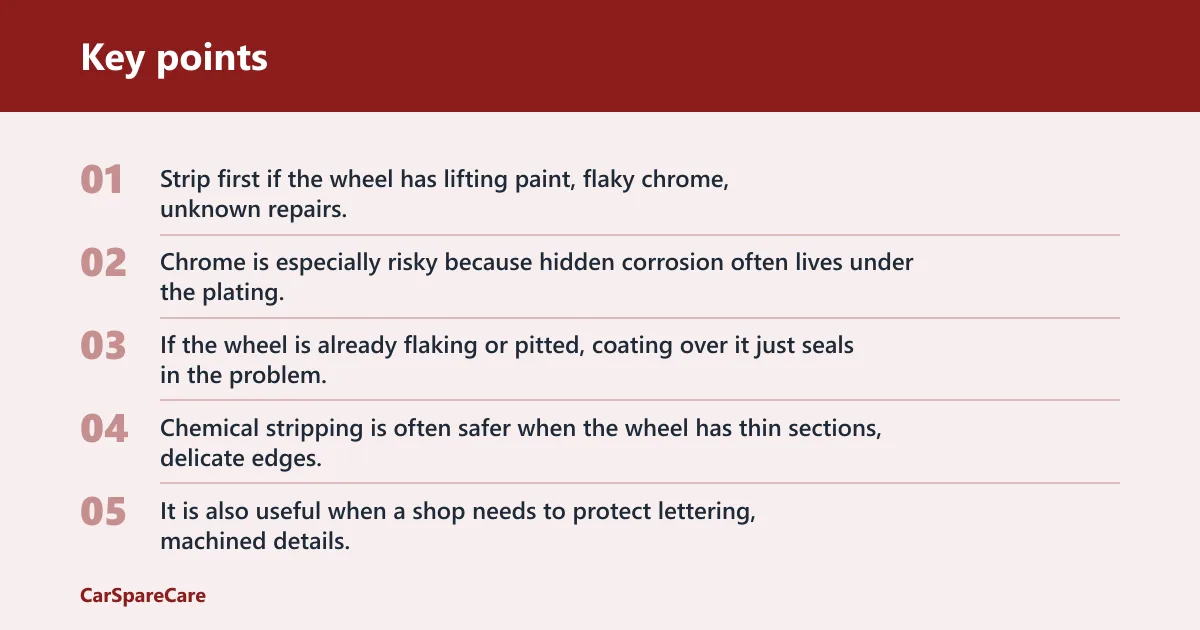
Strip first if the wheel has lifting paint, flaky chrome, unknown repairs, corrosion under the finish, or multiple coating layers. Chrome is especially risky because hidden corrosion often lives under the plating. If the wheel is already flaking or pitted, coating over it just seals in the problem.
When chemical stripping is safer than blasting
Chemical stripping is often safer when the wheel has thin sections, delicate edges, or a finish stack that would take too much base metal off during blasting. It is also useful when a shop needs to protect lettering, machined details, or sharp styling lines. Any stripped wheel still needs a final clean and dry cycle.
Why chrome often needs special removal or rejection
Chrome can hide corrosion, poor prior repairs, and adhesion failure beneath the surface. If removal exposes pitting, deep corrosion, or cracking, the wheel may need repair or rejection before coating. A chrome surface that looks smooth is not enough by itself.
How should you handle aluminum wheels?
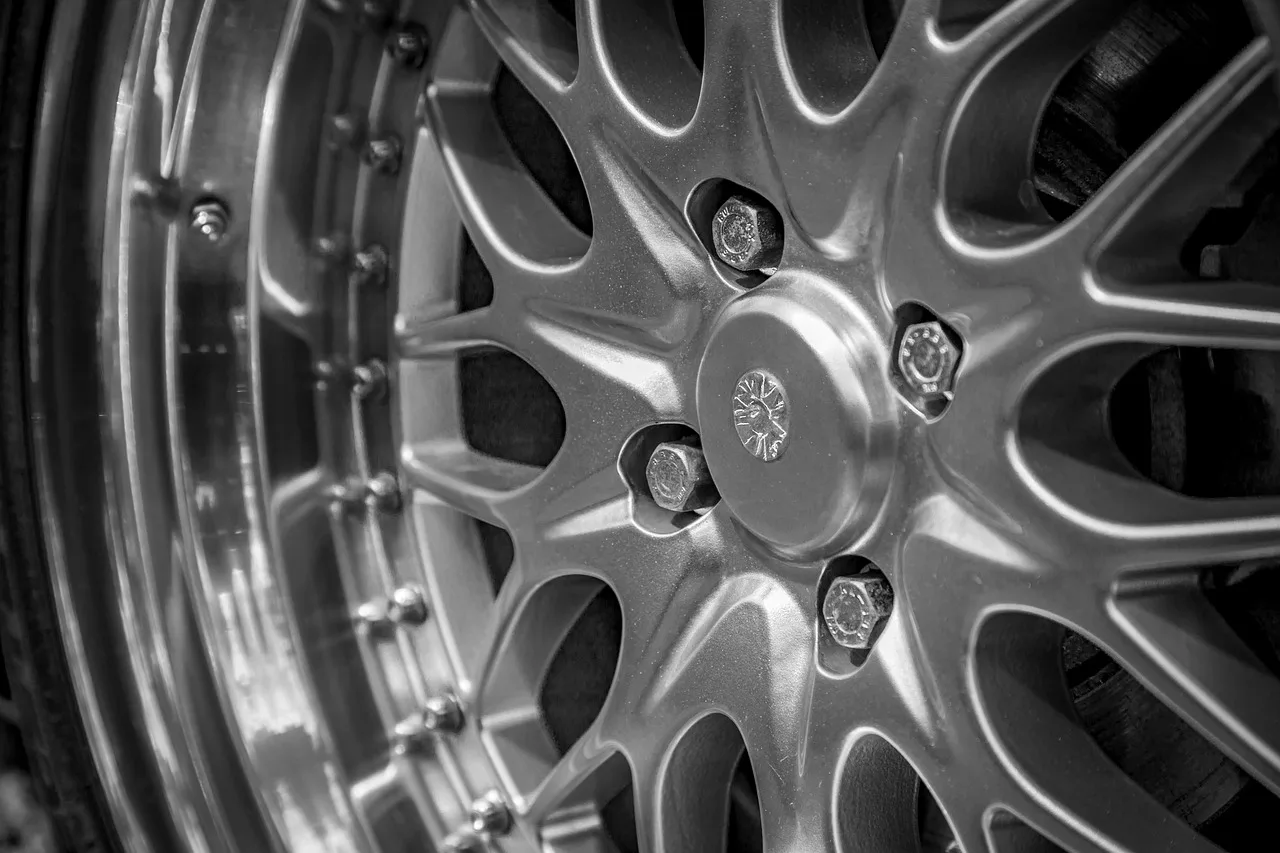
Aluminum wheels need controlled blasting, careful cleaning, and a close look for porosity or damage before coating. A published guide specifies aluminum oxide at 60 to 80 grit and moderate blasting pressure of 40-60 PSI for aluminum wheels. That combination cuts the surface without chewing up soft metal.
Media choice and pressure limits for aluminum
Use aluminum oxide when the goal is a consistent profile on aluminum, then keep pressure moderate. Too much pressure can leave heavy gouging or expose defects that should have been repaired before blasting. Forged aluminum usually tolerates refinishing differently than cast aluminum, so inspect the substrate before choosing media and pressure.
What damage means repair before coating
Cracks, bent areas, serious curb rash, deep pitting, and structural corrosion should be repaired before coating, not hidden under powder. Cosmetic rash on a noncritical edge may be repairable, but damage near bead seats, lug seats, spokes, or mounting surfaces deserves more caution. If the wheel is previously welded, inspect the weld quality before any refinish work.
Picture a forged 19-inch wheel with a shallow curb scrape on one outer lip and no bend. That is usually a cosmetic repair candidate. If the same wheel also has a crack running into a spoke base, it moves into structural territory and should not go forward as a simple refinish job.
How do you prep aluminum wheels for powder coating?
Start by removing the finish completely, then blast with a media and pressure that suit aluminum, then clean and dry the wheel before masking. Cast aluminum gets special attention because it can outgas during cure. If the wheel has porosity, brake dust saturation, or old sealant, those issues need to be removed before coating.
For aluminum wheels, a common prep order is strip, blast, clean, dry, pre-bake if cast, then mask. Wheel-Tech says it strips old coating, sand blasts, repairs curb damage, then chemically cleans and etches alloy wheels. That sequence matters because each step removes a different failure source.
How do you prep chrome wheels for powder coating?
Chrome wheels need more caution than bare aluminum. The plating must usually come off completely before coating, because chrome often hides corrosion and adhesion failure beneath it. If the plating cannot be removed cleanly, or if stripping exposes damage, the wheel may be a poor candidate for powder coating.
After stripping, treat the wheel like any other bare substrate: inspect, clean, dry, blast if appropriate, then mask the fitment surfaces. Do not assume chrome behaves like bare metal simply because the outside looks intact.
What areas of a wheel should be masked before powder coating?
Mask any surface that controls fit, seal, or torque. The hub mounting surface, lug nut seats, valve stem hole, and any threaded or sealing area should stay free of powder. Powder on lug nut seats can affect torque readings and cause loosening over time.
Use high-temperature tape and plugs that fit tightly enough to survive blasting and cure. If the wheel is hub-centric, protect the hub bore so the wheel still centers the way it should. If the design has machined lips or special sealing faces, those may need masking too.
Common mistakes
Leaving brake dust, oil, or silicone on the wheel is a top cause of fish-eyes and adhesion loss. Clean every recess, then dry the wheel fully before coating. Moisture trapped in spoke pockets or the barrel can become a defect source in the oven.
Masking the wrong areas creates fitment problems. If powder gets on lug seats or hub surfaces, torque and centering can change. Do not coat damaged wheels as if the finish will fix them. Cracks, bends, and structural corrosion need repair or rejection first.
A common first-timer mistake is blasting a cast wheel aggressively to “make it clean.” That can leave a rough, overworked surface and still miss trapped gas in the casting. For cast aluminum, the safer path is controlled blasting, a pre-bake, and a clean mask-up before cure.
If the shop says the coating coverage looks thin in the spoke recesses or barrel, stop and correct it before cure. Add powder in a light, even pass, then recheck coverage before it goes into the oven. Once cured, thin spots are harder to correct without stripping and starting over.
Frequently asked questions
How do I prep rims for powder coating?
Remove the tires, weights, valve stems, and TPMS sensors, strip the finish to bare metal, blast with suitable media, clean and dry the wheel, then mask the hub bore and lug seats. The wheel should be free of oil, brake dust, silicone, and corrosion before coating starts.
Do I need to remove tires before powder coating wheels?
Yes. Wheels go into a curing oven at roughly 400°F, so tires must be removed first. Leaving a tire mounted is not compatible with the cure cycle and risks damage to the tire, the wheel, and the finish process.
Do wheel weights and TPMS sensors need to come off?
Yes. Valve stems, wheel weights, and TPMS sensors should come off before coating. That keeps them out of the oven, avoids contamination during blasting and cleaning, and prevents heat damage or masking problems later.
How do I fix curb rash before powder coating?
Minor cosmetic rash can often be sanded or filled with an approved wheel repair method, then re-blasted and inspected. Cracks, deep gouges, or damage near the bead seat or spoke base should be treated as structural concerns and handled by a qualified repair path before coating.
Do I need to outgas cast aluminum wheels before powder coating?
Yes, cast aluminum wheels are often pre-baked for 20 to 30 minutes before powder application. The purpose is to drive out trapped gases before the actual cure cycle, which helps reduce bubbles and pinholes in the finished coating.

Hi, I’m Melvin, an automobile engineer with extensive experience in automobile equipment. I currently work for a local automobile firm, where I specialize in the car parts industry. I’ve had the opportunity to collaborate with seasoned inspectors, gaining invaluable hands-on experience that goes beyond just theory.
My passion for automotive care started at a young age, which led me to create CarSpareCare. Through CarSpareCare, I share the knowledge and skills I’ve acquired over the years to help others navigate the world of car maintenance and repairs.
My goal is to provide practical tutorials, essential safety advice, and the latest industry insights so that anyone—whether a beginner or an expert—can confidently tackle their automotive projects.