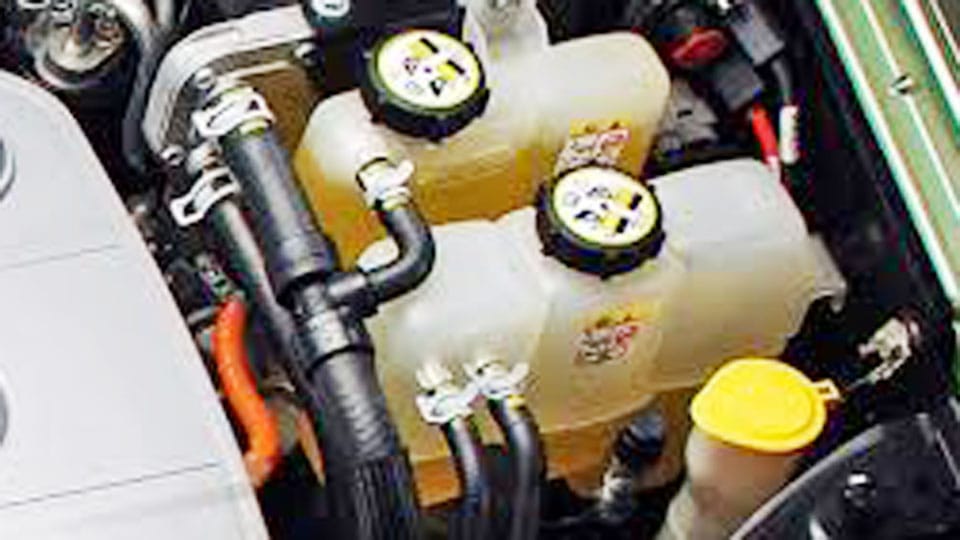
Your car is overheating, but you checked the coolant and it’s full. So what’s going on? A full coolant reservoir doesn’t guarantee the cooling system is working correctly — several components can fail and cause overheating even when coolant levels look fine.
This guide explains every reason a car overheats with full coolant, how to diagnose each cause, and what you’ll pay to fix it.
Why Your Car Overheats Even With Full Coolant
1. Faulty Thermostat (Most Common)
The thermostat regulates coolant flow between the engine and radiator. When it sticks in the closed position, coolant stays trapped in the engine and can’t reach the radiator to cool down — even though the reservoir is full.
Signs: Temperature gauge rises quickly after startup, heater suddenly blows cold air, or temperature fluctuates erratically.
Fix cost: $150–$300 including labor. One of the simpler cooling system repairs.
2. Failing Water Pump
The water pump circulates coolant through the engine and radiator. A failing pump moves coolant too slowly — or not at all. The coolant sits and absorbs heat without being cooled.
Signs: Coolant leak near the front-center of the engine, whining noise from the pump, overheating at idle but normal temperature at highway speed (airflow through the radiator helps compensate).
Fix cost: $300–$750. Often replaced alongside the timing belt to save on labor.
3. Clogged Radiator
Mineral deposits, old coolant sludge, and rust can partially or fully block radiator passages. Even with a full coolant system, restricted flow means the radiator can’t transfer enough heat to the outside air.
Signs: Gradual overheating that worsens over months, visible discoloration or debris in the coolant, overheating in stop-and-go traffic worse than highway.
Fix cost: Radiator flush $100–$150; radiator replacement $300–$900.
4. Air Pocket in the Cooling System
Air pockets (airlocks) trapped in the cooling system prevent coolant from circulating properly. This commonly happens after a coolant flush, hose replacement, or any cooling system repair if the system wasn’t bled correctly.
Signs: Heater blows cold air despite full coolant, temperature gauge rises then drops erratically, gurgling sounds from the dashboard.
Fix: Bleed the cooling system by running the engine with the radiator cap off until the thermostat opens and coolant circulates freely.

5. Broken Radiator Fan
Electric cooling fans pull air through the radiator when the car is idling or at low speed. A broken fan motor or blown fuse means the radiator doesn’t get airflow at idle — causing overheating in traffic even though highway driving is fine.
Test: With the engine hot and AC on, look under the hood — the radiator fan(s) should be spinning. If not, check the fuse first, then the fan motor.
6. Blown Head Gasket
The head gasket seals the engine block and cylinder head. When it fails, combustion gases enter the cooling system, creating air pockets and pressure that push coolant out. The coolant level may look full initially but drops over time.
Signs: White smoke from exhaust, milky or foamy oil on dipstick, repeated overheating, bubbles in the coolant reservoir.
Fix cost: $1,500–$4,000. This is the most expensive cooling system failure — avoid it by addressing overheating early.
What to Do Right Now if Your Car Is Overheating
- Pull over safely and turn off the engine immediately
- Wait 30 minutes before opening anything under the hood
- Never open the radiator cap when the engine is hot — boiling coolant will spray out
- Check for coolant puddles under the car
- Check if the radiator fan was running when the engine was hot
- Call a mechanic if you’re not sure — driving further risks a blown head gasket
According to AAA, cooling system failures are among the top causes of roadside breakdowns in summer months. Also read our guide on how driving habits affect engine temperature to understand how to minimize cooling system stress.
Frequently Asked Questions
Why is my car overheating if the coolant is full?
Common causes include a faulty thermostat, a failing water pump, a clogged radiator, air pockets in the cooling system, a broken radiator fan, or a blown head gasket. Full coolant doesn’t mean the system is functioning correctly.
What’s the first thing to check when a car overheats?
Pull over safely if the gauge is in the red zone. Check coolant level, look for leaks under the car, and check if the radiator fan was running when the engine was hot. Never open the radiator cap when hot.
Can a thermostat cause overheating with full coolant?
Yes. A thermostat stuck closed prevents coolant from reaching the radiator even when the reservoir is full. Replacement costs $150–$300.
How do I know if my head gasket is blown?
Signs include white smoke from exhaust, milky oil on the dipstick, coolant loss without visible leaks, and repeated overheating. A block test from a mechanic confirms it.
How long can I drive an overheating car?
Stop immediately when the temperature gauge hits the red zone. Even a few minutes of overheating can warp the cylinder head or blow the head gasket — repairs costing $1,500–$4,000.

Hi, I’m Melvin, an automobile engineer with extensive experience in automobile equipment. I currently work for a local automobile firm, where I specialize in the car parts industry. I’ve had the opportunity to collaborate with seasoned inspectors, gaining invaluable hands-on experience that goes beyond just theory.
My passion for automotive care started at a young age, which led me to create CarSpareCare. Through CarSpareCare, I share the knowledge and skills I’ve acquired over the years to help others navigate the world of car maintenance and repairs.
My goal is to provide practical tutorials, essential safety advice, and the latest industry insights so that anyone—whether a beginner or an expert—can confidently tackle their automotive projects.