

Bolded Quick Summary:
Yes, car glass can break on its own due to various factors like extreme temperature changes, manufacturing defects, or hidden damage. While impacts are the most common cause, understanding these less obvious reasons will help you protect your vehicle and avoid costly surprises.
Many car owners believe that glass only shatters when something hits it directly. You might be surprised to learn that car windows can, indeed, break without any apparent external force. This can be a puzzling and even alarming experience, leaving you wondering what could have caused it. Was it a tiny rock you didn’t see, or is there another hidden culprit at play?
This guide will walk you through the common and not-so-common reasons why your car’s glass might break unexpectedly. We’ll break down the science behind it in easy-to-understand terms, covering everything from temperature shifts to manufacturing flaws. By the end, you’ll be better equipped to understand what happened and how to prevent it in the future. Let’s get started!
Understanding How Car Glass Works
Before we dive into why car glass might break on its own, it’s helpful to understand what makes it so special. Most car side and rear windows are made of tempered glass. This is different from the glass used in your home windows. When tempered glass breaks, it shatters into many small, relatively harmless pieces, rather than large, sharp shards. This is a crucial safety feature designed to minimize injury in an accident.
The front windshield is typically made of laminated glass. This consists of two layers of glass with a thin layer of plastic (polyvinyl butyral, or PVB) sandwiched in between. If laminated glass cracks, the plastic layer holds most of the pieces together, preventing them from flying everywhere. This is why windshields often crack in a web-like pattern but remain mostly intact.
Why Tempered Glass is Used for Side and Rear Windows
The primary reason for using tempered glass in side and rear windows is safety. Imagine being involved in a collision where a side window shatters. If it broke into large, sharp pieces, the occupants could suffer serious cuts. Tempered glass, also known as safety glass, is designed to break into small, granular pieces that are much less likely to cause severe injury. This is achieved through a special heating and cooling process during manufacturing.
Can Car Glass Break On Its Own? The Common Culprits
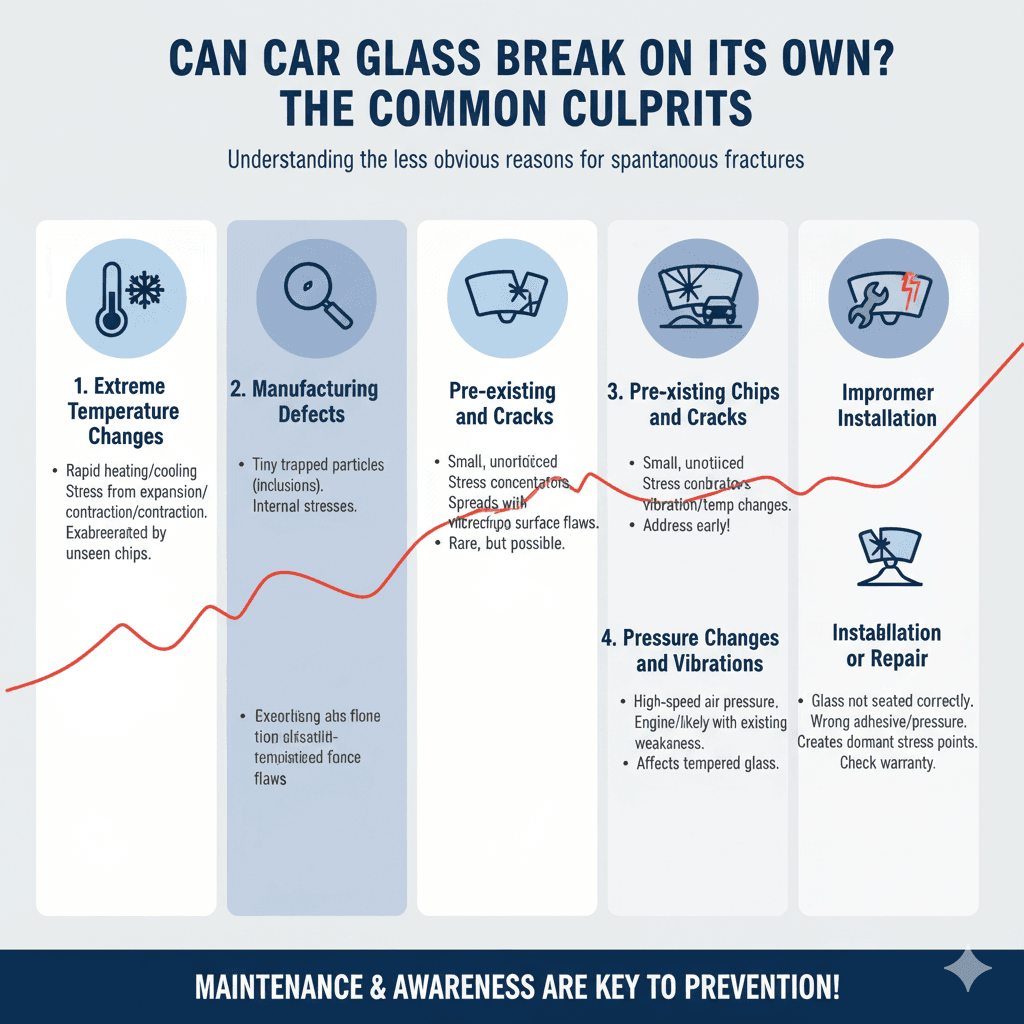
While a direct impact is the most frequent reason for car glass to break, several other factors can cause it to fracture or shatter spontaneously. These might not be as obvious, but they are real and can affect any vehicle. Understanding these allows for informed decisions about maintenance and repair.
1. Extreme Temperature Changes
One of the most common causes of car glass breaking on its own is a rapid or extreme change in temperature. Glass expands when it’s hot and contracts when it’s cold. If one part of the glass heats up or cools down much faster than another, it creates stress within the material. Over time, this stress can build up. If the stress becomes too great, it can cause the glass to crack or shatter, even without any physical impact.
Think about a very cold morning. You might spray hot water on an iced-over window to clear it quickly. The sudden heat from the water can cause the cold glass to expand rapidly, leading to a crack. Similarly, leaving a car in direct sunlight on a blazing hot day can heat the glass significantly. If a small, unseen chip or scratch is present, the added stress from the heat can cause it to spread into a larger crack.
This thermal stress is more likely to affect glass that already has minor imperfections. These imperfections act as weak points where stress can concentrate. The expansion and contraction cycle then puts pressure on these weak points until they fail.
2. Manufacturing Defects
Believe it or not, sometimes car glass can break on its own because of flaws that occurred during the manufacturing process. These defects are usually very small and might not be visible to the naked eye. They can include things like:
- Inclusions: Tiny foreign particles trapped within the glass.
- Internal stresses: Imbalances created during rapid cooling (quenching) of tempered glass.
- Surface imperfections: Microscopic scratches or pits on the glass’s surface.
These defects are rare, especially with modern manufacturing standards, but they can still happen. When they do, they create inherent weak spots. Environmental factors, like temperature fluctuations or even vibrations from driving, can then exacerbate these weaknesses, leading to spontaneous breakage. Most car manufacturers and glass suppliers have strict quality control, but human error or material issues can slip through. If your glass breaks without any apparent cause and you suspect a defect, it’s worth checking if your vehicle is still under warranty.
3. Pre-existing Chips and Cracks
This is probably the most deceptive reason for glass to break “on its own.” You might not have noticed a tiny chip or a small crack that occurred previously. Perhaps it was from a small pebble kicked up by another vehicle on the highway, or even a minor impact that didn’t seem significant at the time. These small imperfections act as stress concentrators.
When these chips or cracks are present, the glass is no longer structurally uniform. Any stress applied to the glass – whether from temperature changes, vibrations, or even the slight flexing of the car’s frame as you drive over bumps – can cause the damage to spread. A tiny chip can quickly turn into a large crack that spans the entire window.
It’s crucial to address any chips or cracks in your car’s glass as soon as you notice them. Even small ones can compromise the structural integrity of the window and can spread over time, leading to more significant problems and potentially costing more to repair.
4. Pressure Changes and Vibrations
While less common, significant pressure changes or persistent vibrations can also contribute to glass failure, especially if the glass has pre-existing weaknesses. Imagine the pressure changes that occur when driving at high speeds, especially with the windows slightly open or if there’s a sunroof. The airflow over the car creates different pressure zones.
Similarly, if your car has been vibrating excessively due to engine issues, suspension problems, or even a poorly installed window, this constant jostling can stress the glass. The vibrations can exacerbate existing micro-fractures, causing a crack to form or spread over time. This is more likely to happen with tempered glass, which is brittle, than with laminated glass, which is more flexible.
Consider the effects of driving on rough roads. While most vehicles are built to handle this, constant, severe jolting can put stress on all components, including the glass. If a window seal is compromised or the window isn’t seated perfectly, it can lead to undue pressure on the glass itself.
5. Improper Installation or Repair
If a car window has been replaced or repaired previously, the installation process itself could be a hidden cause of future breakage. If the glass wasn’t properly seated, if the wrong adhesive was used, or if there was too much clamping pressure during installation, it can create stress points in the glass. Think of it like fitting a piece of glass into a frame that’s slightly too small – it’s under constant tension.
This stress can lie dormant for a while, but it can eventually lead to the glass cracking or breaking, especially when combined with other factors like temperature changes or vibrations. If you’ve had a window replaced recently and it breaks unexpectedly, it’s worth discussing with the auto glass shop that performed the work.
Temperature Stress Explained: Expansion and Contraction
Let’s delve a bit deeper into how temperature affects glass. Glass doesn’t expand or contract uniformly. Different parts of the glass can experience different temperatures simultaneously, especially when there’s a sharp gradient or a sudden change.
A classic example is the “tea cup effect,” where pouring hot liquid into a cold ceramic or glass cup can cause the cup to crack. The inner surface heats up and expands rapidly, while the outer surface remains cold and contracted. This creates immense stress, often leading to a crack radiating from the rim. The same principle applies to car windows, although the glass is designed to withstand more stress.
Here’s a breakdown:
- Heating: When glass heats up, its molecules move faster, and the material expands.
- Cooling: When glass cools down, its molecules slow down, and the material contracts.
- Stress: If one part of the glass expands or contracts significantly more or faster than an adjacent part, internal stresses are generated.
- Fracture: If these internal stresses exceed the tensile strength of the glass, it will fracture.
The presence of a chip, scratch, or manufacturing defect significantly lowers the point at which this fracture will occur. These imperfections act as failure initiation sites where the cracks can start and propagate easily.
Table: Factors Contributing to Spontaneous Glass Breakage
To help visualize the causes, here’s a table outlining the main factors that can lead to car glass breaking on its own.
| Factor | Explanation | Likelihood of Causing Breakage | Common Scenarios |
|---|---|---|---|
| Extreme Temperature Fluctuations | Rapid expansion/contraction due to drastic heat or cold. | High | Bright sun on cold day, hot water on iced window, extreme weather. |
| Pre-existing Chips or Cracks | Small imperfections act as stress points. | Very High | Stone chips from roads, minor impacts not noticed. |
| Manufacturing Defects | Internal stresses or flaws from the production process. | Low (but possible) | Rare inclusions, improper tempering process. |
| Vibrations and Road Stress | Constant shaking from poor roads or vehicle issues. | Medium (especially with other factors) | Rough terrain, engine/suspension problems, aftermarket modifications impacting frame. |
| Pressure Changes | Aerodynamic forces at high speeds or significant internal pressure shifts. | Low (especially with intact glass) | High-speed driving with open windows, strong wind gusts. |
| Improper Installation/Repair | Stress introduced during previous glass work. | Medium | Misaligned window fit, too much adhesive or pressure applied. |
Understanding these factors helps you appreciate the delicate balance of forces at play with automotive glass. It’s not as simple as just resisting impacts!
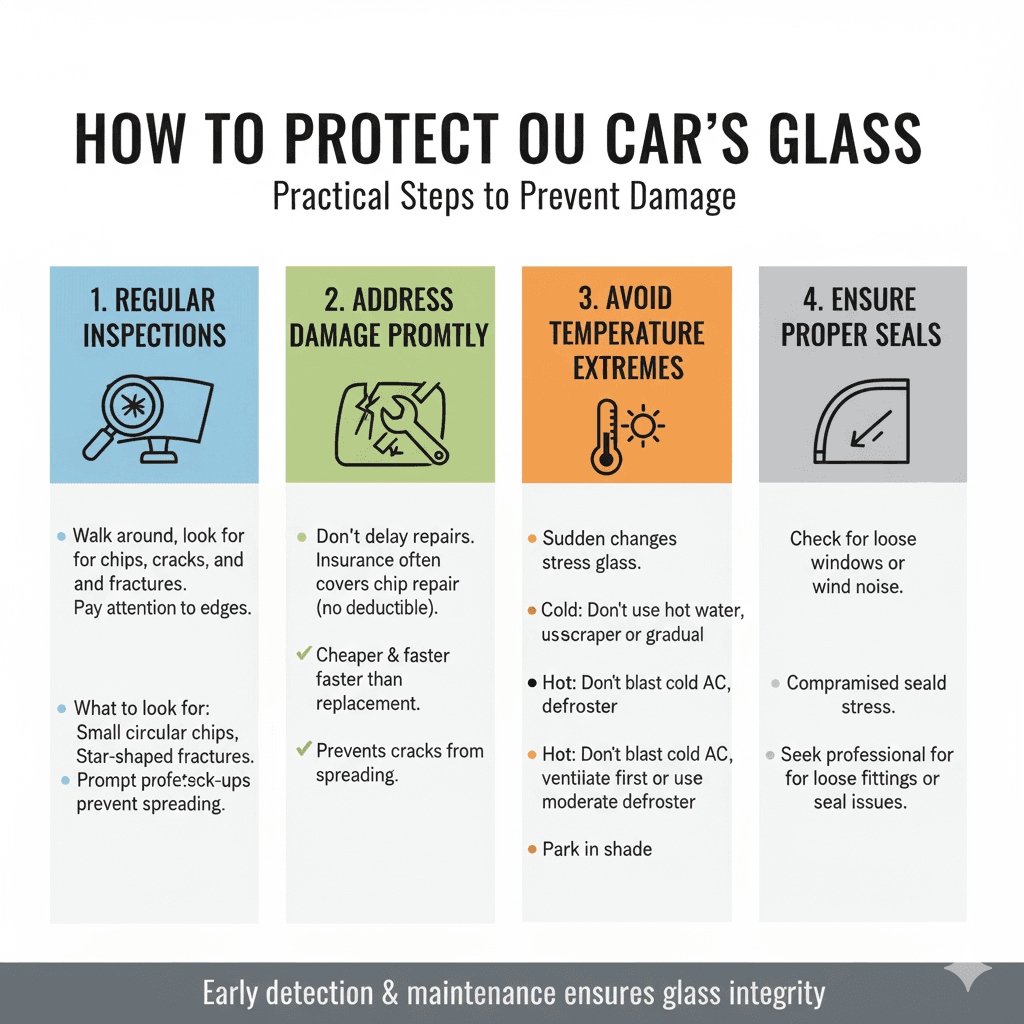
How to Protect Your Car’s Glass
While you can’t control every factor, there are practical steps you can take to minimize the risk of your car’s glass breaking on its own.
Regular Inspections are Key
Make it a habit to walk around your car and visually inspect all the glass surfaces. Look for any small chips, cracks, or even hairline fractures. Pay close attention to the edges and corners of windows, as these are common starting points for damage.
What to look for:
- Small circular chips (like a bug hitting the windshield).
- Star-shaped fractures.
- Long, thin cracks.
- Any imperfection that seems new.
You can often feel these imperfections with your fingertip. If you find anything, it’s best to get it checked out by a professional, even if it seems minor. Early detection can save you a lot of trouble and money.
Address Damage Promptly
As soon as you discover a chip or crack, don’t delay getting it repaired. Many insurance policies cover windshield repair at no deductible. Repairing a small chip is far less expensive and time-consuming than replacing an entire window. Plus, a repaired chip won’t spread, preventing the need for a full replacement later.
For more information on the importance of prompt repair, especially for windshields, you can refer to resources at the Automotive Resources which offer insights into vehicle safety. While this specific link is from a Canadian automotive site, the principles of glass integrity apply globally.
Be Mindful of Temperature Extremes
Avoid sudden, drastic temperature changes on your glass. Here are some tips:
- Cold Weather: Don’t use extremely hot water to de-ice your windows. Use an ice scraper appropriate for glass or warming it up gradually with the car’s defroster.
- Hot Weather: If your car has been sitting in intense sun, avoid blasting the air conditioning on the windshield immediately. Let the interior air out a bit first, or use the defroster vents on a moderate setting.
- Parking: If possible, park your car in a shaded area during extreme hot or cold weather to minimize direct exposure.
These small actions can significantly reduce the thermal stress on your car’s windows.
Ensure Proper Seating and Seals
If you ever notice that a window seems loose, or that there’s an unusual amount of wind noise, it might indicate an issue with the window seal or how the glass is seated. A compromised seal can allow water and air to seep in, and it might also mean the glass isn’t properly supported. This can put extra stress on the glass over time.
If you suspect a problem with a window fitting or seal, especially after a repair, consult a professional auto glass technician. They can ensure everything is sealed correctly and the glass is seated firmly.
When to Call a Professional
For most drivers, understanding these potential causes is enough to know when to be concerned. However, knowing when to seek professional help is crucial for safety and to prevent further damage.
Signs You Need Professional Help Immediately:
- Large Cracks: Any crack that is longer than a few inches, or one that significantly obstructs your vision.
- Spiderweb Cracks: Cracks that radiate from a central point, often indicating a more serious impact or stress point.
- Edge Cracks: Cracks that start at the very edge of the glass. These are more likely to spread quickly.
- Multiple Chips: If your glass has several chips or cracks.
- Suspected Manufacturing Defect: If a window breaks with no apparent cause and you suspect a defect, a professional can inspect it.
- After an Accident: Always have your glass checked by a professional after any collision, no matter how minor.
A professional auto glass technician has the expertise and tools to diagnose the problem accurately and recommend the best course of action, whether it’s a repair or a full replacement. They also understand the importance of structural integrity, especially for windshields, which play a vital role in your car’s overall safety system.
DIY vs. Professional Repair: What’s Best?
When it comes to car glass, it’s usually best to leave repairs and replacements to the professionals. While some very minor chips might seem like they could be a DIY project, the specialized equipment and knowledge required for a proper, safe repair mean that professional service is almost always the recommended route.
Here’s why:
- Safety: Windshields are a critical structural component of your vehicle, especially in rollovers. Improper repair or replacement can compromise this safety feature.
- Quality of Repair: Professional technicians use specialized resins for chip repair and advanced techniques for installation to ensure a strong, clear, and long-lasting fix.
- Tools and Materials: They have access to precise tools for cleaning, injecting resin, and curing, as well as the correct adhesives and glass types.
- Warranty: Reputable auto glass shops often provide warranties on their work, giving you peace of mind.
While attempting a simple fix might seem cost-effective initially, a poor repair can lead to further damage, compromise safety, and ultimately cost more to rectify.
FAQ Section
Here are some common questions car owners have about their glass breaking unexpectedly.
Q1: Can a car window break from sound?
A: While the idea of sound waves shattering glass is a popular myth, normal sound frequencies from music or traffic are not strong enough to break car glass. Only very specific, extremely high-intensity sound waves at resonant frequencies could potentially cause damage, which is highly unlikely in everyday driving scenarios.
Q2: Is it safe to drive with a cracked window?
A: It depends on the size and location of the crack. Small chips or short cracks, especially on side or rear windows, might be drivable for a short period, but it’s not recommended. Larger cracks, or cracks that obstruct your vision, compromise the structural integrity of the glass and the vehicle, making it unsafe to drive. It’s best to get it repaired or replaced as soon as possible.
Q3: How long does a car glass repair take?
A: A typical chip repair for a windshield usually takes about 30 minutes to an hour. The resin needs time to cure, and the technician will ensure the repair is smooth and durable. Windshield replacements generally take longer, often around 1-2 hours for the installation, with a recommended curing time before driving.

Hi, I’m Melvin, an automobile engineer with extensive experience in automobile equipment. I currently work for a local automobile firm, where I specialize in the car parts industry. I’ve had the opportunity to collaborate with seasoned inspectors, gaining invaluable hands-on experience that goes beyond just theory.
My passion for automotive care started at a young age, which led me to create CarSpareCare. Through CarSpareCare, I share the knowledge and skills I’ve acquired over the years to help others navigate the world of car maintenance and repairs.
My goal is to provide practical tutorials, essential safety advice, and the latest industry insights so that anyone—whether a beginner or an expert—can confidently tackle their automotive projects.

