

Can you add ventilated seats to a car? Yes, you absolutely can add ventilated seats to your car! While it’s not a simple DIY project for everyone, upgrade kits are available that can transform your regular seats into cooling, comfortable powerhouses. We’ll guide you through what’s involved, the different options, and what to consider.
Imagine this: it’s a sweltering summer day, the sun is beating down, and you’re stuck in traffic. Your car’s AC is blasting, but you’re still feeling that sticky heat on your back and legs. Wouldn’t it be amazing if your seats could actively cool you down? Many cars today come with ventilated seats, but what if yours didn’t? You might be wondering if it’s possible to add this luxurious feature to your existing vehicle. The good news is, it is! While it might sound complicated, understanding the process, the costs, and the different ways to achieve it can make this upgrade much more achievable than you think. Let’s dive into how you can bring the comfort of ventilated seats to your car.
Understanding Ventilated Seats: How Do They Work?
Before we get into if and how you can add them, let’s quickly understand what makes ventilated seats special. Unlike standard seats that might have perforations, true ventilated seats have a system designed to actively move air. This system typically involves:
- Fans: Small, quiet fans are integrated into the seat cushion and seatback.
- Airflow Channels: These fans draw air from the cabin or push it through the seat’s foam and upholstery.
- Perforated Upholstery: The seat covers are perforated, allowing the conditioned air to reach your body.
The result is a gentle flow of air that helps to dissipate heat and moisture, keeping you significantly cooler and more comfortable, especially during hot weather. It’s a game-changer for anyone who sweats easily or lives in a warm climate.
Can You Add Ventilated Seats to a Car? The Options
The short answer is yes! There are a few primary ways you can achieve the goal of adding ventilated seats to a car that didn’t come with them from the factory. Each has its own set of considerations regarding cost, complexity, and effectiveness.
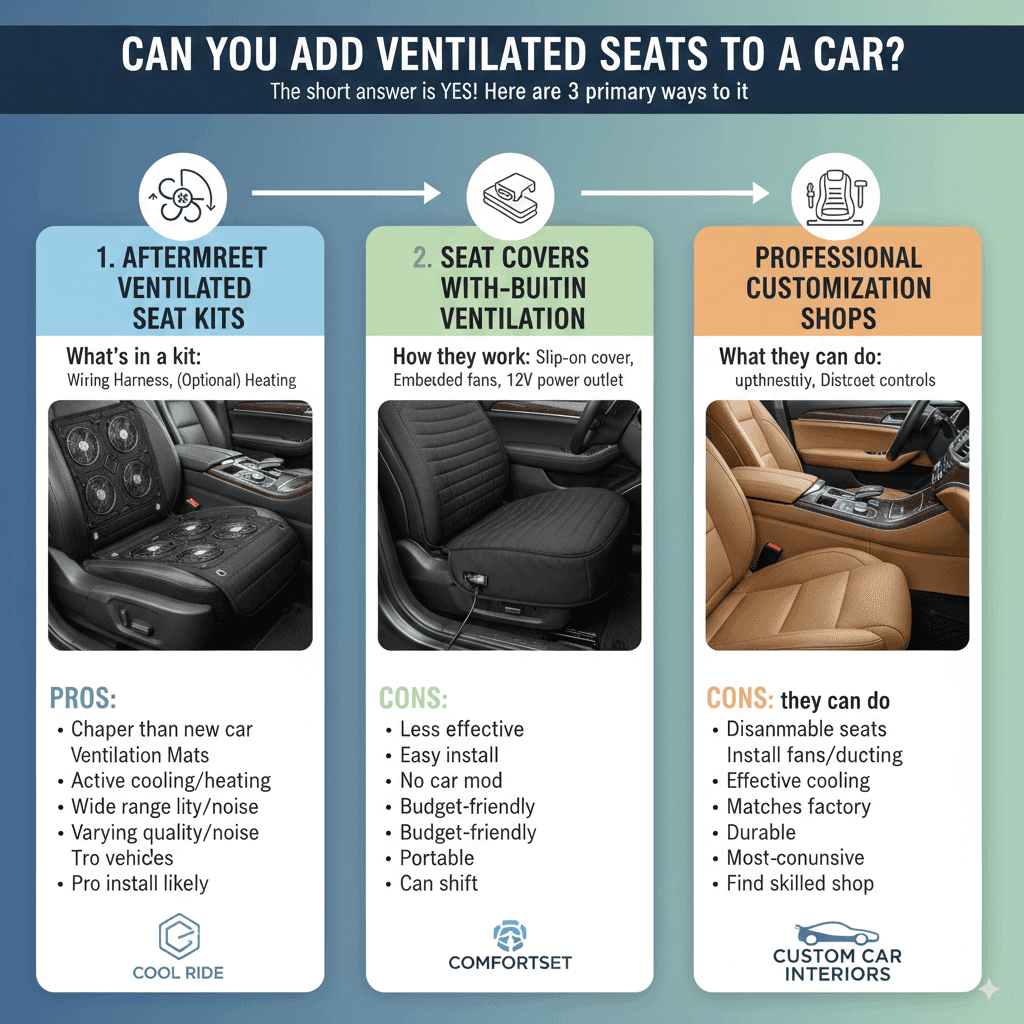
1. Aftermarket Ventilated Seat Kits
This is the most common and often the most direct way to add ventilation. These kits are designed to be installed into your existing seats. Think of them as a “retrofit” solution.
What’s typically in an aftermarket kit?
- Ventilation Mats: These are thin mats with integrated fans and airflow systems that are placed between your seat’s foam and upholstery.
- Wiring Harness: This connects the fans to your car’s power source, often through a cigarette lighter adapter or a more integrated fuse box connection.
- Switches/Controls: These allow you to turn the ventilation on/off and often adjust fan speed.
- (Optional) Heating Elements: Many kits also include heating elements, turning them into 3-season or even 4-season comfort solutions.
Pros:
- Can be significantly cheaper than buying a new car or having factory-installed options.
- Offers a direct way to achieve active cooling and sometimes heating.
- Available for a wide range of vehicle makes and models.
Cons:
- Installation can be complex and time-consuming, often requiring upholstery removal.
- Quality and fan noise can vary significantly between brands.
- May require professional installation if you’re not comfortable with automotive electronics or upholstery work.
Where to Find Them: You can find these kits from online automotive retailers, specialized aftermarket parts stores, and even some larger auto parts chains. Brands like Cool Ride, ComfortSet, and others offer various options. It’s always a good idea to check compatibility with your specific car model.
2. Seat Covers with Built-in Ventilation
A simpler and less invasive option is to use specialized seat covers that have their own ventilation system built-in. These are essentially aftermarket seat covers with integrated fans and power cords.
How they work:
- These covers slip over your existing seats.
- Fans are embedded within the cover material itself.
- They typically plug into your car’s 12V power outlet (cigarette lighter).
Pros:
- Extremely easy to install – just plug them in.
- No modification to your car’s interior or seats required.
- Generally the most budget-friendly option.
- Portable and can be moved between vehicles.
Cons:
- Less effective and less powerful cooling compared to integrated kits.
- May not offer the same level of comfort or even airflow distribution.
- Aesthetics can be a concern for some, as they are clearly add-on covers.
- Can sometimes shift around during driving.
Where to Find Them: These are readily available on major online shopping platforms like Amazon, eBay, and from many online auto accessory stores. Look for terms like “cooling seat cushion” or “ventilated car seat cover.”
3. Professional Customization/Upholstery Shops
For the ultimate, integrated look and feel, you can always turn to professional automotive upholstery shops. These experts can retrofit ventilation systems into your existing seats with a high degree of craftsmanship.
What they can do:
- Disassemble your car’s existing seats.
- Install high-quality fan and ducting systems.
- Reupholster the seats with perforated leather or fabric for optimal airflow.
- Integrate controls discreetly into your dashboard or center console.
Pros:
- The most professional and seamless installation.
- Highest potential for effective and customizable cooling.
- Can often match the look and feel of factory-installed options.
- Durable and reliable results.
Cons:
- By far the most expensive option.
- Requires leaving your car at a shop for an extended period.
- Finding a reputable and skilled shop is crucial.
When to Consider This: This is ideal if you’re restoring a classic car, have a high-end vehicle and want perfect integration, or if budget is less of a concern than the quality of the final product. You can search for “automotive upholstery shops” or “custom car interiors” in your local area.
Factors to Consider Before Adding Ventilated Seats
Before you jump into purchasing a kit or booking an appointment, there are several important factors to weigh. Making an informed decision will save you time, money, and potential frustration.
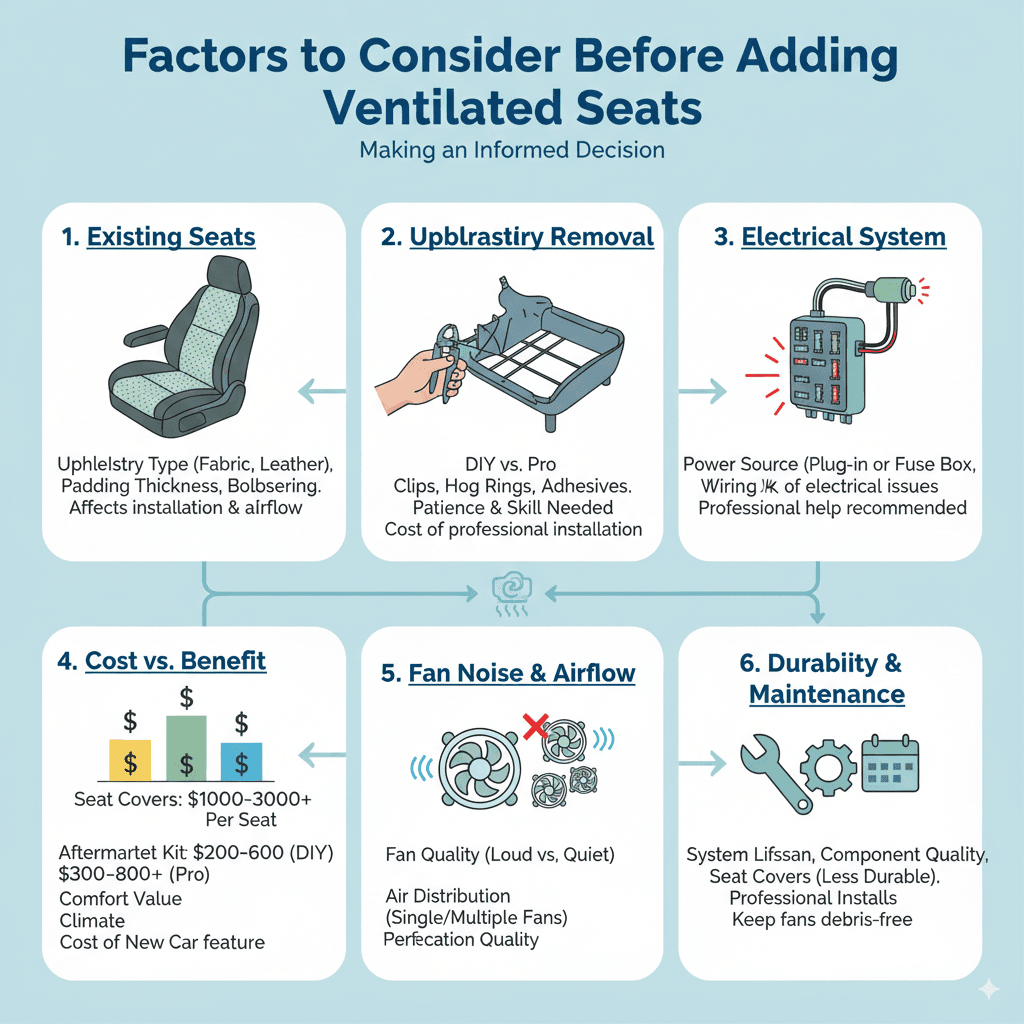
1. Your Car’s Existing Seats
The type of seats you have can influence the ease of installation and the effectiveness of the ventilation. Seats with very thick padding or complex bolstering might make it harder for air to circulate effectively. Leather seats, while luxurious, can sometimes trap more heat than breathable fabric seats if not properly managed by a ventilation system. Understanding your current upholstery material (fabric, leather, vinyl) is key.
2. Upholstery Removal and Reinstallation
For aftermarket kits (option 1), you’ll likely need to remove your car’s seat upholstery. This involves carefully undoing the fabric or leather from the seat frame. This can be tricky, as many modern seats use specialized clips, hog rings (metal rings used by upholsterers), or even adhesives. Putting it back together without wrinkles or damage requires patience and skill. If you’re not comfortable with this, factor in the cost of professional installation.
3. Electrical System and Installation
Adding fans and potentially heating elements means tapping into your car’s electrical system. Most kits will come with a plug-and-play option that uses a cigarette lighter adapter. This is the easiest but can be a bit messy with wires. For a cleaner look and more stable power, you might want to wire the system directly to the car’s fuse box. This is where professional help is often recommended, especially if you’re new to car electronics. Incorrect wiring can lead to blown fuses, or worse, electrical issues. Many DIYers find excellent guides on how to safely tap into circuits, such as this resource on how to properly use a fuse tap from AutoZone, which can be crucial for adding accessories.
4. Cost vs. Benefit
The cost can range dramatically:
| Option Type | Estimated Cost (Parts) | Estimated Cost (Professional Install) |
|---|---|---|
| Seat Covers (Plug-in) | $50 – $150 | N/A (DIY) |
| Aftermarket Kits (DIY Install) | $200 – $600 | $300 – $800+ (depending on complexity) |
| Professional Customization | N/A (labor and custom parts) | $1,000 – $3,000+ (per seat, depending on materials) |
Consider how much you value comfort. If you live in an extremely hot climate and drive frequently, the investment might be well worth it for long-term comfort and reducing sweat-induced discomfort. Compare this to the cost of a new car equipped with this feature.
5. Fan Noise and Airflow Quality
Not all fans are created equal. Cheaper kits might have noisier fans or less effective airflow. Reading reviews carefully and looking for kits that emphasize quiet operation and robust airflow is important. Some systems use multiple smaller fans for better air distribution, while others have one larger one. The quality of the perforations in the upholstery also plays a role; a cheap kit might have poorly done perforations that don’t allow air to escape well.
6. Durability and Maintenance
Think about how long you plan to keep the car and how well the system will hold up. Aftermarket kits can be durable, but they are an additional system that could potentially fail over time. Seat covers are generally less durable. Professional installations with quality components tend to be the most reliable but come at a higher initial cost. Maintenance typically involves ensuring fans are free of debris if accessible.
DIY Installation: A Step-by-Step Overview (for Aftermarket Kits)
If you’re feeling handy and decide to tackle an aftermarket kit yourself, here’s a general overview of the steps involved. Remember to always consult the specific instructions that come with your chosen kit, as they can vary.
Tools You Might Need:
- Screwdrivers (Phillips and flathead)
- Socket set and ratchet
- Trim removal tools (plastic pry tools to avoid scratching trim)
- Phillips head screwdriver with a magnetic tip (very helpful for small screws)
- Wire strippers and crimpers (if not using a plug-and-play harness)
- Heat shrink tubing or electrical tape
- Zip ties for wire management
- Optional: Hog ring pliers and hog rings (if your seat covers use them)
- Safety glasses and gloves
The Process:
- Disconnect Battery: For safety, always disconnect the negative terminal of your car battery. Wait at least 15-30 minutes before starting to allow any residual power to dissipate, especially if working near airbags.
- Remove Seat: In most cars, the seat can be removed from the car by unbolting its frame to the floor. Sometimes, you might need to tilt the seat forward or backward to access all the bolts.
- Remove Seat Upholstery: This is often the most challenging part. Look for where the upholstery attaches to the seat frame. This might involve plastic trim panels that snap off, metal clips, or hog rings that need to be cut or pried open. Carefully work your way around the seat, trying to minimize damage.
- Install Ventilation Mat: Once the foam is exposed, place the ventilation mat on top of the foam. Ensure it’s oriented correctly according to the kit’s instructions, and that any fan modules or wiring channels are positioned to not interfere with the seat’s structure or comfort.
- Route Wiring: Carefully route the wiring harness from the ventilation mat towards where you plan to connect it to power. Avoid pinch points, sharp edges, or areas where the wiring could interfere with seat mechanisms (like recline or height adjustments).
- Reinstall Upholstery: This is the reverse of removal. Carefully stretch the upholstery back over the seat and reattach it using hog rings, clips, or screws. This step requires patience to ensure a smooth, wrinkle-free finish. This is also a good time to consider if you need to make small holes for the perforations if the kit requires it.
- Reinstall Seat: Bolt the seat back into the car.
- Connect Power: Connect the wiring harness to your chosen power source. This could be a cigarette lighter adapter (simply plug it in) or hardwiring into the fuse box using a fuse tap. If hardwiring, locate an ignition-switched power source (meaning it only has power when the car is on). This prevents the fans from draining your battery when the car is off. For guidance on safe electrical connections, resources like those found on NIHTemp discuss the principles of automotive electronics and safe practices.
- Test: Reconnect the battery, turn on the car, and test the ventilation system. Ensure all fans are working and that the controls operate as expected.
Important Safety Note: If you are unsure about any part of the installation, especially the electrical connections or upholstery removal, it is always safer to seek professional help. Messing with vehicle electronics can be dangerous if not done correctly.
Maintaining Your New Ventilated Seats
Once installed, keeping your ventilated seats in good working order is relatively simple. Ensure the vents (perforations in your seat cover) are kept clear of debris, such as food crumbs or dirt, which can impede airflow. Periodically check the wiring connections to ensure they are secure. If the fans become unusually noisy, check for obstructions or consider if they are reaching the end of their lifespan. For basic cleaning, use automotive upholstery cleaners suitable for your seat material.
Frequently Asked Questions (FAQ)
Q1: Is it difficult to install ventilated seats myself?
A: It depends. For simple cooling seat covers that plug into a 12V outlet, it’s very easy – just plug and play! For aftermarket kits requiring upholstery removal and electrical wiring, it can be moderately to very difficult, often requiring patience, specific tools, and some automotive DIY experience. Professional installation is recommended if you’re not comfortable with these tasks.
Q2: How much does it cost to add ventilated seats?
A: It can range from around $50 for basic cooling seat covers to $150-$600 for aftermarket DIY kits. Professional installation of these kits can add another $300-$800+. Fully custom upholstery work with integrated ventilation can cost $1,000 to $3,000 or more per seat.
Q3: Will adding ventilated seats void my car’s warranty?
A: It depends on what you do and your warranty terms. Simple plug-in seat covers typically won’t affect your warranty. Modifying your car’s electrical system or seats with an aftermarket kit could potentially void warranty coverage for related components (like seat motors, airbags, or electrical systems) if a problem arises that can be directly traced to your modification. Always consult your vehicle’s warranty documentation.
Q4: How effective are aftermarket ventilated seats?
A: Effectiveness varies greatly by product quality. High-end aftermarket kits can provide very noticeable cooling, similar to factory options. Cheaper kits or simple seat covers offer a more subtle effect. Factors like fan power, airflow design, and upholstery material play a significant role.
Q5: Can I add ventilated seats to any car?
A: Generally, yes, you can add some form of ventilated seat feature to most cars. The complexity and effectiveness might vary based on the seat design and available space for mounting components. Factory-style integrated systems might be harder to achieve in older or more complex vehicle interiors.
Q6: Do ventilated seats use a lot of electricity?
A: Ventilated seats use significantly less power than heated seats. The fans are typically low-draw DC motors. A typical ventilated seat system usually draws around 1-3 amps, which is well within the capacity of most car’s accessory circuits. Plugging into the cigarette lighter is usually fine, but hardwiring to the fuse box is often preferred for cleaner installation and better power delivery

Hi, I’m Melvin, an automobile engineer with extensive experience in automobile equipment. I currently work for a local automobile firm, where I specialize in the car parts industry. I’ve had the opportunity to collaborate with seasoned inspectors, gaining invaluable hands-on experience that goes beyond just theory.
My passion for automotive care started at a young age, which led me to create CarSpareCare. Through CarSpareCare, I share the knowledge and skills I’ve acquired over the years to help others navigate the world of car maintenance and repairs.
My goal is to provide practical tutorials, essential safety advice, and the latest industry insights so that anyone—whether a beginner or an expert—can confidently tackle their automotive projects.

