

Reduce body roll in your car with simple checks and upgrades. This essential guide explains how to improve your car’s handling by addressing common causes like worn suspension parts and suggests easy ways to make turns feel flatter and safer.
Does your car lean a lot when you take turns? That’s called body roll, and it can make driving feel less secure and a bit wobbly. It’s a common thing, especially in taller vehicles or older cars. But don’t worry! Understanding and fixing body roll isn’t just for mechanics. It’s about feeling more in control and making your ride smoother and safer for everyone. We’re going to break down exactly what causes it and how you can tackle it, step by step. Get ready to make your car feel more stable and responsive!
What Exactly is Body Roll? Understanding the Lean
Body roll happens when your car’s suspension compresses slightly more on one side than the other during a turn. Imagine you’re walking and you lean into a curve – your body does something similar. In a car, this outward force pushes the body sideways, causing it to tilt towards the outside of the turn.
This lean is more noticeable on curves and turns because of centrifugal force. The faster you go, or the sharper the turn, the more this force pushes against your car. While some body roll is normal and designed into most cars for comfort, excessive roll can:
- Make the car feel unstable and less predictable.
- Reduce tire grip, potentially leading to less traction.
- Make passengers feel queasy.
- Affect steering response.
We want to find that sweet spot between a comfortable ride and a car that feels planted and responsive. Let’s dive into why it happens in the first place.
Common Culprits Behind Excessive Body Roll
Several factors can contribute to your car leaning more than you’d like. Most of them have to do with the parts that keep your wheels connected to the road and manage how the car’s weight shifts.
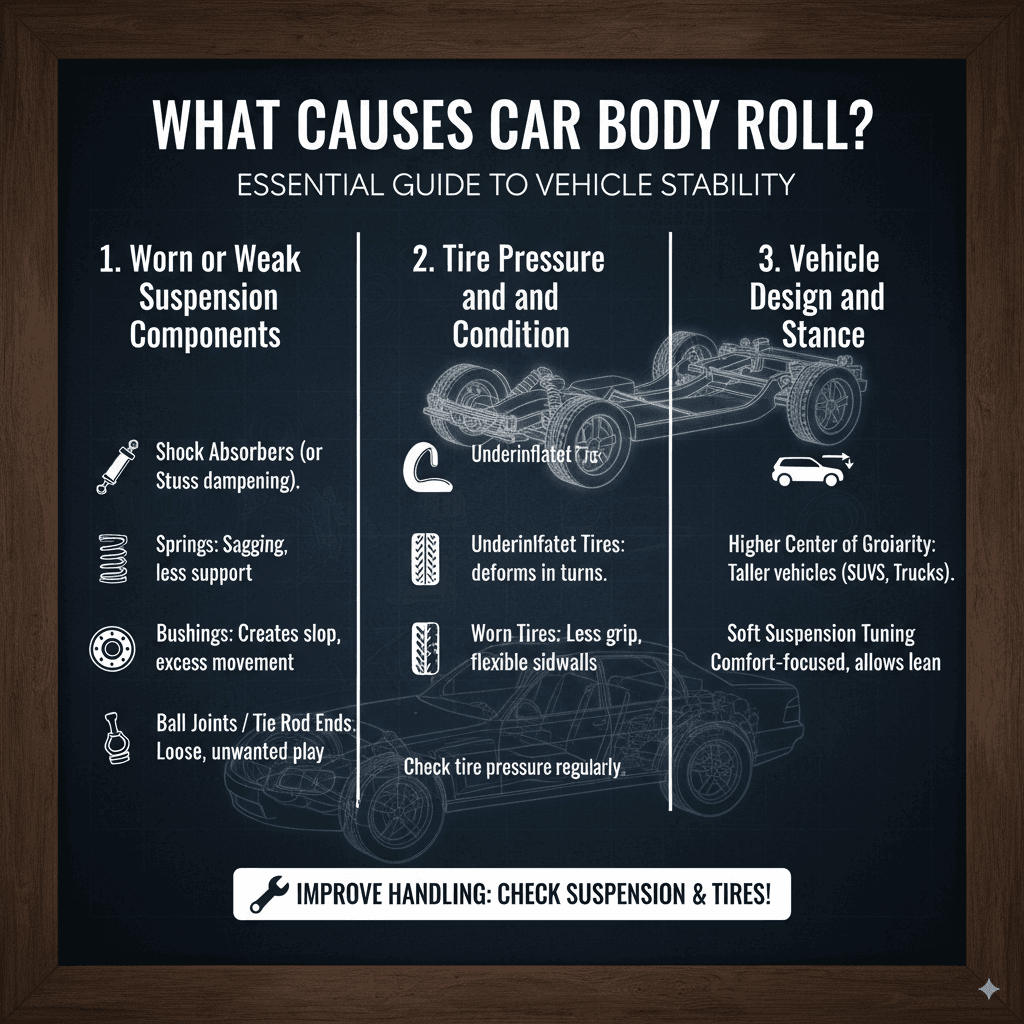
1. Worn or Weak Suspension Components
Your suspension system is a team of parts working together. If any player is weak or tired, the whole team suffers.
- Shock Absorbers (or Struts): These are the workhorses. They dampen the spring’s bounce. If they’re worn out, they can’t control the up-and-down motion effectively, allowing for more sway.
- Springs: These support the car’s weight. Over time, they can sag or weaken, reducing their ability to resist the car leaning.
- Bushings: These are rubber or polyurethane parts that cushion and allow movement between suspension components. Worn bushings can create slop and allow excess movement, contributing to body roll.
- Ball Joints and Tie Rod Ends: These connect various steering and suspension parts. If they’re loose or worn, they can allow for unwanted movement.
2. Tire Pressure and Condition
Your tires are your car’s only contact with the road. What’s happening with them matters!
- Underinflated Tires: Tires with too little air are softer and can deform more easily during turns, increasing the feeling of roll. Make sure your tires are inflated to the pressure recommended in your car’s owner’s manual or on the sticker inside the driver’s door jamb. You can check tire pressure with a simple tire pressure gauge.
- Worn Tires: Tires with shallow tread can lose grip more easily, and their sidewalls might be more flexible, leading to a less stable feel.
3. Vehicle Design and Stance
Some cars are simply built to lean a bit more.
- Higher Center of Gravity: Taller vehicles like SUVs and trucks naturally have a higher center of gravity. This means their weight is distributed higher up, making them more prone to tipping or rolling in turns compared to a low-slung sports car.
- Soft Suspension Tuning: Many cars are designed with comfort in mind. This often means softer springs and shock absorbers, which prioritize a smooth ride over flat cornering. While great for bumpy roads, it allows for more body roll.
How to Reduce Body Roll: Your Step-by-Step Guide
Now that we know what causes body roll, let’s get to the solutions. We’ll start with the simplest checks and move towards more involved upgrades. Remember, safety first! If you’re ever unsure about working on your car, it’s best to consult a trusted mechanic.
Step 1: Check Your Tires
This is the easiest and cheapest place to start. Good tires are crucial for handling!
- Check Tire Pressure: Locate your car’s recommended tire pressure. It’s usually on a sticker on the driver’s side doorjamb or in the owner’s manual. Use a reliable tire pressure gauge to check each tire when they are cold (driven less than a mile). Inflate or deflate them to the correct PSI (pounds per square inch).
- Inspect Tire Tread: Look for wear patterns. Uneven wear could indicate other suspension issues, but general wear means it’s time for new tires. Ensure the tread depth is adequate for good grip. The penny test is a simple way: insert a penny heads first into a tire tread groove. If you can see the top of Lincoln’s head, your tread is getting low and it’s time for replacement.
Step 2: Inspect Your Suspension Components
This step might require getting a little dirty or if you’re uncomfortable, having a mechanic do a quick inspection. You’re looking for visual signs of wear or damage.
- Visual Inspection: With the car parked on a level surface, look at your shock absorbers and springs. Are the shocks leaking fluid? Do the springs look compressed or damaged?
- Bounce Test: Push down hard on each corner of the car. A healthy suspension should rebound once or twice. If the car bounces several times, your shock absorbers might be worn.
- Check for Loose Parts: Look at the rubber bushings where suspension parts connect. Are they cracked, torn, or missing?
If you find any leaks, significant damage, or excessive bouncing, it’s likely time to replace those worn components. Replacing old shocks and struts is often a significant improvement.
Step 3: Consider Upgraded Suspension Parts
If your current suspension is in good shape, or if you’re looking for a noticeable improvement, upgrading parts can make a big difference. These are more involved and might require professional installation if you’re not comfortable.
3.1. Performance Shock Absorbers (or Struts)
These are designed to offer better damping control than stock shocks. They can significantly reduce body roll because they resist the rapid compression and extension of the springs.
- Pros: Greatly improves handling, reduces body roll, often adjustable for ride stiffness.
- Cons: Can make the ride firmer and less comfortable, more expensive than stock replacements.
3.2. Performance Springs
Lowering springs are common performance upgrades. They are typically stiffer and shorter than stock springs. The shorter height lowers the car’s center of gravity, and the increased stiffness helps resist compression during cornering.
- Stiffer Springs: Even without lowering the car, stiffer springs can help reduce body roll by providing more resistance to weight transfer.
- Pros: Lower center of gravity (if lowering springs), increased resistance to roll, can improve steering feel.
- Cons: Can make the ride harsher, may require other suspension modifications to work optimally, potentially voiding warranty on new cars.
3.3. Anti-Roll Bars (Sway Bars)
This is one of the most effective ways to reduce body roll without drastically changing ride comfort. An anti-roll bar is a torsion bar that connects the left and right sides of the suspension. When one side compresses more than the other during a turn, the bar twists, counteracting and resisting that difference in suspension travel.
A thicker or stiffer anti-roll bar means more resistance to body roll. Many performance aftermarket kits offer larger diameter or dual-adjustable sway bars.
- Pros: Highly effective at reducing body roll, can often be adjusted for different levels of stiffness, good balance between handling and comfort.
- Cons: Can sometimes make the ride feel a bit stiffer over uneven surfaces, installation can be moderately difficult.
For example, brands like Moog offer quality suspension components, including various bushings and linkages that are vital for reducing unwanted flex.
3.4. Performance Bushings
Replacing old, worn rubber bushings with new, stiffer ones (often polyurethane) can significantly tighten up the suspension. This reduces play and unwanted flex, giving you a more direct feel and less body roll.
- Pros: Improves steering response, reduces slop in the suspension, relatively affordable way to stiffen things up.
- Cons: Can make the ride noticeably harsher, requires careful installation to avoid binding suspension components.
Step 4: Consider a Professional Suspension Alignment
Even if you don’t change any parts, a professional alignment can ensure your wheels are pointing in the right direction. Poor alignment can sometimes contribute to handling issues that might be mistaken for or exacerbated by body roll. After making suspension changes, an alignment is absolutely essential.
A good alignment shop will check and adjust your car’s:
- Camber: The angle of the wheel relative to the vertical.
- Caster: The angle of the steering axis.
- Toe: The angle of the wheels relative to each other (like looking down from above).
Getting this right ensures your tires are making proper contact with the road under various conditions, improving grip and reducing unpredictable handling.
Table: Suspension Upgrade Options for Body Roll Reduction
Here’s a quick look at different ways to tackle body roll, from simple checks to more involved upgrades:
| Method | Difficulty Level (DIY) | Cost Range (Estimate) | Impact on Body Roll | Impact on Ride Comfort |
|---|---|---|---|---|
| Correct Tire Pressure & Condition | Easy | $ (for gauge) | Minor to Moderate | Minimal |
| Replace Worn Shocks/Struts | Medium to Hard | $$ – $$$ | Moderate to High | Moderate (depending on quality) |
| Install Performance Springs | Hard | $$ – $$$ | High | Noticeably Firmer |
| Install Upgraded Anti-Roll Bars | Medium to Hard | $$ – $$$ | Very High | Slightly Firmer (especially on bumps) |
| Upgrade Suspension Bushings | Medium to Hard | $ – $$ | Moderate | Firmer |
Cost Explanation: $ = Low (Under $100), $$ = Moderate ($100 – $400), $$$ = High ($400+). These are general estimates and can vary greatly based on vehicle, brand, and labor costs if not DIY.
Tips for a Smoother, More Stable Ride
Beyond the direct solutions for body roll, some general car care practices can contribute to better handling and a more confident driving experience.
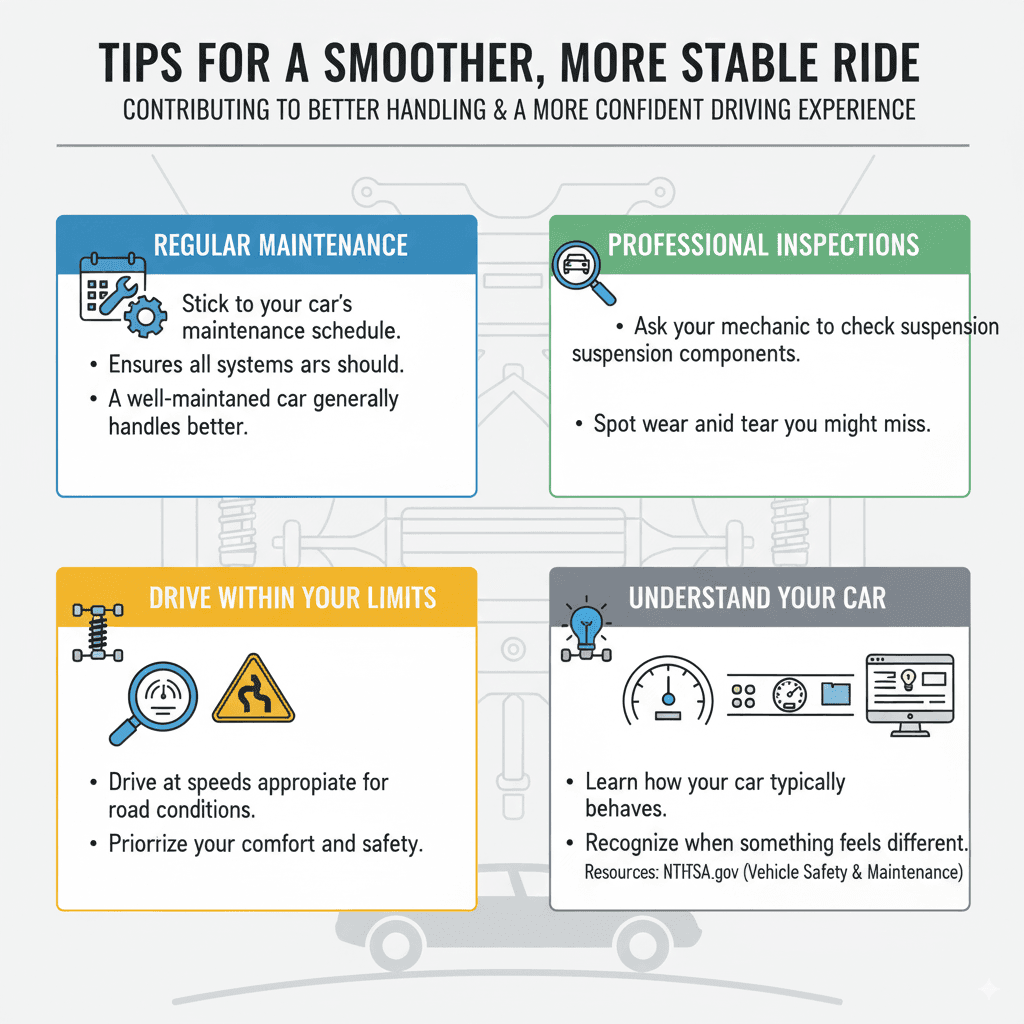
- Regular Maintenance: Ticking to your car’s maintenance schedule ensures all systems are working as they should. A well-maintained car generally handles better.
- Professional Inspections: Every so often, ask your mechanic to specifically check your suspension components during a routine service. They can spot wear and tear you might miss.
- Drive Within Your Limits: Even with sportier suspension, it’s important to drive at speeds appropriate for the road conditions and your comfort level.
- Understand Your Car: Learn how your car typically behaves. This helps you recognize when something feels different and might need attention. Websites like NHTSA.gov provide vast resources on vehicle safety and maintenance standards.
Frequently Asked Questions (FAQ)
Q1: What’s the difference between body roll and understeer/oversteer?
Body roll is the physical leaning of the car’s body itself during a turn. Understeer is when the front wheels lose grip, causing the car to push wide in a turn. Oversteer is when the rear wheels lose grip, causing the car’s tail to swing out. While related to handling, they are distinct phenomena.
Q2: Can I fix body roll just by replacing the tires?
New, properly inflated tires can certainly help reduce the feeling of body roll, especially if your old tires were worn or underinflated. They provide better grip and a firmer contact patch. However, they won’t address underlying suspension issues causing significant lean.
Q3: How much does it cost to upgrade my suspension to reduce body roll?
Costs vary widely. Correcting worn-out stock parts might cost a few hundred dollars for parts and labor. Upgrading to performance shocks, springs, or sway bars typically ranges from $500 to over $2,000, depending on the parts chosen and whether you do the installation yourself.
Q4: Will reducing body roll make my ride uncomfortable?
It can, but it depends on how you do it. Stiffer springs or very firm shocks will make the ride harder. Upgrading to a thicker anti-roll bar is often the best compromise, offering significant body roll reduction with a less noticeable impact on comfort over small bumps.
Q5: Can worn bushings cause serious handling problems?
Yes. Worn bushings create play and looseness in the suspension and steering. This can lead to vague steering, unpredictable handling, and yes, contribute to increased body roll. They are a critical but often overlooked part of a car’s suspension.
Q6: Is a lower stance always better for reducing body roll?
Lowering a car’s center of gravity definitely helps reduce body roll. However, the stiffness of the springs and shocks, and the effectiveness of the anti-roll bars play a much bigger role in how well the suspension manages weight transfer during cornering.
Conclusion: Enjoy a More Stable and Confident Drive
Tackling body roll might seem like a complex task, but as we’ve seen, it often starts with simple checks like tire pressure and can be addressed effectively with targeted solutions. Whether it’s replacing worn shocks, installing a sturdier anti-roll bar, or simply ensuring your tires are in top shape, there are ways for every driver to improve their car’s handling.
By understanding the causes and choosing the right modifications, you can transform your car’s cornering ability, making it feel more stable, responsive, and enjoyable to drive. Gaining more confidence on the road is a fantastic feeling, and for many, reducing that excessive lean is the key. Remember to always prioritize safety, and don’t hesitate to consult a professional if you’re unsure about any step. Happy driving!

Hi, I’m Melvin, an automobile engineer with extensive experience in automobile equipment. I currently work for a local automobile firm, where I specialize in the car parts industry. I’ve had the opportunity to collaborate with seasoned inspectors, gaining invaluable hands-on experience that goes beyond just theory.
My passion for automotive care started at a young age, which led me to create CarSpareCare. Through CarSpareCare, I share the knowledge and skills I’ve acquired over the years to help others navigate the world of car maintenance and repairs.
My goal is to provide practical tutorials, essential safety advice, and the latest industry insights so that anyone—whether a beginner or an expert—can confidently tackle their automotive projects.

