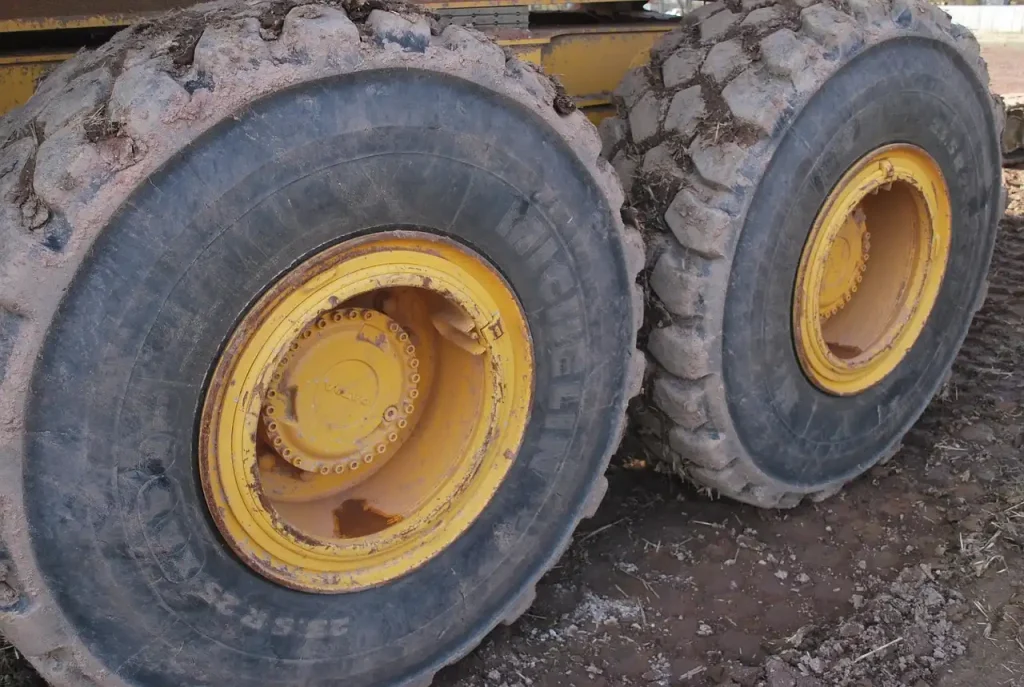
Lug nuts seize because corrosion, galvanic reaction, dirt, overtightening, or damaged seats bind the fastener to the wheel, and the fix depends on which one caused it. Leave it alone and you can round the nut, crack the wheel, snap a stud, or end up stranded roadside. This guide explains how each failure happens and the safest way to remove stuck lug nuts without making the problem worse.
What a seized lug nut actually is
How lug nuts, wheel studs, and seats work together
A lug nut is a fastener that secures a wheel’s hub to threaded wheel studs, and those studs are on the vehicle’s axle. The nut threads onto the stud and clamps the wheel tight against the hub. The seat on the lug nut is the contact shape at the wheel side, usually tapered or rounded, and it must match the wheel.
That seat matters as much as the threads. On the right wheel, it centers the wheel and sets clamping force. On the wrong wheel, or with a damaged seat, it can bind before the threads even feel stuck. That is why one “stubborn lug nut” can have several different failure modes.
Thread seizure vs seat seizure vs cross-threading
Thread seizure means the nut and stud threads are stuck together, often because they are rusted, galled, or packed with debris. Seat seizure means the nut is sticking against the wheel face, often from rust, paint buildup, dirt, or seat damage. Cross-threading means the nut started crooked on the stud and damaged the threads as it was tightened.
Those are not the same problem. A thread-seized nut often turns hard the whole way off. A seat-bound nut may loosen on the threads but still cling to the wheel. A cross-threaded nut may feel rough, bind early, or wobble while refusing to back out cleanly.
What rounded hex heads and swollen chrome caps mean
A rounded hex head means the wrench no longer has full purchase on the nut. That is often the result of past over-tightening, the wrong socket, or repeated impacts with a loose socket. Chrome-plated steel lug nuts can sometimes hide a thin cap that may swell or split, making the outside look worse than the threaded body beneath it.
When a chrome cap swells, the socket may grip the cap instead of the nut body and slip. That is a removal problem, but it is different from rust seizure. Forcing harder often tears the cap or rounds the corners further.
Why do lug nuts seize on wheels?
Lug nuts seize when friction rises and the metal surfaces bond mechanically or chemically. Rust, road salt, mixed metals, dirt, and high clamp load all play a part. In practice, the failure usually starts small: a contaminated thread, a damaged seat, or a nut installed too tight after the last wheel service.
Rust and road salt on the threads
Water carries oxygen and salt into the small gap between the lug nut and wheel stud. Rust forms there and can lock the threads together. The same thing happens around the seat when moisture sits between the nut and wheel face. Chrome plating on lug nuts can slow corrosion, but it does not stop it forever.
Galvanic corrosion between mixed metals
Mixed-metal contact can speed corrosion. Alloy wheels, steel wheels, chrome-plated lugs, and bare studs do not all behave the same way when moisture and road salt are present. The dissimilar metals can create a corrosion cell, so the nut, seat, or stud corrodes faster than a plain dry steel-to-steel joint.
Dirt, grit, and damaged seat surfaces
Oil, filth, grit, rust, and other contaminants should be removed before fastening. If they stay on the threads or seat, they change how the nut clamps and can wedge the nut in place later. A damaged taper or rounded seat can also bite into the wheel and resist removal.
Overtightening and impact damage
Over-torquing can damage threads or fasteners, and a wheel stud can be harmed by repeated abuse. An impact wrench used carelessly can drive the nut past the intended clamp load, stretch the stud, or mash the seat into the wheel. Once that happens, the nut may loosen unevenly or refuse to back off cleanly.
How can you tell what failed before you force it?
You can usually separate rusted threads from seat binding, cross-threading, or heat damage by looking at the socket fit, the nut’s movement, and the condition of the wheel face. That matters because the safest removal method changes with the failure mode. Guessing wrong is how studs snap and wheels crack.
Signs of rusted threads
A rusted thread joint usually feels uniformly tight as it begins to move. The nut may advance a little with force, then bind again, then move again. Rust streaks often appear around the exposed threads, and the nut may leave orange dust behind as it turns.
Signs the seat is stuck to the wheel
If the nut backs off several turns and still will not separate from the wheel, the seat may be seized to the wheel face. This is common after winter driving or after brake work where dirt, paint, and corrosion sit between the seat and wheel. The nut may spin easier once the clamp load drops, yet it still hangs on the wheel.
Signs the nut is cross-threaded on the stud
Cross-threaded nuts often start crooked, then tighten with a gritty or jerky feel. They may sit at a slight angle, and the exposed threads on the stud may look chewed up. If the nut comes off only partway and then binds harder, do not keep forcing it; the stud may already be damaged.
When a heat-damaged wheel is the real problem
Heat can warp or discolor the wheel near the lug seat. If the wheel shows bluing, paint blistering, soft metal near the holes, or a distorted seat, the nut may be clamped against damaged material. In that case, force alone can worsen the wheel, not free the fastener.
What should I use to remove a stuck lug nut?
Start with the least destructive method that still gives enough breakaway torque. Begin with penetrating oil, then use a breaker bar with a long handle if the nut still will not move. If the tool has enough output, an impact wrench can help. Heat can work too, but only with strict fire safety.
Breaker bar and lug wrench for breakaway torque
A breaker bar is a long-handled wrench that gives more turning force from the same pull, which helps when the nut needs a strong first move. A four-way lug wrench or stout lug wrench can also work if the socket fits correctly. Keep the tool square to the nut so the hex does not round off further.
Impact wrench limits and when it helps
An electric or pneumatic impact wrench can remove stubborn fasteners when the tool’s torque output is high enough. It works by repeated hammering, which can break corrosion bonds better than steady force. It is less useful if the nut is already rounded, cross-threaded, or welded to a damaged seat.
Penetrating oil first, WD-40 only for the right job
Penetrating oil is better than WD-40 for rusted fasteners because it is made to creep into corrosion bonds before mechanical removal attempts. WD-40 can reduce friction and displace moisture, but it is not necessarily the same as a true penetrating oil. If the nut is rusted on, use the right product first.
Heat with an acetylene torch or other safe heat source
Heat helps because metal expands and contracts with temperature. That movement can break the rust bond on the threads or the seat. An acetylene torch can be effective, but it demands care around fuel, brake cleaner residue, undercoating, and any oil or solvent near the wheel. Heat is a method, not a shortcut.
Decision table: symptom, failure mode, safest removal method
This table maps the common symptom to the likely failure mode and the safest next step. If the symptom does not fit neatly, stop and inspect the wheel, seat, and stud before adding more force.
| Symptom | Likely failure mode | Safest removal method |
|---|---|---|
| Rust flakes around exposed threads; nut moves hard all the way off | Rusted threads | Penetrating oil, then breaker bar or impact wrench; use heat only if needed |
| Socket slips on the nut; corners look chewed or swollen | Rounded hex | Proper-size six-point socket, then breaker bar; replace the nut after removal |
| Nut loosens but stays stuck to the wheel face | Stuck seat | Remove clamp load, then work the seat free; inspect for wheel-seat damage |
| Nut started crooked, feels gritty, or wobbles as it backs out | Cross-threaded stud | Stop forcing it; remove carefully and replace the stud if threads are damaged |
| Wheel area shows bluing, paint blistering, or warped seat material | Heat-damaged wheel | Do not pry aggressively; cool, inspect, and replace damaged parts if needed |
Are anti-seize compounds a good idea on lug nuts?
For standard dry torque practice, anti-seize should not be applied to lug nuts. Lug torquing is meant to be done on a dry connection, and anti-seize changes friction so the same wrench reading can create more clamp load than intended. That raises the risk of over-torquing and stripping.
Why dry torque is the standard approach
Torque settings assume a dry thread and a dry seat. If lubricant is added, friction drops and the nut turns farther for the same torque value. That means the stud can be stretched more than expected even though the wrench reading looks normal.
How anti-seize changes friction and clamp load
Anti-seize reduces friction, which sounds helpful until the torque reading is treated as if nothing changed. With lower friction, more of the wrench input becomes clamp load. That can be useful in controlled assembly work, but on lug nuts it can alter torque readings and increase over-torque risk.
If someone uses it anyway, what has to change
If a shop or owner uses anti-seize, the torque process has to be adjusted for the changed friction condition. That is not a casual swap. It means extra care with the torque wrench, attention to the threads and seat, and a clear understanding that the usual dry spec no longer applies in the same way.
How do I keep my lug nuts from seizing?
Clean threads, matched seat types, correct torque, and dry reassembly prevent most seizure problems. The best time to stop a seized lug nut is during wheel service, before salt, dirt, and overtightening turn it into a roadside fight. Winter use and mixed-metal wheels need even more attention.
Pre-reassembly cleaning and inspection
Before reinstalling, remove old rust, grit, and contamination from the stud threads, the lug nut seat, and the wheel seat. Inspect for thread damage, cracked plating, swollen chrome caps, and seat wear. If the nut or stud is damaged, replace it rather than trying to hide the problem.
Correct torque with a calibrated wrench
Install lug nuts by hand first so they thread straight. Then snug them in a star pattern and finish with a calibrated torque wrench on dry parts. Over-torquing is a common cause of seized nuts, warped wheels, and stretched studs.
Wheel and lug compatibility checks
Match the lug seat type to the wheel, using the corresponding seat style for the wheel design. A mismatch can center poorly and bind the seat. This matters on alloy wheels, steel wheels, and chrome-plated lugs, where the contact patch can differ enough to change how the nut loads the wheel.
Winter and salt-season prevention
After winter driving, tire rotations, or wheel cleaning, inspect the exposed studs and nut seats for corrosion and trapped debris. If salt exposure is heavy, clean the fasteners sooner rather than later. The goal is to stop rust and dirt from settling into the threads and seat before the next removal.
- Clean the stud threads and wheel seat before reinstalling.
- Check that the lug seat type matches the wheel.
- Thread each nut by hand before using a wrench.
- Use a dry connection for standard torque practice.
- Tighten in a star pattern with a torque wrench, ideally a calibrated one.
- Recheck for damage after brake work, tire rotations, or winter driving.
Frequently asked questions
what causes lug nuts to seize
They seize from rust, galvanic corrosion, dirt, overtightening, seat damage, cross-threading, or heat damage. In many cases, the real cause is a mix of problems, not one alone. The threads may be clean while the seat is rusted to the wheel, or the nut may be damaged from past impact-tool use.
what is a seized lug nut
A seized lug nut is one that no longer comes off normally because the threads, seat, or both are locked by corrosion, damage, or excessive tightening. It may still turn, but it binds, slips, or stays fixed to the wheel instead of backing off cleanly.
can’t get lug nut off wheel
If the nut will not move, do not jump straight to maximum force. Try penetrating oil, the correct six-point socket, and a breaker bar first. If the socket slips, the hex may be rounded. If the nut loosens but stays on the wheel, the seat may be the real problem.
how do I know if a lug nut is rusted on or over-torqued?
Rusted nuts usually show corrosion, orange dust, and a rough but steady breakaway feel. Over-torqued nuts often feel brutally tight without much visible rust, and the stud or hex may show stretching, rounding, or prior impact damage. A nut that wobbles or started crooked may be cross-threaded instead.
WHY Definition & Meaning – Merriam-Webster — The meaning of WHY is for what cause, reason, or purpose. How to use why in a sentence.
In this context, why asks for the cause of seizure, not just the symptom. The answer is usually mechanical: rust, dirt, mixed metals, seat damage, cross-threading, or over-torque. Once the cause is known, the safest removal method becomes much easier to choose.

Hi, I’m Melvin, an automobile engineer with extensive experience in automobile equipment. I currently work for a local automobile firm, where I specialize in the car parts industry. I’ve had the opportunity to collaborate with seasoned inspectors, gaining invaluable hands-on experience that goes beyond just theory.
My passion for automotive care started at a young age, which led me to create CarSpareCare. Through CarSpareCare, I share the knowledge and skills I’ve acquired over the years to help others navigate the world of car maintenance and repairs.
My goal is to provide practical tutorials, essential safety advice, and the latest industry insights so that anyone—whether a beginner or an expert—can confidently tackle their automotive projects.