

Start with tires, coolant, battery, and brake-related fluids first. I check those before anything else because heat turns small faults into roadside problems fast. Then move to oil, air filter, wipers, and sun protection. If anything already looks hot, low, cracked, or corroded, fix that before a long drive.
How do I prepare a car for summer heat?
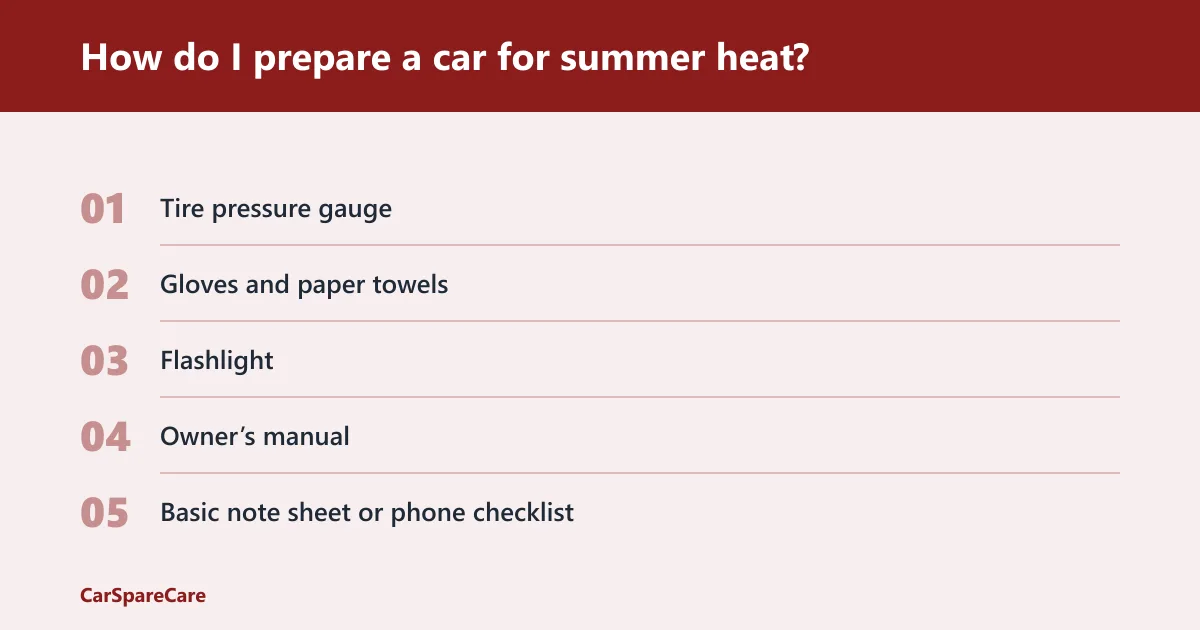
What you’ll need
- Tire pressure gauge
- Gloves and paper towels
- Flashlight
- Owner’s manual
- Basic note sheet or phone checklist
Summer-heat checklist in the right order
- Check tire pressure first, using the owner’s manual recommendation instead of the tire sidewall.
- Inspect coolant next if there is any overheating concern.
- Check motor oil, then the other fluids in one pass.
- Inspect the battery for corrosion, swelling, or weak starting.
- Check the air filter, wipers, and cabin sun protection.
- Book a mechanic if you find leaks, hot-running symptoms, or tire damage.
If that didn’t work, try this next
- If tire pressure was low, reinflate to the owner’s manual recommendation and recheck after the tires cool.
- If coolant was low, look for wet hoses, dried residue, or a sweet smell at the engine bay before topping up.
- If the battery is corroded or slow to crank, clean the terminals only if the clamps are secure; replace an older battery before peak heat.
What should I check before driving in hot weather?
Before a hot-weather drive, check the parts that can fail fast: tires, coolant, brakes, battery, and fluid levels. I put those first for a reason. A car with low coolant, tire damage, or battery corrosion should not head straight into a long highway run without attention.
Urgent safety checks
- Tires: set pressure to the owner’s manual recommendation and inspect tread, cuts, and bulges.
- Coolant: confirm the level is where it should be and look for leaks.
- Battery: look for corrosion, swelling, or loose clamps.
- Brakes: listen for grinding, warning lights, or a soft pedal before a trip.
Same-day DIY checks
- Engine oil
- Transmission fluid
- Brake fluid
- Power steering fluid
- Air filter
- Wipers
- Sunshade or windshield shade
If that didn’t work, try this next
- If a fluid level is low and you do not know why, stop at a shop for a leak check before topping off repeatedly.
- If the temperature gauge has been high, park the car and schedule inspection of the cooling system.
- If a tire shows a bulge or cut, avoid driving at higher speeds; have it repaired or replaced first.
How often should I check tire pressure in summer?
Check tire pressure at least once every month, and before long drives. Set it to the owner’s manual recommendation, not the number molded on the tire. Hot pavement and under-inflation can raise tire damage risk, so I make tire checks one of my early summer maintenance items.
Why tires come first
Heat raises tire stress, and under-inflated tires flex more than they should. That extra flex creates heat inside the tire, and that is where trouble starts. Look for uneven wear, cuts, and bulges while the tires are still cool, then recheck after a long highway run or strong sun exposure.
Daily commuter, long-distance driver, older car
- Daily commuter: monthly checks are usually enough unless a warning light or slow leak appears.
- Long-distance driver: check before every trip over a few hours on hot pavement.
- Older high-mileage car: check more often, because leaks and uneven wear show up sooner.
If that didn’t work, try this next
- If one tire keeps losing air, have the valve stem, bead, and tread inspected for a puncture.
- If the steering wheel shakes at speed, get the tires balanced and the front end checked.
- If tire damage is visible, replace the tire instead of waiting for the next service visit.
What fluids should I check before summer driving?
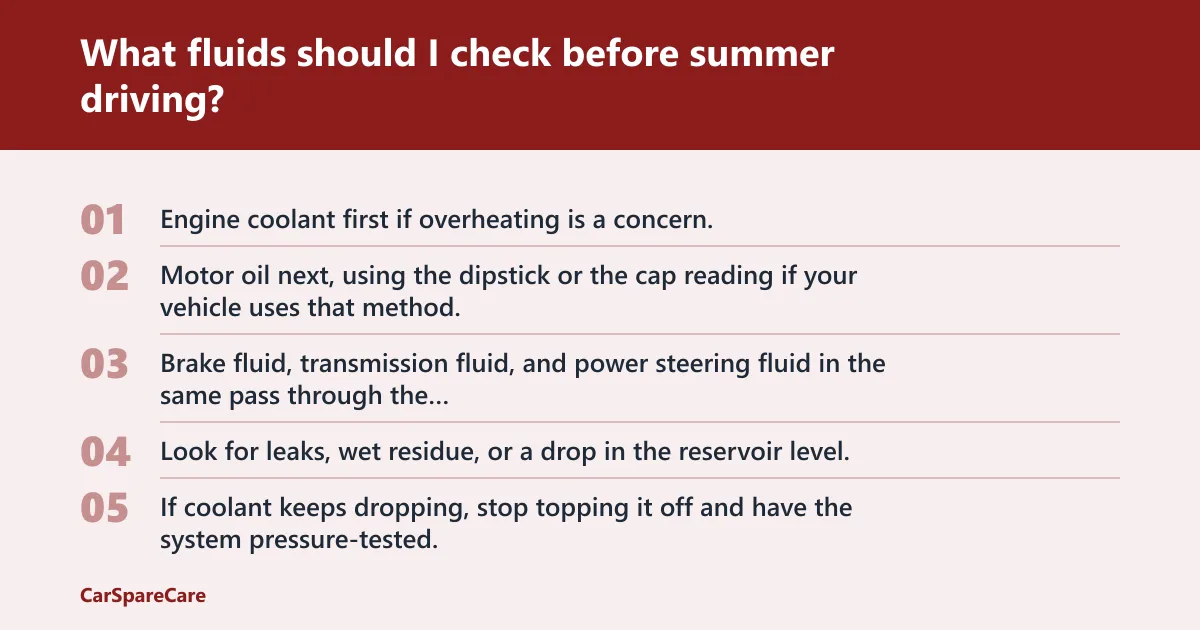
Check the main fluid levels before summer trips. Oil still has to lubricate correctly, coolant helps the engine run well, and the other fluids are part of a basic safety-and-driveability inspection. Low fluid levels are a warning, not a seasonal annoyance.
Fluid check order
- Engine coolant first if overheating is a concern.
- Motor oil next, using the dipstick or the cap reading if your vehicle uses that method.
- Brake fluid, transmission fluid, and power steering fluid in the same pass through the engine bay.
- Look for leaks, wet residue, or a drop in the reservoir level.
What the symptoms mean
| Symptom | What it usually points to | Action |
|---|---|---|
| Low coolant | Possible leak, bad cap, or cooling system loss | Do not ignore; inspect for leaks and book service if it returns low |
| Dirty or dark oil | Oil due for service or overdue maintenance | Change it or top off only if level is low |
| Soft brake pedal | Brake fluid or hydraulic issue | Have the brake system checked immediately |
| Difficulty steering at low speed | Possible power steering fluid issue | Check level and inspect for leaks |
If that didn’t work, try this next
- If coolant keeps dropping, stop topping it off and have the system pressure-tested.
- If brake fluid looks dark or the pedal changes feel, book a mechanic right away.
- If transmission fluid smells burnt or the shift quality changes, wait on long trips until it is inspected.
How can I keep my car from overheating in hot weather?
Keep the cooling system healthy, watch the coolant level, and stop driving if the temperature gauge rises or steam appears. Coolant helps the engine run well, and an overheated engine can turn a normal drive into a tow. If a car already runs hot, do not wait for the next trip.
Cooling-system warning signs
- Rising temperature gauge
- Steam from the hood
- Sweet smell near the front of the car
- Wet hoses or dried residue around the radiator area
- Weak heater output when the engine is hot
DIY vs mechanic
- DIY: check coolant level when the engine is cool and inspect visible hoses for damage.
- Mechanic: handle repeated overheating, leaks, steam, or a temperature gauge that climbs again after topping off.
If that didn’t work, try this next
- Pull over safely if steam appears.
- Shut the engine off and let it cool fully.
- Arrange a cooling-system inspection before the car goes back on a long route.
Do I need to check my battery before summer?
Yes. Heat can shorten battery life by increasing chemical reaction rate, and it can also make battery fluid evaporate faster and corrode terminals. That makes summer a good time to inspect the battery case, clamps, and terminals before the first no-start problem shows up.
Battery checks that matter
- Look for white or green corrosion on the terminals.
- Check for swelling or a cracked case.
- Make sure clamps are tight.
- Watch for slow cranking or dimming lights at startup.
When to replace or book service
If the battery is older, slow to crank, or already showing corrosion, do not wait for the hottest part of summer. Clean visible terminal buildup only if the battery is secure and you know the clamps are safe to handle; otherwise book service and have the charging system tested.
If that didn’t work, try this next
- If corrosion returns after cleaning, check for acid seepage or a weak battery case.
- If the car starts slowly after sitting in heat, test the battery and alternator.
- If the battery is near the end of its life, replace it before a road trip.
Should I check my air filter before summer?
Yes. Dust can clog the car’s air filter units, and regular filter checks help continuous cooling and air circulation. A dirty filter can make the cabin and engine work harder than they should, especially on dusty roads, during pollen-heavy weeks, or after long dry spells.
What to look for
- Dirt and debris trapped in the filter
- Visible clogging or dark buildup
- Reduced airflow through vents or the cabin system
DIY vs mechanic
- DIY: open the filter housing, inspect the filter, and replace it if it is dirty.
- Mechanic: use a shop if the housing is damaged, the filter is oil-soaked, or airflow stays weak after replacement.
If that didn’t work, try this next
- Check the cabin filter if the vents still feel weak.
- Inspect the intake path for leaves or blockage.
- Schedule service if airflow does not return to normal.
What can I do to protect my car interior from the sun?
Use a sunshade or windshield shade, and park in shade when possible. Sunshades may help reduce sun-related wear on the windshield and help limit cabin heat buildup. That lowers stress on plastics, trim, and seats, while also making the car easier to enter after it has sat in direct sun.
Practical interior protection
- Place a windshield shade before parking for long periods.
- Use shaded parking when available.
- Keep window glass clean so the shade sits properly.
- Fold the shade flat to avoid warping.
Watch-items
- Minor cabin heat buildup
- Weak A/C airflow
- Fading trim and dashboard glare
Prevention: use the sunshade every time the car sits outdoors for hours, especially in direct afternoon sun.
One-page printable inspection order
| Priority | Check | DIY or mechanic? | Symptom-to-action |
|---|---|---|---|
| Urgent safety | Tires, coolant, battery, obvious leaks, overheating signs | DIY first look; mechanic if damage or heat symptoms are present | Bulge, steam, low coolant, slow crank, or repeated loss of pressure = stop and book service |
| Same-day DIY | Oil, brake fluid, transmission fluid, power steering fluid, air filter, wipers, sunshade | Mostly DIY | Low fluid, dirty filter, or weak wipers = correct now or replace |
| Watch-items | Older battery, weak A/C airflow, minor dirt on filter, cabin heat buildup | Monitor or schedule next visit | If the issue grows, move it into the urgent tier |
What car maintenance is most important in hot weather?
The most important summer maintenance is the work that prevents heat-related failure: tires, coolant, battery, and fluid levels. After that, check the air filter, wipers, and interior protection. For a commuter, that usually means monthly tire pressure and a quick fluid walk-around. For an older car, it means a closer look before every long drive.
By driver type
- Daily commuter: tire pressure, coolant, battery, and wipers.
- Long-distance driver: add a full fluid inspection and tire walk-around before trips.
- Older high-mileage car: prioritize coolant leaks, battery corrosion, and tire condition before summer use.
If that didn’t work, try this next
- Use the owner’s manual for tire pressure and summer maintenance timing.
- Fix any hot-running, tire, or brake fault before a long trip.
- When in doubt, move the car from “check later” to “book service now.”
Common mistakes
The biggest mistakes are simple and expensive. Drivers often use the tire sidewall number instead of the owner’s manual, check fluids only after a problem starts, and ignore battery corrosion until the car will not start. A hot-running engine should never be treated as normal.
- Wrong tire pressure source: use the owner’s manual, not the sidewall.
- Late fluid checks: inspect coolant and oil before summer trips, not after overheating.
- Ignored corrosion: clean or replace battery terminals before heat makes the problem worse.
- Delayed overheating response: steam, rising temperature, or a sweet smell means stop and inspect.

Hi, I’m Melvin, an automobile engineer with extensive experience in automobile equipment. I currently work for a local automobile firm, where I specialize in the car parts industry. I’ve had the opportunity to collaborate with seasoned inspectors, gaining invaluable hands-on experience that goes beyond just theory.
My passion for automotive care started at a young age, which led me to create CarSpareCare. Through CarSpareCare, I share the knowledge and skills I’ve acquired over the years to help others navigate the world of car maintenance and repairs.
My goal is to provide practical tutorials, essential safety advice, and the latest industry insights so that anyone—whether a beginner or an expert—can confidently tackle their automotive projects.

