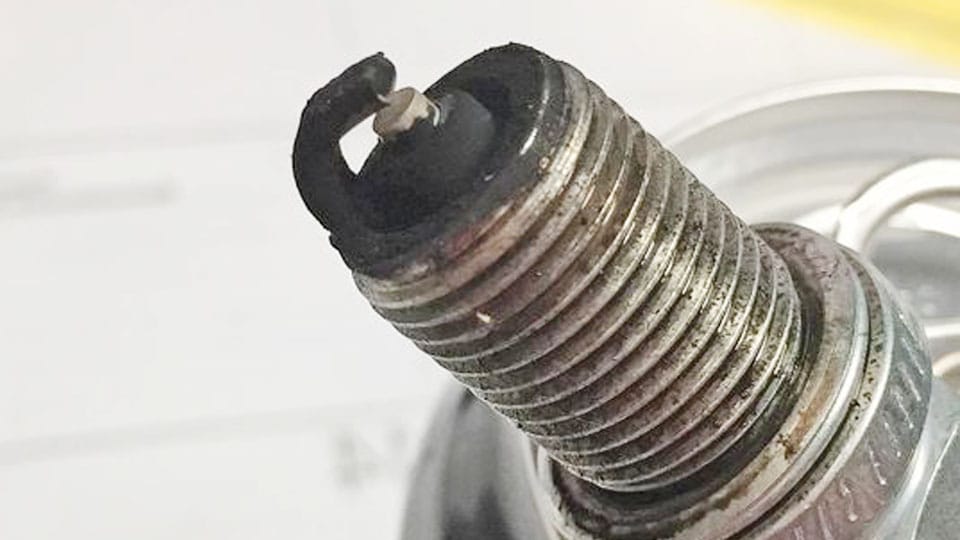
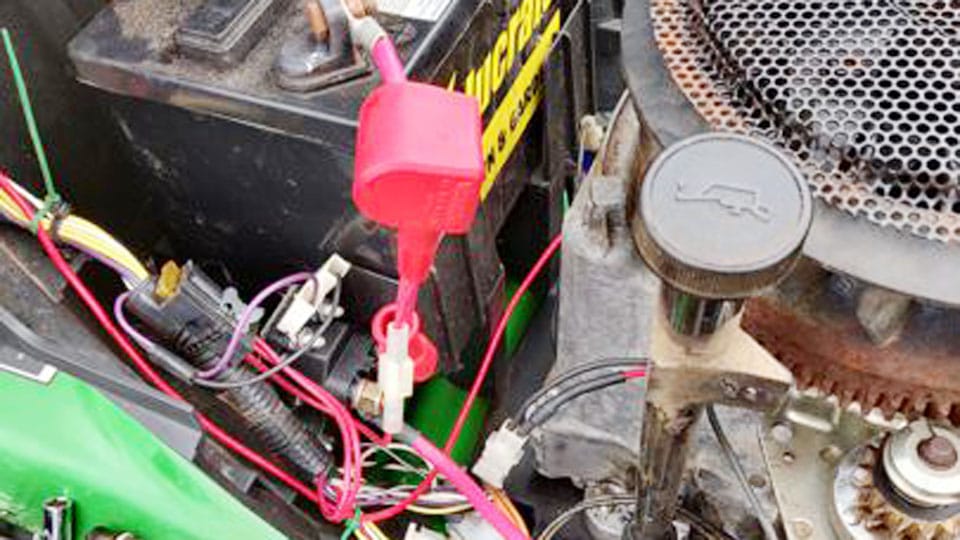
A spark plug that keeps popping out often points to stripped cylinder-head threads, an under-torqued plug, a damaged plug shell, or a worn plug boot that may be slipping off the plug. If you leave it alone, combustion pressure can widen the damage, misfires can spread, and the repair can move from a small fix to a head insert or cylinder-head removal. This guide separates plug, boot, wire, and head faults so you can find the real failure path fast.
Why do my spark plugs keep popping out
What to do first after a spark plug pops out
Stop the engine if the plug has truly ejected from the head, if the hole is open, or if you can see damaged threads. Running the engine can let combustion pressure hammer the plug hole and make the repair larger. Tow the car if the plug will not stay seated, the engine misfires badly, or the plug hole shows metal damage.
- Switch the engine off.
- Let the area cool.
- Look for a missing plug, a loose coil boot, or a wire that slipped off.
- Check the plug well for broken porcelain, thread debris, or rubber left behind by a socket.
- Do not restart if the plug hole is visibly damaged.
What is actually popping out?
Many repeat complaints are not true plug ejections. A coil boot or plug wire can pop off while the spark plug itself stays seated, and a cracked plug can break apart without leaving the head. The fix depends on which part moved, because each fault path is different.
Spark plug ejection
This is the serious case. The threaded shell leaves the cylinder head, often with damaged threads attached or missing entirely. On an aluminum head, combustion chamber pressure can widen the thread damage fast.
Ignition coil boot or plug wire coming loose
If the engine misfires but the plug is still in place, the boot or wire may not have clipped onto the plug terminal. Coil-on-plug systems and wire-on-plug systems both depend on full seating and clip integrity.
Cracked porcelain or damaged plug body
A plug can stay threaded in while the porcelain insulator cracks or the terminal end loosens. A cracked plug may cause misfire, arcing, and a boot that repeatedly pops off because the top of the plug is no longer sound.
What causes repeated plug blowouts?
Repeated plug blowouts usually start with a threading or seating error and then get worse. Cross-threading, stripped head threads, the wrong reach or seat type, under-torque, or a failed insert can all leave too little thread retention for combustion pressure. Once the first damage happens, each reinstallation can make the next failure more likely.
Cross-threading during prior installation
If the plug was started at an angle, the threads may have cut a bad path in the head. The plug can seem tight for a while, then loosen under heat cycles and pressure.
Stripped head threads or failed insert
Aluminum heads may be more prone to thread damage than cast-iron heads. A failed insert can hold briefly, then let go again if the insert was the wrong size, poorly set, or already damaged.
Wrong plug seat, reach, or torque
Spark plugs are not interchangeable by thread alone. Seat type matters: gasketed plugs use a sealing washer, while tapered-seat plugs seal on the cone. Reach should match the chamber depth. Torque should match the plug and engine specification as closely as possible, because under-torque can let movement start and over-torque can strip threads.
Damaged plug, seat, or cylinder head
A reused plug with cracked porcelain, damaged threads, or a crushed seat may never hold correctly again. A pitted or eroded seat in the head can leak pressure and work the plug loose over time.
Why does my spark plug keep coming out
When a spark plug keeps coming out, the thread retention has already failed or the plug is not seating against the correct surface. That usually means the plug was misinstalled earlier, the head threads are damaged, or the plug spec does not match the engine. Repeated loosening is a warning sign, not normal wear.
What causes a spark plug to pop out
A plug pops out when the head can no longer hold the shell against combustion pressure. The usual chain is simple: a plug was cross-threaded, torqued wrong, or fitted with the wrong seat or reach, and the damaged threads finally let go. A failed repair insert can create the same result.
Why did my spark plug pop out
If the plug has already blown out, the hole has likely lost enough thread grip that pressure finished the job. In many cases, the first installation error stayed hidden for weeks or months. Aluminum heads, deep plug wells, and reused damaged plugs all increase the chance that the failure returns after a quick reinstall.
Diagnostic decision table
| What is popping out | Likely cause | Safe next action |
|---|---|---|
| Spark plug shell leaves the cylinder head | Stripped threads, cross-threading, failed insert, wrong reach, or bad seat | Stop driving. Inspect threads and head material. Tow if the hole is damaged or the plug will not retain. |
| Coil boot slips off the plug | Loose boot clip, poor seating, torn boot, missing spring, or cracked plug terminal | Check boot seating and clip integrity. Replace damaged boot or plug. Restart only after full reseat. |
| Plug wire keeps pulling off | Wire terminal worn, boot damaged, wrong wire routing, or plug top damaged | Inspect terminal grip and plug top. Replace the wire set if retention is weak. |
| Plug stays in place but misfires continue | Cracked porcelain, carbon tracking, bad coil, or poor electrical contact | Inspect the plug body and coil or wire before replacing more parts. |
How do you inspect the plug, head, and ignition hardware?
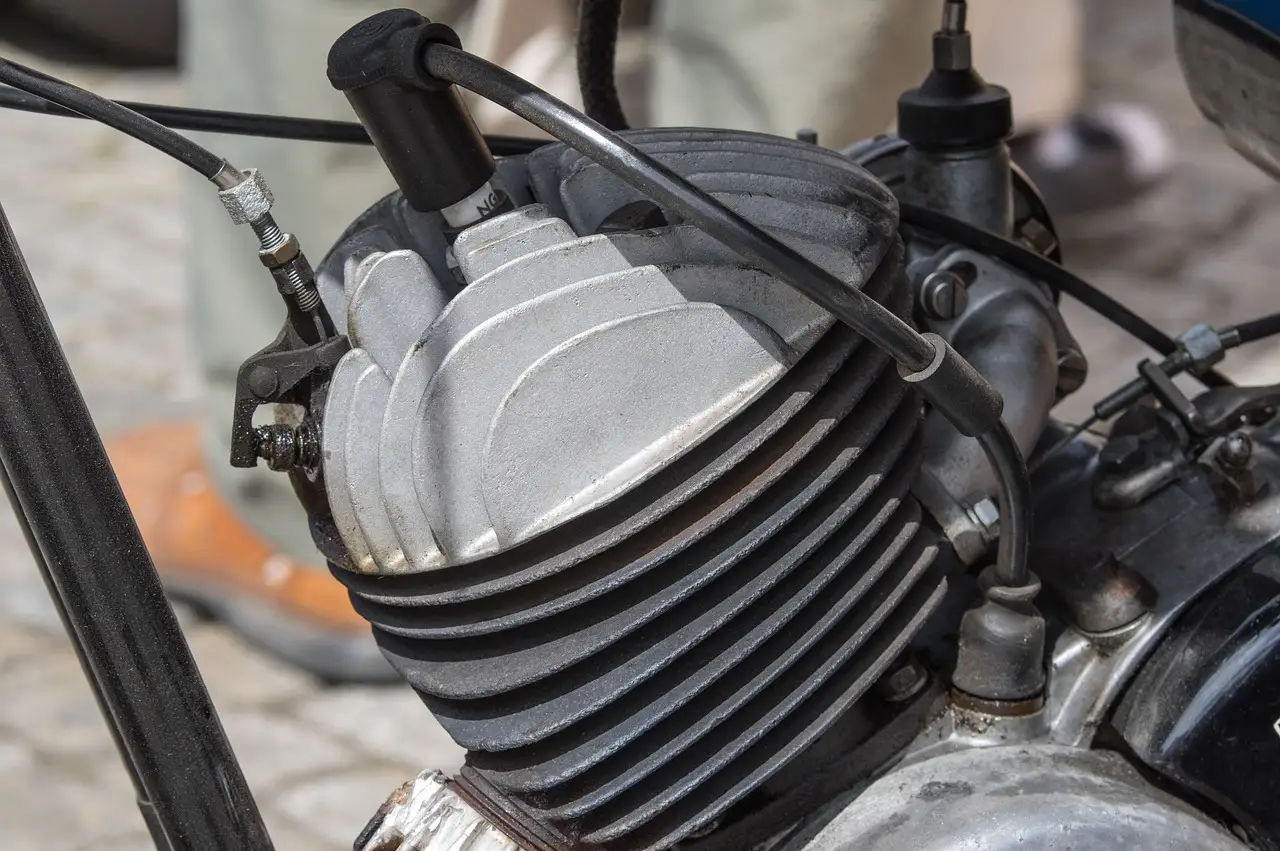
Inspection should tell you if the failure is mechanical, electrical, or both. Start with the plug fit, then confirm the head threads and seat, then check the boot or wire. Use a spark plug socket and extension that fit the well depth without leaving rubber behind on the plug.
Check the spark plug itself
Confirm the thread size, reach, and seat type from the engine specification or the plug catalog. Look for stripped threads, crushed gasket washers, cracked porcelain, and a damaged terminal nut. A plug with any of those faults should not go back in.
Check the cylinder head
Aluminum heads need careful inspection because thread material can pull out with the plug. Cast-iron heads are tougher, but they can still strip. Look for shiny pulled threads, missing thread coils, carbon around the seat, and signs that combustion pressure has been leaking past the plug.
Check the ignition coil or plug wire
On coil-on-plug systems, confirm that the boot is fully down on the plug and that the retaining clip is not bent. On wire-on-plug systems, check the terminal grip inside the boot. A loose boot usually leaves the plug in place but causes a misfire under load.
Check the socket and extension
A spark plug socket often uses a rubber retainer or a magnetic retainer. The rubber type can leave its insert on the plug if it grips too tightly or ages badly. Make sure the socket depth matches the plug recess so the tool does not hide a loose plug or trap debris in the well.
Which repair is right: reinstallation, insert, or head repair?
The right repair depends on how much thread damage exists and what the cylinder head is made of. A plug that only loosened may be reinstalled with the correct torque. Stripped threads usually need an insert. Repeated failure in an aluminum head often means the repair needs to be permanent, not a patch.
Repair recommendation matrix
| Condition | Best repair choice | Notes |
|---|---|---|
| Aluminum head with intact threads | Clean, inspect, and reinstall with the correct plug and torque | Use the specified torque in Nm or lb-ft for that engine and plug. Hand-start the plug first. |
| Stripped threads in aluminum head | Thread repair insert, often Time-Sert for a more permanent result | Heli-Coil can work if sized and installed correctly, but a solid insert is usually preferred when repeat retention matters. |
| Stripped threads in cast-iron head | Thread repair insert or, in severe cases, head repair | Cast iron can sometimes tolerate a better rethread, but damaged material still needs a proper insert. |
| Recurring boot ejections | Replace boot, plug, or coil/wire as needed | Check clip tension and plug terminal shape before condemning the ignition coil. |
Heli-Coil versus Time-Sert
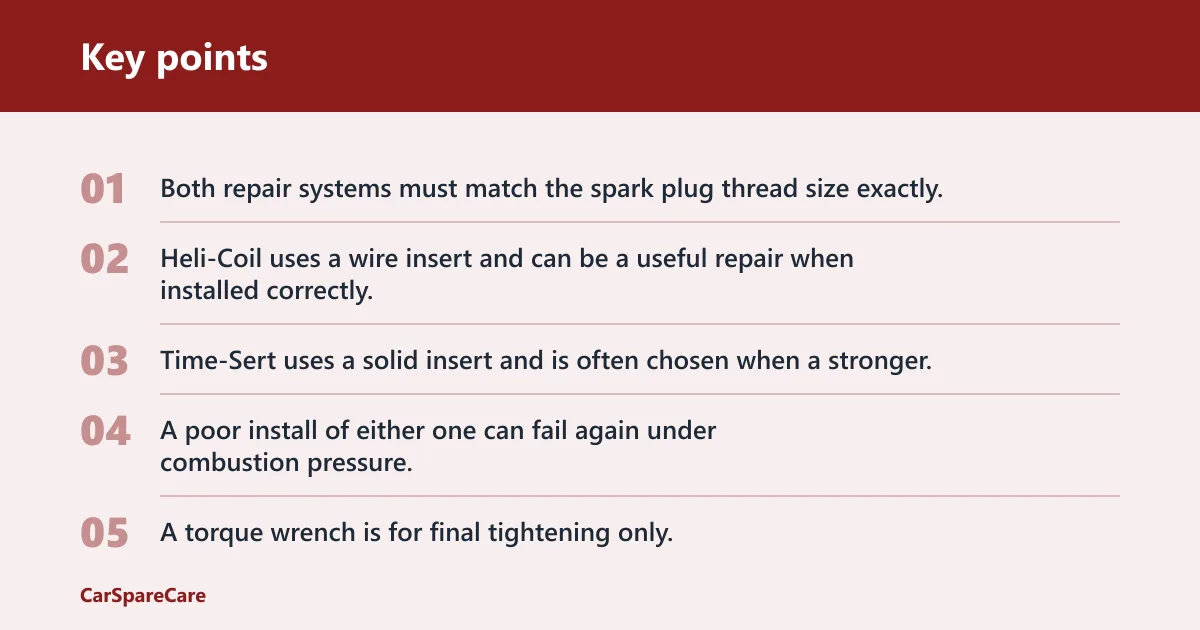
Both repair systems must match the spark plug thread size exactly. Heli-Coil uses a wire insert and can be a useful repair when installed correctly. Time-Sert uses a solid insert and is often chosen when a stronger, more permanent aluminum-head repair is needed. A poor install of either one can fail again under combustion pressure.
Torque wrench, anti-seize, and dielectric grease
A torque wrench is for final tightening only. Use the engine and plug maker’s specified value in Nm or lb-ft, because over-tightening can stretch or strip threads. Anti-seize should be used only if the plug maker allows it, since it can change torque reading and lead to over-tightening. Dielectric grease belongs inside the boot, not on the plug threads.
Picture a four-cylinder engine with deep plug wells and an aluminum head. A plug is started by hand, then forced the rest of the way with a ratchet. The engine runs for a week, then the plug blows out on acceleration because the thread damage was already there.
Say your coil boot keeps popping off a plug that still looks threaded in tightly. That points away from head damage and toward a worn boot spring, a cracked plug terminal, or a boot that was never fully seated on the plug in the first place.
Why do my spark plug boots keep popping out
Plug boots that keep popping out usually have a seating or retention problem, not a cylinder-head problem. The boot may not be fully engaged on the plug, the clip may be bent, or the plug terminal may be damaged. On coil-on-plug engines, a weak boot seal can also let moisture in and worsen misfire.
Why do my spark plug wires keep popping out
Plug wires that pop off are usually losing terminal grip. The boot may be hardened, the terminal spring may be weak, or the plug top may be damaged. Check that the wire routes without tension and that the terminal snaps firmly onto the plug. Replace the wire set if the grip no longer holds.
What does it mean when your spark plug pops out
It means the plug retention has failed. In the mild case, the plug was loose because it was not torqued correctly. In the serious case, the head threads are stripped or the insert has failed. If the plug has ejected, stop driving until the hole, plug, and head are checked.
Why do my spark plugs keep cracking
Repeated cracking usually points to over-tightening, a socket or extension that loads the porcelain, or thermal and mechanical stress from a bad fit. A cracked plug can misfire, leak high voltage, and let the boot slip off. Once porcelain is cracked, replacement is the safe move.
Frequently asked questions
why do my spark plugs keep falling out
If plugs are literally falling out, stop driving. The engine no longer has reliable thread retention, and combustion pressure can enlarge the hole with each cycle. The usual next step is inspection for stripped threads, then insert repair or cylinder-head repair if the metal is damaged.

Hi, I’m Melvin, an automobile engineer with extensive experience in automobile equipment. I currently work for a local automobile firm, where I specialize in the car parts industry. I’ve had the opportunity to collaborate with seasoned inspectors, gaining invaluable hands-on experience that goes beyond just theory.
My passion for automotive care started at a young age, which led me to create CarSpareCare. Through CarSpareCare, I share the knowledge and skills I’ve acquired over the years to help others navigate the world of car maintenance and repairs.
My goal is to provide practical tutorials, essential safety advice, and the latest industry insights so that anyone—whether a beginner or an expert—can confidently tackle their automotive projects.