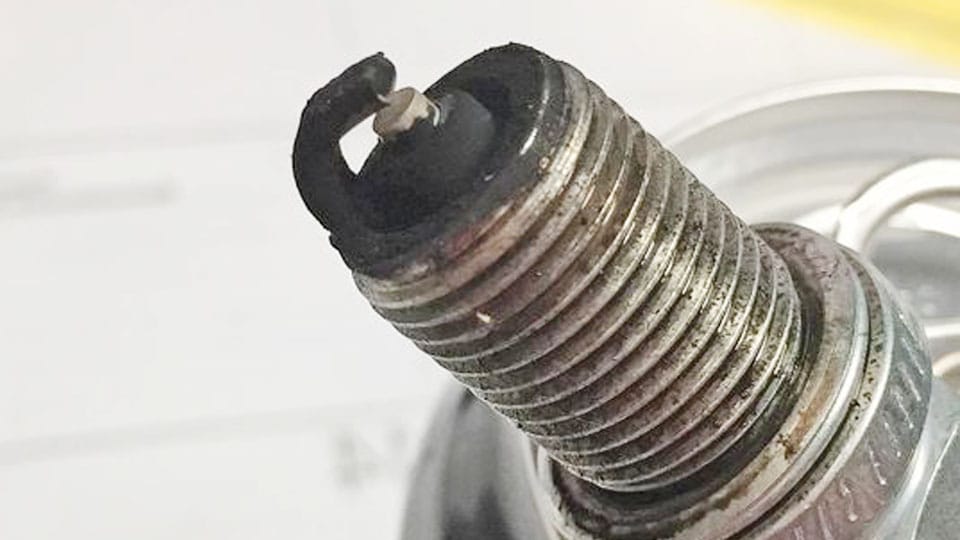
In my experience, spark plug labor can often take a few hours and cost a moderate amount at common shop rates, while engines with buried plugs, coil packs, or intake removal can take several more hours and cost much more. Bad quotes can hide a marked-up repair or a wrong diagnosis. This guide shows normal labor time, why some engines take longer, and when a high quote is justified.
How much should labor cost to replace spark plugs?
Labor-only pricing for spark plugs usually follows time, shop rate, and access. A simple job may bill at 1–2 hours, while a tight engine bay can push well past that. The estimate should split labor from parts. If it does not, the quote is harder to judge.
What a normal labor-only quote includes
A clean labor quote should cover plug removal, new plug installation, coil or wire removal and reassembly, and final start-up checks. It should also note whether the shop plans to inspect coils, boots, or the air filter. AutoAssist lists spark plug replacement at $100–$400 and says labor is about 65% of the total cost.
Why parts and labor get mixed on estimates
Many shops list one total because the parts cost is modest on some cars and the labor dominates the bill. That can blur the real comparison. A cheaper plug set may lower the total, but it does not change the labor much. The labor line should stay the same unless access or teardown changes.
When a low labor quote can still be incomplete
A low figure can miss coil boot damage, seized plugs, or hidden rear-bank access. It can also omit an intake gasket or throttle-body removal if the engine needs it. If the shop does not say why the time is low, ask what is being skipped. A short quote is not always a complete one.
What labor cost looks like by engine size
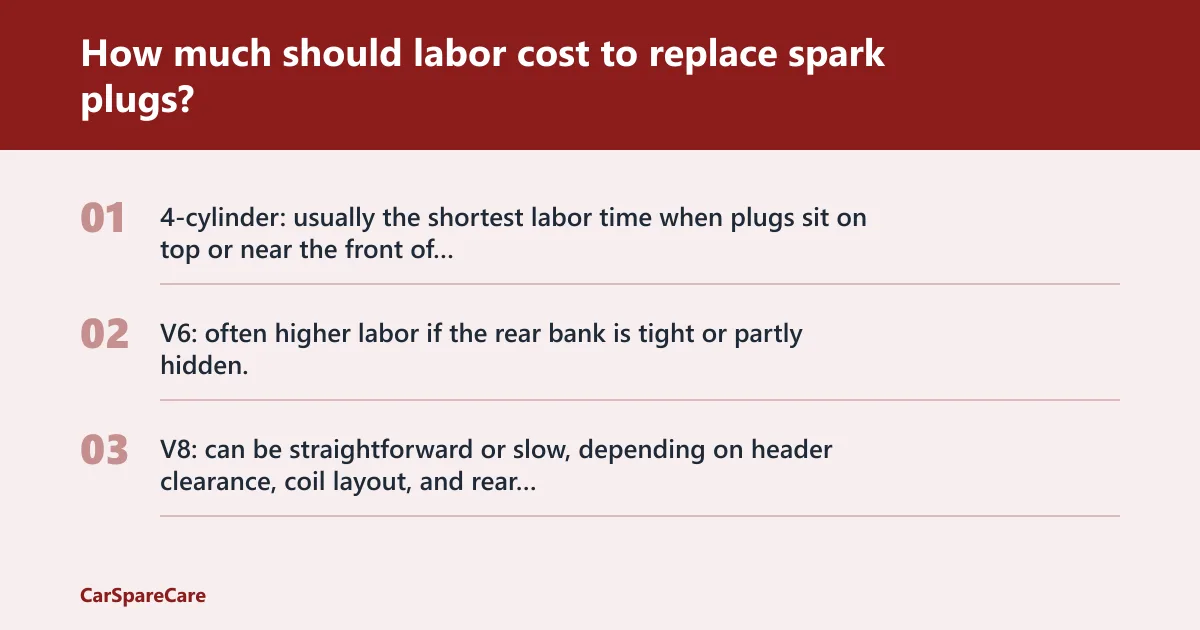
Four-cylinder engines with open plug access often stay near the low end of the range. V6 and V8 layouts vary more because rear-bank access may be blocked by cowl panels, intake plumbing, or the intake manifold itself. Typical spark plug replacement labor takes 30 minutes to 2 hours, but buried plugs can take much longer.
- 4-cylinder: usually the shortest labor time when plugs sit on top or near the front of the engine.
- V6: often higher labor if the rear bank is tight or partly hidden.
- V8: can be straightforward or slow, depending on header clearance, coil layout, and rear access.
According to Spark Plug Replacement Cost: $100 to $400 (2026) — AutoAssist lists spark plug replacement at $100–$400.
Why does access change the quote so much?
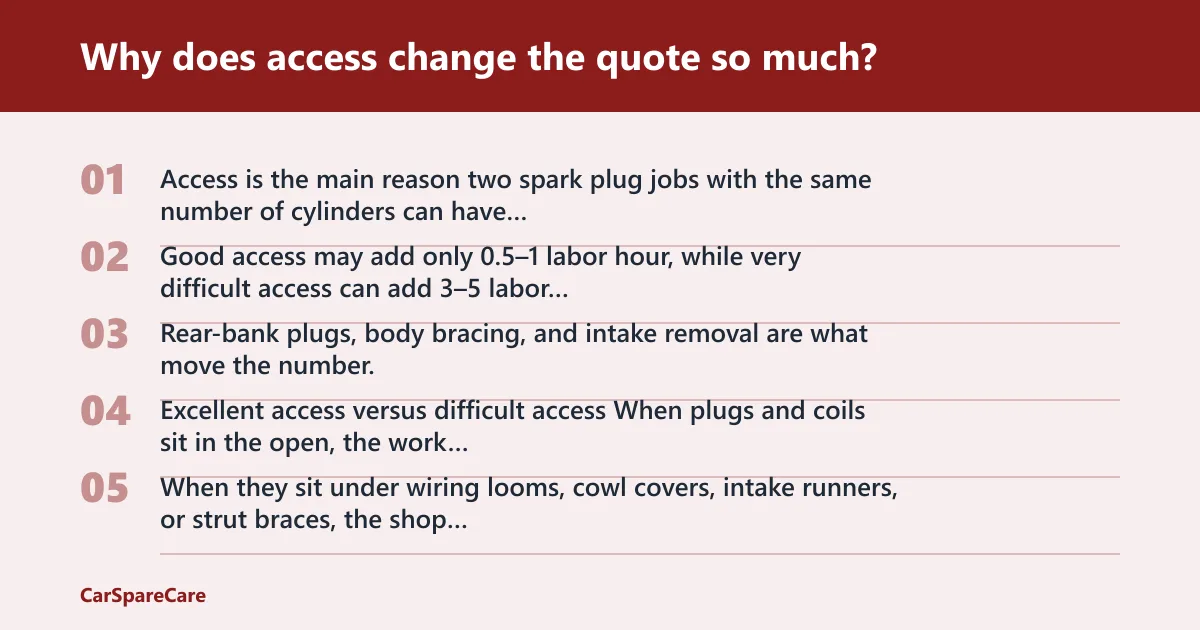
Access is the main reason two spark plug jobs with the same number of cylinders can have very different labor charges. Good access may add only 0.5–1 labor hour, while very difficult access can add 3–5 labor hours. Rear-bank plugs, body bracing, and intake removal are what move the number.
Excellent access versus difficult access
When plugs and coils sit in the open, the work is routine. When they sit under wiring looms, cowl covers, intake runners, or strut braces, the shop spends more time on teardown and reassembly than on the plugs themselves. AutoUpdateZone says a 4-cylinder engine with copper plugs and good access costs $80 to $180, while a V8 with difficult access can cost $300 to $650.
Rear-bank access on V6 and V8 engines
Rear-bank access is the big quote mover on transverse V6 engines and some V8 layouts. The visible plugs may take minutes. The hidden row may require working by feel, removing coils one by one, or taking off upper intake parts. That extra labor is fair when the hardware truly blocks the job.
When intake manifold removal adds time
Some engines place plugs or coils under the intake manifold. If the manifold has to come off, labor rises fast because the shop must handle gaskets, vacuum lines, and throttle connections. That is not padding if the layout demands it. Ask the estimator to point to the blocked bank before approving the extra time.
How much does labor cost to change spark plugs?
The labor charge to change spark plugs is often the same as the labor charge to replace them. Shops may use either term on the estimate. What matters is the billed time, not the wording. If the engine is easy, the labor should stay near the low end; if access is poor, higher labor is reasonable.
What should you expect for coils and boots?
Coil-on-plug systems add time because each coil must be removed before the plug comes out. Boot inspection is important, but coil replacement is not automatic. AutoAssist says coil replacement is not automatic and depends on condition. A cracked boot, oil soak, or misfire can justify extra work. A healthy coil does not need to be changed with every plug job.
When to replace coils with plugs
Replace coils when the fault pattern points to them: repeated misfire on one cylinder, visible cracking, oil contamination, or weak spark confirmed by testing. On high-mileage engines, a shop may recommend a set if several coils are failing together. That advice should come with a reason, not a blanket pitch.
When to inspect and reuse coils
If the engine runs clean, the coil boots are dry, and scan data shows no coil-related misfire, inspection and reuse is normal. The shop should check for tears, carbon tracking, and looseness, then reinstall the parts carefully. That is usually cheaper than replacing functioning coils just because the plugs are out.
How much does it cost to replace spark plugs with labor?
Total cost combines labor and parts. Plug material changes the parts line much more than the labor line. AutoUpdateZone says spark plug replacement cost ranges from $56 to $450. If the estimate is high, check whether the extra is from labor time, plug type, coil work, or hidden access.
Copper and nickel alloy plugs
Copper and nickel alloy plugs are usually the lowest parts cost. They can be fine in some older applications, but they typically wear faster than premium plugs. Their lower price does not mean the job is cheaper overall if the engine is hard to reach. Labor still sets the main cost.
Platinum and double platinum plugs
Platinum and double platinum plugs cost more than copper or nickel alloy plugs, but they often last longer. That can lower service frequency. The labor to install them is usually similar, unless the engine layout changes the time. For many owners, the parts price rises while the labor stays about the same.
Iridium plugs and service interval
Iridium plugs usually cost the most upfront, but they can run longer between services. That makes sense on engines where plug access is painful. Paying more for the plug can be easier to justify if the labor is the same and the replacement interval is longer. The labor bill does not shrink because the plug is premium.
Use this labor-quote decoder table before you approve work
This is the part most shoppers need. Compare the quote line by line. If the shop is charging for extra time, the estimate should name the access issue, the teardown, or the added inspection. If it does not, ask before approving the repair.
| Engine layout | Expected labor hours | Likely access issues | Red-flag add-ons to question |
|---|---|---|---|
| 4-cylinder, top-mounted coils | 0.5–1.5 | Open access, quick coil removal | Unexplained intake removal, extra coil charges without testing |
| 4-cylinder, tight bay | 1–2.5 | Wiring, covers, and hoses in the way | High labor with no note on blocked access |
| V6, front bank easy / rear bank tight | 1.5–3.5 | Rear-bank access, cowl or intake obstruction | Both banks billed the same despite rear-bank work |
| V8, good access | 1.5–3 | Coil-on-plug disassembly, deep plug wells | Coil replacement sold as mandatory with no fault evidence |
| V8, difficult access | 3–6+ | Rear-bank access, intake manifold or bracket removal | No breakdown of teardown time, gaskets, or reassembly labor |
- Ask for labor hours: compare the quote to the expected time, not just the dollar total.
- Ask what blocks access: rear-bank, intake, cowl, or bracket work should be named.
- Ask what is extra: coils, boots, gaskets, and seized hardware should be listed separately.
How much does labor cost to change spark plugs and coils?
Changing plugs and coils costs more because the coil work adds removal and testing time. If coils are only being inspected, the bill should stay lower. If one or more coils are actually being replaced, parts and labor rise together. AutoAssist says coil replacement is not automatic and depends on condition.
When coils should be replaced now
Replace coils when they fail testing, show visible damage, or match a repeated misfire code on the same cylinder. Oil-soaked boots and cracked housings are strong reasons, too. If several coils are aging and the engine has a known pattern of coil failure, a full set can be reasonable.
When coils should be inspected and deferred
If the engine starts clean, idles smoothly, and scan data does not point to coil failure, inspection is enough. Many shops can remove the coils, check the boots, and reuse them. That keeps the repair focused. Good estimates explain the difference between needed replacement and preventive upselling.
How much does it cost to replace spark plugs in a car?
In a normal car, the total cost depends on how the shop prices labor, which plugs are used, and how easy the engine is to reach. The national average is less useful than the actual labor breakdown. A simple job may stay near the low end; a hard one can climb fast.
National average, shop total cost range, and DIY parts cost range
AutoAssist lists spark plug replacement at $100–$400, with labor making up about 65% of the total. AutoUpdateZone lists a broader cost range of $56 to $450. DIY parts cost can be much lower, but that does not account for the risk of a damaged aluminum head, a stripped thread, or a broken plug.
Why DIY savings can disappear
Saving on labor is only useful if the install is clean. A cross-threaded plug can turn a cheap job into an expensive repair. On aluminum heads, the thread damage risk is real. AutoUpdateZone says aluminum heads are a medium-high risk DIY situation, and a no-torque-wrench job is high risk and should not be done.
Installation notes that matter
Plugs should be started by hand first, then torqued to spec with the proper tool. That keeps the plug straight in the threads and lowers the chance of damage. If the plug does not thread in smoothly, stop. Forcing it is how a routine tune-up becomes a head repair.
How much does it cost to replace spark plugs on a 6 cylinder?
A 6-cylinder spark plug job usually lands in the middle of the pack. The engine may be easier than a crowded V8, but harder than an open 4-cylinder, especially if the rear bank is tight. Labor rises when the shop must work around the intake, firewall, or upper engine covers.
What changes on a 6-cylinder job
On many 6-cylinder engines, one bank is harder to reach than the other. That uneven access is why two quotes for the same engine can differ. Ask whether the shop is pricing both banks equally or charging extra for the hidden row. The answer should match the layout.
How much does it cost to replace spark plugs in a Ford F-150?
Ford F-150 spark plug labor depends on engine choice and access, not just the truck badge. Some versions are straightforward, while others have deep wells, tight coil access, or hardware that takes more time to remove and reinstall. A fair quote should name the engine and the access issue.
What to check on a truck quote
Ask whether the estimate includes only plug replacement or also coil inspection, boot replacement, and any stuck hardware. If the engine has a history of seized plugs, the shop should say so before starting. That is where the labor total can rise without the estimate being shady.
How much does it cost to replace spark plugs on a Ram 1500 Hemi?
A Ram 1500 Hemi can be expensive to service when access is poor, because rear-bank work and nearby components slow the job. The labor cost is fair when the quote reflects the actual teardown time. If the estimate is high, it should identify what is blocking the plugs and why.
Why Hemi quotes can climb
On a Hemi, the issue is often access, not the plug itself. Deep wells, exhaust heat, and tight working room can make the job slower than the owner expects. If the shop adds time for stuck plugs, that should be stated clearly. Hidden labor is the problem, not honest labor.
How much does it cost to replace spark plugs on a Mercedes?
Mercedes spark plug labor is often higher because engine packaging can be tight and coil access can be slower than on simpler cars. The quote should still be readable. The shop should show labor hours, plug type, and any extra work for covers, intake parts, or rear-bank access.
Why luxury-car quotes may be higher
Higher shop rates, tighter packaging, and more teardown steps all push the total up. That does not mean every high quote is wrong. It means the estimate should be specific. If the bill is large but vague, the owner should ask for the labor hours and the reason each step is needed.
How much does it cost to replace spark plugs at Jiffy Lube?
Quick-lube pricing can look lower at first, but the final total depends on the vehicle and whether the shop is equipped for the access required. If the engine is easy, the price may be reasonable. If the job needs deeper teardown, the quote should rise or the shop may decline it.
What to ask before you agree
Ask whether the price includes labor only, labor plus parts, or labor plus an inspection of coils and boots. Also ask whether the quoted price assumes easy access. If the answer is vague, compare it against the labor-hour range and the access notes in the estimate decoder above.
Is a high spark plug labor quote ever fair?
Yes. A high quote is fair when the engine is genuinely hard to reach, plugs are seized, boots break during removal, or intake parts must come off first. Shop rate also matters. A higher hourly rate can make the same labor time cost more even when the hours are normal.
Seized plugs and broken boots
Older plugs can stick in the head, and brittle boots can tear during removal. Both add time. If the shop has to work slowly to avoid breaking hardware, the labor charge should reflect that. The same is true if one plug has already snapped and needs careful extraction.
Hidden access on trucks and luxury cars
Some engines hide the plugs behind body structures or under upper intake parts. That is real labor, not padding. When the quote is high, the repair order should say what is hidden and what has to come off to reach it. A good estimate reads like a plan, not a guess.
When shop rates, not labor hours, drive the total
Two shops can bill the same labor time and still land far apart on price. That is often just a rate difference. Compare the quoted hours first, then compare the hourly charge. If both are high, ask whether the job includes extra teardown, inspection, or coil work that should have been itemized.

Hi, I’m Melvin, an automobile engineer with extensive experience in automobile equipment. I currently work for a local automobile firm, where I specialize in the car parts industry. I’ve had the opportunity to collaborate with seasoned inspectors, gaining invaluable hands-on experience that goes beyond just theory.
My passion for automotive care started at a young age, which led me to create CarSpareCare. Through CarSpareCare, I share the knowledge and skills I’ve acquired over the years to help others navigate the world of car maintenance and repairs.
My goal is to provide practical tutorials, essential safety advice, and the latest industry insights so that anyone—whether a beginner or an expert—can confidently tackle their automotive projects.