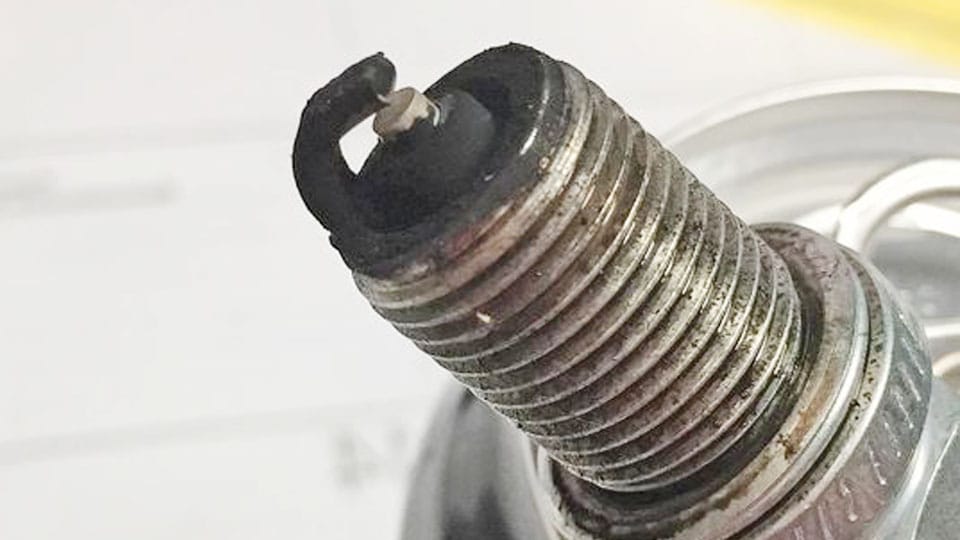
Budget about $120–$450 for spark plug maintenance on a used car, plus an extra buffer of roughly $75–$200 if service history is unknown or the engine is hard to access. Skip it, and misfires can hurt fuel economy and lead to coil or catalytic converter damage later. This guide shows how I set a plug budget by mileage, engine layout, and risk, then decide whether to replace plugs now.
What you’ll need before you price the job

- Owner’s manual or OEM service schedule
- Current mileage and purchase records
- Basic scan-tool results or a shop code readout
- Local labor rate from one independent shop and one dealer
- Parts quote for the exact plug type
- Allowance for coils, boots, and thread repair if the engine is overdue
- Check the factory plug specification and interval first.
- Write down the car’s mileage, age, and any service receipts.
- Scan for misfire codes before pricing parts.
- Ask for labor on your exact engine layout.
- Add a contingency line for unknown history.
According to Bosch’s 10 billionth spark plug rolls off the production line — Bosch says normal spark plugs last around 20,000 to 30,000 kilometres.
How to budget for spark plug maintenance on a used car
The budget needs three buckets: replacement parts, inspection or diagnosis, and a contingency fund. Used cars are different from cars with known records, because missing service history makes deferred maintenance more likely. That is where most owners get caught out.
Spark plugs wear with time and mileage, and the interval depends on plug type and engine design. Bosch says normal spark plugs last around 20,000 to 30,000 kilometres, but that is only a general marker. Spark plugs were patented on 7 January 1902, and Bosch says it has developed well over 20,000 spark plug types in 100 years.
Bosch also says it has more than 300 million spark plugs produced annually, with 31 different electrode configurations in its current catalogue and more than 1,250 spark plug variants. That spread is why a used-car budget should be model-specific, not one flat number.
The three cost buckets to track
| Bucket | What it covers | Typical budget target |
|---|---|---|
| Baseline replacement cost | Plugs, and labor if you are not doing the work yourself | $120–$450 |
| Inspection/diagnostic cost | Code scan, visual check, and plug access assessment | $0–$100 |
| Contingency add-ons | Coils, boots, seized plugs, thread repair, broken hardware | $75–$200 |
If the car already misfires, the second bucket matters. A rough-running engine can hide a plug issue, a coil issue, or both.

When do spark plugs need replacing on a used car?
Use mileage and age together, then verify the OEM service schedule. If the records are clear, follow the factory interval and plan the budget around that. If the records are missing, treat the plugs as overdue until inspection proves otherwise.
Replace them sooner when you see rough idle, harder starts, fuel economy loss, or misfire codes. That is the kind of real-world trigger I use. Neglected plugs can hurt performance, emissions, and fuel use. On a used car, that cost is usually small compared with chasing a misfire after it spreads to coils or the catalyst.
Budget rule by mileage and history
- Clear records and under the factory interval: budget for inspection now, replacement later.
- Clear records and near the factory interval: budget for replacement in the current service visit.
- No records: budget as if the plugs may be due now.
- Misfire symptoms present: add diagnostic time and a coil contingency.
How much should spark plug replacement cost?

Separate parts cost from labor cost. Basic plug sets are cheaper, but access and diagnosis can add more than the parts themselves. For a used car, a realistic budget starts with the plug type, then adds labor for the engine layout, then adds diagnostics if the engine is already running badly.
Iridium spark plugs usually cost more up front, and they often last longer than basic copper plugs. Platinum spark plugs sit between copper and iridium in price and service life, and OEMs often specify them. That means the cheapest part is not always the cheapest service plan.
Parts and labor by plug type
| Plug type | Budget tendency | Use case |
|---|---|---|
| Copper | Lowest parts cost, shorter service life | Older engines, shorter intervals |
| Platinum | Mid-range parts cost and life | Many OEM-specified applications |
| Iridium | Highest parts cost, longest service life | Newer engines, long-interval maintenance |
Labor time changes a lot with engine layout. A four-cylinder with open access is usually easier to budget than a V6 or V8 with buried rear plugs. Coil-on-plug layouts can add time if coils must come off before the plugs can be reached.
What affects spark plug replacement cost?
Vehicle access, plug type, and added repair risk drive most of the bill. A simple four-cylinder can stay near the low end of the range, while cramped rear-bank access, heat shields, or intake removal can push the job higher. That is why two used cars with the same mileage can need very different budgets.
Failure-case budgeting is where many estimates fall apart. Seized plugs, damaged threads, and broken boots are not common on every job, but once they appear the bill rises quickly. The budget should include a reserve for the worst common outcomes, not only the easy case.
How access and engine layout change the bill
- Four-cylinder engines: often simpler access, lower labor risk.
- V6 and V8 engines: often tighter access, more labor time.
- Coil-on-plug layouts: may need coil removal before plug removal.
- Rear-bank engines: may need intake or cover removal.
What else should you budget with spark plugs?
Ignition coils may need attention if the car misfires or the plugs were neglected. A failing coil can mimic plug wear, so a used-car budget should leave room for diagnosis before parts swapping starts. Boots and wires, where fitted, can also age out with the plugs.
If a plug seizes or the threads are damaged, thread repair becomes part of the budget. In a worst case, the head needs more invasive repair. That is uncommon, but it is expensive enough that a small contingency fund makes sense on any unknown-history purchase.
Build a contingency reserve
- Coils: add a reserve if the scan shows misfire codes or one cylinder is weak.
- Boots and wires: add if the engine uses them and they are brittle or oil-soaked.
- Seized plugs: add if the engine has long overdue service or corrosion risk.
- Thread repair: add if plug removal feels rough or the head is aluminum and neglected.
Use the spark plug budgeting worksheet
This worksheet turns plug life into a practical reserve. It separates the known cost now from the risk cost later, which is the part most used-car buyers miss. If the service history is clean, the contingency can stay small. If it is unknown, the reserve should be larger.
Worksheet
| Bucket | Low-risk car | Unknown-history car | High-risk access-heavy car |
|---|---|---|---|
| Baseline replacement cost | $120–$180 | $150–$300 | $220–$450 |
| Inspection/diagnostic cost | $0–$50 | $50–$100 | $50–$100 |
| Contingency add-ons | $0–$75 | $75–$150 | $150–$200 |
| Suggested reserve | $120–$305 | $275–$550 | $420–$750 |
Use OEM service schedule data as the floor, then move upward for age, mileage, and access. A car with clear records and easy access needs less reserve than one with missing paperwork and a buried rear bank.
Should I replace spark plugs as soon as I buy a used car?
Replace them right away if the mileage is near the OEM interval, the records are missing, or the engine already shows rough running. If the history is clear and the car is comfortably inside the interval, an inspection first is enough. That keeps you from spending early without a reason.
The decision rule is simple: replace now if the car is near due, misfiring, or undocumented; monitor if the plugs match the schedule and the engine is smooth. This is the cleanest way to avoid overpaying on a car that does not need immediate work.
If that didn’t work, try this next
- Read the OEM interval in the owner’s manual and compare it to current mileage.
- Run a scan for misfire codes before buying parts.
- Ask for a plug inspection quote on your exact engine.
- Replace the plugs now if the car is undocumented or already rough.
Common mistakes when budgeting for plug maintenance
Planning only for parts is the biggest miss. Labor often matters more than the plug set itself, especially on a cramped engine. Another mistake is assuming all spark plugs last the same amount of time. They do not, and the OEM specification matters.
Buying a used car with no records and treating the plugs as “probably fine” is another error. That saves nothing if the first symptom is a misfire. Waiting for a hard misfire before acting can turn a modest service into a larger ignition or exhaust bill.
How to avoid the budget traps
- Price parts and labor separately.
- Use the exact OEM plug specification.
- Budget more when service history is missing.
- Do not ignore access-heavy layouts.
- Carry a coil and thread-repair reserve on overdue engines.
Prevention: keep the service receipt and mileage in the glovebox after the job. That makes the next budget easier and helps prove when the plugs were last changed.
Frequently asked questions
How much should spark plug maintenance cost on a used car?
Plan on $120–$450 for the basic job, then add $75–$200 if the history is unknown or access is difficult. That range covers parts and labor on many common cars, but misfire diagnosis, coils, or thread repair can move the total higher.
Can I budget for spark plugs by mileage?
Yes. Match the car’s mileage to the factory interval, then add risk if records are missing. A car that is close to the interval should be budgeted for replacement now, while a car far under the interval may only need inspection and a small reserve.
Do iridium or platinum plugs cost more to maintain?
Iridium usually costs more up front and often lasts longer. Platinum sits between copper and iridium in both price and service life, and it is often the OEM choice. Maintenance cost is lower when the interval is longer and the engine is easy to reach.
What other ignition parts should I budget with spark plugs?
Ignition coils are the main extra item, especially when the engine misfires. Boots and wires, where fitted, can also fail at the same time. If plug removal is rough, leave room for thread repair or, in rare cases, more serious head work.
How can I tell if spark plugs are near the end of their life?
Look for rough idle, longer starts, hesitation, lower fuel economy, or a misfire code. A scan tool and a plug inspection give the clearest answer. If the plugs are worn and the service history is missing, budget for replacement instead of hoping they last much longer.

Hi, I’m Melvin, an automobile engineer with extensive experience in automobile equipment. I currently work for a local automobile firm, where I specialize in the car parts industry. I’ve had the opportunity to collaborate with seasoned inspectors, gaining invaluable hands-on experience that goes beyond just theory.
My passion for automotive care started at a young age, which led me to create CarSpareCare. Through CarSpareCare, I share the knowledge and skills I’ve acquired over the years to help others navigate the world of car maintenance and repairs.
My goal is to provide practical tutorials, essential safety advice, and the latest industry insights so that anyone—whether a beginner or an expert—can confidently tackle their automotive projects.