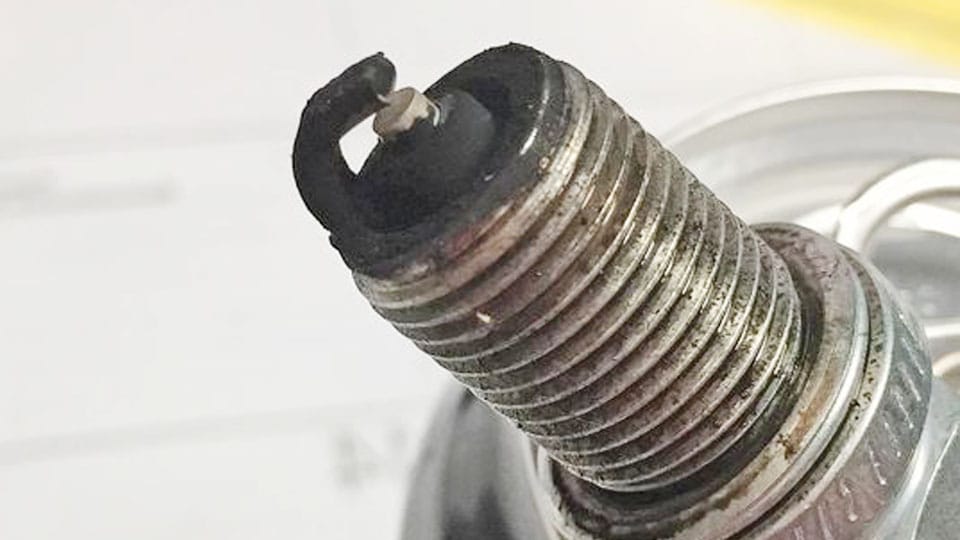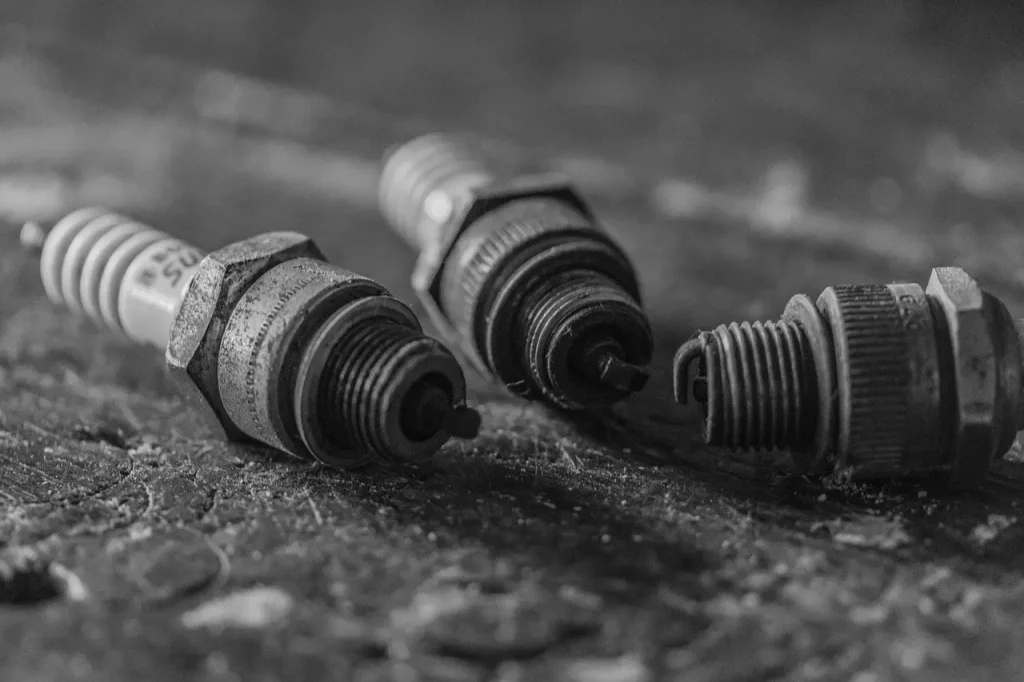
Clean only lightly fouled spark plugs with a soft brush, brake cleaner, and compressed air; if the electrodes are worn, cracked, oil-soaked, or the deposits are heavy and baked on, replacement is usually the better choice. Cleaning the wrong plug can leave misfires, hard starts, poor fuel economy, and a damaged catalytic converter. This guide shows how to judge a plug, clean it safely, and spot cases where replacement is the only sound choice.
What fouled spark plugs look like
Fouled plugs often show up as misfire, rough idle, hard starting, hesitation, or poor fuel economy. The plug itself may carry dry black carbon, wet oil, or pale ash on the insulator tip, center electrode, ground electrode, and threaded shell.
How to tell the main fouling types
Dry carbon fouling looks sooty and powdery. Oil fouling looks wet, dark, and sticky. Ash fouling is usually light tan, gray, or white and can sit on the insulator tip. Only the first type is sometimes worth cleaning; wet oil usually points to an engine problem that cleaning will not fix.
When a plug is a cleaning candidate
Light fouling can sometimes be cleaned instead of replacing the plug. If the insulator is intact, the electrodes still have shape, and the gap is close to specification, cleaning is a reasonable option. If the plug is cracked, badly eroded, or soaked in oil, replacement is the usual step.
What you’ll need
- Spark plug socket with the correct size and a rubber insert or grip
- Ratchet and extension if the plug wells are deep
- Wire brush for light deposits on electrodes and threads
- 220-grit sandpaper for light carbon buildup only
- Spark plug gap tool to check electrode spacing after cleaning
- Torque wrench for reinstalling to manufacturer specification
- Clean rag and compressed air to remove loose debris and moisture
- Brake cleaner for light residue on a sound plug
- Any thread treatment your vehicle guidance allows
How do you remove fouled spark plugs safely?
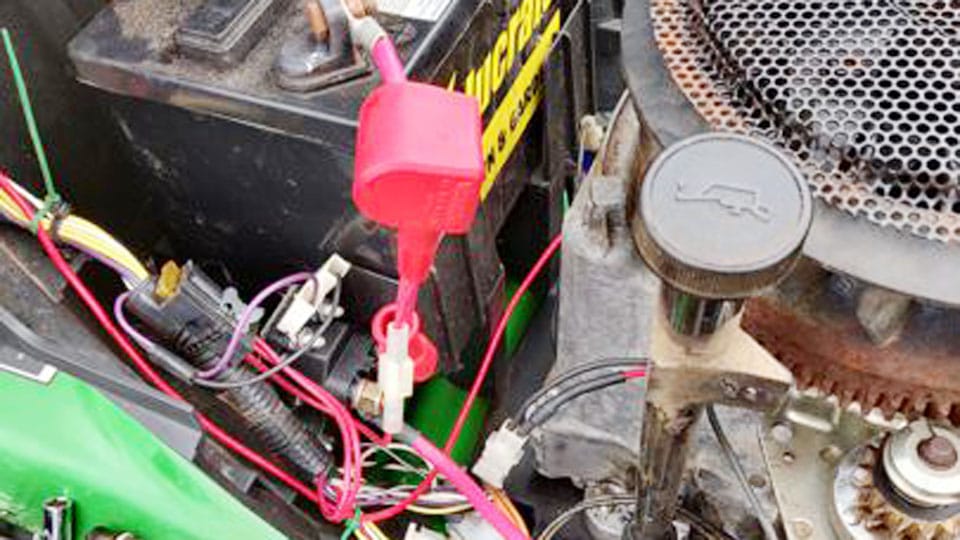
Let the engine cool, disconnect the battery if your setup calls for it, and clean the plug well before removal. That keeps dirt from falling into the cylinder and reduces the chance of thread damage. Use the correct socket so the shell does not round off.
- Switch the ignition off and let the engine reach ambient temperature.
- Blow dirt away from the plug well with compressed air.
- Disconnect the coil or lead, then fit the spark plug socket fully onto the plug.
- Break the plug loose with a ratchet, then back it out by hand if possible.
If a plug sits under a coil-on-plug boot and the well is dusty, a quick blast of air before removal matters more than force at the ratchet. That one step helps keep grit out of the cylinder and off the threads.
How should you clean light deposits?
Use gentle cleaning only on plugs with light dry carbon. Hold the plug by the shell and scrub the firing end with a soft brush, then use brake cleaner to lift residue from the center electrode, ground electrode, and threaded shell. 220-grit sandpaper is a last step for light carbon buildup only, because it can change the edge of the electrode gap.
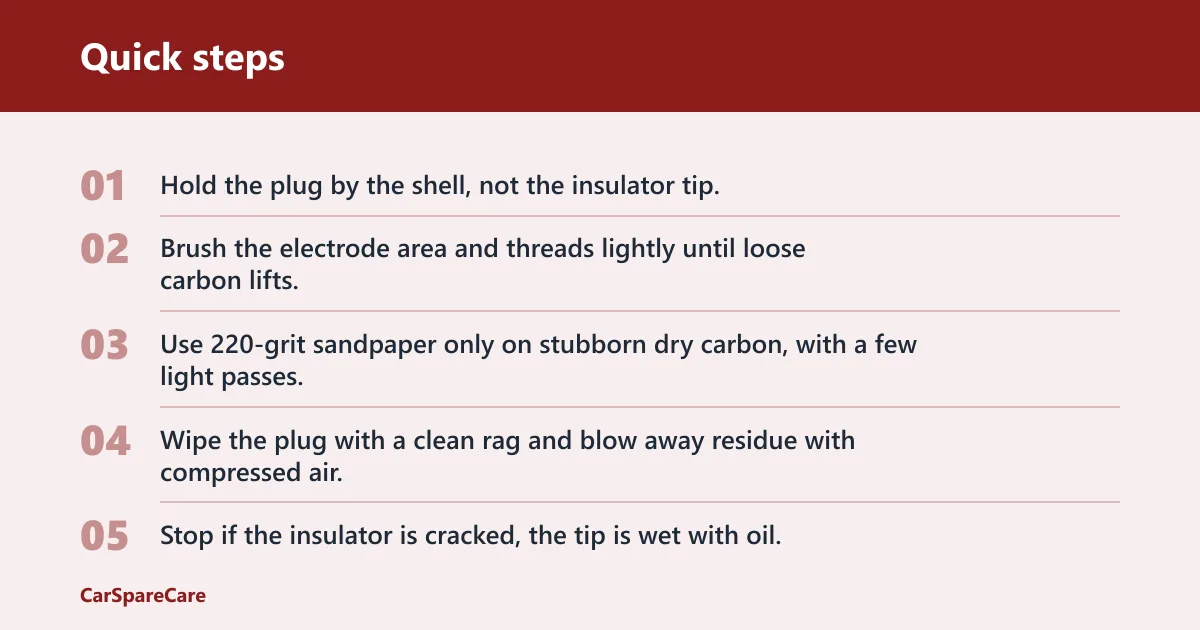
- Hold the plug by the shell, not the insulator tip.
- Brush the electrode area and threads lightly until loose carbon lifts.
- Use 220-grit sandpaper only on stubborn dry carbon, with a few light passes.
- Wipe the plug with a clean rag and blow away residue with compressed air.
- Stop if the insulator is cracked, the tip is wet with oil, or the electrodes look rounded away.
Brake cleaner can help remove loose film, while household acids are generally not the first choice. Vinegar is acidic, can leave residue, and can create questions about plating, boots, and rubber parts. It is not a routine cleaner for spark plugs.
A common first-timer mistake is soaking the whole plug in a household cleaner to “save time.” That can hide the real issue for a day, then the misfire returns because the plug was oil-fouled or the engine is running rich.
Clean, test, or Replace?
Use this checklist to make the decision fast. The key split is simple: dry light carbon may be cleaned; wet oil, cracked ceramic, eroded metal, or repeat fouling should push you to replacement and diagnosis.
| Plug appearance | Likely fouling type | Action |
|---|---|---|
| Dry black soot on tip and threads | Light carbon fouling | Clean if the insulator is intact and the electrode shape is still sharp |
| Wet, oily film on the firing end | Oil fouling | Replace the plug and fix the oil source before reinstalling anything |
| White or tan crust on the insulator | Ash fouling | Inspect the engine condition; clean only if deposits are light and the plug is otherwise sound |
| Cracked porcelain or chipped insulator tip | Physical damage | Replace immediately |
| Rounded or eroded center/ground electrode | Wear | Replace; cleaning will not restore the shape |
| Gap drift within manufacturer spec after cleaning | Correctable gap change | Clean, then verify with a gap tool and reinstall if spec is met |
| Plug fouls again soon after cleaning | Repeat-fouling risk | Replace the plug and diagnose the root cause first |
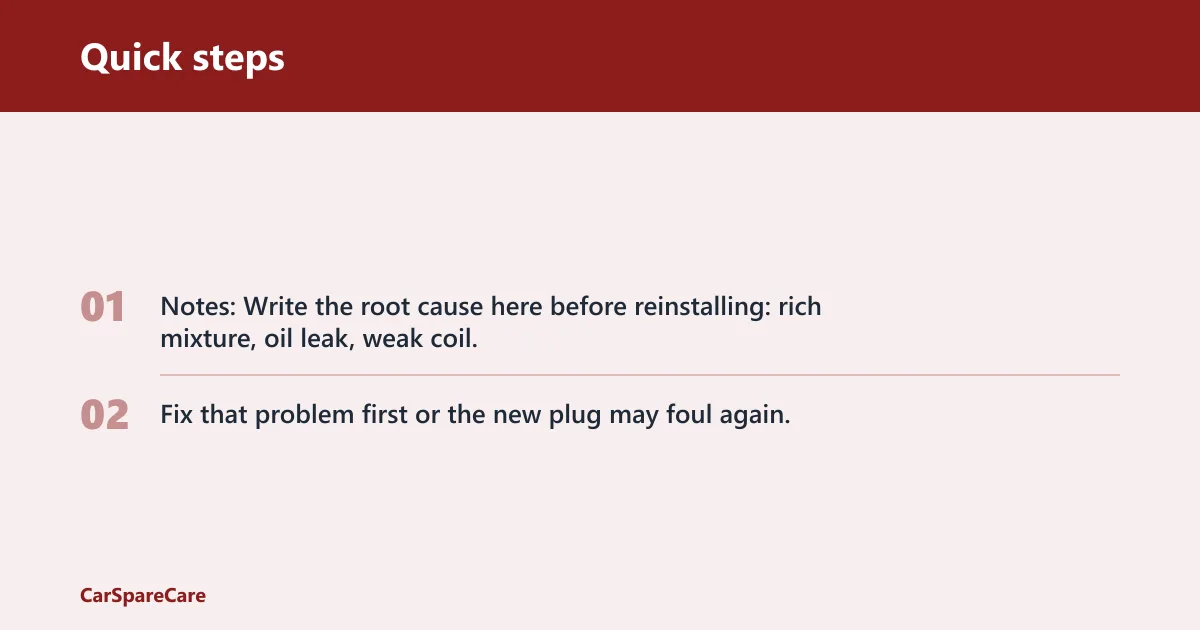
Notes: Write the root cause here before reinstalling: rich mixture, oil leak, weak coil, bad injector, short-trip driving, or overheating. Fix that problem first or the new plug may foul again.
Do you need to regap spark plugs after cleaning?
Yes, if the gap changed. Competitor guidance says to check and adjust the gap after cleaning, and typical spark plug gaps are usually between 0.028 and 0.060 inches. Use a spark plug gap tool to confirm the actual gap against the vehicle specification before reinstalling.
- Insert the gap tool into the gap and read the fit.
- Compare that reading with the manufacturer spec for your engine.
- Adjust only if the plug style allows it and the gap is off.
- Recheck after any adjustment.
If the plug is iridium or platinum with a delicate fine-wire tip, avoid aggressive bending. A damaged electrode edge is a replacement case, not a regap candidate.
How do you reinstall spark plugs correctly?
Start the plug by hand to avoid cross-threading, then finish with a torque wrench to manufacturer specification. That matters because overtightening can damage threads or crush the sealing washer, while undertightening can lead to poor heat transfer and loosening.
- Thread the plug in by hand until it seats smoothly.
- Set the torque wrench to the service spec for your engine.
- Tighten the plug to spec, then reconnect the coil or lead.
- If your vehicle guidance allows anti-seize, apply it lightly to the threads only.
Anti-seize is not mandatory on every plug. Use it only when the plug and vehicle guidance allow it, and keep it light so you do not alter the tightening load.
What mistakes should you avoid?
Do not treat cleaning as a cure for every fouled plug. It only works for light carbon on an otherwise sound plug. Avoid forcing a plug with dirty or damaged threads, and do not skip the gap check after cleaning if the gap may have changed.
Wet oil fouling is generally not a good candidate for cleaning alone. That usually means the engine has an oil-control problem, and the plug will foul again. Also avoid overworking the porcelain with a wire brush, because a crack can start where it is hardest to spot.
Picture a plug with soot on the tip, a 0.040-inch gap, and clean threads. That is a cleaning candidate. Picture another plug with oil on the firing end, a chipped insulator, and rounded electrodes. That one is a replacement, even if a brush makes it look better for a moment.
Prevention: Fix the cause of fouling before reinstalling the plug. That may mean correcting a rich mixture, finding an oil leak, replacing a weak coil, or addressing an injector issue so the new plug does not fail the same way.
Frequently asked questions
Can you clean fouled spark plugs?
Yes, but only when fouling is light and dry. Carbon deposits can often be removed with a soft brush and, for stubborn soot, 220-grit sandpaper used gently. Oil-fouled, cracked, or heavily worn plugs should be replaced rather than cleaned.
Can you clean and reuse a fouled spark plug?
You can reuse a lightly fouled plug if the insulator is intact, the electrodes are not eroded, and the gap can still be set to spec. After cleaning, inspect the plug under good light and verify the gap with a proper gauge before reinstalling.
When should a fouled spark plug be replaced instead of cleaned?
Replace it if the insulator is cracked, the electrodes are rounded away, the plug is wet with oil, or the fouling returns quickly after cleaning. Those conditions point to damage or an engine problem, not a simple surface deposit.
What tools do I need to clean spark plugs safely?
Use a correct-size spark plug socket with a rubber insert or grip, a ratchet, a soft brush, 220-grit sandpaper for light carbon only, a spark plug gap tool, a torque wrench, a clean rag, and compressed air. Brake cleaner can help with light residue.

Hi, I’m Melvin, an automobile engineer with extensive experience in automobile equipment. I currently work for a local automobile firm, where I specialize in the car parts industry. I’ve had the opportunity to collaborate with seasoned inspectors, gaining invaluable hands-on experience that goes beyond just theory.
My passion for automotive care started at a young age, which led me to create CarSpareCare. Through CarSpareCare, I share the knowledge and skills I’ve acquired over the years to help others navigate the world of car maintenance and repairs.
My goal is to provide practical tutorials, essential safety advice, and the latest industry insights so that anyone—whether a beginner or an expert—can confidently tackle their automotive projects.