

Choose car paint care products by starting with a few basics: pH-neutral shampoo, one or two wash mitts with a rinse bucket, a plush drying towel, and a quality sealant; add clay and polish only if the paint seems contaminated or shows visible swirls. Buy the wrong products and you can scratch clear coat, stain trim, or waste money on steps you do not need. This guide shows how to match product choice to paint condition, wash method, and budget.
What should a beginner buy first?
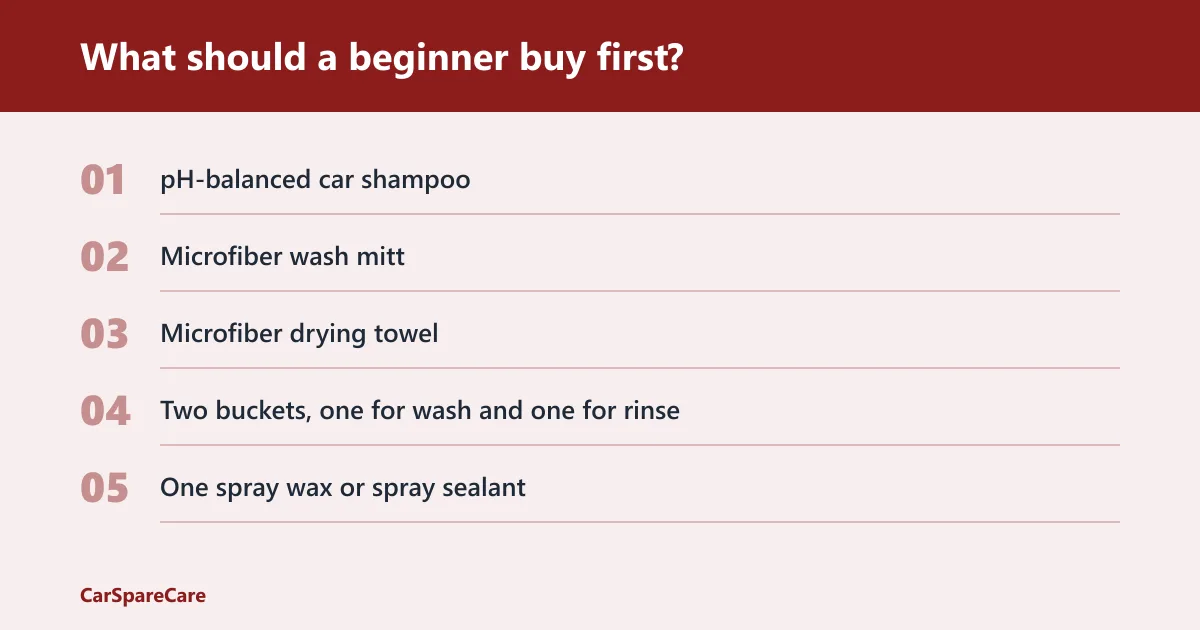
Start with a compact, safe kit that handles washing, drying, and light protection. For many beginners, that means pH-balanced car shampoo, a microfiber wash mitt, a microfiber drying towel, two buckets, and a spray wax or spray sealant. I would leave the rest until a real need shows up.
The smallest safe starter kit for clear coat paint
A practical first order should follow the wash process, not a giant bundle. Beginner products should cover washing, wheels, interior, glass, and paint protection, but the first purchase should focus on the exterior basics that protect clear coat during every wash.
- pH-balanced car shampoo
- Microfiber wash mitt
- Microfiber drying towel
- Two buckets, one for wash and one for rinse
- One spray wax or spray sealant
Thedailyautomotive recommends buying six basics first, including soap, mitts, towels, interior cleaner, glass cleaner, and tire cleaner. That is a sensible target, but the first dollar should go to the tools that lower wash risk on paint.
What to buy now, what to buy later, and what to skip
Buy now: shampoo, mitt, towel, buckets, and a simple spray protectant. Buy later: clay bar kit, polish, wheel cleaner, and APC if the car does not need interior cleaning yet. Skip for now: ceramic coating, aggressive wheel cleaner, and any correction product that adds risk without solving a visible problem.
Carcaretotal lists clay bar kit and paste wax or spray sealant as exterior products, but a beginner does not need all of them on day one. A starter kit should solve current needs first.
How much a basic kit should cost
A beginner detailing kit is estimated to cost between $80 and $150. That range is enough for a proper wash setup plus a light protection product, without drifting into expensive correction gear or extra bottles that sit unused.
| Budget tier | Buy now | Buy later | Skip for now |
|---|---|---|---|
| About $80 | Shampoo, mitt, drying towel, two buckets, one spray sealant | Wheel cleaner, APC, quick detailer | Clay bar kit, polish, ceramic coating |
| About $120 | Add grit guard, extra drying towel, interior cleaner | Wheel brush, glass cleaner, quick detailer | Paste wax, correction compounds |
| About $150 | Add finish-specific wheel cleaner and a second mitt for lower panels | Clay bar kit, APC, tire cleaner | Machine polish, pro coating systems |
According to Car Detailing for Beginners: Complete Starter Guide – Car Care Total — A beginner detailing kit is estimated to cost between $80 and $150.
How do you choose by paint condition and risk?

Start with the least risky product that solves the job. If the paint is dirty, wash it. If it feels rough after washing, decontaminate. If it looks tired or has swirls, protection may help the gloss, but correction is a separate step. Do not buy a product for a problem the car does not have.
Clear coat, single-stage paint, wrapped panels, and sensitive trim
Clear coat paint usually tolerates a normal wash routine best, so beginners should focus on low-risk soap, mitts, and drying towels. Single-stage paint can be more sensitive to aggressive polishing because color comes from the top layer. Wrapped panels, matte finishes, black textured trim, and glossy plastic trim need extra label checks for trim-safe and finish-safe language.
A beginner starter kit matrix usually labels car wash soap and microfiber wash mitt as low risk and must-buy. Wheel cleaner is marked as medium risk in the starter-kit matrix, which is why finish compatibility matters more than brand hype.
When the car needs washing, decontamination, or protection
- Wash first if the paint has road film, dust, salt, or mud.
- Use clay only after washing, with lubrication, when the paint still feels rough.
- Use spray wax or spray sealant when the surface is clean and needs a thin layer of protection.
- Use polish only if swirls, oxidation, or dullness are visible and you are ready for correction.
That order matters. A clay bar kit is not a cleaner for heavy dirt. It is a paint decontamination tool, and it requires lubrication plus follow-up protection.
What should you look for on a car shampoo label?
Look for pH-balanced or pH-neutral wording, good lubricity, and a rinse-clean finish. Those three signals point toward safe wash behavior on clear coat. Avoid products that lean on foam claims without saying anything about dirt release, lubrication, or how easily the residue rinses away.
Why pH-balanced and good lubricity matter
Carcaretotal says a pH-neutral car shampoo is an essential item, and the same logic applies to a beginner’s first bottle. pH-balanced soap is safer for regular washing because it is aimed at cleaning dirt rather than stripping everything on the paint. Good lubricity helps the mitt glide instead of grabbing grit.
Rinse clean versus foamy marketing
Foam can look impressive, but foam alone does not tell you whether the soap leaves residue or rinses clean. Beginners should prefer a soap that says it rinses clean and is safe for clear coat. That matters more than a dramatic lather.
Why the wash mitt and two-bucket method matter as much as the shampoo
lists a pH-balanced car shampoo and microfiber wash mitt as starter basics, and recommends a two-bucket wash method to help keep dirt out of the mitt. The mitt lifts grit into its fibers, while the rinse bucket gives that grit somewhere to go before it returns to the paint.
Microfiber wash mitts are preferred because the soft fibers trap dirt better than a hard sponge. Pair the mitt with a rinse bucket and a grit guard when possible. That setup reduces swirl risk more than any premium soap label.
Build the wash and dry setup the right way
The wash setup should make dirt leave the paint, not move around on it. Use one bucket for soap, one for rinsing the mitt, and separate towels for paint and interior work. That small bit of discipline prevents cross-contamination and reduces marring.
Microfiber wash mitt choice
Choose a microfiber mitt with soft fibers and clear dirt-lifting wording. A mitt that feels plush and flexible is easier to keep flat against the paint. Hard edges and coarse pads increase the chance of towel marring when a panel is dusty.
Microfiber drying towel choice
Pick a microfiber drying towel that is high absorbency, low-lint, and labeled paint-safe for drying. A good towel pulls water off the surface quickly, which helps reduce water spots. It should feel soft enough to touch paint without dragging.
Two buckets, grit guard, and separate towels for paint and interior
Use a wash bucket plus a rinse bucket, and add a grit guard if possible. The guard helps keep debris lower in the bucket, so the mitt is less likely to pick it back up. Keep interior towels separate from paint towels so trim cleaner, APC, and interior grime do not end up on clear coat.
Which protection product should beginners start with?
Beginners should usually start with a spray wax or spray sealant, not paste wax or coating systems. Spray products are easier to apply, easier to wipe off, and less likely to create streaking when used on a clean panel. They give light protection without turning a simple wash into a bigger job.
Spray wax versus spray sealant
Spray wax and spray sealant are both beginner-friendly. says they are easier than paste waxes for beginners, and notes a spray-on, wipe-off ceramic spray coating format. In practice, spray wax tends to be chosen for simple gloss and slickness, while spray sealant is often chosen for longer-lasting light protection.
Why paste wax is usually a later buy
Paste wax asks for more prep, more controlled application, and more care during removal. A beginner usually gets better results from a spray product because it is quicker to learn and less likely to leave high spots or heavy residue.
Where quick detailer fits between washes
Quick detailer is for light dust, fingerprints, or a bird dropping that needs safe removal before it bakes on. It is a maintenance product, not a wash replacement for heavily soiled paint. Used wrong, it can smear grime and drag grit across the finish.
When are clay bars, APC, and wheel cleaner worth buying?
Buy these products when the job calls for them, not because a kit includes them. Clay bar kits belong after washing and before protection. APC belongs mostly to interior and compatible surfaces. Wheel cleaner belongs when brake dust needs a finish-safe cleaner that matches the wheel type.
Claying after washing, with lubrication and follow-up protection
A clay bar kit can remove bonded contamination from paint, and it should only be used after the car is washed. The clay needs lubrication, and the panel should be protected afterward because claying can leave the surface bare. That is why clay is a later buy for many beginners.
APC for interior surfaces and safe dilution
APC can be useful on plastic, vinyl, and fabric when the label suggests mild dilution and the surface is compatible. It is not a universal cleaner for delicate trim, piano black panels, or sensitive finishes unless the label says it is safe there. Overuse can stain or haze surfaces that needed a gentler cleaner.
Wheel cleaner risk, wheel finish compatibility, and brush use
Wheel cleaner should be safe for the wheel finish and can be paired with a wheel brush. marks wheel cleaner as medium risk, which is a fair caution because harsh formulas can damage sensitive coatings, dull finishes, or attack trim if left too long. A safe product should rinse clean and match the wheel material.
Do not default to the strongest wheel cleaner on the shelf. For many beginners, soap and a brush are enough on lightly dirty wheels.
Beginner paint-care decision matrix
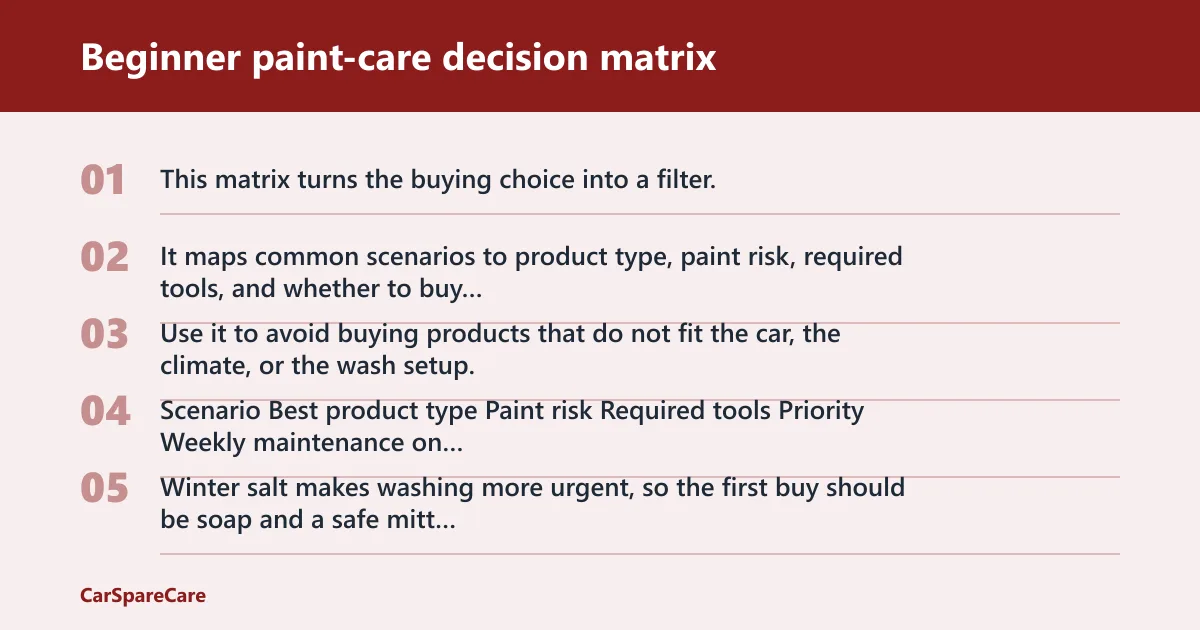
This matrix turns the buying choice into a filter. It maps common scenarios to product type, paint risk, required tools, and whether to buy now, buy later, or skip for now. Use it to avoid buying products that do not fit the car, the climate, or the wash setup.
| Scenario | Best product type | Paint risk | Required tools | Priority |
|---|---|---|---|---|
| Weekly maintenance on clear coat | pH-balanced shampoo | Low | Two-bucket wash, microfiber mitt, drying towel | Buy now |
| First wash for a daily driver with road film | Shampoo plus spray sealant after drying | Low | Wash mitt, rinse bucket, drying towel | Buy now |
| Paint feels rough after washing | Clay bar kit | Medium | Clay lubricant, drying towel, follow-up protection | Buy later |
| Black trim beside the paint | Trim-safe shampoo and protectant only | Medium | Soft mitt, separate towel | Buy now |
| Wheel faces with brake dust | Finish-safe wheel cleaner | Medium | Wheel brush, rinse hose or bucket | Buy now if needed |
| Sparse apartment setup, limited storage | Compact wash kit with spray sealant | Low | Two buckets, mitt, one drying towel | Buy now |
| Winter salt on daily-use car | pH-balanced shampoo and drying towel | Low | Frequent wash access, rinse bucket | Buy now |
| Hot sun and fast-drying panels | Quick rinse-friendly shampoo and spray sealant | Low | Shade, microfiber drying towel | Buy now |
| Garage-kept car with light dust | Quick detailer for spot cleaning | Low | Clean microfiber towel | Buy later |
| Bird droppings or fingerprints between washes | Quick detailer | Low | Soft microfiber towel | Buy later |
| Interior plastics and fabric need cleanup | APC with mild dilution | Medium | Interior towels, soft brush if needed | Buy later |
| Looking for long-term appearance upgrade | Spray sealant first, coating later | Low to medium | Clean wash setup, careful wipe-off | Buy later |
How the matrix changes with climate, parking, and driving conditions
Hot sun pushes you toward faster-rinsing shampoo, shade, and a drying towel that pulls water off the paint before spots set. Winter salt makes washing more urgent, so the first buy should be soap and a safe mitt rather than a cosmetic product.
Apartment living often means less storage, so a compact kit wins. Water restrictions mean you should prioritize efficient wash tools and products that rinse clean. Daily-driven cars need maintenance protection sooner; garage-kept cars can wait longer on polish, clay, or specialty protection.
What car care products should you skip at first?
Skip products that add complexity before you have a wash routine. That includes machine polish, aggressive wheel cleaner, full ceramic coating systems, oversized starter kits, and dressings or specialty products for parts that are not yet dirty or faded.
Common beginner mistakes to avoid
- Using one towel for paint, wheels, and interior
- Washing with a sponge that holds grit on the surface
- Letting shampoo or APC dry on the panel
- Using quick detailer on heavily soiled paint
- Buying clay before the car is actually washed and inspected
- Choosing wheel cleaner without checking wheel finish compatibility
Failure cases are usually simple. Towel marring comes from dirty towels or too much pressure. Streaking usually comes from overapplication. APC staining happens when dilution is wrong or the surface is sensitive. Wheel-cleaner damage happens when the formula is too strong for the finish or left on too long.
How do you choose products for your climate and driving conditions?
Match the product to where the car lives and how it is used. Hot sun, winter salt, apartment parking, and water restrictions all change the buying order. The best first products are the ones that solve the environment you face every week, not the one you hope to have later.
Hot sun
Choose products that rinse clean and dry quickly. Wash in shade when possible, because fast evaporation can leave streaks and water spots before you can wipe the panel. A drying towel and a light spray sealant make more sense than a slow paste product.
Winter salt
Salt exposure means more frequent washing and a safer, simpler wash system. A pH-balanced shampoo, microfiber mitt, and drying towel matter more than heavier-looking protection products. Paint protection can come later, after the car is being cleaned regularly.
Apartment living and water restrictions
A compact bucket setup with a single spray protectant is usually the best first buy. If storage is tight, skip the big kit. Keep the focus on products that rinse clean, dry fast, and need little equipment.
Daily drivers, garage-kept cars, and outdoor parking
Daily drivers collect the most contamination, so a safe wash routine matters most. Garage-kept cars often need less frequent cleaning, which makes quick detailer and spray sealant more useful than heavy correction products. Outdoor parking increases the need for regular washing and simple protection, not an expensive coating at the start.
Frequently asked questions
What car paint care products should a beginner buy first?
Start with pH-balanced shampoo, a microfiber wash mitt, a microfiber drying towel, two buckets, and a spray wax or spray sealant. That list covers the basics safely. Add APC, wheel cleaner, or clay only when the car has a clear need for them.
Do I need wax, sealant, or ceramic coating as a beginner?
A beginner usually needs a spray wax or spray sealant first. Those products are easier to apply and remove than paste wax, and they are far simpler than coating systems. Ceramic coating is a later choice after washing and prep habits are solid.
Are clay bars, polishes, and quick detailers beginner-friendly?
Quick detailer is beginner-friendly for light dust, fingerprints, and isolated spots. Clay bars are useful but need lubrication and follow-up protection. Polishes are a later step because they address swirls and correction, not routine washing or protection.
How much should a beginner car paint care kit cost?
A beginner detailing kit is estimated to cost between $80 and $150. That range should cover a proper wash setup and one protection product. If the basket is full of products that do not match the car’s condition, the kit is too large.

Hi, I’m Melvin, an automobile engineer with extensive experience in automobile equipment. I currently work for a local automobile firm, where I specialize in the car parts industry. I’ve had the opportunity to collaborate with seasoned inspectors, gaining invaluable hands-on experience that goes beyond just theory.
My passion for automotive care started at a young age, which led me to create CarSpareCare. Through CarSpareCare, I share the knowledge and skills I’ve acquired over the years to help others navigate the world of car maintenance and repairs.
My goal is to provide practical tutorials, essential safety advice, and the latest industry insights so that anyone—whether a beginner or an expert—can confidently tackle their automotive projects.

