Before a road trip, replace spark plugs if they’re coming due soon, are already causing misfires or hard starts, or you’ll be far from help; otherwise, a quick check is usually enough. Worn plugs can mean rough running, poor fuel use, and a tow on the worst day. This guide shows how mileage, symptoms, trip length, and service history change the decision.
Should you replace spark plugs before a road trip?
The answer is conditional. Replace them now when the plugs are near the service interval, the engine already shows plug-related symptoms, or the trip is long enough that a roadside problem would cost more than preventive service. If the car is recent on service and running cleanly, inspection is often the better move.
Spark plugs fire the air-fuel mix in the cylinder, and they wear by electrode erosion and deposit buildup. That wear is slow, which is why many drivers forget about them until a cold morning, a rough idle, or a misfire code appears. The question before a trip is not “Are plugs old?” It is “What does waiting cost?”
How to decide: replace now, inspect first, or monitor
Use three filters together: mileage remaining, symptom severity, and service-history certainty. A plug set that is close to the factory interval, paired with any hard-starting or rough-running behavior, belongs in the replace-now bucket. Unknown history pushes the decision toward inspection, especially before remote travel.
If the car has plenty of life left on the plugs and the trip is short, monitoring is reasonable. If the route is remote, the load is heavy, or the schedule leaves no room for repair delays, the risk shifts. The same plug set can be fine for daily commuting and a bad idea for a mountain crossing with no nearby parts store.
How the owner’s manual fits into the decision
The owner’s manual or factory maintenance schedule is the first reference. It is vehicle-specific and can differ by engine, plug material, and tune. A generic interval is only a starting point. Some engines use long-life plugs; others wear them faster because of heat, access, or combustion design.
That matters before a road trip. A vehicle with a copper set near its interval deserves a different answer than one with iridium plugs and documented recent replacement. The manual gives the baseline. The trip details decide how much margin you need.
What spark plugs do, and how they wear out
Spark plugs fire the air-fuel mix in the cylinder. As they age, the firing edges erode and deposits build up. That changes the spark quality and can make the engine harder to start, rougher at idle, or more likely to misfire under load.
Not every worn plug fails in the same way. Some show heavy deposits. Some simply widen the gap as the electrodes wear. A plug can be weak enough to cause trouble on a highway climb while still feeling fine around town.
Why copper, platinum, and iridium last different lengths of time
Copper spark plugs are generally the shortest-life design in common use and usually need replacement sooner than other types. Platinum or iridium plugs can last 60,000 to 100,000 miles or more. Iridium plugs may last 80,000 to 100,000 miles, sometimes longer, depending on the engine and driving pattern.
That does not mean every long-life plug should be left alone until the maximum number. Heat, fuel quality, oil consumption, and frequent cold starts all change the picture. A plug that looks fine on paper may be tired in real use if the vehicle lives a hard life.
| Plug type | Typical service life range | Road-trip decision |
|---|---|---|
| Copper | 20,000 to 30,000 miles | Replace early if near interval or history is unknown |
| Platinum | 60,000 to 100,000 miles | Inspect if near interval; replace if symptoms appear |
| Iridium | 80,000 to 100,000 miles or longer | Often inspect first unless symptoms or overdue service are present |
How many miles do spark plugs usually last?
There is no single replacement interval for every vehicle. Copper spark plugs may need replacement around 20,000 to 30,000 miles. Platinum or iridium plugs often last 60,000 to 100,000 miles or more. The vehicle’s manual still wins over any general rule, because engine design and plug type matter.
For trip planning, the practical question is how much life remains, not just how many miles the plug set has seen. A plug that is 5,000 miles from its scheduled interval is a stronger candidate for replacement than one with 40,000 miles of margin left, especially if the route is remote.
Copper spark plugs
Copper plugs wear sooner and are common in older or higher-maintenance engines. If a road trip is coming up and the set is already close to the 20,000 to 30,000 mile range, replacement is usually the safer bet. Copper plugs do not give the same long buffer as platinum or iridium.
Platinum spark plugs
Platinum plugs usually last longer than copper plugs and are often a middle-ground choice. If the service record shows they were changed well within their interval and the engine runs cleanly, inspection may be enough. If the history is fuzzy or the plugs are near the end of their range, replacing them before departure is easier to justify.
Iridium spark plugs
Iridium plugs are generally intended for longer service, often well beyond standard intervals. That does not make them immune to wear, deposits, or heat-related trouble. If the vehicle has hard-starting or misfire symptoms, the plug set should still be checked even if the mileage looks acceptable.
What signs mean the plugs may need attention before traveling?
Hard starting, rough idle, misfires, poor fuel economy, and sluggish acceleration are the signs that should change the road-trip decision fast. A check engine light can accompany plug problems, but it does not prove the plugs are the only cause. Symptoms matter more when the trip is long or remote.
These signs can show up separately or together. A slight stumble at idle may be the first clue. A more obvious hesitation under load is more concerning before a highway trip, because the engine will be asked to stay consistent for long stretches.
What misfire codes mean, including P0300
Misfire codes like P0300 or a cylinder-specific code are clues, not proof. They often appear with worn plugs, and they can also point to ignition coils, injectors, vacuum leaks, or even battery and charging issues. A code tells you where the problem may be happening, not which part is guilty.
That is why a diagnostic scan is better than guessing from symptoms alone. Replacing plugs can fix a plug-related misfire, but if the same code comes back, the diagnosis needs to widen. Ignition coils may already be stressed by worn plugs and may need attention if the symptom persists after replacement.
Why rough running is not always spark plugs
Rough idle and hesitation are common plug symptoms, but they overlap with other faults. Dirty injectors, intake vacuum leaks, weak coils, and a weak battery can all cause similar complaints. Before a trip, it is smarter to treat spark plugs as one likely cause instead of the only one.
If the engine is already running poorly, the safest move is to inspect and diagnose before departure. That is especially true when the code set includes P0300, because random misfires can be caused by more than one cylinder or more than one system.
Do driving conditions shorten spark plug life?
Yes. In many cases, short trips, stop-and-go use, cold starts, towing, and heavy loads can shorten spark plug life. Those conditions keep the engine from reaching steady operating patterns or raise cylinder demands, which means plugs can accumulate deposits or wear faster than the manual’s ideal schedule suggests.
For a road trip decision, that history matters. A vehicle used mostly for short errands may need plugs sooner than the mileage alone suggests. A towing vehicle should be treated more cautiously, especially if it already shows roughness, hesitation, or hard starting.
Short trips and cold starts
Short trips can shorten spark plug life. Cold starts add extra wear because the engine runs richer and less cleanly until it warms up. If a vehicle has spent years doing brief drives, plug condition may be worse than the odometer suggests.
Stop-and-go use, towing, and highway heat
Stop-and-go use and towing can increase stress on the ignition system. Towing can increase spark plug stress, and heavy loads make weak plugs show up sooner. A long highway run itself is not usually the problem; the problem is when the engine must pull hard with tired plugs already in place.
Road-trip decision checklist: replace now, inspect first, or monitor

Use this checklist to choose the least risky option. The best outcome depends on how much service life is left, how strong the symptoms are, how far you will drive, and how certain the maintenance history is. A remote trip with unknown plugs deserves a different answer than a local weekend drive.
- Replace now if the plugs are due within about 10,000–15,000 miles, the vehicle has hard starting, rough idle, misfires, or a check engine light, or the route is remote enough that a breakdown would be costly.
- Inspect first if the plugs are not clearly due, the service history is uncertain, or the engine shows mild symptoms that could also be coils, injectors, vacuum leaks, or battery-related.
- Monitor and go if the plugs are well within their interval, the engine runs cleanly, and the trip is not remote or time-critical.
Outcome 1: replace now
This is the right call when a plug set is near the end of its interval, the vehicle is already showing plug-type symptoms, or a roadside failure would cost more than preventive work. It is also the sensible choice when parts availability on the road is poor and the trip cannot absorb delays.
Outcome 2: inspect first
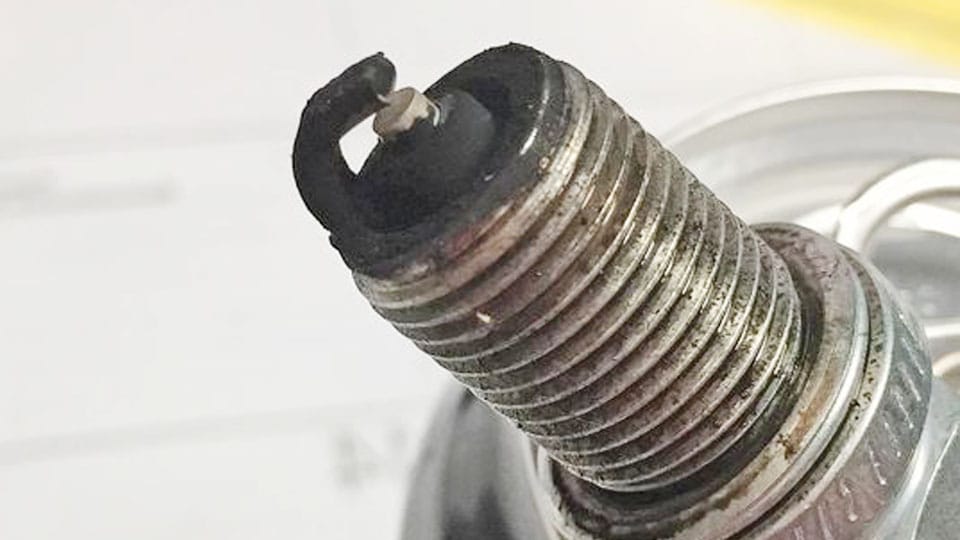
Inspection makes sense when the mileage is not clearly overdue but the history is unclear or the engine has mild symptoms. Pulling the plugs lets you look for a light tan or gray appearance, which is usually normal used condition, versus black dry soot from carbon fouling or wet oil deposits from oil consumption.
Outcome 3: monitor and go
Monitoring is acceptable when the plugs have plenty of life left, the engine is running well, and the trip is close enough that a repair stop would be manageable. Freshly serviced vehicles with clear records rarely need pre-trip replacement just because a trip is coming up.
Cost and risk matrix for a pre-trip spark plug decision
The cheap decision is not always the safe one. Planned service now usually costs less than a tow, a lost day, and a scramble for parts on the road. The farther you are from home, the more the math shifts toward preventive replacement when the plugs are already near their limit.
| Decision | Upfront cost | Roadside risk | Best fit |
|---|---|---|---|
| Replace now | Planned service cost | Low | Overdue plugs, symptoms present, remote travel, unknown history |
| Inspect first | Low to moderate | Medium | Unclear history, borderline mileage, mild symptoms |
| Monitor | Lowest now | Low to medium | Recent service, no symptoms, short or flexible trip |
Think about the full failure cost, not just the part price. A roadside misfire can mean towing, lost trip time, fewer shop options, and the possibility that the real fault is not the plugs at all. If the vehicle is far from home, waiting often costs more than the repair.
Frequently asked questions
How do I know if spark plugs need replacing before a long trip?
Look for hard starting, rough idle, misfires, sluggish acceleration, poor fuel economy, or a check engine light. Then compare those signs with the service record and the owner’s manual. If the history is uncertain or the plugs are near their interval, inspect or replace before leaving.
Can worn spark plugs cause a car to break down on a road trip?
They can, especially if they are already causing misfires or hard starting. A worn plug may not strand a car by itself, but it can trigger rough running, power loss, and a tow if the problem worsens under load. Remote travel raises the cost of that failure.
Should I replace spark plugs early if the car is running fine?
Not automatically. Early replacement makes sense when the plugs are close to their interval, the trip is long or remote, or the service history is unclear. If the car runs cleanly and the plugs still have plenty of life left, inspection is usually the better cost choice.
Can a check engine light mean I need spark plugs before traveling?
Yes, but it is not proof by itself. A check engine light can accompany spark plug problems, and misfire codes like P0300 often appear with worn plugs. The same light can also point to coils, injectors, vacuum leaks, or battery issues, so diagnosis matters before the trip.

Hi, I’m Melvin, an automobile engineer with extensive experience in automobile equipment. I currently work for a local automobile firm, where I specialize in the car parts industry. I’ve had the opportunity to collaborate with seasoned inspectors, gaining invaluable hands-on experience that goes beyond just theory.
My passion for automotive care started at a young age, which led me to create CarSpareCare. Through CarSpareCare, I share the knowledge and skills I’ve acquired over the years to help others navigate the world of car maintenance and repairs.
My goal is to provide practical tutorials, essential safety advice, and the latest industry insights so that anyone—whether a beginner or an expert—can confidently tackle their automotive projects.