A bad spark plug can be fine for a short, gentle drive if the engine still runs smoothly, but a flashing check-engine light, heavy shaking, or repeated misfires means stop driving now. I have seen a cheap plug fix turn into a damaged catalytic converter, a worse misfire, or a car that would not restart when the warning signs were ignored. This guide turns plug symptoms into a clear drive, slow down, or stop decision.
What a bad spark plug does on the road
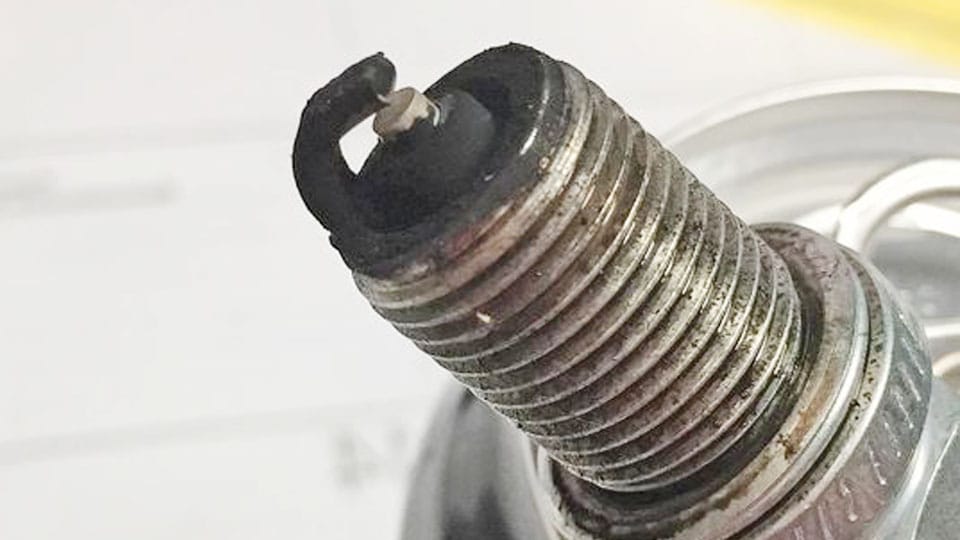
A spark plug turns ignition energy into the spark that lights the air-fuel mix. The spark jumps between the center electrode and the ground electrode. As the center electrode wears, the spark has a harder job, and the engine can start misfiring, idling poorly, or losing power under load.
One weak plug often feels like a faint stumble at idle or a light hesitation on acceleration. Several weak plugs usually feel harsher. The engine may shake, surge, or run unevenly across a wider rpm range.
How spark plugs create the spark
The plug’s job is simple: carry ignition energy and fire at the right moment. When the gap, wear, fouling, or cracking gets in the way, the spark can weaken or disappear. That loss shows up as rough running before it turns into a full no-start.
Why worn electrodes cause misfire symptoms
Wear at the center electrode makes the spark work harder. If the spark cannot consistently jump the gap, the cylinder does not burn its charge properly. That can feel like a stumble, a shake, or a brief dead spot when you press the throttle.
According to How To Test a Spark Plug — The article mentions about 20,000 volts at the spark plug. (source)
Is it okay to drive with a bad spark plug?
In some cases, a very short and gentle drive may be reasonable, but only with care. If the engine still runs smoothly and the symptom is mild, a short drive to a repair shop may be reasonable. If the engine shakes, the check-engine light flashes, or the car smells strongly of fuel, driving becomes a bad bet.
When a car may still make a short trip
A light miss at idle, a tiny stumble on cold start, or a single cylinder that only acts up under load may still allow a short, gentle trip. Keep speed down, avoid hard acceleration, and head straight for repair.
When driving becomes a bad idea
Do not keep driving if the engine is shaking hard, the check-engine light is flashing, the exhaust smells strongly of raw fuel, or power drops off sharply. Those signs mean unburned fuel is likely reaching the exhaust, and the damage can grow fast.
Why the answer changes with symptom severity
Driving risk is not about the word “bad” alone. It depends on whether the plug is causing a light stumble or a larger ignition problem. A misfire can also come from fuel loss, low compression, or weak spark, and the wrong guess can waste time while the real fault gets worse.
What happens when you keep driving with a misfire?
If a misfire continues, it can lead to problems beyond rough running. Unburned fuel can overheat the catalytic converter, fuel can wash down cylinder walls and thin the oil, and the ignition system can work harder than it should. That is how a small fault turns into a bigger repair.
Catalytic converter damage from unburned fuel
When a cylinder misfires, fuel may pass through the combustion chamber without burning. That fuel can overheat the converter. Once the converter is damaged, the repair bill rises fast compared with the cost of a plug or coil check.
Fuel dilution and rougher operation over time
Repeated misfires can sometimes let extra fuel reach the oil. That can thin the oil film and make the engine run rougher. The driver may notice poor starts, worse idle quality, and a stronger fuel smell.
Extra load on coils and other ignition parts
Ignition coils can be stressed when they are trying to fire a weak cylinder. On some cars, one bad spark plug can be part of a bigger no-spark problem that includes the ignition coil, spark plug wire, ignition module, or distributor.
Is it okay to drive with one bad spark plug?
Even one bad spark plug can still cause a real problem. A single-cylinder misfire may let the car move, but it can also hide a coil issue, a wire fault, or a fuel or compression problem. If the engine is smooth enough for a short trip, get it checked soon.
Single-cylinder misfire symptoms
One bad plug often causes a lighter shake than multiple bad plugs. The engine may idle unevenly, hesitate on takeoff, or feel flat under load. On some engines, though, one weak cylinder is enough to trigger a flashing warning and make driving unsafe.
When one bad plug can still mask another fault
A plug can look guilty when another part is at fault. A weak ignition coil, a damaged spark plug wire on older vehicles, an ignition module issue, or a distributor fault can create the same miss. A fuel delivery or compression fault can do it too.
Why one bad plug can still be serious on some engines
Turbo engines and many direct-injection engines may be less forgiving of a misfire, since the problem can show up quickly and feel more noticeable. Older distributor-based systems can also misbehave in ways that make the fault feel intermittent, which does not mean it is harmless.
How to tell if the spark plug is the problem
Begin with the easiest check. A quick visual check can show wear, fouling, or cracking, but it does not prove the plug is the only fault. A bad plug can be one part of a broader ignition diagnosis that includes the coil, wire, module, and distributor.
Visible plug wear, fouling, or cracking
Look for heavy deposits, oil fouling, damaged ceramic, or a worn center electrode. Those clues point toward a plug that has aged out or run under bad conditions. A plug that looks normal can still fail under load, so appearance is only the first pass.
Ruling out other ignition parts
If there is a no-spark condition, check the ignition coil, spark plug wire on older vehicles, ignition module, and distributor system as needed. A spark plug is only one part of the chain that creates ignition.
Why fuel and compression problems can mimic plug failure
A cylinder that lacks fuel or compression can misfire just like a bad plug. That is why a plug should not be blamed too early. The symptom may be the same, but the fix is not.
Use this checklist to decide whether to drive

This checklist maps symptom severity to driving advice. Use it before you decide whether to limp to a shop, take only a short trip, or park the car. When in doubt, stop driving and inspect the fault first.
| Symptom | Drive cautiously to a shop | Short-trip only | Do not drive |
|---|---|---|---|
| Flashing check-engine light | No | No | Yes, stop now |
| Hard starting | Maybe, if it starts and runs smoothly after | Yes, if brief and repeatable | No, if it cranks long, stalls, or will not start |
| Rough idle | Yes, if mild and the car drives cleanly above idle | Yes, for a short trip | No, if the engine shakes hard or stalls |
| Loss of power | Only if slight and steady | Yes, if the route is short and traffic is light | No, if the car cannot accelerate safely |
| Fuel smell | No | No | Yes, inspect before driving |
| Visible misfire | No | No | Yes, stop driving |
Drive cautiously to a shop
This fits a mild, steady symptom with no flashing warning light and no strong fuel smell. Keep the trip short. Avoid hills, high rpm, and hard throttle. If the symptom grows, stop.
Short-trip only
This fits a car that starts, idles fairly well, and only shows a light stumble. Use this only to get the car to a repair shop. Do not keep running errands while hoping it clears up.
Do not drive
A flashing check-engine light, repeated misfires, a strong fuel smell, visible shaking, or obvious power loss all point to parking the vehicle. At that point, the risk of catalytic converter damage, fuel dilution, and further ignition stress is too high.
How to inspect and test a spark plug at home

Wear safety glasses and gloves before working under the hood. Let the engine cool before removing plugs. Use a spark plug socket set to remove the plug, and keep clear of moving parts if you do any exposed-plug testing. Basic home testing can be done with a multimeter.
- Let the engine cool fully.
- Disconnect the necessary ignition component before removal.
- Remove the spark plug with a spark plug socket set.
- Inspect the plug for fouling, damage, or worn electrodes.
- Use a multimeter for resistance testing if the plug design allows it.
- Recheck the coil, wire, module, or distributor if the plug does not explain the misfire.
Using a multimeter
A multimeter helps with basic resistance testing. It can support the diagnosis, especially when a plug, wire, or related ignition part reads out of range. It does not settle every case, because fuel and compression faults can still create the same symptom.
Using an exposed plug under the hood
The other method involves working with an exposed plug under the hood. Stay clear of moving parts and use caution around ignition energy. The spark plug can see about 20,000 volts, so the test must be handled carefully.
What the tests can and cannot prove
A test can show that a plug is worn, cracked, fouled, or not behaving correctly. It can also show that the problem is elsewhere. What it cannot prove by itself is that a plug is the only cause of the misfire.
Frequently asked questions
Is it bad to drive with a spark plug misfire?
Yes, it can be bad if the misfire is active and repeated. The main risks are rough running, catalyst damage from unburned fuel, fuel dilution, and extra stress on coils and related parts. Mild cases may allow a short trip, but the engine should be checked quickly.
What happens when you drive with a bad spark plug?
The engine can stumble, shake, hesitate, and burn fuel poorly. If the misfire continues, unburned fuel can overheat the converter and the oil can pick up fuel contamination. Over time, the fault often gets harder to ignore and may spread to other ignition parts.
Can a bad spark plug be the only cause of a misfire?
Yes, but it is not the only likely cause. A misfire can also come from fuel loss or low compression, plus ignition coil, spark plug wire, ignition module, or distributor faults. That is why a plug should be checked, not assumed guilty on sight.
What tools do you need to test a spark plug at home?
A spark plug socket set is the main removal tool, and a multimeter helps with basic resistance testing. Safety glasses and gloves are recommended, and the engine should be cool before removal. Those tools can narrow the problem, but they do not replace a full diagnosis.
is it.okay to drive with a bad glow plug
A glow plug is a different part used on diesel engines, so this question is not the same as a spark plug problem. If a diesel has a glow-plug fault, starting may be harder in cold weather, but the driving risk depends on the exact engine fault and symptoms.

Hi, I’m Melvin, an automobile engineer with extensive experience in automobile equipment. I currently work for a local automobile firm, where I specialize in the car parts industry. I’ve had the opportunity to collaborate with seasoned inspectors, gaining invaluable hands-on experience that goes beyond just theory.
My passion for automotive care started at a young age, which led me to create CarSpareCare. Through CarSpareCare, I share the knowledge and skills I’ve acquired over the years to help others navigate the world of car maintenance and repairs.
My goal is to provide practical tutorials, essential safety advice, and the latest industry insights so that anyone—whether a beginner or an expert—can confidently tackle their automotive projects.