
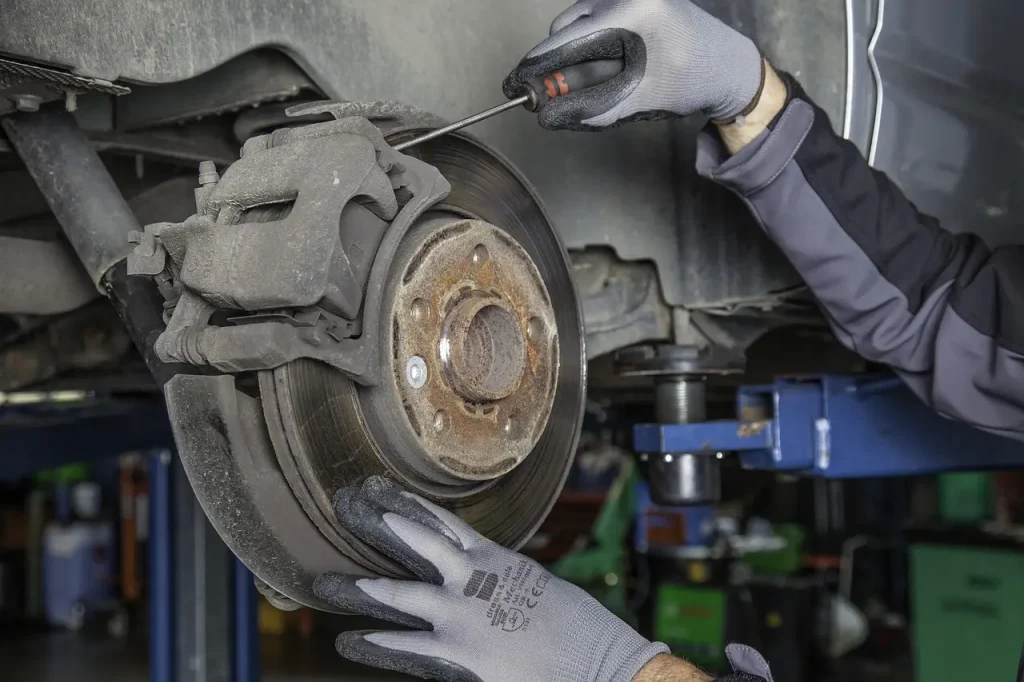
Ceramic brake pads usually suit daily commuting because they stay cleaner and quieter; metallic pads do better for towing, long downhill stretches, and repeated hard stops. Pick the wrong one and you will pay in dust, noise, faster rotor wear, longer stops, or heat fade. This guide compares both by driving scenario and ownership cost, then gives a clear pick for commuting, towing, mountain use, and performance driving.
Ceramic vs metallic brake pads: the real trade-off
The real choice is quietness and wheel cleanliness versus heat tolerance, cold bite, and fade control. Ceramic pads usually fit light-to-moderate braking, while metallic and semi-metallic pads are built for harder use, especially when the brakes stay hot for long periods.
Ceramic materials are hard, brittle, heat-resistant, and corrosion-resistant. They can withstand very high temperatures, ranging from 1,000 °C to 1,600 °C, and they have low thermal and electrical conductivity plus high hardness. That explains why ceramic pad compounds stay stable and clean in everyday service, yet can feel less aggressive at the first stop in cold weather. (en.wikipedia.org)
Metallic and semi-metallic pads use metal content in the friction mix. That metal helps initial bite and heat handling, but it usually brings more noise, more dust, and more rotor abrasion. Semi-metallic is often the middle ground, and many shoppers should compare ceramic against semi-metallic rather than against a pure “metallic” label.
According to Ceramic – Wikipedia — Ceramic materials can withstand very high temperatures, ranging from 1,000 °C to 1,600 °C. (source)
Ceramic vs metallic brake pads: quick comparison table
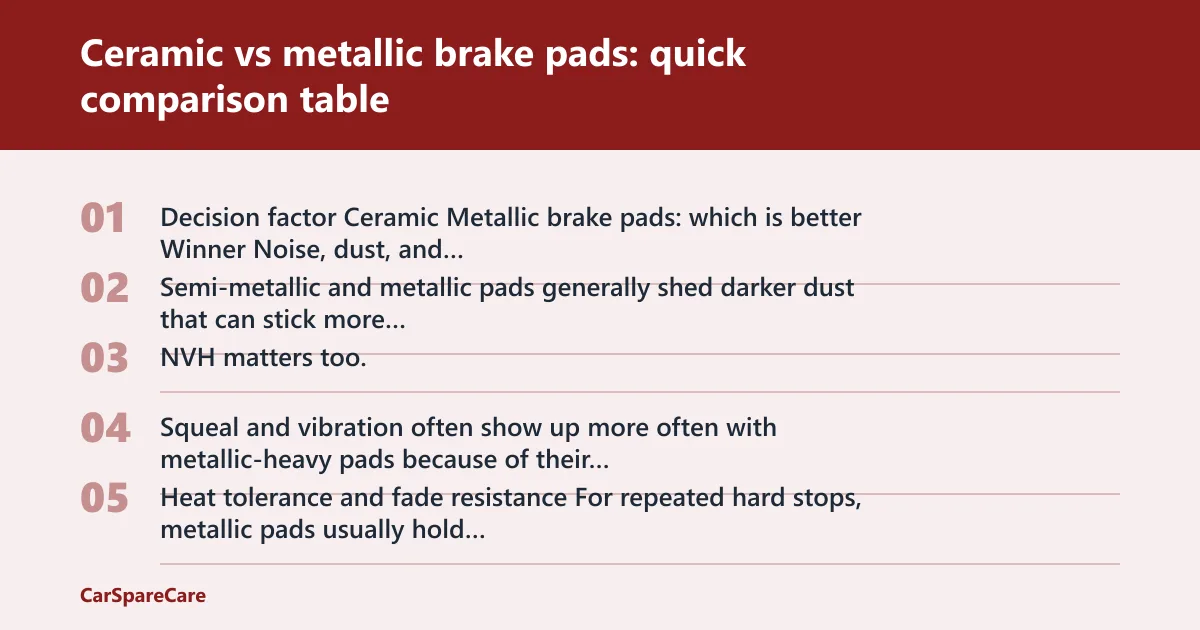
| Decision factor | Ceramic | Metallic brake pads: which is better | Winner |
|---|---|---|---|
| Noise, dust, and pedal feel | Usually quieter, with lighter-colored dust and smoother everyday pedal feel | Usually noisier, with darker dust and a firmer, more aggressive bite | Ceramic |
| Heat tolerance and fade resistance | Stable in normal street use, but less tolerant of repeated heavy heat cycles | Better under sustained heat, repeated hard stops, and loaded braking | Metallic brake pads: which is better |
| Rotor wear and replacement cost | Usually gentler on rotors, which can lower total ownership cost | More abrasive, so rotor wear and replacement cost often rise sooner | Ceramic |
| Cold bite and first-stop confidence | Can feel softer on the first cold stop, especially in winter | Typically stronger initial bite when cold | Metallic brake pads: which is better |
| Best fit by use case | Commuting, light SUVs, clean-wheel ownership | Towing, mountain driving, heavy vehicles, performance braking | Tie |
Noise, dust, and pedal feel
Ceramic pads usually create less visible brake dust. Semi-metallic and metallic pads generally shed darker dust that can stick more aggressively, so wheel cleaning may become more frequent.
NVH matters too. Squeal and vibration often show up more often with metallic-heavy pads because of their harder bite and higher friction variability in real traffic, especially after light braking and then a hot stop.
Heat tolerance and fade resistance
For repeated hard stops, metallic pads usually hold their shape in the friction zone better than ceramic. That matters on long descents, in towing, and in stop-after-stop braking where heat buildup is the enemy.
Ceramic compounds can survive very high temperatures, but pad choice is not only about material survival. It is also about how the pad feels when the rotor is already hot, the caliper is already heat-soaked, and the driver needs the same bite on the fifth stop as on the first.
Rotor wear and replacement cost
Rotor wear changes the cost story. A pad that is gentler on rotors may cost more upfront yet save money later if the rotors last longer and stay smoother. Ceramic usually wins that ownership argument in normal driving.
Metallic and semi-metallic pads can eat into rotors faster because the friction mix is more abrasive. That does not automatically make them a bad buy. It only means the replacement math needs to include rotor life, not pad price alone.
Cold bite and first-stop confidence
Cold stopping is where many daily drivers notice the difference first. Ceramic can feel less immediate on the first stop of the morning, especially in cold weather or after a wet night. The pedal may still stop the car safely, but the initial bite can feel softer.
Metallic pads generally give stronger initial bite when cold. That is useful when the vehicle is loaded, the road is steep, or the driver wants a firmer bite before the brakes are fully warmed up.
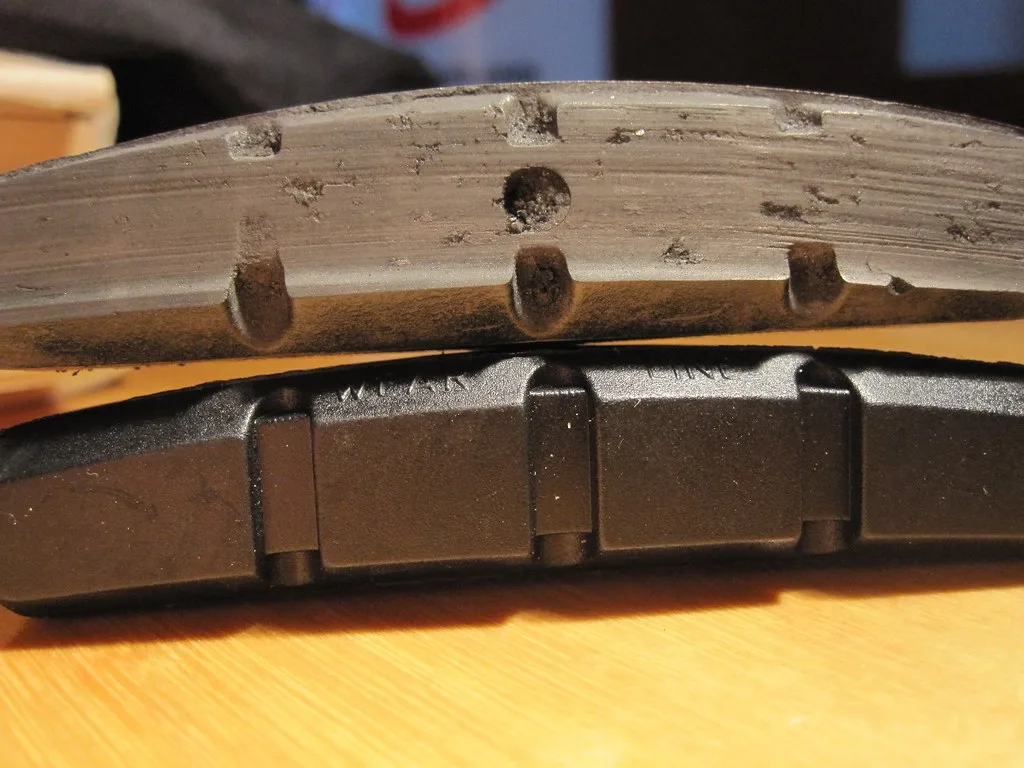
What ceramic brake pads are best at
Ceramic brake pads are best at quiet, clean, low-drama stopping in normal road use. They usually produce less dust, are gentler on rotors, and make sense when the vehicle spends most of its life in commuting, errands, and light highway use.
How ceramic friction material behaves
Ceramic brake material is a non-metallic, inorganic material made by shaping and firing at high temperatures. Ceramics are usually crystalline or amorphous and are held together with covalent or ionic bonds. That structure gives them hardness and heat resistance, but ceramics also tend to fracture before plastic deformation happens, so they have poor toughness.
That brittleness is why ceramic pad compounds are aimed at steady street use rather than repeated punishment. They stay composed in normal temperatures and traffic, but they are not the first pick when the brake system is asked to work near the edge for long periods.
Dust, noise, and rotor wear in daily use
Ceramic pads usually throw less visible dust, and the wheel face stays cleaner longer. That is one of the few pad traits a driver notices every week without opening the hood.
They also tend to be quieter. Less squeal matters in city traffic, especially for drivers who are sensitive to low-speed brake noise or park in places where dusty wheels are obvious.
Where ceramic pads fit best
They fit commuter sedans, light crossovers, and drivers who care most about wheel cleanliness and quiet braking. They also suit vehicles that rarely tow, rarely descend long grades under load, and do not see repeated hard stops in a single trip.
What metallic and semi-metallic pads are best at
Metallic and semi-metallic pads are best when the brakes work hard and often. They give stronger initial bite, better hot performance, and more confidence when the vehicle is heavy, the trailer is loaded, or the route includes steep grades.
Metal content and braking behavior
Semi-metallic pads are the common variant most shoppers will encounter. They usually contain a meaningful share of metal fibers or particles, though exact blends vary by maker. That metal content gives them more bite and heat tolerance than many ceramic pads.
That same metal content also makes them harsher on noise and rotor surfaces. The pad grabs harder, but the tradeoff is more squeal risk, more dust, and often a rougher feel at low speed.
Why they hold up better under heat
When braking heat builds, metallic pads keep working where softer street compounds can fade or feel long. That matters on mountain roads, in trailers, and in repeated stop-and-go braking with a heavy vehicle.
For towing and grades, hot braking behavior matters more than brochure claims. A pad that feels excellent on the first stop can disappoint after several miles of load and heat.
Noise, dust, and rotor wear tradeoffs
Metallic pads usually make more dust, and the dust is often darker. They also tend to make more noise, especially at low speed, in light braking, or when the pad and rotor are slightly glazed.
Rotor wear is the other hidden cost. A more abrasive compound can shorten rotor life, which can erase any pad-price savings if the vehicle needs rotors more often.
What brakes are better ceramic or metallic
For ordinary commuting, ceramic is often a good choice. For heat, load, and repeated hard stops, metallic or semi-metallic is usually better. The right answer comes from how hard the brakes work, how often they heat soak, and whether rotor wear or stopping bite matters more.
How the driving pattern changes the answer
A sedan that stops gently in traffic is a different job from a half-ton truck pulling a trailer through hills. The first case rewards quietness and low dust. The second rewards fade resistance and cold bite under load.
That is why “better brakes” is incomplete without the use case. The pad that wins on a clean commuter car can be the wrong choice on a loaded tow vehicle.
Which brake pads are better for towing and heavy use?
For towing and heavy use, semi-metallic or metallic pads are usually better because they tend to handle heat and load more confidently. When trailer weight, mountain grades, or repeated descents increase brake temperature, the pad must keep its bite instead of going long or fading.
Trailer weight and mountain grades
Trailer weight adds kinetic energy the brakes must remove. On a steep descent, that energy turns into heat, then more heat. Pad choice that works in town can feel weak once the rotor and caliper temperatures rise.
Half-ton trucks and tow SUVs usually benefit from pads that stay consistent when loaded. Semi-metallic is often the middle ground for drivers who tow sometimes but still use the vehicle for family driving the rest of the week.
Heat buildup and fade risk
Fade is a real failure mode in long downhill driving. The pedal may still move normally while the stopping force falls away. That is where metallic pads earn their place.
Ceramic can be fine for light tow duty, but once the route includes long grades or repeated braking with trailer weight, the safer choice is usually semi-metallic or metallic.
Truck and SUV buying logic
For a truck or SUV, the answer depends on whether the vehicle is a grocery hauler or a load carrier. A city SUV that never tows can stay with ceramic. A truck that sees hauling, towing, or mountain use should lean toward semi-metallic or metallic.
Scenario matrix: which pad wins in real driving?
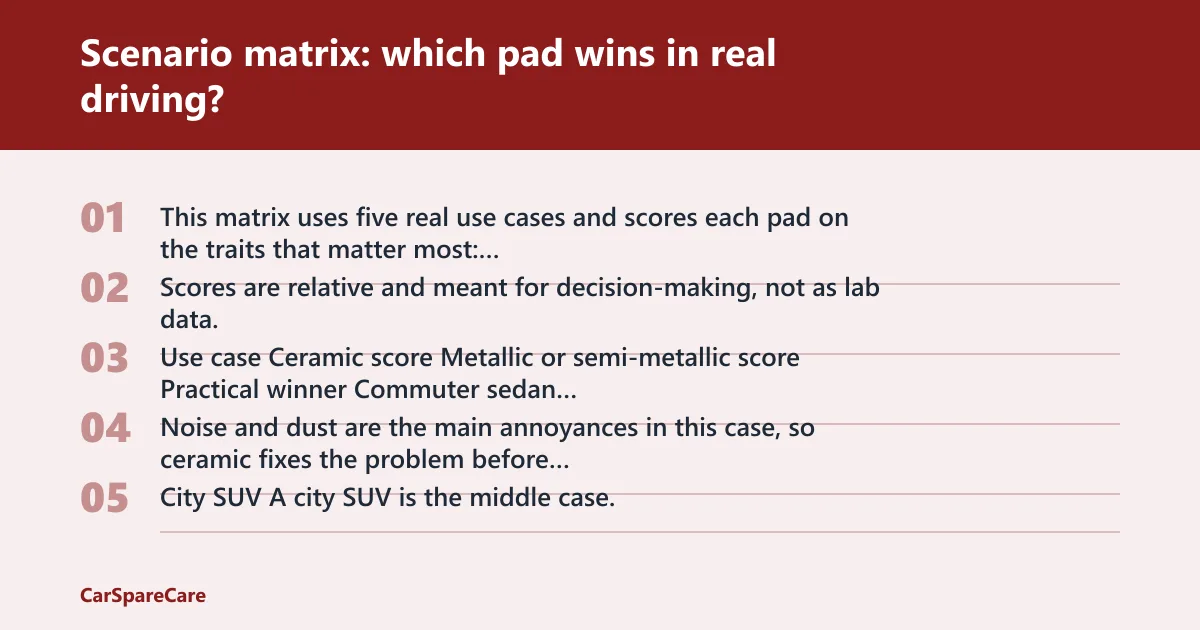
This matrix uses five real use cases and scores each pad on the traits that matter most: noise, dust, rotor wear, fade risk, and daily feel. Scores are relative and meant for decision-making, not as lab data.
| Use case | Ceramic score | Metallic or semi-metallic score | Practical winner |
|---|---|---|---|
| Commuter sedan | Quiet, low dust, lower rotor wear | More bite than needed, more dust, more noise | Ceramic |
| City SUV | Strong everyday fit if unloaded | Better if it carries people and cargo often | Ceramic for light use; metallic brake pads: which is better if loaded often |
| Tow vehicle | Can work, but fade margin is thinner under load | Better heat control and stronger loaded bite | Metallic brake pads: which is better |
| Mountain driving | Comfortable on short grades, weaker on repeated descents | Better on repeated downhill braking and hot rotors | Metallic brake pads: which is better |
| Performance braking | Good for street comfort, less suited to sustained abuse | Better response under heat and repeated hard stops | Metallic brake pads: which is better |
Commuter sedan
The commuter sedan usually rewards ceramic because the braking load is modest, the stops are frequent but not extreme, and wheel cleanliness matters in daily ownership. Noise and dust are the main annoyances in this case, so ceramic fixes the problem before it starts.
City SUV
A city SUV is the middle case. If it mostly carries passengers and light cargo, ceramic is still the cleaner fit. If it is loaded often, semi-metallic starts to make more sense because the extra mass puts more heat into the brakes.
Tow vehicle
Tow rigs should usually favor semi-metallic or metallic pads. Trailer weight and hill braking make fade resistance and cold bite more important than dust control or wheel appearance.
Mountain driving
Mountain driving often exposes weak pad choices fast. Repeated descents create heat buildup, and that is where metallic pads stay more predictable. Ceramic can be fine for occasional hills, but long downhill routes change the equation.
Performance braking
Performance use asks for consistent bite after heat builds. Metallic compounds handle that demand better, even if the price is more noise and more rotor wear. For street-driven cars with occasional spirited use, semi-metallic is usually the safer middle choice.
Choose ceramic if… / Choose semi-metallic or metallic if…
Choose ceramic if your top priority is quiet braking, cleaner wheels, and gentler rotor wear in normal daily driving. Choose semi-metallic or metallic if you care more about cold bite, load handling, steep grades, or repeated hard stops than you do about dust and noise.
Choose ceramic if…
- You drive a commuter sedan or light crossover.
- You want lower brake dust and less wheel cleaning.
- You value quieter NVH in stop-and-go traffic.
- You want to protect rotor life in normal street use.
Choose semi-metallic or metallic if…
- You tow, haul, or drive in mountain terrain.
- You need stronger first-stop bite in cold weather.
- You make repeated hard stops and want more fade margin.
- You accept more dust and noise for better loaded braking.
Frequently asked questions
what’s better ceramic or metallic brake pads
Ceramic is usually better for daily driving because it stays quieter, makes less dust, and is gentler on rotors. Metallic is usually better when the brakes run hot, such as towing, mountain driving, or repeated hard stops. The better pad is the one that matches heat, load, and noise tolerance.
ceramic vs metallic brake pads for towing
For towing, metallic or semi-metallic pads are usually the safer pick because trailer weight and long grades create heat. Ceramic can work for light towing, but it gives up margin when the brakes are loaded for a long time. The more hill work and trailer mass, the stronger the case for metallic.
ceramic vs metallic brake pads for truck
For a truck, the right pad depends on whether the truck is a commuter or a load hauler. A light-use truck can do well on ceramic. A truck that tows, hauls, or sees mountain grades should usually move to semi-metallic or metallic for better hot braking and fade control.
are semi metallic brake pads better than ceramic
Semi-metallic pads are better than ceramic when heat, load, and cold bite matter more than dust and noise. Ceramic is better when quiet operation, cleaner wheels, and lower rotor wear matter more. Many drivers should compare ceramic against semi-metallic first, because that is the real buying decision.
which brake pads last longer ceramic or metallic
Pad life depends on driving style, but ceramic often lasts well in normal street use because it is gentler on the braking system. Metallic pads can wear differently depending on heat and load, and they may shorten rotor life even when the pad itself still has material left. Total ownership life matters more than pad thickness alone.

Hi, I’m Melvin, an automobile engineer with extensive experience in automobile equipment. I currently work for a local automobile firm, where I specialize in the car parts industry. I’ve had the opportunity to collaborate with seasoned inspectors, gaining invaluable hands-on experience that goes beyond just theory.
My passion for automotive care started at a young age, which led me to create CarSpareCare. Through CarSpareCare, I share the knowledge and skills I’ve acquired over the years to help others navigate the world of car maintenance and repairs.
My goal is to provide practical tutorials, essential safety advice, and the latest industry insights so that anyone—whether a beginner or an expert—can confidently tackle their automotive projects.

