
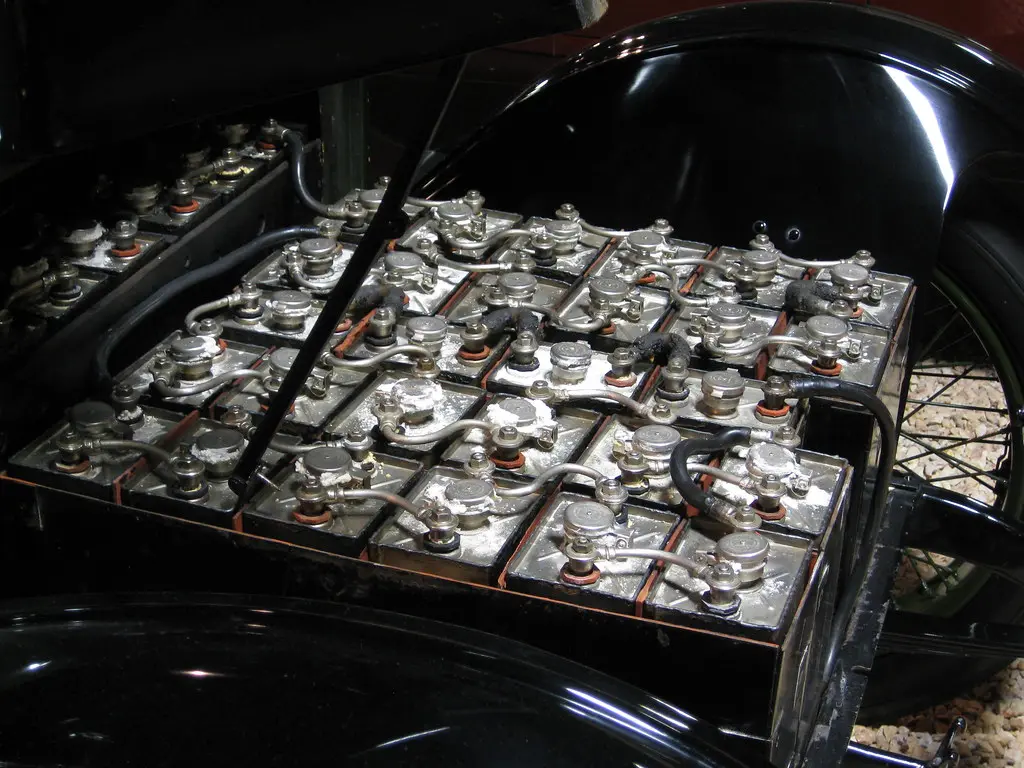
AGM fits most daily-driver car batteries better. I would choose lithium only when the vehicle was built for it, the charging profile matches the pack, and the weight or cycle-life gain justifies the higher price. Fit the wrong type and you can trigger charging faults, shorten battery life, or pay for a battery that your car cannot use well. This guide compares AGM vs lithium for real vehicle fitment, charging, cost, and retrofit use cases.
AGM vs lithium car batteries: the real trade-off
The choice is usually not about which chemistry is “better.” It is about whether the car needs a starter battery that behaves like a normal 12-volt battery, or a lithium setup that the alternator, ECU, and battery management system can support without complaints.
AGM batteries are sealed lead-acid batteries with absorbed glass mat construction. They are common in cars, trucks, RVs, and boats, resist vibration well, can be mounted in different orientations, and recharge faster than regular flooded batteries. Lithium in this comparison usually means LiFePO4, which many users associate with higher usable capacity, lower self-discharge, steadier voltage under load, and a battery management system that can stop charging when conditions are wrong.
| Decision factor | AGM | lithium car batteries: which makes sense | Winner |
|---|---|---|---|
| Cold-crank performance | More dependable for cold starting | Can be strong, but charge protection in cold weather is a limit | AGM |
| Alternator compatibility | Usually the safer fit in stock cars | Needs closer checking of voltage limits and BMS behavior | AGM |
| Short-trip recovery | Good fit when the car sees normal alternator charging | Can accept fast bulk charge, but only if the system is compatible | Tie |
| Parasitic drain tolerance | Better for ordinary vehicles with slow drains | Lower self-discharge helps, but a BMS cutoff can leave less margin | AGM |
| Start-stop fitment | Common and proven | Possible only when the vehicle and charging logic are built for it | AGM |
| Weight savings | Heavier | Lighter | Lithium |
| Replacement cost | Lower upfront cost | Higher upfront cost | AGM |
| Payback period | Usually shorter for daily drivers | Can be worthwhile only with high cycle use or weight-sensitive installs | AGM |
How to read the table for daily drivers, start-stop cars, and retrofit builds
Daily-driver cars usually care most about cold starts, alternator compatibility, and replacement cost. That is why AGM wins more rows. Lithium starts to make sense when the vehicle was designed around it, or when the battery is really serving an accessory bank, not a normal starter role.
According to interstatebatteries.com — AGM batteries can sit unused for a month and only lose 1% of their power.
What changes in a car battery swap?
A battery swap changes more than reserve capacity. A starter battery must deliver a big burst of current, recover quickly after cranking, and work with the vehicle’s charging strategy. If the car expects one chemistry and gets another, the alternator and BMS may not agree on how to charge or protect the battery.
Starter battery duty versus accessory or house-bank duty
This distinction matters more than chemistry labels. A starter battery has one job: crank the engine and sit ready for the next start. A house bank or accessory battery may spend more time powering inverters, fridges, motors, or camping loads, where usable capacity and voltage sag matter more than cold-crank behavior.
Why vehicle charging voltage and BMS limits matter
LiFePO4 batteries use a BMS to manage charge, discharge, and temperature protection. That is useful, but it also means the battery can refuse charge when conditions are outside its limits. In a car, that can become a fitment problem if the alternator voltage, charge strategy, or temperature behavior do not match what the battery expects.

How do AGM and lithium compare on the factors that matter?
AGM is the conservative fit for most cars because it behaves like the battery the vehicle already knows how to charge. Lithium can be excellent in the right build, but it needs the vehicle, battery location, and use pattern to line up. The wrong fit can wipe out the expected gain fast.
Cold-crank performance and voltage sag under load
AGM is the safer bet for starting in real cars, especially in cold weather. Lithium holds voltage steadier under load, which is useful for inverters and motors, but starting confidence in freezing conditions is not the same as a bench spec. AGM also handles the brief, ugly load spike of engine cranking better in ordinary automotive setups.
Voltage sag matters because it changes what the car’s electronics see during load. A battery that sags more can look weak even when it is not empty. That is one reason lithium’s steadier voltage helps in deep-cycle and accessory use, while AGM stays comfortable in starting duty.
Alternator compatibility, charging profile, and recharge behavior
AGM batteries can recharge faster than regular batteries and are usually far easier to drop into a stock vehicle. They still want a proper charge profile, but the vehicle’s alternator and voltage regulation are far more likely to be within range. Lithium accepts fast bulk charging, yet that advantage only matters if the alternator and BMS are happy together.
For a normal car, the charging system is not a lab charger. It is a moving target with temperature swings, voltage drop, and control logic. If the battery fitment is wrong, the car may not finish charging it properly, or the BMS may limit charge in a way the driver never expected.
Short-trip recovery, parasitic drain tolerance, and storage loss
Short-trip driving is hard on any battery, because the alternator has little time to recover the energy spent starting. AGM handles that routine well when the car is used daily. A regular car battery can lose 3%-20% of its power a month depending on temperature, while AGM batteries can sit unused for a month and only lose 1% of their power.
Parasitic drain changes the picture further. A car with an alarm, tracker, or module sleep issue can drain a battery while parked. AGM usually gives more predictable behavior here. Lithium’s lower self-discharge helps, but the BMS can also cut the battery off if something goes wrong, which is not the kind of surprise most daily drivers want.
Start-stop fitment and what the car may expect from the battery
Start-stop vehicles are not ordinary battery swaps. They ask more from the battery, because the car may shut the engine off repeatedly and expect fast recovery every time. AGM batteries are common in these applications, and they are built with more engine starts than standard batteries.
Lithium can work in some start-stop or retrofit cases, but only when the electrical system was built or checked for it. If the ECU expects AGM behavior and the replacement does not match, the car may not charge correctly or may flag faults. That is not a chemistry issue. It is a fitment issue.
Decision matrix for real-world vehicle use
The matrix below scores fitment for a typical car owner, not a lab bench. The point is to compare how each battery type behaves in everyday vehicle use, where cold starts, alternator behavior, parked drain, and ownership cost matter more than headline capacity.
| Factor | AGM score | Lithium score | Winner |
|---|---|---|---|
| Cold-crank performance | 9/10 | 6/10 | AGM |
| Alternator compatibility | 9/10 | 5/10 | AGM |
| Short-trip recovery | 8/10 | 7/10 | AGM |
| Parasitic drain tolerance | 8/10 | 6/10 | AGM |
| Start-stop fitment | 9/10 | 4/10 | AGM |
| Weight savings | 4/10 | 10/10 | Lithium |
| Replacement cost | 9/10 | 4/10 | AGM |
| Payback period | 8/10 | 5/10 | AGM |
How the scores change for daily drivers, weekend cars, and retrofit installs
For daily drivers, AGM stays ahead because it solves the most problems with the fewest surprises. For weekend cars that sit for long periods, lithium’s low self-discharge can help, but only if the vehicle charging system is compatible and the battery stays within its temperature limits. For retrofit installs, the score depends on whether the battery is carrying starter duty or accessory duty.
Which battery lasts longer in your car?
Lithium usually lasts longer in cycle life, but that does not automatically mean it lasts longer in your car. AGM practical depth of discharge is often around 50%, while LiFePO4 is commonly treated as roughly 80% practical DoD, so lithium can give more usable capacity from the same rated size. The catch is that the vehicle has to support it correctly.
Depth of discharge and usable capacity
Usable capacity is what you can actually draw before battery life starts to suffer. Battle Born says AGM usable depth of discharge is about 50%, while lithium usable depth of discharge is about 80–100%. Victron also gives 50% as a practical AGM depth of discharge. That means a lithium battery may feel bigger than its label suggests, but only if the system is built for it.
Cycle life in real ownership, not lab ratings
Battle Born lists AGM cycle life at roughly 300–500 cycles in deep-cycle use and lithium at roughly 3000–5000+ cycles in deep-cycle use. Those numbers matter most when the battery is repeatedly cycled, not when it is just starting a commuter car every day. A starter battery can age from heat, undercharging, and time long before cycle count becomes the main issue.
Why longer life does not always mean lower cost
A battery that lasts longer only saves money if the vehicle will actually use that extra life. In a normal commuter car, the replacement interval may be driven by age, heat, or charging pattern rather than cycle count. That is why a cheaper AGM often wins the total-cost math for ordinary ownership horizons.
How much more does a lithium battery cost than AGM?
Lithium costs more upfront than AGM, often enough that the payback period is hard to justify in a normal daily-driver car. The extra spend only makes sense when the vehicle benefits from the lighter weight, the higher usable capacity, or the longer cycle life in a way that the owner will actually use. Price alone is the wrong comparison.
The better question is whether the higher purchase price buys a usable gain. In a commuter car, the answer is usually no. In a retrofit build with high accessory loads or a weight-sensitive application, it may be yes if the charging system is checked first.
Do lithium batteries need a special charger?
Often yes, or at least a charger and charging profile that are confirmed compatible. Lithium accepts fast charging behavior, but the voltage limits and BMS rules still matter. If the charger or alternator pushes outside the battery’s preferred range, the BMS may protect the pack by limiting or stopping charge.
AGM is less demanding in ordinary vehicle use, which is one reason it is the safer default. It still needs a proper charge profile, but stock automotive systems are much more likely to behave normally with AGM than with lithium.
What is the difference between AGM and lithium batteries?
AGM is a sealed lead-acid battery with absorbed glass mat electrolyte retention. It is common in cars, trucks, RVs, and boats, is spill-resistant, can be mounted in different orientations, and is built to tolerate vibration and extreme temperature better than flooded batteries. It is usually the simpler starting-battery choice.
In this comparison, lithium usually means LiFePO4. It can bring higher usable capacity, lower self-discharge, steadier voltage under load, and longer cycle life. It also depends more on BMS limits, temperature protection, and vehicle charging compatibility, so it is less forgiving as a universal drop-in replacement.
Is AGM better than lithium for cold weather starting?
Yes, AGM is usually the better and safer cold-weather starter-battery choice. It can charge and discharge in cold weather, and it does not have the same charge-protection limits that lithium batteries use when temperatures drop too far. That matters more in real cars than a spec sheet does.
Lithium can hold voltage well, but charge protection when frozen is a real limitation. A battery that refuses to charge because it is too cold is not a good starter battery for a winter commuter. For freezing mornings, AGM is the practical answer unless the vehicle and battery system were built around lithium from the start.
Which battery is better for start-stop vehicles?
AGM is usually the better fit for start-stop vehicles because the car’s electrical system is already designed around a battery that can take repeated engine starts and normal alternator charging. Lithium can work in some start-stop or retrofit builds, but only if the charging system, ECU logic, and BMS behavior are checked first.
The reason is simple. Start-stop use is not about light weight alone. It is about repeated restart duty, fast recovery, and predictable behavior under the vehicle’s own charging rules. AGM matches that role more often than lithium does.
Choose AGM if… / Choose lithium car batteries: which makes sense if…
Choose AGM if you want the safer default for a normal daily-driver car, your vehicle has a stock alternator and ECU, you drive short trips, you live with cold starts, or you want lower replacement cost with fewer compatibility worries. AGM is the right answer when the battery has to behave like a normal automotive starter battery.
Choose lithium car batteries: which makes sense if the vehicle was designed for it, the charging voltage and BMS limits have been checked, the battery is serving an accessory or house-bank role, or weight savings and long cycle life matter enough to justify the higher cost. If the swap is for a retrofit, the electrical system needs verification first.
Frequently asked questions
Is a lithium car battery worth it over AGM?
Only in the right vehicle. Lithium is worth it when the car or retrofit setup can use its higher usable capacity, lower weight, or longer cycle life without charging faults. For most daily-driver cars, AGM is still the more sensible choice because it fits stock charging systems better and costs less upfront.
Can I replace an AGM battery with lithium in my car?
Sometimes, but not automatically. The car’s alternator voltage, ECU expectations, and the lithium battery’s BMS limits all need to be compatible. If the battery is a starting battery in a normal commuter car, AGM is usually the safer drop-in replacement. Lithium is more of a checked fitment than a simple swap.
Which battery lasts longer, AGM or lithium?
Lithium usually lasts longer in cycle life. Battle Born lists AGM at roughly 300–500 cycles in deep-cycle use and lithium at roughly 3000–5000+ cycles. That advantage matters most in repeated cycling, not in a normal starter-battery role where heat, charging pattern, and age may end the battery first.
Is AGM better than lithium for cold weather starting?
Yes. AGM is generally the better cold-weather starter battery because it can charge and discharge in cold conditions without the same protection limits lithium uses when temperatures drop too low. Lithium can be strong in the right setup, but frozen-charge protection makes it a poor default for winter starting.
How much more does a lithium battery cost than AGM?
Usually a lot more upfront. The exact gap depends on size and brand, but the decision should be based on whether the battery’s longer cycle life or lower weight actually pays back in your vehicle. In a normal car, AGM usually wins the total ownership cost because the vehicle is not cycling the battery deeply enough to justify lithium.
Do lithium batteries need a special charger?
Often yes, or at least a charger and charging strategy confirmed for LiFePO4. Lithium accepts fast charging, but only within its voltage and temperature limits. A stock automotive alternator may work in some cases, yet the BMS can still limit charging if conditions are outside what the battery allows.

Hi, I’m Melvin, an automobile engineer with extensive experience in automobile equipment. I currently work for a local automobile firm, where I specialize in the car parts industry. I’ve had the opportunity to collaborate with seasoned inspectors, gaining invaluable hands-on experience that goes beyond just theory.
My passion for automotive care started at a young age, which led me to create CarSpareCare. Through CarSpareCare, I share the knowledge and skills I’ve acquired over the years to help others navigate the world of car maintenance and repairs.
My goal is to provide practical tutorials, essential safety advice, and the latest industry insights so that anyone—whether a beginner or an expert—can confidently tackle their automotive projects.

