
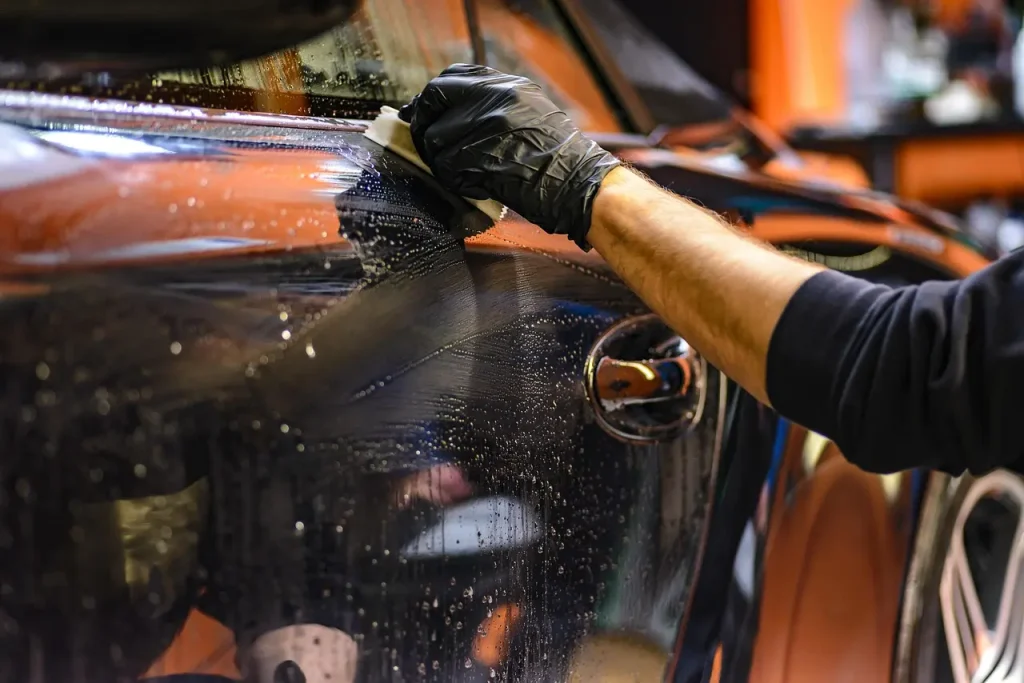
To wash a white car without streaks, rinse first, wash top to bottom with a two-bucket method, dry with a clean microfiber towel, and finish with a spot-free rinse or drying aid if your water is hard. Skip a step and white paint can hold soap film, chalky spots, or towel smears that show in sunlight. This guide breaks down each streak source and gives a finish sequence for home driveways and self-service bays.
Why white paint still streaks
White automotive clear coat is often reported to hide small swirls better than dark paint, but it can still show soap film, mineral marks, and towel residue after drying. Treat it like standard clear coat unless the vehicle has matte paint or a wrap. The residue often stays hidden until the panel dries, then it stands out at once.
How soap film looks on white clear coat
Soap film usually appears as a chalky haze or uneven dullness, especially on flat panels and around trim edges. It shows up after the rinse, not during the wash. If the car still looks cloudy in changing light, the shampoo likely did not rinse cleanly or dried before it fully broke down grime.
How hard water leaves white marks
Water hardness is commonly associated with spotting as water evaporates. The mineral load stays behind as white marks, and hot panels make that happen faster. Direct midday sun can cause soap and water to evaporate before rinsing, which is why white cars in hard-water areas need faster drying or a spot-free final rinse. If you routinely see white dots or rings after a normal wash and dry, treat that as a sign to use demineralised water or a spot-free rinse.
Why towel residue shows up after drying
A drying towel can leave lint, smears, or faint streaking if it is dirty, overused, or dragged over paint that still carries water. On white paint, that residue may look like a pale film rather than a dark smear. A clean, plush microfiber towel used right after rinsing is the safer choice.
What you’ll need
- Microfiber wash mitt dedicated to paint, not wheels
- Two buckets, each with a grit guard
- pH-neutral car shampoo
- Clean plush microfiber drying towel
- Drying aid, if you use one
- Spot-free rinse access or demineralised water
- Ammonia-free glass cleaner
- Separate microfiber towels for glass and paint
How do you wash a white car without streaks?
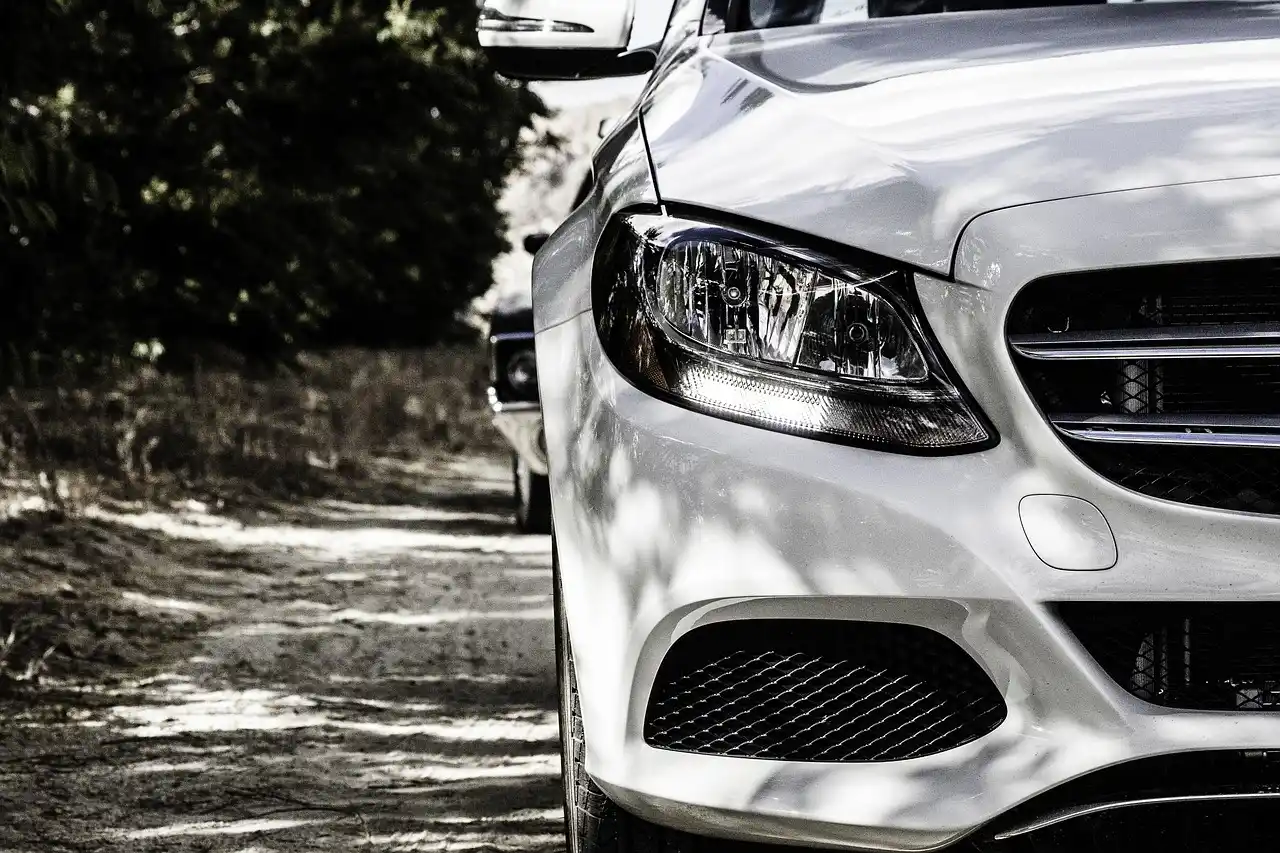
Rinse from top to bottom, wash with a microfiber mitt using the two-bucket method, rinse again before soap dries, and inspect the mirror housings, trim edges, and lower doors before you dry. White paint is unforgiving at the finish stage, so the final inspection matters as much as the wash itself.
- Park in shade and work on cool panels so soap does not flash-dry.
- Rinse from the roof down with the nozzle on a wide rinse setting.
- Wash with pH-neutral shampoo in one bucket and rinse the mitt in the other.
- Use straight-line passes with light pressure, then rinse each panel before moving on.
- Check mirror housings, lower doors, emblems, and trim edges for trapped residue.
- If available, use a spot-free rinse, then dry immediately with a plush microfiber towel.
If the car sits in a driveway where sun hits the hood first, wash the shaded side first, then move around the car so the hottest panel is never left with standing water. That one change often stops the first white streaks on the hood and mirrors.
White car streak diagnostics table
| Symptom | Likely cause | Where it shows first | The exact fix |
|---|---|---|---|
| Chalky haze after drying | Soap film | Flat doors and hood | Rinse longer, then rewash with pH-neutral shampoo and a clean mitt |
| White dots or rings | Hard-water spots | Horizontal panels and glass | Use a spot-free rinse or dry immediately with demineralised water |
| Fine fuzzy streaks | Towel lint | Dark trim on white paint, then doors | Swap to a clean plush microfiber towel and buff lightly, not aggressively |
| Smears that worsen after buffing | Overused drying towel | Lower doors and rear quarter panels | Fold to a clean side or replace the towel before finishing |
| Residue trapped in seams | Missed panel edges | Door gaps, emblems, and trim joints | Blot seams with a separate towel and recheck after a short dry |
| Cloudy marks around mirrors | Mirror housings hold water and soap | Mirror backs and stalk bases | Dry mirror shells by hand and finish with a clean corner of the towel |
| Dirty streaks after rinsing lower panels | Wheel splash-back | Lower doors and rocker panels | Wash wheels first, then re-rinse lower body panels before drying |
| White film appears after glass cleaning | Glass-to-paint transfer | Window edges and adjacent paint | Use separate towels for glass and paint, then wipe paint again with a clean towel |
How do you dry a car without water spots?
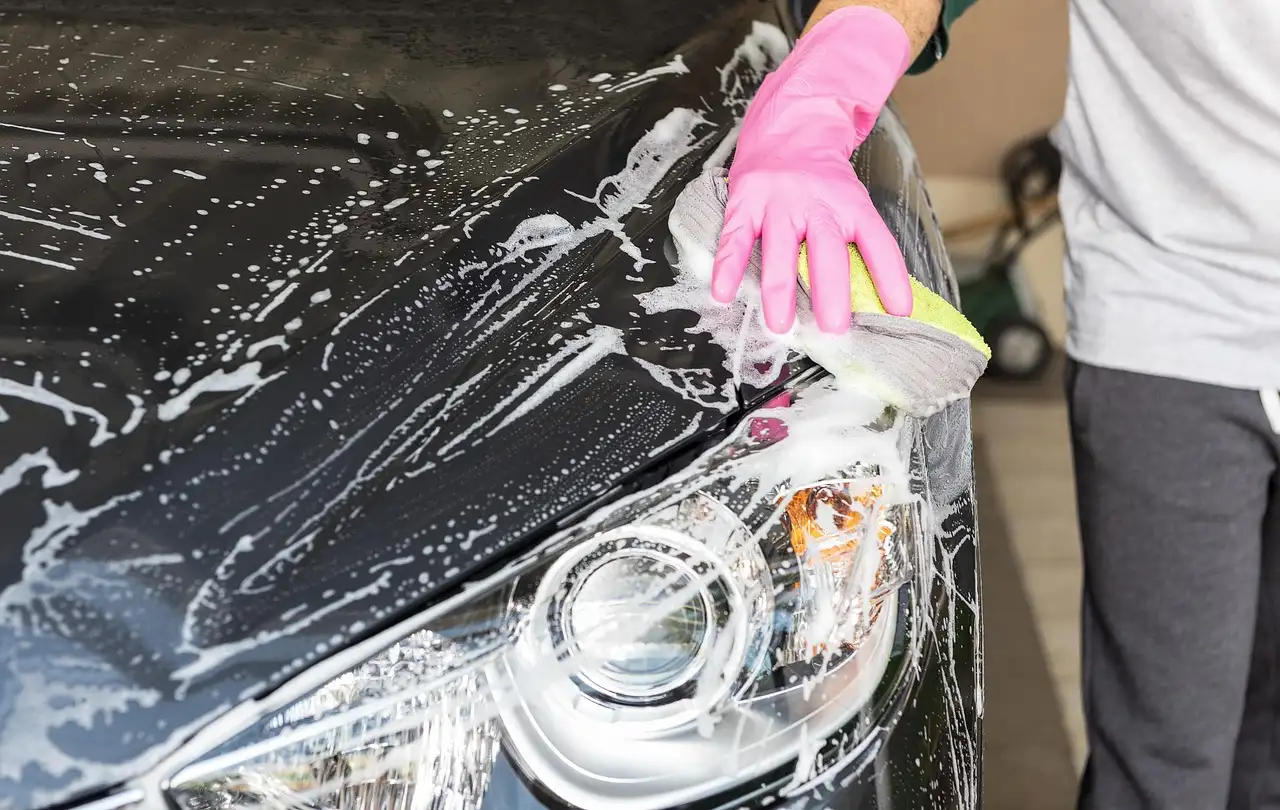
Dry on cool panels immediately after rinsing, before minerals can dry into white marks. A plush microfiber drying towel should blot first, then lightly buff. If your water is hard, using a final spot-free rinse with demineralised water can help reduce the mineral load before the towel touches the paint.
- Start with the roof and upper panels while they are still wet.
- Blot standing water instead of dragging the towel across the panel.
- Flip to a dry side as soon as the towel becomes damp.
- Use a second towel for lower panels, where splash-back adds grit.
- If the bay offers it, finish with a spot-free rinse before drying.
Picture a white hatchback in a self-service bay with hard water and bright afternoon sun. If the wash ends but drying waits ten minutes, the roof and hood can show white spotting even though the soap rinsed cleanly. The fix is not more soap; it is quicker drying and less mineral contact.
Common mistakes
Using one towel on paint and glass transfers cleaner residue back onto the body. Letting water dry on hot panels creates mineral marks that are harder to remove later. Missing panel edges, emblems, and mirror backs leaves the spots that catch the eye first on white paint.
- Do not use a shared foam-bay brush on paint.
- Do not use dish soap or laundry detergent on automotive paint.
- Do not dry after the sun has already baked the panels.
- Do not keep rubbing one towel across dusty lower panels.
How do you clean glass and mirrors without re-smearing paint?
Use an ammonia-free glass cleaner on tinted windows, then keep a separate towel for glass and another for paint. Finish the mirror housings and trim after the paint, because runoff from glass cleaning can re-smear white panels. On outside glass, vertical motions help; inside the windshield, horizontal motions help.
Finish sequence for glass and trim
- Spray the glass cleaner onto the towel, not the tint.
- Wipe outside glass with vertical motions and the inside windshield with horizontal motions.
- Switch to a fresh towel for the mirrors and surrounding trim.
- Inspect the paint below the glass for any transferred cleaner or lint.
If that didn’t work, try this next
If streaks remain, clean the worst area again with a fresh towel and a light mist of waterless detailer or drying aid. If the mark still looks chalky, wash that panel again with pH-neutral shampoo because the issue is likely film, not residue. If the mark feels gritty, stop and re-rinse before wiping.
Frequently asked questions
What is the best way to wash a white car?
The safest routine is shade, cool panels, two buckets, pH-neutral shampoo, straight-line washing, and immediate microfiber drying. Add a spot-free rinse if your water is hard. That sequence addresses the three main causes of white-car streaking: soap film, minerals, and towel residue.

Hi, I’m Melvin, an automobile engineer with extensive experience in automobile equipment. I currently work for a local automobile firm, where I specialize in the car parts industry. I’ve had the opportunity to collaborate with seasoned inspectors, gaining invaluable hands-on experience that goes beyond just theory.
My passion for automotive care started at a young age, which led me to create CarSpareCare. Through CarSpareCare, I share the knowledge and skills I’ve acquired over the years to help others navigate the world of car maintenance and repairs.
My goal is to provide practical tutorials, essential safety advice, and the latest industry insights so that anyone—whether a beginner or an expert—can confidently tackle their automotive projects.

