Vacuum fur first, then clean odor sources, then ventilate the cabin or add an odor absorber. If the smell returns after heat, you missed a source. Pet dander, saliva, urine, or hair trapped in fabric can release odor again as the cabin warms up. This guide gives the exact reset sequence for seats, carpets, vents, mats, and hard surfaces after transporting pets or other animals.
Dry cleanup order and Pet cleanup reference guide
Start with dry cleanup. Remove the animal, trash, loose gear, and any food bowls or blankets, then lift out floor mats and cargo liners before you touch liquid cleaners. That order matters because car interiors collect dust and grit, especially on carpet, and brushing or vacuuming first keeps grit from turning into muddy paste.
Regular cleaning cuts wear and discoloration in carpets and trim, and a yearly spring clean is recommended for the interior. For quick resets, a 10-minute clean can clear trash, wipe surfaces, and sweep crumbs, but animal trips usually need a longer pass because hair and odor source material sit in seams and fibers.
Car interior matrix
| Mess type | Affected surface | First-step tool | Cleaner type | Drying risk | When to escalate to professional detailing |
|---|---|---|---|---|---|
| Dog fur on cloth seats | Seat cushions, seams, seatback pockets | Handheld vacuum with crevice tool | Upholstery cleaner, label-approved for fabric | Medium; foam can hold moisture for days if soaked | Hair is embedded after vacuuming and brushing, or the fabric still smells after drying |
| Muddy paw prints on rubber mats | Rubber mats and door-sill edges | Rinse and scrub brush | Soap and water | Low if removed and dried fully | Texture stays stained, or mud has reached carpet underneath |
| Cat odor in vents | HVAC vents, intake openings, nearby trim | Small detailing brush or compressed air used gently | Odor neutralizer after source removal | Low for plastic trim, higher for electronics and HVAC parts if overblown | Odor returns with heat, airflow still smells after cleaning, or cabin filter needs replacement |
| Wet cargo-area accident | Cargo liner, carpet, side panels | Blotting towels and vacuum | Upholstery cleaner, then odor neutralizer | High; wet backing and underlay can trap odor | Moisture reached padding, odor remains after full drying, or staining is still visible |
A dog may have ridden on a fleece blanket during a roughly 15-minute trip, and the rear seat can still smell warm after parking. The likely problem is not only fur. Saliva, skin oils, and fine dander can stay in the cloth weave and release smell once the cabin heats up, so the fix must include cleaning the fabric, not only vacuuming it.
📊 wikiHow’s car-cleaning guide was fact-checked and updated in 2026. Source: Wikihow.
How do you remove pet hair fast?
Use a handheld vacuum with a crevice tool for seat seams, tight gaps, and carpet edges, then loosen what remains with a small detailing brush. That tool pair reaches the places where fur, crumbs, and grit collect. Battery-powered or corded options both work; choose the version that lets you keep steady suction without constant recharging.
Work in short passes. Long back-and-forth passes often smear loose fur into fabric instead of lifting it. For cloth seats and carpets, a narrow nozzle is especially useful in deep joints, which is why it is a better match than a wide head for pet cleanup.
A small detailing brush helps lift hair from textured areas, but use light strokes so you do not pack debris deeper into seams. If fur is clinging to cargo carpet or the side bolsters, vacuum, brush, then vacuum again. That sequence is usually faster than trying to force everything out in one pass.
Compressed air can be useful for vents, cup holders, and stitching, but it should generally be used with caution and light bursts. Use eye protection, light bursts only, and avoid directing compressed air toward electronics or deep into HVAC components, since it can push debris farther inside rather than removing it.
How do you clean seats and trim safely?
Choose the cleaner for the surface before you spray anything. All-purpose interior cleaner is useful on vinyl, cloth, and some trim when the label says it is safe for that material. Upholstery cleaner is for fabric seats and carpets. Leather cleaner and protector are for leather seats and bolsters. Screen areas need the most restraint, and every product should be label-approved first.
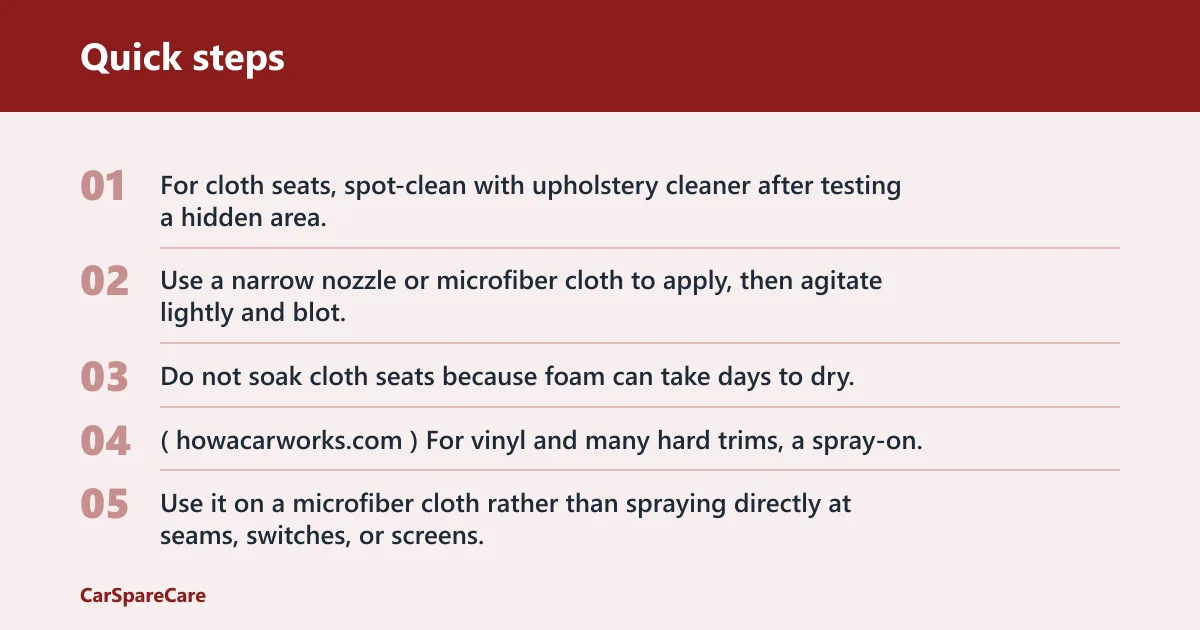
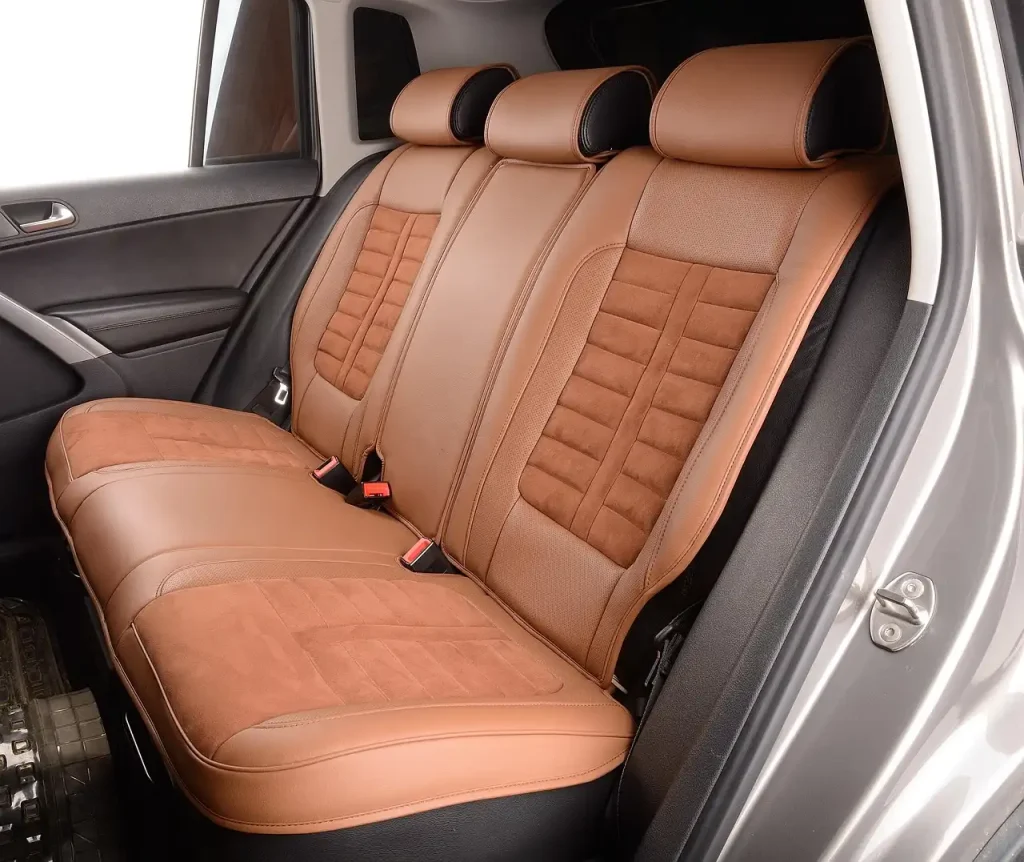
For cloth seats, spot-clean with upholstery cleaner after testing a hidden area. Use a narrow nozzle or microfiber cloth to apply, then agitate lightly and blot. Do not soak cloth seats because foam can take days to dry, and trapped moisture can keep odor alive even after the surface looks clean. (Howacarworks)
For vinyl and many hard trims, a spray-on, wipe-off all-purpose interior cleaner is usually enough, but only after confirming compatibility. Use it on a microfiber cloth rather than spraying directly at seams, switches, or screens. Avoid oversaturating electronics, headliners, and delicate stitching.
Leather needs a different approach. Clean first, then condition if the product is meant for automotive leather. Skip glossy finishes that leave the seat slippery, especially on bolsters where you slide in and out. Leather or vinyl seats can be wiped with a damp cloth, but the cleaner still needs to be suitable for that finish.
Dashboard plastic should be wiped with a damp cloth, while wood should be dry-wiped or treated only with a product approved for that finish. A microfiber cloth is the safest all-purpose wiping tool because it is lint-free and works dry or lightly damp on dashboards, panels, and glass.
A common first-timer mistake is spraying a strong cleaner onto a hot dash and wiping it after it flashes too fast. Shade helps prevent products from drying too quickly, which improves wipe-off and reduces streaking on plastics and glass.
How do you clean mats and cargo areas?
Remove floor mats before any deep cleaning. Rubber mats can be scrubbed with soap and water, then dried fully before reinstalling. Carpeted mats and cargo liners behave more like fabric surfaces, so treat them with vacuuming, spot cleaning, and a label-approved upholstery cleaner if needed.
Drying matters more than many drivers expect. A damp cargo liner can hold smell even after visible soil is gone. If the mat or liner is still cool, heavy, or musty after drying, leave it out longer and check the underlay beneath it before putting it back.
For muddy paw prints on rubber mats, start with removal of loose dirt, then wash. For carpeted mats, vacuum both sides if possible, then spot treat the stained area. If the back side has picked up moisture, dry it before reinstalling so trapped dampness does not spread odor back into the cabin.
For wet cargo-area accidents, lift the liner and check the floor underneath. Blot first, then vacuum water if the material allows it, then clean with an upholstery product that is approved for the cargo surface. If padding under the floor has been soaked, professional drying or detailing is a better call than repeated surface wiping.
How do you remove lingering animal odor from your car interior?
Odor treatment comes after source removal, not before. Vacuum, brush, and clean the surfaces first, then use a pet odor neutralizer. That product can help with lingering animal smell, but it is not a substitute for deep cleaning. If hair, saliva, urine, or dander remains in the fabric, the odor will return when the car warms up.
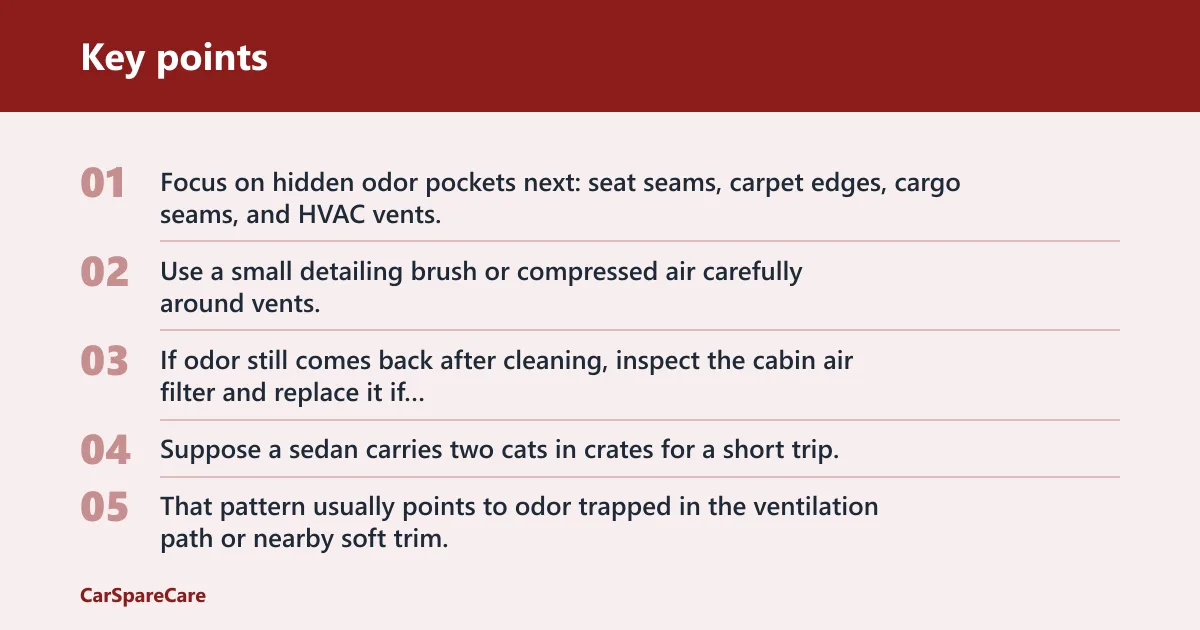
Focus on hidden odor pockets next: seat seams, carpet edges, cargo seams, and HVAC vents. Use a small detailing brush or compressed air carefully around vents, with eye protection and short bursts only. Do not force debris deeper into the system. If odor still comes back after cleaning, inspect the cabin air filter and replace it if needed.
Suppose a sedan carries two cats in crates for a short trip, and the cabin smells fine until the heater runs. That pattern usually points to odor trapped in the ventilation path or nearby soft trim, not just on the seat surface. In that case, clean the intake area, vents, and any fabric the crates touched before using an odor neutralizer.
Popular Mechanics recommends a removable brush on carpet foam cleaner, and notes that Turtle Wax Power Out lifted dirt from fibers. It also places the odor product as a final step after cleaning. The sequence matters more than the brand: remove the source, clean the surface, then treat the remaining smell.
How do you keep your car clean when you travel with a dog?
Use seat covers and cargo liners before the next trip, then vacuum promptly after each ride. A fabric protector can help cloth seats and mats resist future soil and reduce fur cling after deep cleaning. It is optional, but it can make the next cleanup faster if the surface is already clean and fully dry.
Keep a small travel kit in the car: handheld vacuum access, microfiber cloths, a brush, and the right cleaner for your interior surfaces. That cuts the time from return trip to cleanup. If your usual routine is only a quick wipe-down, plan for a deeper reset once fur starts settling into seams or odor starts returning with heat.
Budget matters. A basic vacuum-and-wipe cleanup is enough after a short, clean trip. Once you have wet fur, muddy paws, or a cargo accident, expect more time for drying and product use. Professional detailing makes more sense when the smell returns after cleaning, when padding is wet, or when the cabin filter and vents need attention.
Frequently asked questions
How do I clean my car interior after transporting animals?
Remove the animal, trash, and loose gear, then dry-clean fur and grit before using any liquid product. Vacuum seats, seams, carpets, and cargo areas first, clean mats separately, then treat odor sources. Finish with glass and vents, because smell often lingers in airflow paths and fabric, not just on visible surfaces.
How do I get pet hair out of car seats and carpets fast?
Use a handheld vacuum with a crevice tool for the first pass, then a detailing brush for seams and textured areas. Work in short passes so fur lifts instead of smearing deeper into the weave. For cloth seats, a narrow nozzle is especially useful in deep joints.
How do I remove animal smell from my car interior?
Clean first, then use a pet odor neutralizer. Odor products work after source removal and vacuuming, not before. If the smell returns when the cabin warms up, check hidden fabric, vents, and the cabin air filter. That usually means the odor source was not fully removed.
How do I clean car upholstery without damaging it?
Match the cleaner to the material and test a hidden spot first. Use upholstery cleaner on fabric, a damp microfiber on suitable vinyl, and leather cleaner on leather surfaces. Avoid soaking cloth seats because foam can take days to dry, and keep liquid away from screens and switches.
How do I clean car floor mats properly after pets?
Remove the mats before cleaning. Rubber mats can be scrubbed with soap and water, while carpeted mats need vacuuming and spot cleaning like other fabric surfaces. Dry them fully before reinstalling. If moisture reaches the backing or floor underneath, let both areas dry before driving again.
How do I protect car interior from dog?
Use seat covers, cargo liners, and a routine post-trip vacuum. After a deep clean, fabric protector can help cloth seats and mats resist future soil and fur cling. Keep a travel kit with microfiber cloths and the right cleaner so you can reset the cabin before odors settle in.

Hi, I’m Melvin, an automobile engineer with extensive experience in automobile equipment. I currently work for a local automobile firm, where I specialize in the car parts industry. I’ve had the opportunity to collaborate with seasoned inspectors, gaining invaluable hands-on experience that goes beyond just theory.
My passion for automotive care started at a young age, which led me to create CarSpareCare. Through CarSpareCare, I share the knowledge and skills I’ve acquired over the years to help others navigate the world of car maintenance and repairs.
My goal is to provide practical tutorials, essential safety advice, and the latest industry insights so that anyone—whether a beginner or an expert—can confidently tackle their automotive projects.