Clean a car interior without a vacuum by lifting dry debris first with a brush, microfiber cloth, tape, and a dustpan, then wipe hard surfaces with a lightly damp cloth and finish fabrics with a stiff brush. If you skip dry removal, crumbs turn to mud and stains spread into seams. This guide shows a no-vacuum, surface-by-surface method for seats, mats, vents, crevices, and trim.
What you’ll need
- Several clean microfiber cloths
- Soft-bristled detailing brush
- Mild soap and water in a spray bottle or bowl
- Glass cleaner, preferably ammonia-free
- Leather cleaner and conditioner for leather seats and trim
- Carpet shampoo or upholstery cleaner for spot cleaning
- Compressed air or an air duster for vents and cup holders
- Dry towels
- Rubber mat supplies: dish soap, warm water, and a scrub brush
- Tape or a lint roller for pet hair
- Small dustpan or stiff card for collecting dry debris
Clear out trash, loose gear, food wrappers, and anything that catches grit in corners or under seats. A common approach is to clean from the roof line down to the floor, so dust drops onto areas you have not cleaned yet. Good Housekeeping says a quick sweep can be enough if you only have 10 minutes, and it lists a microfiber cloth plus all-purpose cleaner as the basic pairing for a fast cabin reset.
Dry-lift the debris first
- Open the doors and shake out floor mats, bags, and loose floor debris.
- Use a soft-bristled detailing brush on seams, seat stitching, vents, buttons, and textured trim.
- Collect loosened crumbs with tape, a lint roller, or a folded microfiber cloth.
- Use compressed air only to dislodge grit from cup holders and vent fins, then wipe it away right away.
- Wipe hard surfaces with a lightly damp microfiber cloth and dry them immediately.
Suppose the back seat has dry cereal in the seat belt buckle and a few grains in the seam. Brush the seam first, tap the crumbs onto a towel, then wipe the buckle area with a barely damp cloth. That keeps the debris from turning into paste.
Top up moisture carefully
If a surface still looks dusty after the first pass, add one more light mist to the cloth, not the panel. Check the area after each pass. That small step matters because too much liquid can leave streaks on plastic and may creep into switches or stitching.
No-vacuum interior cleanup decision table
| Mess type | Best dry-removal method | Safest damp-cleaning option | Drying risk |
|---|---|---|---|
| Crumbs | Brush into a pile, then lift with tape or a cloth | Lightly damp microfiber cloth after the loose bits are gone | Low if you do not smear the mess first |
| Dust | Microfiber cloth or soft detailing brush | Dry dusting is usually enough; follow with a lightly damp wipe if needed | Low |
| Sand | Brush toward an open door and collect with a dustpan or cloth | Very light wiping only after the grit is removed | Medium if you grind it into fabric |
| Pet hair | Lint roller, tape, or a slightly damp rubber glove | Spot wipe only after the loose hair is lifted | Low to medium, depending on fabric texture |
| Sticky spills | Scrape gently with a card or cloth edge | Microfiber cloth with mild soap and water, then dry at once | High if the spill is left wet |
| Odors | Remove the source first: trash, food, damp mats, or spills | Clean the source area; use ventilation after cleaning | Low for airflow, high if moisture stays in foam |
Do not use: a soaking wet towel on any of these messes. It pushes grime deeper, leaves residue, and slows drying.
How do you clean car seats without a vacuum cleaner?
Clean car seats without a vacuum by lifting loose debris first, then using the right cleaner for the material. Cloth seats need the tightest control over moisture. Leather needs gentle, pH-balanced products. Vinyl and plastic trim can take a mild soap wipe, but all three need a dry follow-up so moisture does not sit in seams or foam.
Cloth seats
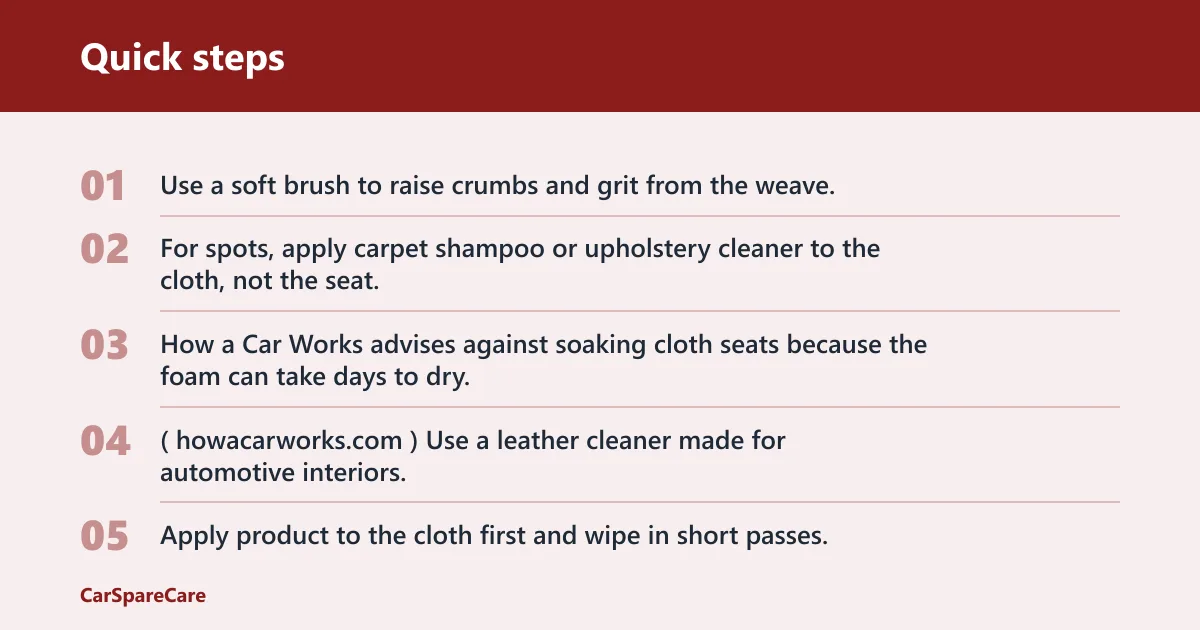
Use a soft brush to raise crumbs and grit from the weave, then blot with a microfiber cloth. For spots, apply carpet shampoo or upholstery cleaner to the cloth, not the seat, and test a hidden area first. How a Car Works advises against soaking cloth seats because the foam can take days to dry. (Howacarworks)
Leather seats
Use a leather cleaner made for automotive interiors, then follow with conditioner if the surface is dry or dull. Apply product to the cloth first and wipe in short passes. Too much liquid can leave streaks, and harsh household cleaners can strip the finish.
Vinyl and plastic seat trim
Mild soap and water are a safe starting point for many hard surfaces. Wring the cloth well, wipe the area, then dry it right away. If the seat trim borders a switch, seam, or stitch line, keep the cloth only slightly damp.
A common first-timer mistake is spraying cleaner straight at a seat seam. The liquid runs into the gap, the foam stays damp, and the spot looks clean on top while it still smells stale underneath.
When to use carpet shampoo or upholstery cleaner
Use carpet shampoo or upholstery cleaner for set-in food marks, drink rings, and tracked-in soil on cloth seats and carpets. Spot-test first. Keep the application light. If the fabric darkens from soaking, stop and blot dry. Car Decorates recommends a homemade cleaner with two cups of hot water, two tablespoons of borax, three tablespoons of grated soap, and ten drops of lavender essential oil, while also warning not to saturate the carpet.
How do you clean car carpet without a vacuum?
Car carpet without a vacuum needs a dry-first pass, then a spot-cleaning pass. Lift sand, soil, and crumbs with a brush before any liquid touches the fibers. If possible, remove the floor mats first so the carpet underneath does not collect the same grit again. If the carpet stays wet too long, odor and mildew risk go up.
Remove loose grit first
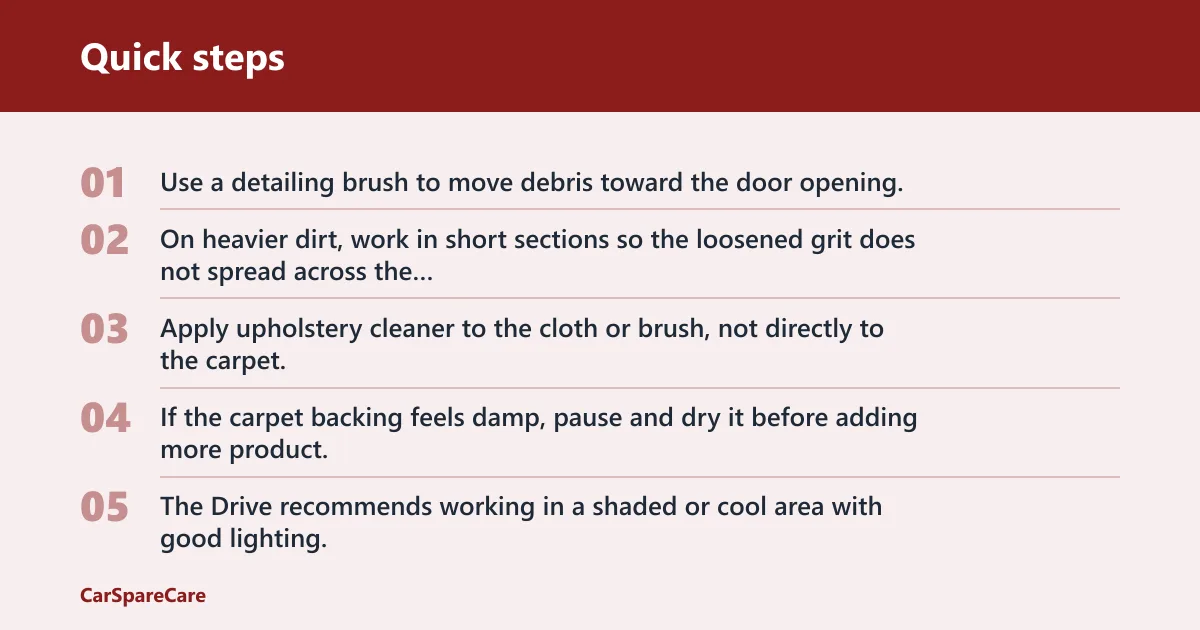
Use a detailing brush to move debris toward the door opening, then pick it up with a dustpan, tape, or microfiber cloth. On heavier dirt, work in short sections so the loosened grit does not spread across the cabin.
Spot-clean stains with limited moisture
Apply upholstery cleaner to the cloth or brush, not directly to the carpet, and work the stain from the outside in. Blot, do not scrub hard. If the carpet backing feels damp, pause and dry it before adding more product. The Drive recommends working in a shaded or cool area with good lighting, which helps you see residue without speeding evaporation unevenly. (Thedrive)
Clean the mats separately
Remove floor mats and clean them apart from the carpet. Rubber mats can be scrubbed with dish soap and warm water. Dry them fully before reinstalling. If you leave moisture trapped under a mat, the smell returns fast, and the floor can stay damp longer than the top layer suggests.
How do you dry a car interior after cleaning without causing mold? Leave the doors open in a shaded or cool area, run the fan or air conditioning on fresh air if available, and use dry towels on seats, carpets, and seams. Car Decorates warns to avoid mold by leaving windows down, and How a Car Works says to check the floor for rust and leaks if carpet can be removed.
How do you clean vents and tight spaces without damaging them?
Use a detailing brush and compressed air carefully, not aggressively. The goal is to loosen dirt and catch it, not push it deeper into the dash. Vents, cup holders, seat rails, buttons, and stitching all need light pressure. Glass cleaner should stay on the cloth, not blasted into electronics or trim gaps.
Work from dry to damp
- Brush vent fins, seams, and buttons with light pressure.
- Use compressed air in short bursts to loosen debris from tight spots.
- Hold a microfiber cloth below the area so the dust lands on fabric, not deeper inside the cabin.
- Wipe the loosened dirt away before it settles into another seam.
The same source lists compressed air for hard-to-reach areas like vents and cup holders. Use it as a helper only. It is not a substitute for wiping, because airborne grit can land on the dash or get blown into an even tighter gap.
Glass, trim, and leather finish
Ammonia-free glass cleaner is commonly used for inside windows and mirrors. The Drive advises avoiding glass cleaners that contain ammonia, which is a safer choice near cabin plastics and tint. For leather trim, use a gentle automotive cleaner and conditioner. For dashboards and plastic trim, a microfiber cloth with mild soap and water is usually enough.
Common mistakes
The biggest errors are often moisture-related. Too much liquid, the wrong cleaner, or rushing the drying stage creates streaks, odor, and hidden damp spots. Keep the process dry-first, then damp-clean only where needed.
- Using too much liquid: wring cloths out hard and apply cleaner to the cloth first.
- Scrubbing the headliner: use very light pressure only. Never soak it; the adhesive can fail and the fabric can sag.
- Using the wrong cleaner: avoid ammonia-heavy glass cleaner near tint, and use automotive-safe products on leather.
- Putting mats back too early: dry rubber mats completely before reinstalling them.
- Ignoring the floor underneath: if you can lift carpet, check for rust or leaks before cleaning it again.
How do you clean dirty car interior without a vacuum? Follow the same order every time: trash out, dry debris out, surfaces wiped, fabrics spot-cleaned, then full drying. That sequence matters more than the product count. A few clean cloths, a brush, and restrained moisture will usually do more than a wet all-purpose pass.
Frequently asked questions
What household items can clean a car interior?
Microfiber cloths, a soft brush, mild soap and water, dish soap for rubber mats, tape for crumbs, and a lint roller for pet hair cover most basic jobs. For a quick refresh, Good Housekeeping says a microfiber cloth and all-purpose cleaner are usually enough, with compressed air reserved for vents and cup holders.
How do you get crumbs and dust out of car seats without a vacuum?
Brush the fabric first so the debris breaks free, then lift it with tape or a microfiber cloth. Work from the top of the seat downward. If the crumbs are sticky or oily, spot clean only after the loose bits are removed, because moisture makes them cling harder to the weave.
How do you clean cloth car seats without carpet cleaner?
Use a lightly damp microfiber cloth with mild soap and water, then blot dry right away. For deeper spots, apply a small amount of upholstery cleaner to the cloth and test a hidden section first. Do not soak the foam, and do not scrub hard enough to rough up the fabric.
How do you clean car seats with carpet cleaner if you do have one?
Spot-test first, then apply the carpet cleaner sparingly to a cloth or soft brush. Work in small sections and blot away residue as you go. The safest method is still light application, because soaked seats trap moisture and can stay damp much longer than they look on the surface.
How do you clean car seats without carpet cleaner?
Use a microfiber cloth, a soft detailing brush, and mild soap and water for the first pass. On cloth seats, lift debris dry before any liquid touches the fabric. On leather, use automotive-safe leather cleaner, then conditioner if the finish looks dry. Keep the cloth only lightly damp.
How do you clean car vents and tight spaces without damaging them?
Use a soft detailing brush and short bursts of compressed air, then wipe what comes loose. Do not force the air nozzle deep into the vent, and do not spray cleaner into electronics. Clean cup holders, seat rails, and seams last so loosened dirt does not fall back onto already-cleaned panels.

Hi, I’m Melvin, an automobile engineer with extensive experience in automobile equipment. I currently work for a local automobile firm, where I specialize in the car parts industry. I’ve had the opportunity to collaborate with seasoned inspectors, gaining invaluable hands-on experience that goes beyond just theory.
My passion for automotive care started at a young age, which led me to create CarSpareCare. Through CarSpareCare, I share the knowledge and skills I’ve acquired over the years to help others navigate the world of car maintenance and repairs.
My goal is to provide practical tutorials, essential safety advice, and the latest industry insights so that anyone—whether a beginner or an expert—can confidently tackle their automotive projects.