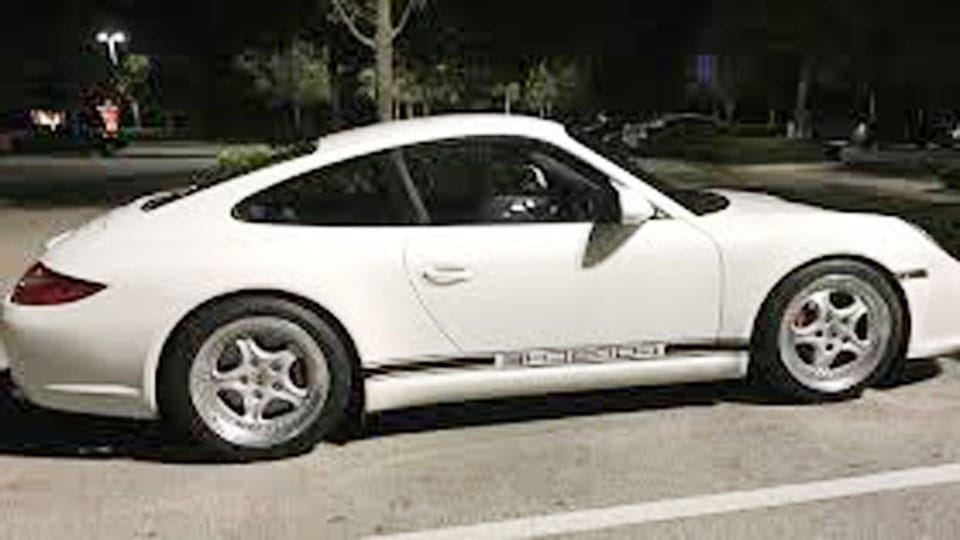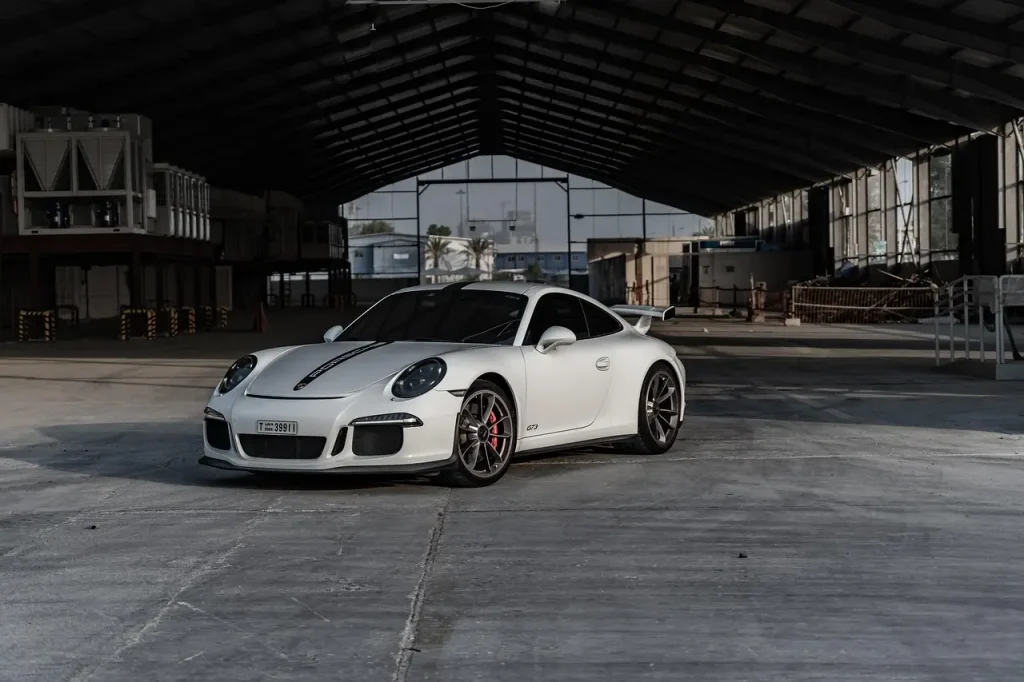
A larger wheel changes more than appearance. Wheel diameter changes the rim size, usually forces tyre sidewall height down, and should keep rolling diameter close to factory so the speedometer, gearing, and driver aids stay accurate. Width and offset matter just as much, because they decide where the tyre sits in the arch and what it touches.
What changes when wheel size grows?
Wheel diameter and tyre sidewall
Wheel diameter is the overall rim size. Go up one rim size and the tyre sidewall shrinks to keep the same rolling diameter. That matters because the sidewall is part of your suspension, so less sidewall means less compliance, firmer ride quality, and more impact harshness over potholes and sharp edges.
Suppose a car moves from a 16-inch wheel to a 17-inch wheel while keeping the same rolling diameter; the sidewall would be reduced by about 12.7 mm per side. The tyre sidewall loses about 12.7 mm per side. That is enough to change the way the car filters bumps, especially on short sidewall tyres and on roads with broken surfaces.
Rolling diameter, width, and offset
Rolling diameter is the tyre’s overall diameter, not just the rim. It should stay nearly constant, because it affects speedometer accuracy, gearing, and driver-aid calibration. Wheel width changes the contact patch and stance, but it can also add tramlining on rutted roads and reduce clearance to suspension parts or arches.
Offset, usually shown as ET, is where the wheel sits in the arch. Lower offset pushes the wheel outward. If the offset is wrong, the tyre can touch the arch, steering lock can change, and bearing load can rise. That is why diameter alone is not enough for fitment checks.
What happens if wheel size is too big?
The first failure is usually rubbing, not a dramatic handling change. If diameter, width, or offset push the tyre outside the car’s clearance envelope, the wheel will usually touch first on full lock or full compression. After that come speedometer error, harsher ride, and, on some cars, steering heaviness or bearing stress.
The first failures you usually notice
Clearance is the first thing to go because tyres move under load. On a daily road car, the front end often shows clearance issues first, such as inner arch liners at full lock, outer arch lips on compression, or contact near brake hardware if the wheel barrel shape is not suitable. Speedometer error and gearing changes are usually noticed only after the car is driven.
A common first-timer mistake is fitting a larger wheel for looks, then keeping the old offset. The tyre may clear when parked, but rub as soon as the suspension compresses or the steering reaches full lock. That is why the fit needs checking at both extremes, not just from the side of the car.
Why rubbing, speedo error, and harshness appear in that order
Rubbing appears first because it is a physical contact issue. Speedometer error comes next if the rolling diameter has changed enough to affect wheel-speed calculations. Ride harshness shows up whenever the sidewall gets shorter, because the tyre has less travel to absorb bumps before the suspension has to do the work.
Wheel size checklist
The table below separates symptom from likely cause so you can measure the right thing next. If more than one symptom appears, start with the most obvious contact point, then check rolling diameter, then load and weight.
| Symptom | Likely cause | Urgency | What to measure next |
|---|---|---|---|
| Rubbing on full lock | Width too large, offset too low, or tyre shoulder too wide for the front arch | High | Steering lock clearance to liner, spring perch, and suspension arm |
| Rubbing on compression | Overall tyre diameter too large or arch clearance too tight | High | Tyre-to-arch gap at full bump and with passengers or luggage aboard |
| Speedometer reads low | Rolling diameter increased | Medium | Tyre size code and calculated rolling diameter against factory size |
| Harsher ride | Sidewall too short for the road surface | Medium | Sidewall height, tyre pressure, and wheel diameter change |
| Tramlining on rutted roads | Width increased, tyre profile changed, or offset moved the contact patch outward | Medium | Wheel width, offset, and front-axle tyre width |
| Reduced acceleration | Heavier wheels, larger rolling diameter, or both | Medium | Wheel weight and total rolling diameter compared with factory |
| Brake or arch contact at turn-in | Incorrect diameter, width, or spoke/barrel shape | High | Brake caliper clearance and inside barrel clearance |
How does wheel size affect performance?
Wheel size affects performance through acceleration, braking, steering response, and ride control. Bigger wheels do not automatically make a car quicker or give more grip. The result depends on rolling diameter, wheel weight, tyre width, and whether the new fit keeps suspension and steering geometry in a range the car can tolerate.
Acceleration and braking
Larger wheels can slow acceleration if they are heavier or if the overall rolling diameter rises. That is because the engine has to turn more mass and may move the car farther per revolution. Braking can also suffer if the wheel/tyre package adds inertia, though a wider contact patch can help only when the rest of the setup is matched properly.
Steering feel and tramlining
Wheel width affects grip and stance, but it can also make the car follow grooves in the road. That tramlining is more obvious on rutted surfaces and with low-profile tyres. A lower offset can shift the tyre outward and change steering feel further, sometimes making the car feel darty or heavier at the wheel.
Unsprung mass and wheel construction
Unsprung mass rises with heavier wheels, and that hurts ride quality, steering response, and often acceleration. Construction matters here. Cast wheels are the entry point and the heaviest option, flow-formed wheels are stronger and lighter than pure cast wheels, and forged wheels are machined from a single forged billet and are significantly lighter at any size.
That does not mean forged wheels are always the right answer. They usually cost more, and a lighter wheel is only worthwhile if the fitment, tyre choice, and load rating still suit the car. A cheaper wheel that fits correctly can be the better road choice.
Can bigger wheels fit without problems?
Yes, if diameter, width, offset, rolling diameter, load rating, and brake clearance all stay within the car’s limits. There is no universal maximum wheel size for every platform. The practical limit is the point where the tyre starts touching, the ride becomes too firm for your roads, or the wheel’s load and weight no longer suit the car.
Brake and arch clearance checks
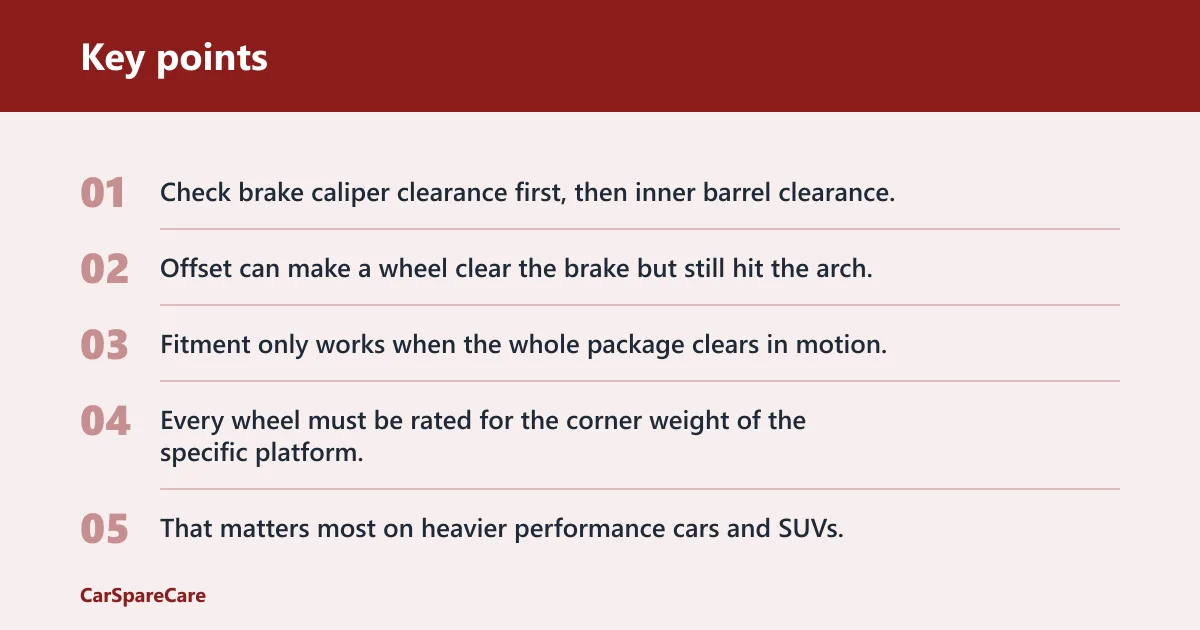
Check brake caliper clearance first, then inner barrel clearance, then outer arch clearance on full lock and compression. Offset can make a wheel clear the brake but still hit the arch. Width can do the opposite. Fitment only works when the whole package clears in motion, not just when the car is parked.
Load rating for heavier cars
Every wheel must be rated for the corner weight of the specific platform. That matters most on heavier performance cars and SUVs, where a wheel that looks fine on paper may still be under-rated for the load it sees in use. If the rating is wrong, do not rely on appearance or offset to make up for it.
Why visual gains stop being worth it
Big wheels can fill the arches more, but the value drops fast once the tyre sidewall gets too short for the road you drive on. For daily use on rougher roads, the point where style costs too much comfort is often the point where impacts become sharper, noise rises, and the car starts tramlining more often.
Picture a commuter hatchback moving from 16-inch wheels to 19-inch wheels with the same rolling diameter. The car may look more aggressive, but if the new offset also pushes the tyre outward, the first real-world complaint is usually rubbing on full lock, followed by a firmer ride and more road-following on worn tarmac.
When are bigger wheels worth it?
Bigger wheels are worth it when the fitment improves the car without creating new problems in daily use. On UK roads, that often means staying close to factory rolling diameter, keeping enough sidewall for potholes, and avoiding offsets that push the tyre into the arch. For track use, a firmer sidewall can suit sharper steering, but only if clearance and load rating still check out.
Daily driving on UK roads
For regular road use, comfort and tyre protection matter. A moderate step up can work, but once the sidewall becomes too short, impact harshness and rim damage risk rise. If the car sees broken surfaces, speed humps, or kerb strikes, a smaller wheel with more tyre often makes better sense.
Track-focused use
Track use changes the balance. Sharper steering and response may matter more than ride comfort, so a larger wheel and lower-profile tyre can be acceptable if the compound, load rating, and brake clearance are right. Even then, unsprung mass still matters, so a lighter wheel is usually the smarter upgrade than a bigger one alone.
SUVs and heavy cars
SUVs and heavier performance cars need load rating checked first. They are more sensitive to tyre and wheel ratings because the corner weight is higher. A visually larger wheel is not automatically better if it adds weight, reduces sidewall too far, or creates arch contact under load.
Frequently asked questions
How does wheel size affect a car?
Wheel size affects stance, ride quality, steering feel, gearing, and clearance. A larger rim usually means a shorter sidewall, which makes the ride firmer and leaves less buffer over bumps. Width and offset also change where the tyre sits, so fitment and behaviour both move together.
Why does wheel size matter?
Wheel size matters because the tyre is part of the suspension and the wheel has to fit the car in motion. If rolling diameter changes too much, speedometer accuracy, gearing, and driver aids can be affected. If width or offset is wrong, rubbing and bearing load can follow.
How does wheel size affect car performance?
Wheel size can affect performance through mass, inertia, and tyre shape. Larger or heavier wheels can hurt acceleration and steering response. A wider wheel may add grip, but only if the tyre and suspension can use it. Bigger is not automatically faster.
Do bigger wheels affect performance?
Yes. Bigger wheels often change acceleration, brake feel, and ride quality because they usually add weight and reduce sidewall height. If the rolling diameter grows, the gearing also changes. The result can be worse in daily use even if the car looks more purposeful.
Are smaller or bigger wheels better?
Neither is always better. Smaller wheels usually give more sidewall, better impact absorption, and more margin on rough roads. Bigger wheels can sharpen steering and fill the arches, but they can also add harshness and rubbing risk. The better choice depends on use, road quality, and fitment.
Does wheel width matter?
Yes, wheel width matters because it changes the contact patch, stance, and clearance. Extra width can improve response, but it also raises the chance of tramlining and contact with suspension or arch parts. Width has to be checked with diameter and offset, not on its own.

Hi, I’m Melvin, an automobile engineer with extensive experience in automobile equipment. I currently work for a local automobile firm, where I specialize in the car parts industry. I’ve had the opportunity to collaborate with seasoned inspectors, gaining invaluable hands-on experience that goes beyond just theory.
My passion for automotive care started at a young age, which led me to create CarSpareCare. Through CarSpareCare, I share the knowledge and skills I’ve acquired over the years to help others navigate the world of car maintenance and repairs.
My goal is to provide practical tutorials, essential safety advice, and the latest industry insights so that anyone—whether a beginner or an expert—can confidently tackle their automotive projects.