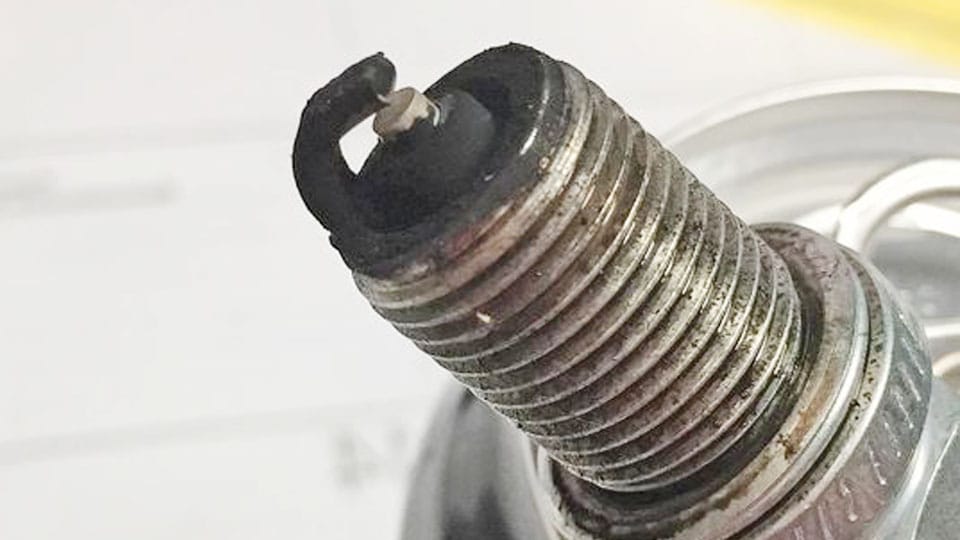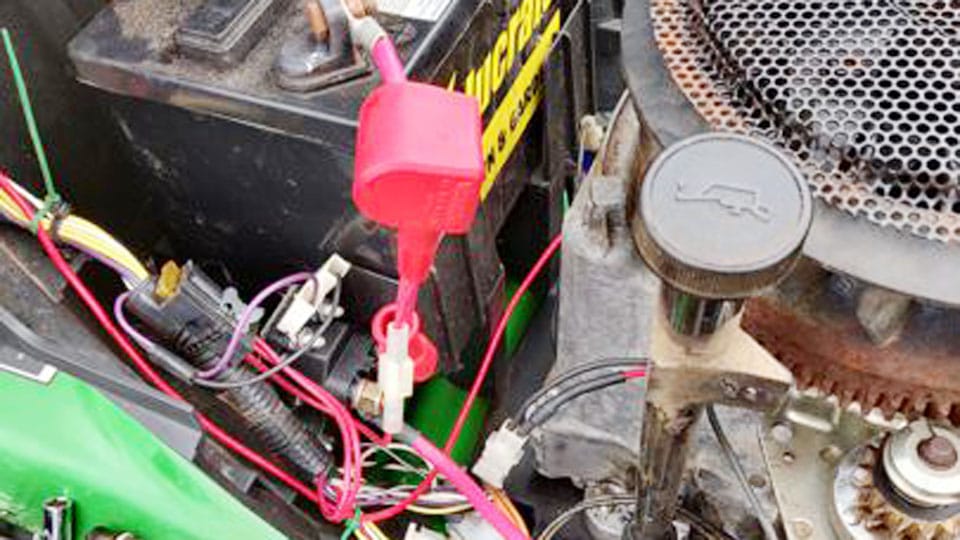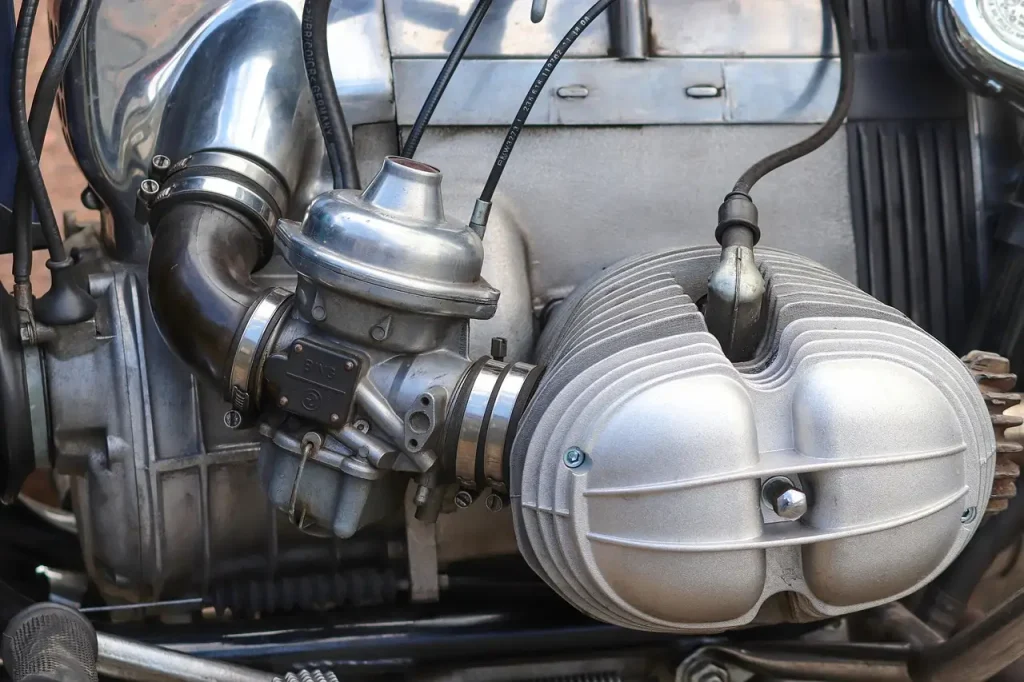
Replace spark plugs in a full set when they’re worn, old, or the service history is unknown; replace one plug only for isolated damage or diagnosis. Skipping that split can leave one cylinder misfiring, waste time, and trigger a repeat repair. This guide explains when to replace all plugs together, when a single plug is acceptable, and what to check before you buy parts.
Mileage, driving habits, and signs of wear
Spark plugs need replacing when mileage, age, or plug condition points to normal wear, even if the engine still runs well. A common rule of thumb is to think about replacement around the 60,000-mile mark, with 40,000 miles a better checkpoint for older cars or hard-driven cars. Copper plugs often reach their limit around 30,000 miles, while iridium and platinum plugs can last 60,000 to 100,000 miles.
Mileage and age clues
Service interval matters more than one symptom. If the plugs are due by the maintenance schedule, or you do not know when they were last changed, replacing the full set is usually the safer move. That matters even more when the engine has multiple cylinders and the plugs have aged together.
Driving conditions that shorten plug life
Short trips, stop-and-go traffic, heavy towing, and frequent hard acceleration can shorten plug life. In those conditions, plugs can foul sooner and gaps can widen faster. A mileage number still helps, but the engine’s duty cycle should move the decision earlier when the car works harder than average.
What worn plugs usually look like
Worn plugs often show widened gaps, rounded electrodes, and deposits. A wider plug gap makes the coil work harder because the spark must jump farther. That extra demand can turn into rough idle, jerking under acceleration, or a misfire that sets a check engine light.
Do spark plugs need to be replaced in sets?
Spark plugs do not always need to be replaced in sets, but replacing the whole set is usually the better choice when wear is even across cylinders, mileage is due, or the service history is unknown. A single-plug replacement makes sense only when the fault is isolated to one cylinder and the other plugs still match each other in wear and condition.
Why matching wear matters across cylinders
Plugs in the same engine age under similar heat, load, and combustion conditions. If one plug has clearly outlived the others, the set may no longer be matched. Replacing only one can leave the engine with a fresh plug next to several tired ones, which can make diagnosis harder if the problem returns.
When one plug can be replaced alone
One plug is a reasonable replacement when it is physically damaged, contaminated by a single-cylinder issue, or confirmed by diagnosis as the only bad part. That includes a cracked insulator, damaged electrode, or a plug fouled because that one cylinder had a separate problem. In those cases, the plug is a symptom, not the whole story.
When the full set is the better choice
Choose the full set when the plugs are all near the service interval, the engine has unknown maintenance history, or several plugs show the same wear pattern. On a 4-cylinder engine, the labor gap between one plug and four plugs may be modest. On transverse V6 and V8 engines, the cost of opening the job twice can be much higher.
Spark plug decision matrix
This table gives a practical rule. Use the symptom pattern, mileage, plug condition, and engine layout together. Do not use one clue alone unless diagnosis is clear.
| Symptom pattern | Mileage/age | Plug condition | Engine type | Recommended action |
|---|---|---|---|---|
| Rough idle with no single-cylinder code | 60,000 miles or more, or unknown history | All plugs show wear or widened gaps | Any layout | Replace the full set |
| Hesitation under acceleration with P0301-P0308 on one cylinder | Plugs otherwise within interval | One plug is cracked, oil-fouled, or carbon-fouled | Any layout | Replace the bad plug, then confirm the root cause |
| Check engine light flashes during a severe misfire | Any mileage | Heavy wear or deep fouling on multiple plugs | Any layout | Stop driving, diagnose the misfire, and replace the full set if wear is general |
| One cylinder misfires after plug damage during removal | Recent service, other plugs still healthy | Physical damage on one plug only | Any layout | Replace one plug and inspect related coil, boot, and wire |
| Several cylinders misfire or the idle is consistently rough | Near scheduled interval | Similar wear across the set | V6 or V8 with difficult access | Replace all plugs together |
Can you replace just the bad spark plug?
Yes, but only when the problem is clearly limited to one plug and one cylinder. A single-plug repair is reasonable for a cracked plug, one fouled plug, or a confirmed cylinder-specific fault code. If the other plugs are near their service limit, replacing only one often postpones the bigger job rather than solving it.
Isolated damage or fouling
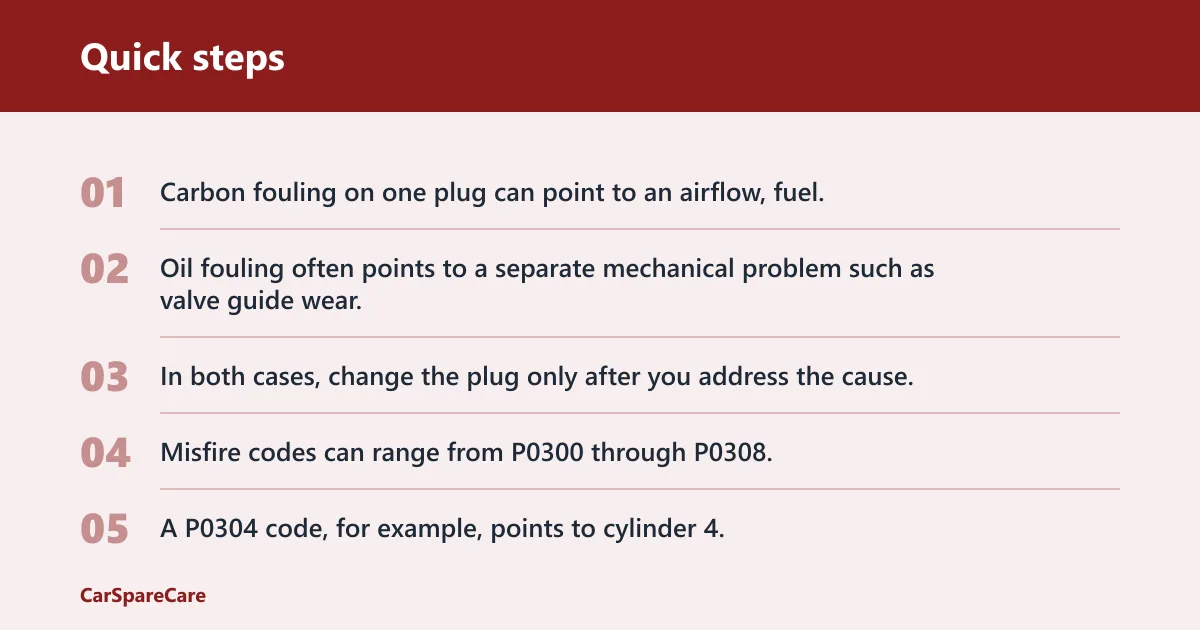
Carbon fouling on one plug can point to an airflow, fuel, or ignition issue on that cylinder. Oil fouling often points to a separate mechanical problem such as valve guide wear, piston ring wear, or a gasket leak. In both cases, change the plug only after you address the cause, or the new plug may foul again.
Confirmed diagnostic codes
Misfire codes can range from P0300 through P0308. A P0304 code, for example, points to cylinder 4. That does not prove the plug is the only fault, but it does narrow the search. Check the coil, connector, wiring, and injector before assuming the plug alone failed.
When replacing one plug is acceptable
Replace one plug when diagnosis confirms a single-cylinder issue and the remaining plugs are still within their service life. That is the right call after accidental damage during service, a broken tip, or a plug fouled by a one-cylinder defect. It is not the right call when the plug set is already near the end of its interval.
Say your 4-cylinder commuter has 32,000 miles on copper plugs and one plug cracks during removal. Replacing that one plug is sensible if the other three still read evenly and the engine has no broader misfire pattern. The repair stays local because the failure is mechanical, not age-related.
Why set replacement often saves money
Replacing one plug can look cheaper up front, but the second repair visit often wipes out the savings. A full set of spark plugs may cost $20 to $80, and shop labor can add another $100 to $200. If you pay that labor twice because the rest of the set fails soon after, the single-plug job becomes false economy.
Repeated labor costs
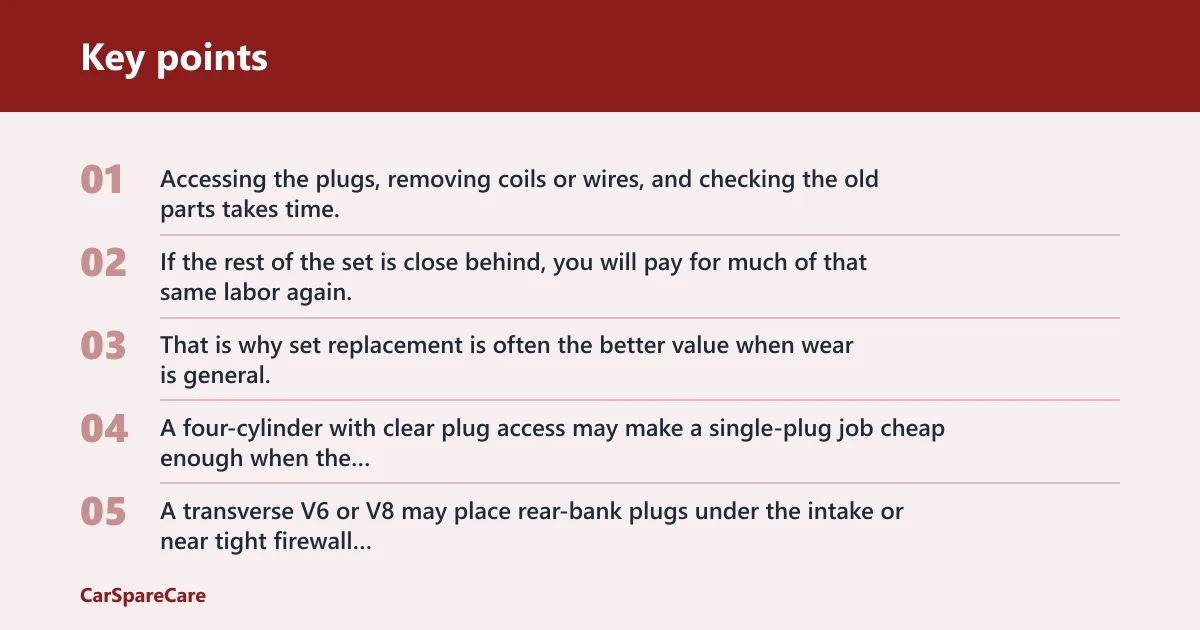
The parts bill is only part of the total. Accessing the plugs, removing coils or wires, and checking the old parts takes time. If the rest of the set is close behind, you will pay for much of that same labor again. That is why set replacement is often the better value when wear is general.
Access differences by engine layout
Engine layout changes the economics. A four-cylinder with clear plug access may make a single-plug job cheap enough when the problem is isolated. A transverse V6 or V8 may place rear-bank plugs under the intake or near tight firewall clearance, so repeating the job later costs far more than replacing the set now.
Picture a V6 minivan with one misfiring rear-bank plug and 78,000 miles on iridium plugs. If one plug is changed today and the other five are left in place, the owner may face the same difficult access job again soon. In that layout, the full set usually costs less over time.
How worn plugs affect coils and the catalyst
Worn plugs can stress ignition coils because a wider gap needs more voltage to fire. That does not mean every old plug will kill a coil, but the risk rises when the gap widens, the coil runs hotter, or the engine misfires repeatedly. Misfires can also send raw fuel into the exhaust, where it can overheat and damage the catalytic converter.
Widened gap and extra coil voltage
As electrodes wear, the spark gap widens. The coil must build more voltage to jump that gap. Over time, that extra load can aggravate weak coils, especially on engines with already marginal ignition parts or poor maintenance history.
Misfire risk and heat stress
Severe wear can trigger rough idle and jerking under acceleration. A flashing check engine light means the misfire is severe enough to risk catalytic converter damage. The engine should not be driven hard in that state. Find the cause quickly, because raw fuel can overheat the converter and turn a plug job into a much bigger repair.
Raw fuel and catalytic converter damage
When a cylinder misfires, unburned fuel can pass into the exhaust. The converter then has to deal with fuel it was not meant to process in that quantity. That is why a repeated misfire is more than an annoyance. It can become an expensive downstream problem if ignored.
Spark plug type and service life
Plug material affects service life and replacement strategy. Copper plugs wear faster and are often tied to shorter service intervals. Platinum and iridium plugs last longer, which makes full-set replacement less frequent, but it does not remove the need to replace them together when the set is due.
Copper plugs
Copper spark plugs typically last around 30,000 miles. They are common in some older or simpler engines, and they usually need more frequent replacement. On these plugs, keeping the whole set on the same schedule helps keep wear even across cylinders.
Platinum plugs
Platinum plugs can last much longer than copper, with service life often in the 60,000 to 100,000-mile range. They are a strong fit for longer maintenance intervals, but once the engine is due, replacing the full set keeps the ignition system balanced.
Iridium plugs
Iridium plugs are built for long service life, often in the same 60,000 to 100,000-mile range. That longer life can tempt owners to delay replacement, especially when the engine still runs smoothly. If the history is unknown or the mileage is high, replace the set rather than hoping one good-looking plug is enough.
Frequently asked questions
Do I need to replace spark plugs one at a time?
No. One-at-a-time replacement makes sense only when you have a single, confirmed problem on one cylinder and the other plugs are still in good condition. If the plugs are due by mileage or show similar wear, doing the whole set at once usually avoids repeat labor and keeps the engine balanced.
Should I replace all spark plugs at the same time?
Yes, when the plugs are due, the history is unclear, or several cylinders show the same wear pattern. That approach is especially sensible on engines with harder access, where repeating the job later is expensive. It is less necessary only when you can point to one damaged plug and nothing else.
Do spark plugs need to be changed if only one is misfiring?
Not automatically. A single misfire can come from the plug, but it can also come from the coil, wiring, injector, compression, or air-fuel issues. Replace the plug only if inspection or diagnosis points to that cylinder’s plug. If the rest of the set is old, replace all of them while you are there.
Will old spark plugs damage ignition coils?
Old plugs can add stress to ignition coils because a wider gap needs more voltage to fire. That raises load and heat risk, especially when the engine is already misfiring. It is not guaranteed coil damage, but it is a real risk worth avoiding with timely replacement.

Hi, I’m Melvin, an automobile engineer with extensive experience in automobile equipment. I currently work for a local automobile firm, where I specialize in the car parts industry. I’ve had the opportunity to collaborate with seasoned inspectors, gaining invaluable hands-on experience that goes beyond just theory.
My passion for automotive care started at a young age, which led me to create CarSpareCare. Through CarSpareCare, I share the knowledge and skills I’ve acquired over the years to help others navigate the world of car maintenance and repairs.
My goal is to provide practical tutorials, essential safety advice, and the latest industry insights so that anyone—whether a beginner or an expert—can confidently tackle their automotive projects.