Restore faded interior trim by checking the cause first: dirt you can clean off, UV-faded plastic, worn coating, or surface damage. Only the first two respond well to cleaners or trim restorer; coating loss or damage needs repainting or repair. Skip that check and you can leave greasy residue, blotchy color, or a shiny patch that looks worse than the fade. This guide shows how to test each problem and choose the right fix for a natural, low-gloss finish.
What you’ll need
- Microfiber cloths
- Soft brush for grained surfaces and seams
- Vacuum with a narrow nozzle
- Damp cloth
- Interior cleaner or mild cleaner
- Soap and water
- Vinyl cleaner for stubborn grime or stains
- Trim restorer for faded hard plastic or vinyl
- Interior protectant for maintenance, not repair
- Dye or coating option for worn-through color
- Masking supplies for vents, switches, and adjacent panels
- Methylated spirit for isolated stains on compatible surfaces
What causes interior trim to look faded?

Trim usually looks faded because UV exposure, heat, and constant touch break down the top layer, while dirt and old dressing build-up can make sound material look dull. Regular cleaning cuts down wear and discoloration, but if the color has changed in the grain or coating has worn through, cleaning alone will not fix it.
When fading is actually surface wear
Hard plastic, vinyl, wood trim, textured dashboards, and door panels age differently. A steering-wheel spoke or grab handle often wears faster than a sheltered insert, because frequent contact and heat remove the original finish in those spots. If the color is inconsistent between high-touch areas and protected areas, you are seeing wear, not simple grime.

How do you tell faded trim from dirty trim?
Dirty trim usually changes color unevenly and still looks darker where grime sits in the grain, while faded trim looks pale, chalky, or washed out across the whole exposed area. Check whether the surface feels greasy or dry. If a small clean spot matches the surrounding area, you need restoration; if it does not, you may need recoloring.
What to check first
Look closely at textured grain, seams, and edges. Dirt collects in recesses and around switchgear, vents, and door pulls. Fading is more uniform and often follows the sun line on the dashboard or upper door trim. If a dashboard pad has dark grain lines but a pale flat top surface, the top is more likely faded than dirty.
How do you restore faded car interior trim without making it greasy?
Use the least shiny fix that matches the problem: clean first, then use a matte trim restorer only on truly faded plastic or vinyl. Apply thin, even coats to a fully cleaned panel, keep it out of vents and switches, and stop once the grain still reads clearly. Heavy dressing is what usually creates the greasy look.
How to prep interior trim before restoring it
- Vacuum loose grit from seams and edges, especially around joints and textured corners.
- Use a damp microfiber cloth on the panel to lift loose dust and film.
- Use a soft brush with interior cleaner on the grain if dirt remains.
- Use soap and water for grimy vinyl or hard plastic, then dry fully.
- Use vinyl cleaner for stubborn stains; keep liquid off electronics and backing.
- Mask vents, switches, and nearby soft materials before any restorer goes on.
How to apply the product
- Test the product on a hidden area, such as the lower edge of a door card, and let it dry fully before proceeding.
- Apply a small amount with a microfiber cloth or applicator pad.
- Apply in thin coats, following the grain rather than crossing it.
- Wipe off excess before it dries on textured edges.
- Let the panel dry fully before touching it again.
- Repeat only if the finish stays even and matte.
What is the best product to bring back faded plastic trim?
The best product depends on the trim type and the symptom. For lightly faded hard plastic, a trim restorer or matte interior protectant can bring back a cleaner, low-gloss look. For worn-through color, choose a dye or coating option. For dirt or stains, start with cleaner only; a restorer will not fix embedded grime.
Trim types and the right fix
| Trim type | Typical symptom | Best first fix | Finish to aim for |
|---|---|---|---|
| Hard plastic | Light fading, dry look | Trim restorer | Matte to low-sheen |
| Textured dashboard trim | Pale grain, dusty recesses | Cleaner, then thin restorer | Natural grain visibility |
| Vinyl door panels | Grime, dull film | Vinyl cleaner, then protectant | Low-gloss, not greasy |
| Wood trim | Clouding, worn coating | Gentle cleaner only | Original coated sheen |
| Lightly worn colored trim | Uneven, thin color | Dye or coating option | Even factory-like color |
Can I use vinyl cleaner on car interior trim?
Yes, if the trim is vinyl or if a hard plastic panel has stubborn grime and the label says it is suitable for interior use. Vinyl cleaner is useful for stains that soap and water leave behind, but it is not a color restorer. Use it before any protectant or restorer, never after a greasy dressing.
When vinyl cleaner helps most
Use it on door panels, armrests, and other vinyl-covered areas where grime sits in the texture. It is also useful on switch surrounds and grab handles, as long as you keep product away from openings and electronics. Avoid abrasive scrubbing. A soft brush and a damp cloth remove dirt without cutting the grain.
Will trim restorer work on textured plastic and door panels?
Yes, but only if you apply it lightly enough to preserve the grain. Textured plastic and door panels generally do better with thin coats, since excess product can leave uneven sheen in recesses and on raised edges. If the panel is worn through or the color has gone patchy, a restorer may help only briefly before recoloring becomes the better choice.
How to keep texture visible
Work the product into the surface, then wipe off what sits on top. That keeps the grain open and avoids a painted look. If a small area on a door pull dries patchy, the usual fix is another cleaning pass followed by a lighter restorer coat rather than adding more product.
What should you do if the finish goes wrong?
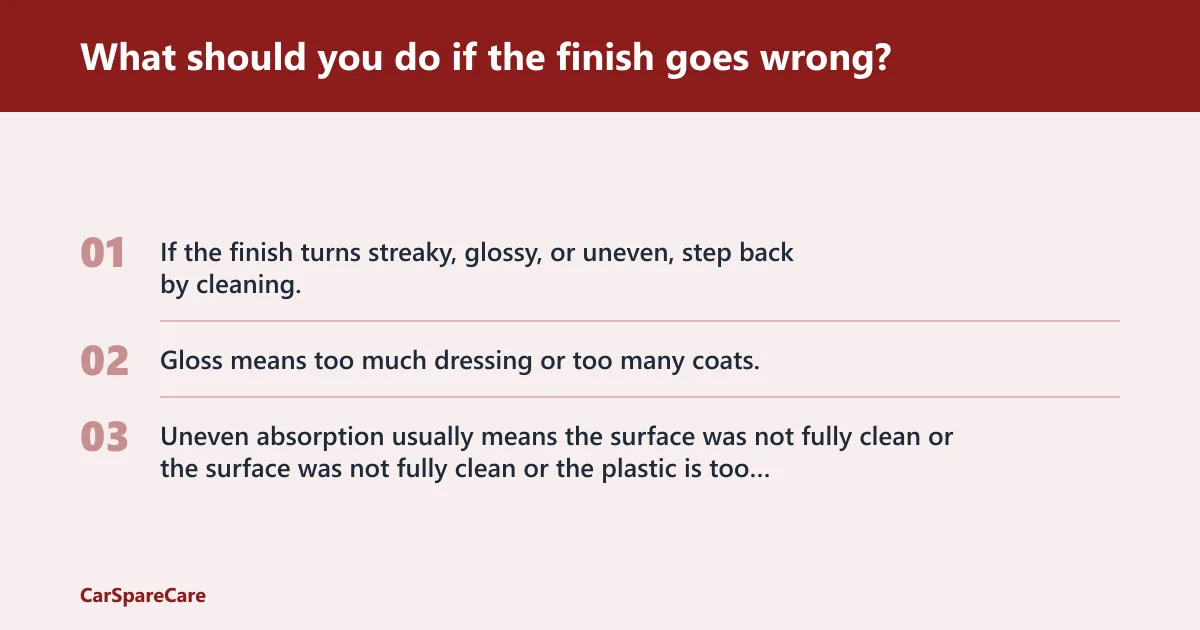
If the finish turns streaky, glossy, or uneven, step back by cleaning, not by adding more product. Streaking usually means excess residue. Gloss means too much dressing or too many coats. Uneven absorption usually means the surface was not fully clean or the plastic is too worn for a restorer alone.
Side-by-side decision checklist
| Trim type | Symptom | Best fix | When to replace or recolor |
|---|---|---|---|
| Hard plastic | Dry, faded, still intact | Trim restorer | When the surface is light-scratched or unevenly worn |
| Textured plastic | Patchy after cleaning | Cleaner plus one thin coat | When the grain has worn smooth in spots |
| Vinyl | Grimy, dull, not damaged | Vinyl cleaner, then protectant | When the coating has cracked or peeled |
| Wood trim | Cloudy coating, scratches | Gentle cleaning only | When the clear coat is failing |
Failure-case fixes
| Bad result | What it usually means | Next move |
|---|---|---|
| Streaky finish | Residue left in the grain | Reclean with a damp microfiber cloth, then apply less product |
| Glossy finish | Too much dressing or protectant | Wipe down with mild cleaner and stop using shine-heavy products |
| Uneven absorption | Old plastic, skipped prep, or worn coating | Clean again; if color is still patchy, switch to dye or coating |
How long will restored trim last?
Restored trim generally lasts longer when the panel is kept clean, out of strong sun when possible, and lightly maintained. UV exposure, heat, and frequent contact shorten results. Regular cleaning helps the finish hold up, because grime can speed wear and eventually cut through the backing. Heavy touch points, like door pulls and dashboard edges, usually need attention first.
When replacement makes more sense
If the trim has deep scratches, faded color that returns quickly, or a coating that keeps peeling, replacement or recoloring is usually the better option. A restorer cannot rebuild missing material. For badly worn panels, another coat often just repeats the same uneven look.
How to Restore Faded And Oxidized Paint – Ultimate Guide to… — Faded and heavily oxidized paint can often be restored (to a point).
Paint and interior trim fail in different ways, but the logic is similar: remove contamination first, then judge whether the surface still has enough intact material to restore. If the color or coating layer is gone, cleaning will only expose damage. Trim needs the same honest diagnosis before any product goes on.
Common mistakes
Too much water, aggressive scrubbing, and one-product fixes cause most bad results. Interior panels can distort if soaked, especially around backing material and electronics. Shine-heavy products can leave a patchy look on textured surfaces. If the panel still feels greasy after cleaning, it was not fully degreased before restoration.
- Do not saturate plastic trim or door panels.
- Do not spray product directly into vents, switches, or seams.
- Do not scrub textured grain with an abrasive pad.
- Do not use a restorer to hide peeling coating or deep scratches.
- Do not skip the hidden-area test.
What should you avoid using on faded dashboard and trim surfaces?
Avoid harsh chemicals, abrasive pads, and high-gloss dressings that leave the surface slippery or uneven. Do not flood dashboard openings or electronic controls. A mild cleaner, damp microfiber cloth, and the right restorer for the material are safer choices. Regular cleaning reduces wear and discoloration, so light maintenance beats repeated heavy treatment.
Frequently asked questions
How do I know if trim is faded or just dirty?
Clean a small hidden section first. If the color returns after wiping and the grain still looks dark where dirt sat, it was dirty. If the exposed areas stay pale, chalky, or uneven after cleaning, the surface has likely faded or lost its coating.
How long does restored car trim last?
It depends on sun, heat, and contact. Panels that sit in direct light or get handled often will fade faster than sheltered trim. Light cleaning and occasional maintenance protectant help the finish last longer, while neglected grime and harsh scrubbing shorten the result.

Hi, I’m Melvin, an automobile engineer with extensive experience in automobile equipment. I currently work for a local automobile firm, where I specialize in the car parts industry. I’ve had the opportunity to collaborate with seasoned inspectors, gaining invaluable hands-on experience that goes beyond just theory.
My passion for automotive care started at a young age, which led me to create CarSpareCare. Through CarSpareCare, I share the knowledge and skills I’ve acquired over the years to help others navigate the world of car maintenance and repairs.
My goal is to provide practical tutorials, essential safety advice, and the latest industry insights so that anyone—whether a beginner or an expert—can confidently tackle their automotive projects.