

Start with a wash, then test the paint: if oxidation wipes off on a microfiber or polish restores shine, correct it; If the clear coat is peeling, cracking, or white and chalky after polishing, repainting is usually the only real fix. Skip that check and you can waste time, burn through clear coat, or chase a gloss loss that polish cannot solve. This guide shows how to tell dullness from contamination or clear-coat failure, then pick the least aggressive way to restore gloss safely.
What you’ll need
- Car shampoo
- Two wash buckets
- Drying towels
- Clay bar and clay lubricant
- Automotive polish in light, medium, or heavy correction levels
- Rubbing compound for heavier oxidation or scratches
- Finishing polish
- Clean microfiber towels
- Applicators and, if needed, a dual-action polisher with pad and backing plate
- Wax, sealant, or ceramic coating
Why does old paint look dull instead of glossy?

Old paint usually looks dull for one of three reasons: oxidation, bonded contamination, or clear-coat failure. Oxidized clear coat often looks chalky or hazy and usually needs correction, not wax alone. Contamination feels gritty after washing. Clear-coat failure is often seen as peeling, cracking, or cloudy patches, and polishing usually cannot truly repair it.
Single-stage paint changes the diagnosis
Single-stage paint has no separate clear coat, so the process is different from a modern clear-coated finish. A polishing pad or microfiber may pick up color transfer from the paint itself, which is normal on that type of finish. That does not mean the paint is failing, but it does mean you should stop and reassess the product and pressure.
Paint restoration checklist
| Check | Yes | No |
|---|---|---|
| Does the panel have a clear coat, or does color transfer appear on the applicator? | Use clear-coat or single-stage methods as appropriate. | Recheck with a clean microfiber; the surface may only be dirty. |
| Does the paint feel gritty after washing? | Use clay bar with lubricant. | Move to polish testing. |
| Does the dullness look chalky, hazy, or faded rather than rough? | Start with polish. | If the surface is smooth, contamination is less likely. |
| Are there peeling edges, deep cracking, or cloudy patches that stay after correction? | Stop and consider repainting. | Continue with the least aggressive correction. |
| Is the fading light, moderate, or severe? | Light: hand polish. Moderate: machine or stronger polish. Severe: compound, then finish. | Stay with a lighter product. |
Effort guide: light fading usually means 1 to 2 panels can be corrected by hand in under an hour. Moderate oxidation often takes a dual-action polisher and roughly a few hours for a full car. Severe fading can require compounding, refining, and still end in repainting if the clear coat has failed.
How do you bring back gloss?
Use the least aggressive correction that works. Wash first, clay if needed, then test polish on a small area before reaching for compound. If the surface still looks dull after proper correction, the problem may be deeper than the top layer can safely fix.

- Wash the car with car shampoo, two buckets, and drying towels so loose dirt does not get dragged across the paint.
- Dry the panel fully before correction.
- Test a 30 cm by 30 cm section with automotive polish by hand first.
- Use a clay bar with clay lubricant if the surface feels rough after washing.
- Move to rubbing compound only if polish does not clear oxidation or light scratches.
- Refine the area with finishing polish to remove haze from compounding.
- Apply wax, sealant, or ceramic coating after correction to slow future oxidation.
If a section needs more cut, increase it in steps. Raise pressure or switch products only once on that test panel, then check the result under bright light before you move on. That keeps you from jumping straight to compound on paint that only needed polish.
Say your hood has a hazy gray look, but the paint is smooth after washing. A mild automotive polish on a microfiber applicator may restore gloss without touching compound. Suppose the rear quarter panel feels rough and the first wipe still drags. Clay first, then polish. One variable changed: texture, not the whole process.
When hand correction is enough
Hand correction works best on light oxidation, small panels, and single-stage paint where you want tight control. A microfiber applicator or soft foam pad can restore gloss, but it is slower than a dual-action polisher on large hoods, roofs, and doors. Heavy oxidation usually needs machine help.
When a machine makes more sense
A dual-action polisher is the safer beginner machine option because it uses a pad and backing plate with less risk of cutting too hard in one spot. Use it when the paint is dull over a large area, when hand polishing is too slow, or when medium correction is needed. Keep the pad clean and work one section at a time.
When is faded paint too far gone?
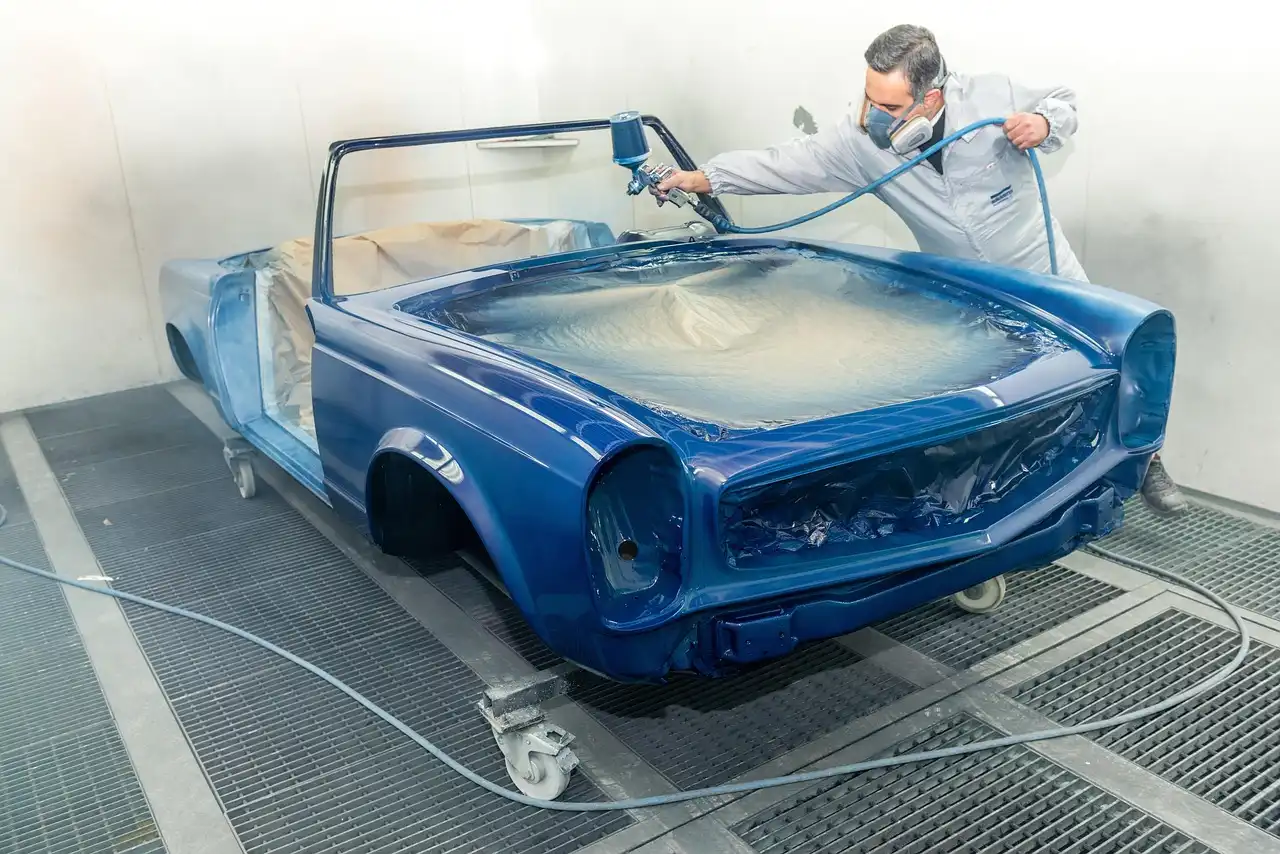
Paint is too far gone for DIY gloss restoration when the clear coat peels, cracks, or turns powdery again right after correction. If polishing does not bring back clarity and the finish stays white, cloudy, or patchy, the surface layer has failed. At that point, repainting is the safe option.
If that didn’t work, try this next
- Inspect for peeling edges and cracking under direct light.
- Wipe a polished test spot with a clean microfiber towel and check whether the gloss returns for only a few minutes or not at all.
- If the panel still looks dull after polish, step up to rubbing compound on a small area only.
- If compounding exposes more failure, stop and quote repainting for that panel.
Picture a 15-year-old hood with chalky patches near the front edge and clear-coat peeling around the badge. Compounding that area will not rebuild the failed layer. The right move is to stop before chasing shine through missing material.
Common mistakes
- Skipping the wash before claying or polishing, which grinds dirt into the finish.
- Using compound everywhere instead of starting with polish.
- Working too dry and creating haze or fresh marring.
- Using dirty microfiber towels or pads, which can scratch the paint.
- Polishing single-stage paint without checking for color transfer first.
- Trying to fix peeling clear coat with wax.
Clean microfiber towels matter because residue removal is part of the finish, not an afterthought. A low-lint towel reduces scratching risk when you buff off polish or compound residue. If the towel picks up grit, replace it before the next panel.
Frequently asked questions
Can oxidized car paint be restored by hand?
Yes, if the oxidation is light to moderate and the clear coat is still intact. Hand polishing works on small areas and lets you stop early if the gloss comes back. Heavy oxidation usually needs a dual-action polisher or compound, and failed clear coat cannot be restored by hand.
When is faded paint too far gone to polish?
If the clear coat is peeling, cracking, or turns powdery again after polishing, the panel is past DIY gloss restoration. That also applies when a test spot stays dull even after proper correction. In those cases, repainting the panel is the only reliable fix.
What products bring back shine without repainting?
Use clay bar for bonded contamination, automotive polish for oxidation, rubbing compound for heavier defects, and finishing polish to remove haze. After correction, apply wax, sealant, or ceramic coating to slow future oxidation. A small test spot tells you which product level is enough before you do the whole car.
What if the paint is single-stage instead of clear-coated?
Single-stage paint needs a different approach because the color and finish are the same layer. A towel or pad may pick up color during correction, so test gently and reduce aggression if transfer is heavy. That does not always mean failure, but it does mean the finish needs a lighter touch.
For acrylic paint surfaces outside automotive work, one source specifies that acrylic paint can be made shinier with varnish. It names a medium-gloss varnish, a stiff-bristled brush, pouring varnish onto a paper plate first, smooth even strokes in the same direction, no overlapping brushstrokes, a second coat perpendicular to the first, and waiting for the varnish to dry completely.

Hi, I’m Melvin, an automobile engineer with extensive experience in automobile equipment. I currently work for a local automobile firm, where I specialize in the car parts industry. I’ve had the opportunity to collaborate with seasoned inspectors, gaining invaluable hands-on experience that goes beyond just theory.
My passion for automotive care started at a young age, which led me to create CarSpareCare. Through CarSpareCare, I share the knowledge and skills I’ve acquired over the years to help others navigate the world of car maintenance and repairs.
My goal is to provide practical tutorials, essential safety advice, and the latest industry insights so that anyone—whether a beginner or an expert—can confidently tackle their automotive projects.

