Clean leather car seats with a microfiber cloth dampened with distilled water and a single drop of mild dish soap; if the stain is oily, ink, or the leather is cracked or coated, leave it alone or use a leather-safe cleaner. Bad DIY cleaning can strip dye, leave residue, or push moisture into seams. This guide gives a household-product decision tree, safe cleaning steps, and a clear list of what to avoid.
What you’ll need
- 2 to 4 clean microfiber cloths
- Vacuum with a soft brush attachment
- Mild dish soap or Castile soap
- Distilled water
- White vinegar, only for limited dilution-based spot treatment
- Baking soda, only for grease or odor spots
- Soft-bristle brush or soft toothbrush, used lightly only if needed
- Dry towel or a separate dry microfiber cloth for the final wipe
Leather seat decision table
| Stain type | Safest household option | Stop or avoid signal | Do not use |
|---|---|---|---|
| Dust | Vacuum with soft brush attachment, then dry microfiber wipe | Grit still drags or scratches during wiping | Soaking spray or abrasive brush |
| Body oils | Wrung-out microfiber with mild dish soap in warm water | Surface turns darker or tacky | Olive oil, linseed oil, or vinegar-only mix |
| Drink spill | Blot with microfiber, then mild soap solution | Liquid reaches seams or leaves a ring | Soaking spray or steam |
| Grease spot | Baking soda left in place briefly, then removed; follow with light soap wipe if needed | Powder clings to grain or leaves chalky residue | Oil-heavy mixes |
| Ink | Try a hidden-spot test first; if transfer is fresh, blot only and stop at the first color lift | Dye starts moving or the finish dulls | Alcohol-heavy cleaners, rubbing alcohol, scrubbing |
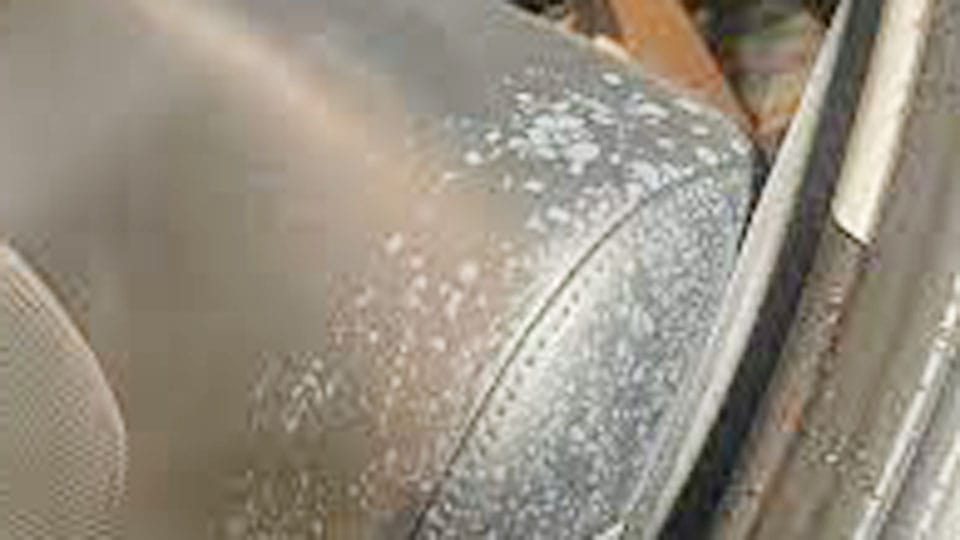
| White residue | Dry microfiber buff, then a barely damp soap wipe if residue is from cleaner buildup | Residue spreads, streaks, or returns after drying | More liquid or repeated soaking |
How to clean leather car seats with household products at home
Start with the least risky option: vacuum, test a hidden spot, then wipe with a wrung-out microfiber cloth and mild soap solution. Use the same approach on genuine leather and coated leather, but be more careful with coated surfaces, which can show streaking, darkening, or finish damage faster after over-wetting.
What this guide covers
Leather seats need gentle cloth-only cleaning and very little moisture. Genuine leather and coated leather do not always react the same way, so the safest choice depends on the stain and how the finish looks after the first pass. A seat that feels dry, cracked, or sticky needs a stop, not more liquid.
When a household fix is safer than a specialty cleaner
Use household products for dust, fresh drink spots, body oils, light grime, and a few isolated residue marks. Mild dish soap is one of the safest household cleaners for routine dirt, and white vinegar can help in diluted form on some stains. If a mark is dyed in, oily, or old, a leather-specific cleaner is the safer next step.
How to spot signs that you should stop
Stop if the seat darkens, feels tacky, streaks, or shows white residue after drying. Also stop if moisture starts settling in seams, if stitching stays damp, or if the leather looks dull after a pass that should have lifted the stain. That is the point where more liquid usually makes the problem worse.
How to clean leather car seats without damaging them
Vacuum first, test a hidden area, clean with a wrung-out microfiber, and dry before repeating. Good Housekeeping advises cleaning one small area at a time, and it also advises using as little liquid as possible on perforated leather. That matters because excess moisture can collect in holes and seams.
- Vacuum the seat with a soft brush attachment, including seams and crevices.
- Mix a few drops of mild dish soap into warm distilled water.
- Dampen a microfiber cloth, then wring it out until it feels barely wet.
- Test the mix on a hidden spot for color change or dulling.
- Wipe one small section, then follow with a clean dry microfiber cloth.
- Repeat only if the surface stays even and dry-looking.
Genuine leather versus coated leather
Genuine leather can be more sensitive to drying and repeated wetting, while coated leather can show film, streaking, or a patched look if soap or vinegar is left behind. Both types can crack if they dry out over time, so the goal is gentle cleaning followed by a dry final wipe, not repeated soaking and scrubbing.
How to treat stubborn spots step by step
Use the least aggressive method first, and move up only if the stain stays put. Say your driver’s seat has a 3-inch ring from a coffee spill and the surface still feels smooth. Start with a wrung-out microfiber and mild soap; if the ring remains after drying, stop before adding more liquid and switch cleaners.
Body oils and light dirt
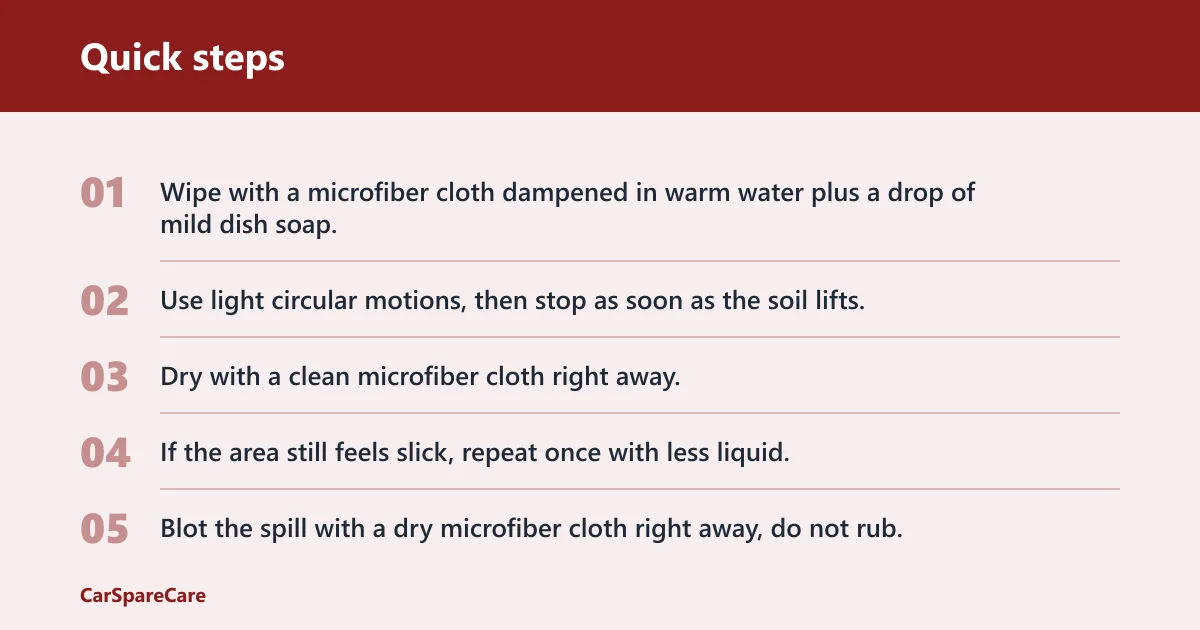
- Wipe with a microfiber cloth dampened in warm water plus a drop of mild dish soap.
- Use light circular motions, then stop as soon as the soil lifts.
- Dry with a clean microfiber cloth right away.
- If the area still feels slick, repeat once with less liquid.
Drink spills and sticky marks
- Blot the spill with a dry microfiber cloth right away, do not rub.
- Wipe the spot with a wrung-out soap cloth.
- For a sugar ring, follow with a second dry cloth pass.
- If the spot stays sticky, let it dry fully before deciding on another pass.
Grease spots and odor
- Dust baking soda over the spot.
- Let it sit briefly so it can pull at surface oil and odor.
- Lift it with a dry microfiber cloth or soft vacuum brush.
- Use a light soap wipe only if residue remains.
Ink and transfer marks
Ink is where DIY often goes wrong. Four Wheel Trends lists rubbing alcohol for pen marks on leather, but that is a high-risk choice for many finishes, especially on coated seats. A safer first move is to stop at a hidden-spot test and use only the least wet method that lifts any transfer at all.
- Test the stain edge in a hidden spot first.
- Blot the mark with a dry microfiber cloth.
- Stop if the color starts spreading or the finish dulls.
- Switch to a leather-safe cleaner if the mark remains.
Should you use vinegar on leather car seats?

Use vinegar only diluted, and only on a small test area if the seat finish looks stable. Vinegar can help with deodorizing and some stain lifting, but it is not a soak treatment for leather. Some finishes do not tolerate it well, and a vinegar-only wipe can leave the seat dry or streaky.
When diluted vinegar can help
A diluted mix can help with light odor, some water-based spots, and mild soil on a stable finish. The leather method here uses vinegar mixed with two parts water, applied with a microfiber cloth rather than sprayed on. Wipe once, then follow with a dry cloth so the acid does not sit on the surface.
When to avoid vinegar completely
Avoid vinegar on cracked leather, unclear finishes, shiny coated leather that already shows streaking, and any seat that turns dull after the hidden test. Do not pair it with oil-heavy mixes as a routine cleaner. HG suggests a vinegar and linseed oil mixture as an alternative, but that is also a residue risk on seats that pick up lint or clothing transfer.
Signs of finish damage after vinegar
Watch for chalky whiteness, dark patches, a sticky feel, or a finish that looks uneven after drying. White residue usually means the cleaner left something behind. Darkening often means too much liquid or a finish that reacted badly, and both are reasons to stop before a second pass.
What household products can you use to clean leather car seats?
A common routine option is mild dish soap in warm water, applied with a wrung-out microfiber cloth. White vinegar is a limited stain helper, baking soda is for grease and odor spots, and a soft toothbrush belongs only in stubborn seams. Olive oil and linseed oil are not routine cleaners.
Picture a back seat with dust in the stitching and a faint handprint on the bolsters. Vacuum the seams first, then use the soap cloth on the handprint, and only then decide whether a soft brush is needed for the seam line. That order reduces scratching and keeps liquid away from the stitching.
Common mistakes to avoid
Most leather damage from household cleaning comes from too much liquid, too much pressure, or the wrong residue-prone product. If a method leaves the seat darker, tacky, streaked, or chalky, stop and dry the area before doing anything else.
- Using too much liquid: Leather is sensitive to excess moisture, and perforated seats need especially little. Use a wrung-out cloth, not a soaking spray.
- Leaving oil on the surface: Olive oil and linseed oil can transfer to clothing and attract dirt if overapplied. Buff thoroughly or skip them.
- Scrubbing with an abrasive brush: A soft-bristle brush or soft toothbrush is for stubborn spots only, and only with light pressure.
- Ignoring seams and perforations: Liquid sits there longer, which raises moisture risk. Wipe across them lightly instead of flooding them.
- Skipping the dry final wipe: Monster Detailing says to dry leather with a clean cloth, not air dry. That final pass helps prevent water spots and streaking.
- Using vinegar as a universal cleaner: It is not one. Some finishes dislike it, and repeated use can leave leather looking dull or dry.
Frequently asked questions
How to clean leather car seats with household products at home: vacuum first, then wipe
Vacuum first, then wipe with a microfiber cloth dampened with warm water and a drop of mild dish soap. Clean one section at a time, dry with a second cloth, and stop if the seat darkens, streaks, or feels tacky after the first pass.
How to clean leather car seats with household products vinegar
Use vinegar only diluted, such as about two parts water to one part vinegar, and only after a hidden-spot test. Wipe lightly with microfiber, then dry immediately. Skip it if the finish dulls, if the seat is cracked, or if it already shows white residue.
What household items can I use to clean leather seats?
The safest household items are microfiber cloths, a vacuum with a soft brush, mild dish soap, distilled water, baking soda, and a soft toothbrush for seams. White vinegar has a limited role. Skip bleach, ammonia, heavy all-purpose cleaners, and oil-heavy mixes.
Can you use olive oil to clean leather car seats?
Olive oil is not a routine cleaner for leather seats. It may leave transfer, attract dirt, and create a sticky film if it is overapplied. If a guide suggests oil, use it only with caution and buff it off thoroughly, or choose a leather-specific product instead.
How do you clean leather seats without damaging them?
Use the gentlest sequence: vacuum, test, wipe with a wrung-out microfiber and mild soap, then dry immediately. Work on one small area at a time and use as little liquid as possible on perforated sections. Stop at the first sign of streaking or darkening.

Hi, I’m Melvin, an automobile engineer with extensive experience in automobile equipment. I currently work for a local automobile firm, where I specialize in the car parts industry. I’ve had the opportunity to collaborate with seasoned inspectors, gaining invaluable hands-on experience that goes beyond just theory.
My passion for automotive care started at a young age, which led me to create CarSpareCare. Through CarSpareCare, I share the knowledge and skills I’ve acquired over the years to help others navigate the world of car maintenance and repairs.
My goal is to provide practical tutorials, essential safety advice, and the latest industry insights so that anyone—whether a beginner or an expert—can confidently tackle their automotive projects.