

Are German Cars Reliable? Proven Essential
German cars are generally known for their engineering and performance, but reliability can vary by model and year. While some brands consistently score well, others might require more attentive maintenance. This guide breaks down what makes German cars tick and how to ensure yours stays dependable for years to come.
Ever wondered if that sleek German sedan or sporty SUV is worth the hype when it comes to reliability? It’s a question many drivers ponder. German cars often boast advanced technology and fantastic driving dynamics, which can lead some to believe they’re less reliable or more expensive to maintain. But is that always the truth? The good news is, with the right understanding and care, you can absolutely keep your German-engineered vehicle running smoothly. Let’s dive in and demystify German car reliability, giving you the confidence to make informed decisions and keep your car in top shape.
Understanding German Car Reliability: More Than Just a Stereotype
When we talk about “German cars,” we’re usually referring to brands like Volkswagen, BMW, Mercedes-Benz, Audi, and Porsche. These manufacturers have built reputations on precision engineering, innovative technology, and a driving experience that often feels superior. But reliability isn’t just about build quality; it’s a complex mix of design, materials, manufacturing, and how the car is used and maintained.
Historically, German cars have sometimes been perceived as needing more specialized and costly repairs compared to their Japanese or American counterparts. This perception can stem from sophisticated engineering and a reliance on advanced electronics. However, this doesn’t mean they are inherently unreliable. In fact, many studies and owner surveys show that certain German models perform very well in terms of dependability, especially as they age and with proper upkeep. The key is understanding the nuances and taking proactive steps.
Myths vs. Reality: Separating Fact from Fiction
Let’s clear up some common misconceptions about German cars:
Myth: German cars are always expensive to fix.
Reality: While some specialized parts or labor can be pricier, many common maintenance items are comparable. Also, the longevity and resilience of well-built German components can mean fewer, less frequent repairs overall.
Myth: German cars are complex and hard to maintain.
Reality: They often have advanced systems, but routine maintenance like oil changes and brake checks are straightforward. For more complex issues, understanding their systems helps demystify them.
Myth: German cars break down more often.
Reality: Reliability differs greatly by model and year. Many German vehicles are built to last, and studies often place them in the middle to upper tier of dependability rankings, sometimes even surpassing competitors.
What Makes German Cars Stand Out (and What to Watch For)
German engineers often focus on performance, driver engagement, and premium materials. This translates to:
Advanced Technology: Expect features like sophisticated infotainment systems, adaptive cruise control, and intricate engine management. These are brilliant when working but can sometimes be sources of repair if they fail.
High-Quality Materials: Interiors often use durable, premium materials. Exteriors are built to withstand various climates.
Precision Engineering: Engines and drivetrains are designed for power and efficiency, often involving cutting-edge technology. This precision means regular, correct maintenance is crucial.
Are German Cars Reliable? The Data Tells the Story
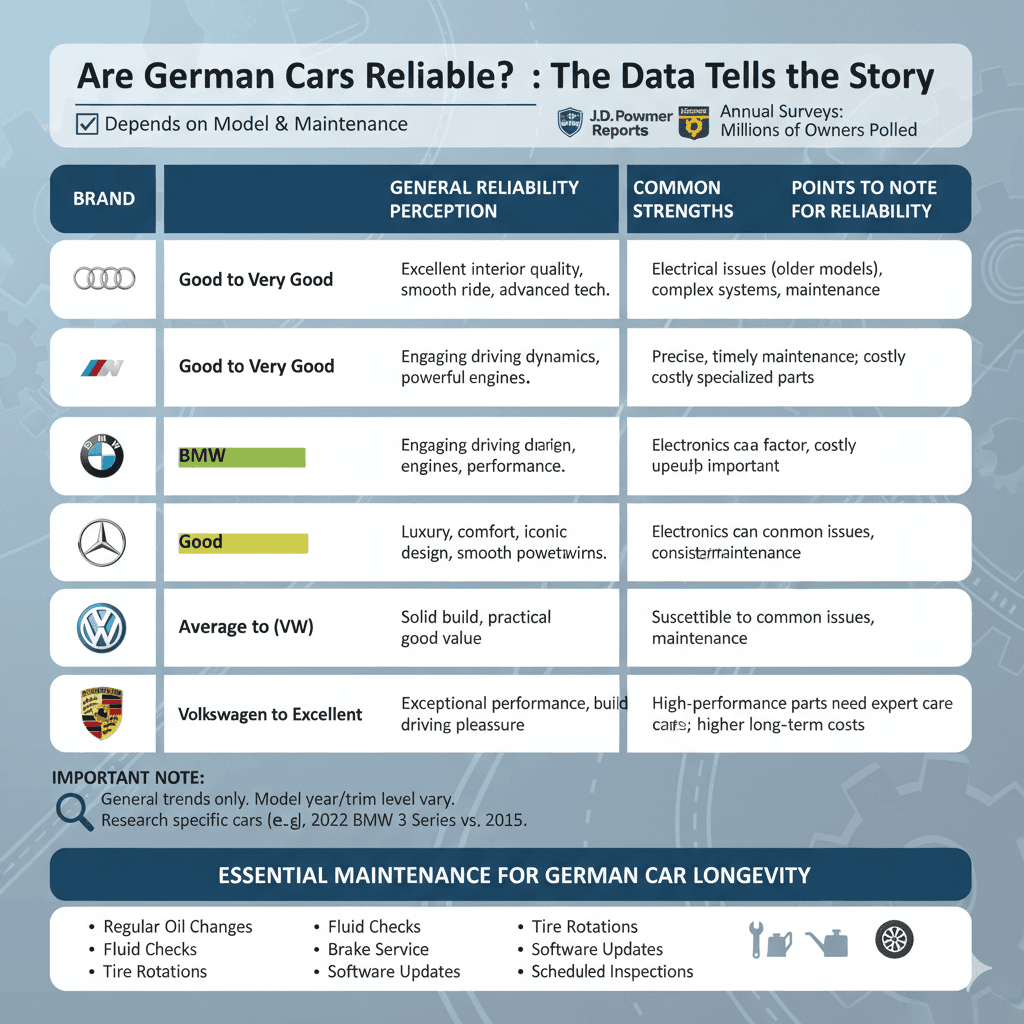
When looking at various reliability studies, a consistent picture emerges: German car brands can be as reliable as any other, but their performance often depends on the specific model and how well it’s maintained. Organizations like J.D. Power and Consumer Reports conduct annual surveys that poll millions of vehicle owners about their experiences.
Here’s a general overview of how some popular German brands often fare:
| Brand | General Reliability Perception | Common Strengths | Points to Note for Reliability |
|---|---|---|---|
| Audi | Good to Very Good | Excellent interior quality, smooth ride, advanced tech. | Can have electrical issues in older models; maintenance on complex systems is key. |
| BMW | Good to Very Good | Engaging driving dynamics, powerful engines, performance focus. | Requires precise, timely maintenance; some specialized parts can be costly. |
| Mercedes-Benz | Good | Luxury, comfort, iconic design, smooth powertrains. | Electronics can be a factor; upkeep is important for long-term performance. |
| Volkswagen (VW) | Average to Good | Solid build, practical design, good value in their class. | Can be susceptible to some common automotive issues; consistent maintenance is beneficial. |
| Porsche | Very Good to Excellent | Exceptional performance, build quality, and driving pleasure. | High-performance components require specific, expert care; long-term ownership costs can be higher. |
Important Note: These are general trends. A specific model year or trim level might deviate significantly. Always research the particular car you’re interested in. For example, a 2022 BMW 3 Series might have different reliability scores than a 2015 model due to software updates and engineering refinements. Understanding common issues for a particular model can be found on reputable car forums and consumer review sites.
Essential Maintenance for German Car Longevity
The secret to unlocking the reliability of any German car really comes down to consistent, quality maintenance. These vehicles are often engineered with very tight tolerances and advanced systems, meaning they perform best when cared for precisely.
Here’s what makes a difference:
- Scheduled Maintenance: Don’t skip oil changes, filter replacements, or fluid checks. Following the manufacturer’s recommended service schedule is paramount. You can typically find this in your owner’s manual or by checking online with your car’s VIN (Vehicle Identification Number).
- Using Quality Parts: When it’s time for a replacement, opt for OEM (Original Equipment Manufacturer) parts or high-quality aftermarket alternatives recommended for your specific vehicle.
- Expert Technicians: While you can handle basic checks, more complex repairs are best left to mechanics who specialize in German makes or have extensive experience with them. They understand the intricacies and use specialized tools.
- Addressing Issues Promptly: Don’t let small warning lights or strange noises linger. A minor issue, addressed early, can prevent a major, costly repair down the line.
Practical Steps: How to Ensure Your German Car Stays Reliable
As a car owner, you have a significant role in your German car’s reliability. Here’s how you can contribute:
Step 1: Get to Know Your Owner’s Manual
This is your car’s personal instruction book. It contains vital information specific to your model, including:
Recommended maintenance schedule.
Type of fluids and lubricants needed (e.g., specific oil viscosity or coolant type).
Warning light explanations.
Basic care tips.
Reading your manual is the first, and perhaps most essential, step to understanding your specific vehicle’s needs.
Step 2: Master the Basics of Self-Care
You don’t need to be a master mechanic to do a lot! Simple checks can preempt bigger problems:
Fluid Levels: Regularly check your engine oil, coolant, brake fluid, and windshield washer fluid. Low levels, especially of oil or coolant, can lead to severe engine damage.
Tire Pressure: Properly inflated tires improve fuel economy, handling, and tire wear. Check them weekly, or at least monthly, when they are cold. You can find the recommended pressure on a sticker inside your driver’s doorjamb.
Lights and Wipers: Ensure all exterior lights are functioning and your wipers are in good condition, especially before changing weather conditions.
Step 3: Understand Common Maintenance Needs
While specific needs vary, German cars often benefit from:
Oil Changes: Use the correct grade of synthetic oil recommended by the manufacturer. Synthetic oils offer better protection at extreme temperatures and extend drain intervals.
Brake System: German cars often have advanced braking systems. Keep an eye on brake pad wear and fluid levels.
Cooling System: Overheating can be detrimental. Ensure your coolant is at the proper level and clean. The U.S. Department of Energy emphasizes that a well-maintained cooling system is vital for engine health and efficiency.
Air Filters: A clean engine air filter helps your engine breathe easier, improving performance and fuel economy.
Step 4: Choosing the Right Repair Shop
If you’re not comfortable doing a repair yourself, finding a trustworthy mechanic is crucial.
Look for Specialists: Seek out shops that highlight their expertise with European or specific German makes (e.g., “BMW Specialist,” “Audi Repair”).
Read Reviews: Online reviews on platforms like Google, Yelp, or dedicated auto repair sites can offer insights into customer satisfaction.
Ask for Recommendations: Friends, family, or colleagues who own similar vehicles can be great sources for reliable mechanic referrals.
Get Quotes: For larger jobs, get estimates from a couple of reputable shops to compare pricing and proposed work.
Step 5: When to Use Dealership vs. Independent Mechanic
Dealerships are typically best for the initial warranty period, complex diagnostics that require proprietary software, or when you need very specific OEM parts that only they stock. They often have the most up-to-date training and tools for the latest models.
Independent Specialists can often perform the same high-quality work as dealerships, sometimes at a lower cost. They are ideal for routine maintenance and repairs once your warranty has expired, especially if they have proven expertise with your car’s make.
Common Wear-and-Tear Items and How to Manage Them
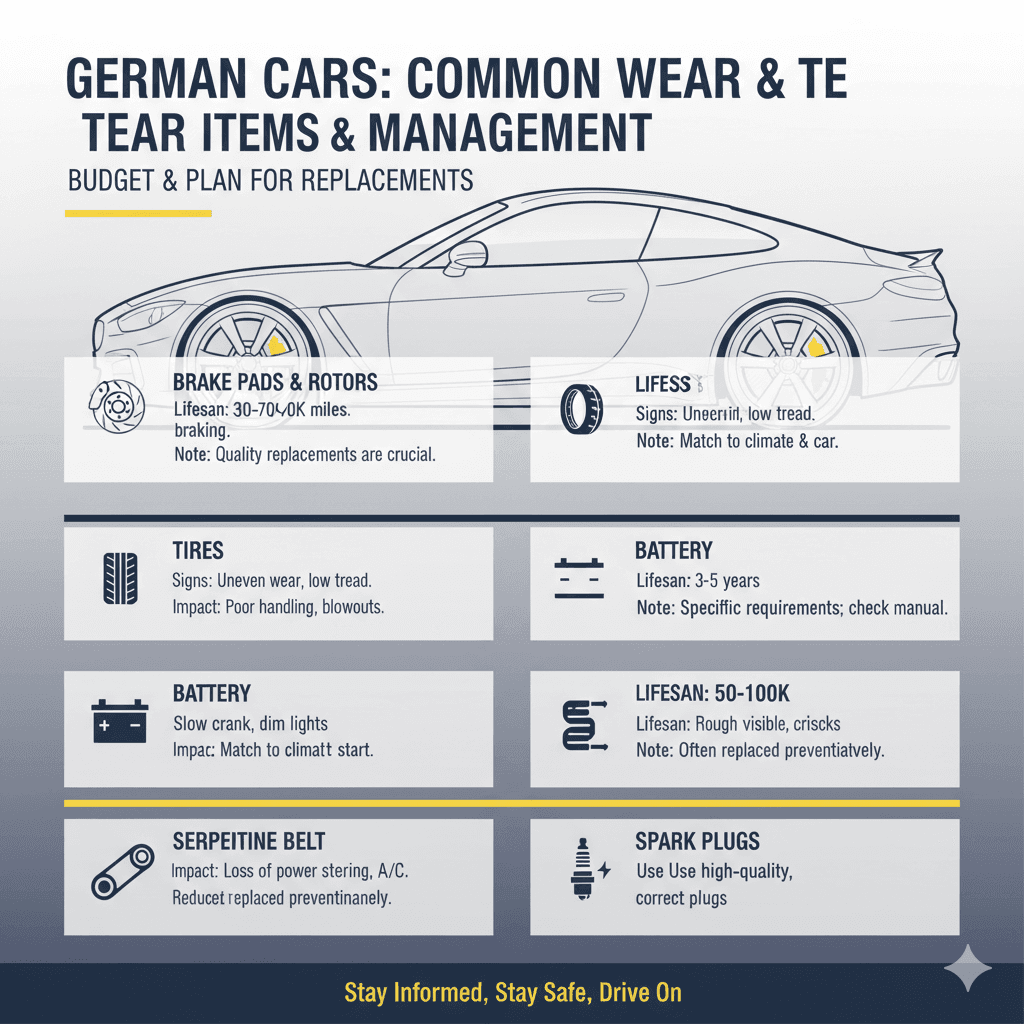
Like all cars, German vehicles will experience wear and tear. Being aware of common components and their typical lifespan can help you budget and plan for replacements.
Table: Common Wear & Tear Items for German Cars
| Component | Typical Lifespan (approx.) | Signs of Wear | Impact of Failure | Notes |
|---|---|---|---|---|
| Brake Pads & Rotors | 30,000 – 70,000 miles (varies greatly with driving style) | Squealing/grinding noises, reduced braking performance, pulsing pedal. | Decreased safety, potential damage to other brake components. | German cars often have powerful braking systems; quality replacements are essential. |
| Tires | 25,000 – 60,000 miles (varies with type, driving, inflation) | Uneven wear, tread depth below 2/32″, reduced traction. | Poor handling, increased stopping distances, blowouts. | Consider performance or all-season tires suited to your climate and car’s capabilities. |
| Battery | 3 – 5 years | Slow cranking engine, dim headlights, warning lights. | Inability to start the car, electrical system malfunctions. | German cars sometimes have specific battery requirements; check your manual. |
| Serpentine Belt | 50,000 – 100,000 miles | Squealing noise from the engine bay, visible cracks on belt. | Loss of power steering, alternator, A/C; engine can overheat if it drives the water pump. | Often replaced preventatively during other engine service. |
| Spark Plugs | 30,000 – 100,000 miles (depends on type – platinum/iridium last longer) | Rough idle, decreased fuel efficiency, engine misfires. | Reduced engine performance, poor emissions, potential catalytic converter damage. | Use correct, high-quality plugs recommended for your engine. |
Proactive Care: Making Your German Car Last
Beyond scheduled maintenance, proactive care can significantly extend the life and maintain the reliability of your German car.
Fluids are the Lifeblood
Engine Oil: As mentioned, the right synthetic oil changed on schedule is critical. Dirty oil breaks down lubrication properties, leading to increased friction and wear.
Coolant: This prevents your engine from overheating in summer and freezing in winter. Ensure it’s the correct type for your car and is flushed and replaced according to the manufacturer’s recommendations. You can find excellent resources on coolant specifics from reputable automotive sites like AutoZone’s DIY guides.
Brake Fluid: This fluid transmits the force from your brake pedal to your brakes. It absorbs moisture over time, which can reduce its effectiveness and corrode brake components. Regular flushing and replacement are usually recommended every 2-3 years.
Electrical System Health
German cars often have complex electrical and electronic systems.
Battery Maintenance: Keep battery terminals clean and free of corrosion. A loose or corroded connection can cause all sorts of intermittent electrical gremlins.
Wiring Harnesses: While not something you typically “maintain,” be aware that damage to wiring (e.g., from rodents or wear and tear) can lead to significant, hard-to-diagnose issues.
Software Updates
Modern German cars rely heavily on software for engine management, infotainment, and safety systems. Manufacturers often release updates to improve performance, fix bugs, or enhance features. Regularly checking with your dealership or a qualified independent shop about available software updates can help keep your car running optimally and may even prevent future issues.
Addressing Potential Pitfalls and Costs
It’s fair to acknowledge that some repairs on German cars can be more expensive. This is often due to:
Specialized Parts: Some components are unique to German manufacturers and may have higher production costs.
Labor Intensity: Complex systems might require more time and specialized knowledge to diagnose and repair, increasing labor costs.
Technology Integration: Advanced features often involve intricate wiring and control modules that can be costly to replace if they fail.
However, the reliability of modern German cars means that many owners experience fewer unexpected breakdowns than perceived. Investing in preventative maintenance and quality repairs upfront often saves money in the long run by avoiding catastrophic failures.
How to Save Money on German Car Maintenance
DIY Basic Checks: As discussed, many simple tasks can be done by you, saving labor costs.
Independent Shops: Once out of warranty, a good independent specialist is often more affordable than the dealership.
Research Parts: While OEM is best, reputable aftermarket brands can offer savings on less critical components. Compare prices from trusted online retailers.
Loyalty Programs/Discounts: Some dealerships or independent shops offer loyalty programs or discounts that can add up over time.
* Address Issues Early: Don’t delay repairs. Small problems are almost always cheaper to fix than those that have worsened.
Frequently Asked Questions About German Car Reliability
What is the most reliable German car brand?
While reliability scores can fluctuate year to year and by model, Porsche consistently ranks very high in reliability surveys, often followed by Audi and BMW. Volkswagen is generally considered average to good. Mercedes-Benz also performs well but historically has had more electrical component concerns in some older models.
Are German cars more expensive to insure than Japanese or American cars?
Yes, generally, German cars can be more expensive to insure. This is often due to their higher purchase price, the cost of replacement parts, and potentially higher repair costs. Insurance providers factor in these risks when determining premiums.
How often should I get an oil change in my German car?
This is highly dependent on the specific model and the type of oil recommended. Many modern German cars using synthetic oil can go 10,000 miles or even longer between changes. Always refer to your owner’s manual for the exact interval recommended by the manufacturer.
Can I do my own oil changes on a German car?
Yes, absolutely, if you are comfortable with the process and have the right tools. However, ensure you use the specific type and viscosity of synthetic oil recommended by your car’s manufacturer and dispose of the old oil properly. German cars might have specific oil filter housings or drain plug types, so ensure you have the correct parts and tools before you start.
What are common problems with older German cars?
Common issues in older German cars can include electrical problems (like window regulators or sensor failures), cooling system leaks (hoses, water pump), suspension wear, and exhaust system issues. For turbocharged models, check the health of the turbocharger and related components. Consistent maintenance is key to mitigating these.
Are repair costs for German cars worth the driving experience?
For many enthusiasts, the superior driving dynamics, build quality, and advanced technology of German cars make the potential for higher maintenance costs worthwhile. It’s a personal decision that balances driving pleasure against cost of ownership. Many owners find that with good care

Hi, I’m Melvin, an automobile engineer with extensive experience in automobile equipment. I currently work for a local automobile firm, where I specialize in the car parts industry. I’ve had the opportunity to collaborate with seasoned inspectors, gaining invaluable hands-on experience that goes beyond just theory.
My passion for automotive care started at a young age, which led me to create CarSpareCare. Through CarSpareCare, I share the knowledge and skills I’ve acquired over the years to help others navigate the world of car maintenance and repairs.
My goal is to provide practical tutorials, essential safety advice, and the latest industry insights so that anyone—whether a beginner or an expert—can confidently tackle their automotive projects.

