
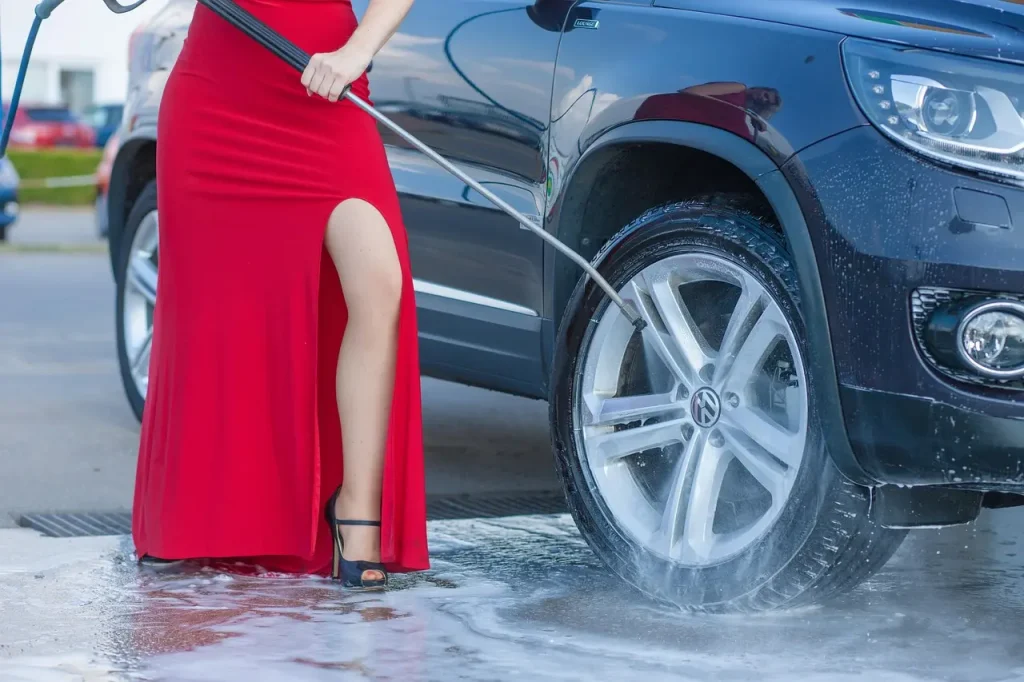
Use a pressure washer on healthy car paint only with a 25° or wider nozzle, about 12–18 inches away; avoid damaged paint. A bad angle, too much pressure, or a turbo nozzle can lift trim edges, force water past seals, and chip weak clear coat. This guide explains safe settings, vulnerable areas, and when to skip the washer.
Can you use a pressure washer on car paint?
Yes, if the paint is intact and you use a fan tip, moderate pressure, and enough distance. Risk rises fast when the spray is focused, held too close, or aimed at chips, peeling clear coat, seals, badges, or fresh paint. The nozzle, angle, and technique matter more than the machine.
Car clear coat is the top protective layer over the base coat. When it is healthy, it handles normal rinsing well. When it already has failure points, high-energy water can catch an edge and lift it further.
Pressure-safety checklist
| Check | Yes | No | Action |
|---|---|---|---|
| Paint is smooth, with no chips or peeling | Proceed | Higher risk | Use caution or avoid on that panel |
| No fresh respray, vinyl wrap, or PPF edge lifting | Proceed | Do not proceed normally | Reduce pressure or hand wash only |
| Using a 25° or 40° fan tip, rather than a zero-degree jet, is commonly recommended. | Proceed | Stop | Switch to a wider fan tip |
| Keeping about 12–18 inches from the panel is part of the safety checklist. | Proceed | Too close | Step back before spraying |
| Staying off badge edges, seals, and trim gaps | Proceed | Do not proceed normally | Angle away and reduce exposure |
| Wheel wells and undercarriage are separate from painted panels | Proceed | Mixing techniques | Use a different pass and distance |
Recommendation: if every answer is yes, pressure wash the car. If one or two items are uncertain, proceed with caution. If the panel has peeling, exposed chips, or a fresh repair edge, do not pressure wash that area.
What you’ll need
- Pressure washer, ideally electric for lighter car-wash use; gas units can be fine, but they often have higher output and need more control
- 25-degree and 40-degree fan tips
- Pre-wash foam cannon or car soap
- Microfiber wash mitt
- Two buckets, including one rinse bucket if you hand wash after foaming
- Wheel brush or separate wheel-wash tools
- Optional undercarriage nozzle or lance for lower-body rinse
- Clean microfiber towels for drying and spot inspection
PSI is only part of the picture. Flow rate, usually listed as GPM, matters because it affects how much water hits the surface and how quickly dirt is carried away. A 1.2 to 2.0 GPM electric unit is common for car care. Many gas units run far higher, so nozzle choice and distance matter even more.
How to pressure wash a car safely
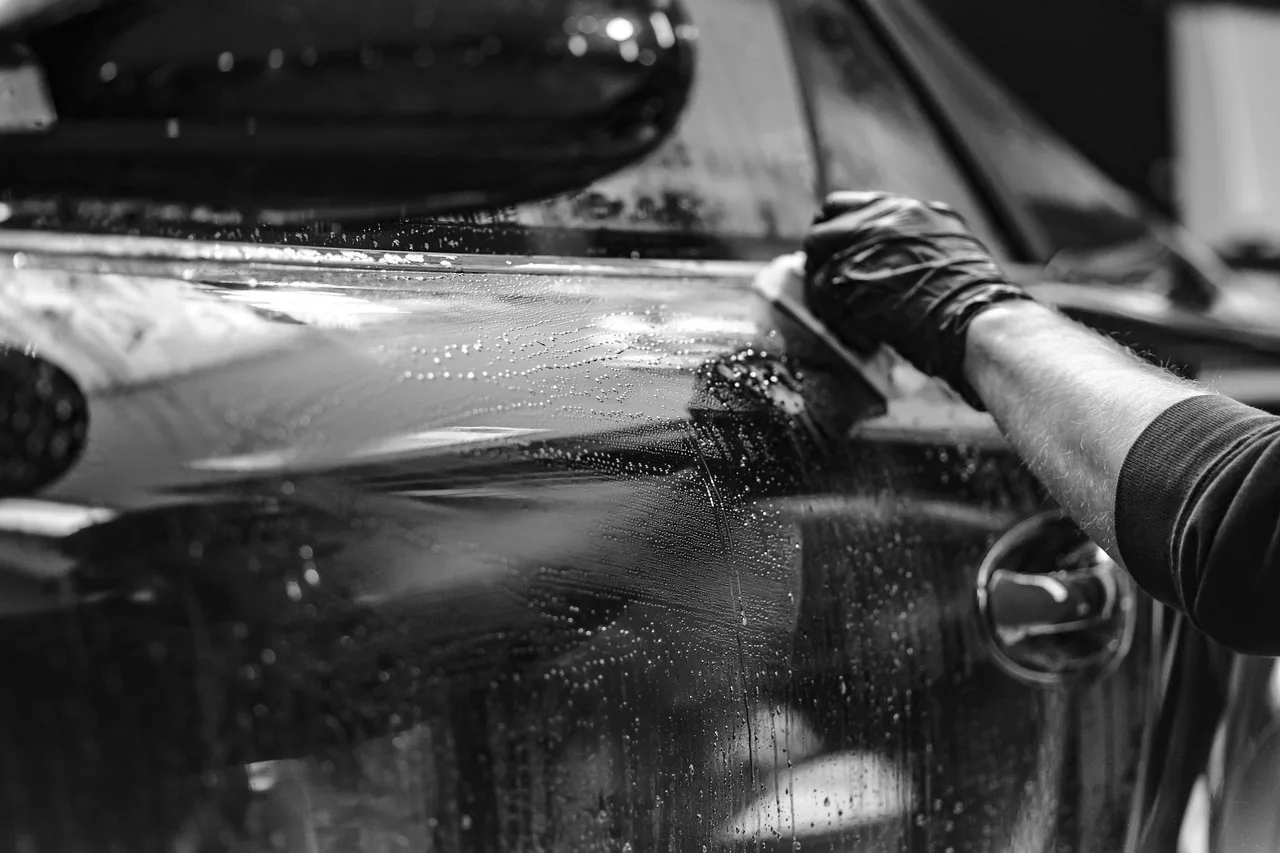
Start by removing loose dirt, then foam the panel so the soil softens before contact washing. Keep the spray moving, stay back from the paint, and give extra room around edges and fittings. That sequence lowers the chance of dragging grit across the finish or forcing water where it should not go.
- Fit a 25-degree or 40-degree fan tip.
- Rinse the car from top to bottom at 12–18 inches.
- Apply foam or soap and let it dwell for 3–5 minutes, but do not let it dry.
- Wash the body with a microfiber mitt from top panels downward.
- Rinse again, keeping the wand moving across the panel.
- Back off to 18–24 inches near badges, seals, emblems, and panel edges.
- Inspect chips, peeling spots, and fresh repairs before a second pass.
Say your hood has clean, glossy clear coat but one stone chip near the front edge. A 25-degree tip at 14 inches across the center panel is usually fine, while a direct blast into that chip can push water under the weak edge. One variable changed, one risk increased.
Suppose the rear bumper has a fresh respray and the clear coat is only a few weeks old. The same nozzle and distance that work on cured factory paint can be too aggressive there, so the safer move is a hand wash or a very light rinse from farther back.
What pressure and nozzle are safe?
For most cars, the safer setup uses moderate pressure with a wide fan. There is no single PSI that makes every car safe, because nozzle angle, GPM, distance, and paint condition all change the result. A zero-degree or pencil jet is generally not recommended for painted panels.
Practical pressure guide
| Use case | Typical setup | Notes |
|---|---|---|
| Body panels with healthy paint | 25° or 40° fan tip; moderate PSI; 12–18 inches away | Keep the wand moving |
| Delicate edges, badges, seals | Wider fan; lower impact; 18–24 inches away | Short passes only |
| Wheels and wheel wells | Different cleaning zone; higher contamination allowed | Still avoid zero-degree on finish surfaces |
Electric pressure washers are often easier to control for paint work because their output is usually lower. Gas units can be used, but they are more likely to overwhelm trim or weak paint if you work too close. Safe results come from control, not from fuel type alone.
The spray pattern matters because a fan spreads force over a wider area. A 40-degree tip is gentler than a 25-degree tip, while a pinpoint jet concentrates force into one spot and raises the chance of edge lift, etching, or seal failure.
How paint condition changes the risk
Healthy clear coat is more forgiving than damaged paint. Chips, peel, etching, and failed repairs create edges that water can catch. Once that edge moves, water intrusion and further lifting become more likely, especially if you spray from close range.
Areas that need extra caution
- Chips: exposed paint edges can chip further if the spray is too close.
- Peeling clear coat: lifted sections can be driven back or torn wider.
- Fresh respray: new paint and clear coat may not have full hardness yet.
- Vinyl and PPF: edges and seams can lift if hit directly.
- Badges and emblems: adhesive edges and gaps can trap water.
- Rubber seals: old seals may leak if sprayed hard and close.
Trim, badges, and seals are the most common trouble spots because they create transitions. Aim across them, not straight into them. If a badge already has a lifted corner, even a normal rinse can make the problem worse.
Wheel wells and undercarriage cleaning deserve a separate approach. They carry heavier grime and road film, so stronger rinsing can make sense there, but that does not mean the same pass is safe on painted doors or quarter panels.
Wax and sealant protection guide
Pressure washing can reduce wax or sealant longevity, even if it does not strip protection instantly. Strong spray, repeated passes, and close-range work can shorten the life of a wax layer or weaken a sealant film. Ceramic coatings are more durable, but they are not immune to abrasion or aggressive technique.
Protection after washing
- Wax may need reapplication about every 4–8 weeks, depending on the product and wash frequency.
- Sealants often last longer than wax, but strong washing can still reduce beading over time.
- Ceramic coatings usually keep water behavior longer, though frequent harsh washing can dull performance.
Pre-wash foam or soap helps here too. It adds lubrication, softens road film, and lets the pressure washer do less of the dirty work before the mitt touches the panel. Keep dwell time brief, usually 3–5 minutes, so the soap does not dry on the surface.
Can you use Dawn Power Wash on car paint? It can remove oily film, but it can also reduce wax or sealant more quickly than a car-specific soap. For a protected finish, use it only with that tradeoff in mind and reapply protection afterward if the surface lost water beading.
Common mistakes
Most paint damage comes from technique errors, not from pressure washers by themselves. A fan tip held too close, repeated passes over one spot, or a blast at a peeling edge can do the harm. That is why safe distance and motion matter more than chasing a single PSI number.
- Using a zero-degree or turbo nozzle on paint
- Standing too close to the panel
- Dwelling on one spot instead of sweeping
- Aiming straight at chips, badges, or seal edges
- Skipping pre-wash foam and scrubbing gritty paint too soon
- Using the same approach on wheels, panels, and undercarriage
Prevention: test the nozzle on a small, lower-risk section first, then inspect for any lifting, fuzzing, or sudden water intrusion at edges before moving across the rest of the car.
Frequently asked questions
Is a pressure washer bad for car paint?
Not by itself. Risk comes from concentrated spray, poor distance, and damaged surfaces. On intact paint, controlled washing is usually fine. On weak clear coat or fragile edges, the same spray can lift material or force water into seams.
Can pressure washer damage car paint?
Yes, if you use the wrong tip or get too close. A zero-degree nozzle, a turbo tip, or a repeated pass at a chip can chip paint further or lift clear coat. The safest move is to keep the spray moving and back off near vulnerable areas.
How close can you safely pressure wash car paint?
A practical rule is about 12–18 inches for painted panels with a fan tip. Move out to 18–24 inches around badges, seals, and repaired areas. If the water visibly pounds the surface or rebounds hard, you are too close.
What pressure washer PSI is safe for cars?
There is no single PSI number that fits every setup. Many car-washing setups use moderate pressure with 1.2 to 2.0 GPM on an electric unit, but nozzle type and distance matter just as much. A wide fan at a sane distance is safer than chasing a number alone.
What nozzle is best for washing a car?
A 25-degree or 40-degree fan tip is generally the better choice for paint. It spreads the force and lowers the chance of damage. Avoid zero-degree or pencil-jet tips on painted panels, trim, or seals.
Does a pressure washer remove wax or sealant?
It can reduce their life, especially with close-range passes or repeated washing. It usually does not strip protection in one wash, but it can weaken beading and shorten durability. If the finish no longer beads well, reapply wax or sealant after washing.
Can you use dawn power wash on car paint?
You can, but treat it as a stronger cleaner that may remove wax or sealant faster than a car soap. It is not the best choice if you want to preserve protection. If you use it, plan to reapply wax or sealant afterward.

Hi, I’m Melvin, an automobile engineer with extensive experience in automobile equipment. I currently work for a local automobile firm, where I specialize in the car parts industry. I’ve had the opportunity to collaborate with seasoned inspectors, gaining invaluable hands-on experience that goes beyond just theory.
My passion for automotive care started at a young age, which led me to create CarSpareCare. Through CarSpareCare, I share the knowledge and skills I’ve acquired over the years to help others navigate the world of car maintenance and repairs.
My goal is to provide practical tutorials, essential safety advice, and the latest industry insights so that anyone—whether a beginner or an expert—can confidently tackle their automotive projects.

