

Choose wax if your paint is already healthy and you want warm gloss plus easy reapplication. Choose ceramic spray if you want longer-lasting water beading and easier upkeep, especially on daily drivers or cars parked outside. Pick the wrong product, and you can waste money on one that fades too fast, bonds poorly to neglected paint, or adds work you did not need. This guide shows how paint condition, climate, storage, and washing habits point you to the better choice.
Wax vs ceramic spray: the core trade-off
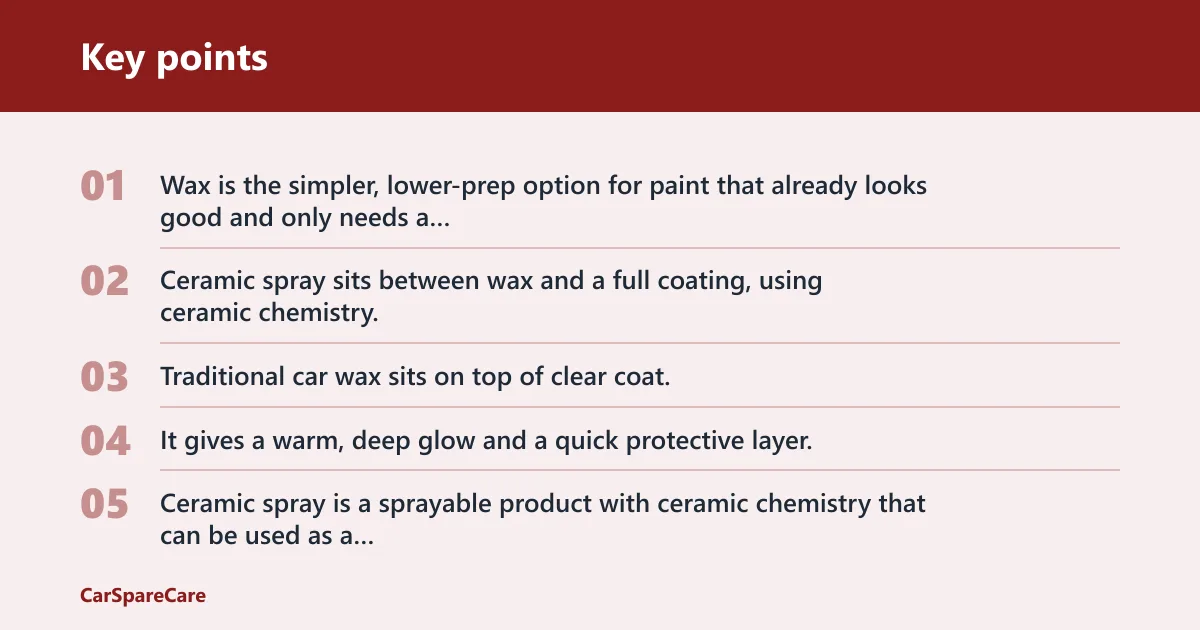
Wax is the simpler, lower-prep option for paint that already looks good and only needs a sacrificial top layer. Ceramic spray sits between wax and a full coating, using ceramic chemistry, usually SiO2- or silica-based, to provide stronger water-beading behavior and longer service intervals, but it generally calls for cleaner paint and more careful application conditions.
Traditional car wax sits on top of clear coat. It gives a warm, deep glow and a quick protective layer, but it also needs reapplication in weeks to a couple of months. Ceramic spray is a sprayable product with ceramic chemistry that can be used as a stand-alone protectant or as a top-up on an existing surface. Full ceramic coating is a different tier altogether: it cures into a bonded layer, usually with manufacturer claims measured in years, and it normally needs decontamination and often correction before application.
| Criterion | Traditional wax | Ceramic spray wax | Full ceramic coating |
|---|---|---|---|
| Prep required | Minimal prep is common | Clean, washed paint is required; shade or a cool panel helps | Significant prep, often including decontamination and correction |
| Typical durability | Weeks to a couple of months; often 1 to 3 months | Common consumer range is about 2 to 3 months; some spray ceramic products are described as lasting up to 6 months or more | Years by manufacturer claims |
| Gloss and look | Warm, deep glow | Bright gloss with strong water behavior | Clear, slick finish that depends on paint prep |
| Mistake risk | Lower; excess usually buffs off more easily | Moderate; streaking and residue can happen if the panel is hot or dirty | Higher; high spots and locked-in defects are harder to fix |
| Total ownership cost | Lowest upfront cost, but more frequent repeat purchases | Middle ground on product cost and upkeep | Highest cost tier because prep, correction, and labor add up |
Which lasts longer: wax or ceramic spray?
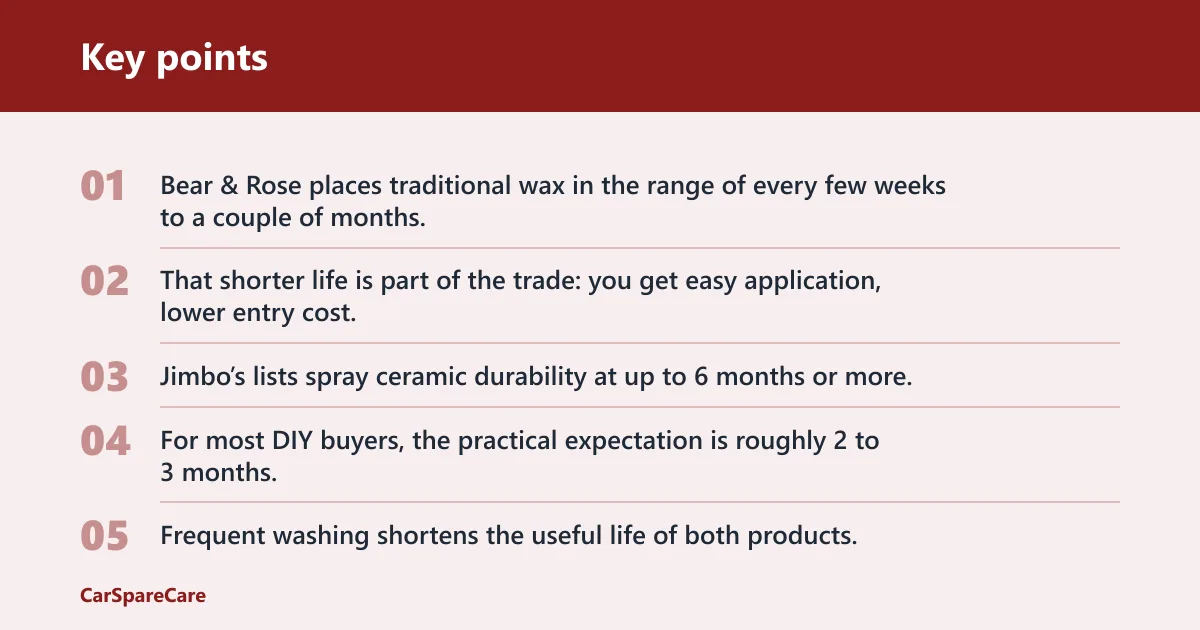
Ceramic spray usually lasts longer than wax, but not by the same margin that a true coating does. Wax commonly needs reapplying every few months, with some sources placing carnauba wax at 4 to 6 weeks and others at one to three months. Ceramic spray coatings are usually described in months, not weeks, and consumer spray ceramic products are often placed around 2 to 3 months.
Typical reapplication timing for wax
Wax is the short-interval option. Bear & Rose places traditional wax in the range of every few weeks to a couple of months, and other guidance puts wax at one to three months. That shorter life is part of the trade: you get easy application, lower entry cost, and a warm glow, then you renew it more often.
Typical reapplication timing for ceramic spray
Ceramic spray wax sits in the middle. Jimbo’s lists spray ceramic durability at up to 6 months or more, while other sources describe spray coating durability in months rather than weeks. For most DIY buyers, the practical expectation is roughly 2 to 3 months, especially on a daily driver that is washed often and sees weather, dust, and road film.
How washing habits change real-world durability
Frequent washing shortens the useful life of both products, and the drop-off is usually sharper with wax because the layer is weaker and less durable. Harsh detergents, aggressive drying towels, and neglected contamination also reduce ceramic spray performance. A gentle wash routine matters more than the label on the bottle.
Say your coupe sits outside all week and gets washed every Saturday. Wax may look great for a short stretch, then lose its tight water beading and start to feel uneven. The same car with a ceramic spray top-up will usually hold a cleaner water pattern longer, which reduces how often you need to reapply.
Do you need wax removal before ceramic spray?
Not always. Ceramic spray can go over some existing wax, but old wax residue can interfere with bonding, mute beading, or make the finish streaky. If the paint still has a heavy wax film, or if the old layer is patchy, it is better to strip as much residue as practical before switching.
When ceramic spray can go over existing wax
If the wax layer is thin, even, and still healthy, a ceramic spray top-up can work. That is especially true when the goal is maintenance rather than a full reset. A spray product used on top of a light wax base may still improve water behavior, but the result is only as good as the surface beneath it.
When old wax residue hurts bonding or beading
Thick wax residue can keep the spray chemistry from contacting the paint consistently. That can lead to dull patches, uneven sheeting, or weak beading in some areas. A common first-timer mistake is topping a dirty, wax-heavy panel with ceramic spray and then blaming the product when the panel looks smeared.
How to prep safely before switching products
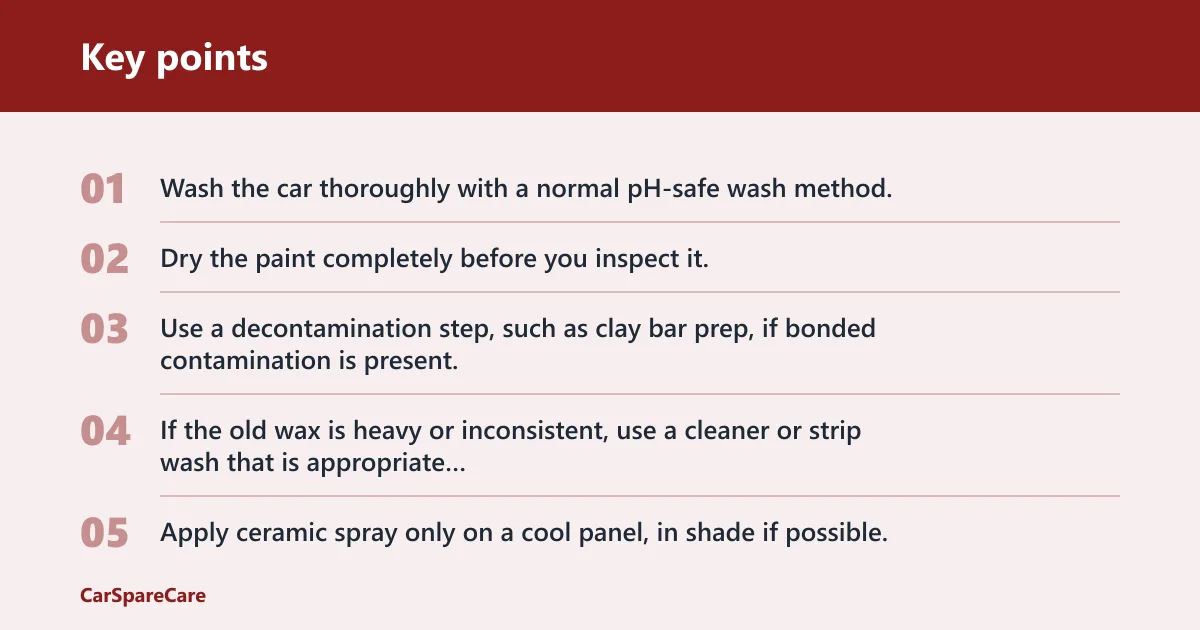
- Wash the car thoroughly with a normal pH-safe wash method.
- Dry the paint completely before you inspect it.
- Use a decontamination step, such as clay bar prep, if bonded contamination is present.
- If the old wax is heavy or inconsistent, use a cleaner or strip wash that is appropriate for your paint care plan.
- Apply ceramic spray only on a cool panel, in shade if possible, and follow the bottle’s wet or dry application direction exactly.
Suppose a sedan has been waxed three times over the last year and now shows random dull spots after rain. That does not automatically mean the paint is bad. It often means the old layer is uneven, and the new spray protectant needs a cleaner, more uniform surface to behave as intended.
How paint condition changes the choice
Paint condition should steer the decision before price or shine does. Clear, well-kept paint can take either product well. Swirled or tired paint may still use either one, but the result depends on whether you are trying to maintain appearance or mask minor visual defects. If bonded contamination is present, decontamination comes first.
Clear, well-kept paint
If the clear coat is already smooth and glossy, wax is attractive because it gives quick payoff with minimal prep. Ceramic spray is also a good fit here, especially if you want better water behavior and longer spacing between applications. On healthy paint, the choice comes down to how often you want to maintain it.
Swirled or slightly tired paint
Light swirls do not force you into wax, and they do not rule out ceramic spray. Wax can give a softer, warmer look that many owners prefer on older paint, while ceramic spray can make the surface easier to wash and keep looking clean. Neither product repairs swirls; if the paint needs correction, that is a separate step.
Paint that needs decontamination first
If the panel feels rough after washing, bonded contamination may be present. That is where clay bar prep or another decontamination step matters. Ceramic products are less forgiving of leftover contamination, so a dirty or gritty surface can make the finish look worse, not better. Wax is more tolerant, but it still performs better on a properly cleaned surface.
How climate and storage affect results
Storage and weather exposure matter as much as product chemistry. Garage-kept cars can get away with simpler protection because they are not constantly hit by rain, UV, and airborne dirt. Outdoor cars benefit more from ceramic spray because the water behavior and easier washing pay back the extra prep. Winter salt and frequent rain push the choice further toward ceramic spray.
Garage-kept cars
A garage-kept car with light mileage is a strong wax candidate. The paint is less exposed, so the shorter reapplication interval is less of a burden. If you want a warm glow for shows or weekend use, wax still makes sense here.
Outdoor cars
Daily outdoor exposure favors ceramic spray because it sheds water better and tends to hold that behavior longer between washes. That makes rinsing off dust, rain film, and road grime easier. You are still doing maintenance, but the surface usually stays cleaner with less effort.
Winter salt and frequent rain
Road salt, slush, and repeated wetting are hard on short-life protection. Ceramic spray is usually the better fit because stronger hydrophobic behavior helps water and dirt move off the surface more easily. Wax can still work, but it will usually need more frequent attention through the season.
Heat, shade, and panel temperature
Ceramic spray is less forgiving of hot panels than wax. Shade and a cool surface reduce streaking and make wipe-off easier. Most spray products are happiest on a clean, washed surface, and the application method matters: some are designed for wet application, others for dry. Read the bottle closely before you start.
Wax vs ceramic spray comparison table
The best choice is not the one with the highest shine claim. It is the one that fits your paint, your weather, and how often you are willing to repeat the job. Use the matrix below as a practical ownership guide, not a brand ranking.
| Scenario | Prep required | Durability | Gloss | Mistake risk | Total ownership cost | Better fit |
|---|---|---|---|---|---|---|
| Garage-kept show car | Low to moderate | Wax: acceptable; ceramic spray: longer interval | Wax wins on warm glow | Low for either | Wax is cheaper over a short season | Wax |
| Outdoor daily driver | Moderate | Ceramic spray lasts longer between top-ups | Ceramic spray gives cleaner water behavior | Moderate if panels are hot or dirty | Ceramic spray often costs less over time | Ceramic spray |
| Used car with swirls | Moderate to high if you correct first | Similar if the surface is prepped well | Wax can soften the look; ceramic spray looks sharper | Moderate | Depends on whether correction is included | Either, based on your goal |
| Winter road-salt commuter | Moderate | Ceramic spray holds up better through wet weather | Ceramic spray sheds water more consistently | Moderate | Ceramic spray usually wins once repeat waxing is counted | Ceramic spray |
| Budget lease return | Low | Enough for a short term | Wax gives quick gloss for inspection time | Low | Wax is the cheapest reset | Wax |
| Beginner DIYer | Low to moderate | Wax is easier to refresh; ceramic spray can last longer if applied well | Both can look good | Wax is lower; ceramic spray has more wipe-off sensitivity | Wax is cheaper to learn with | Wax first, ceramic spray if ready for more careful prep |
Choose wax if… / Choose ceramic spray if…
Choose wax if you want the lowest upfront cost, the simplest reset, and a warm, deep glow on healthy paint. Choose ceramic spray if you want better water beading, longer intervals between applications, and a product that better suits outdoor storage or frequent rain. Choose a full coating only if you are ready for a different prep and budget tier.
Choose wax if you want the lowest upfront cost and the easiest reset
Wax fits you if the paint already looks good, you wash it gently, and you do not mind reapplying every few weeks to a couple of months. It is also the safer choice when you want minimal prep or when you are protecting a car for a short period, such as a lease return or a show weekend.
Choose ceramic spray if you want better water behavior and longer intervals
Ceramic spray fits you if the car lives outdoors, sees winter weather, or gets washed often and you want easier maintenance in return. It also makes sense if you want a middle-ground product with ceramic chemistry, stronger hydrophobic behavior, and a realistic consumer service window around 2 to 3 months.
Choose a coating only if you want a different prep and budget tier
A full ceramic coating is not the same decision. It can last years by manufacturer claims, but it also asks for decontamination and often correction before application, plus a higher spend and more care during install. That is a separate project, not a substitute for deciding between wax and ceramic spray.
Frequently asked questions
Can you use ceramic spray over wax?
Yes, if the wax layer is thin and even, ceramic spray can go over it. The risk is that old wax residue may weaken bonding or leave uneven beading. If the surface has heavy or patchy wax, wash and strip as much residue as practical before switching products.
Are ceramic spray waxes any good?
Yes. They are a useful middle ground for owners who want stronger water behavior than wax without the prep burden of a coating. They are especially useful on daily drivers because they are easy to apply, can be stand-alone protection, and usually last longer than traditional wax.
Does ceramic spray wax work?
It works when the paint is clean, the panel is cool, and the product is used as directed. Most of the complaints come from poor prep, hot panels, or applying over contamination and old residue. Used correctly, it gives real hydrophobic behavior and easier washing.
What is the difference between wax and ceramic spray?
Wax is a sacrificial layer that sits on top of clear coat and gives a warm, deep glow with short reapplication intervals. Ceramic spray uses ceramic chemistry, usually SiO2 or silica-based, and aims for stronger water beading, easier wash-down, and longer time between applications.
Do I need to remove wax before applying ceramic spray?
Not always, but old wax can interfere with bonding and make the finish less uniform. If the existing layer is light and even, ceramic spray may still work. If the old wax is heavy, patchy, or dirty, a cleaner surface is the safer choice before you switch.

Hi, I’m Melvin, an automobile engineer with extensive experience in automobile equipment. I currently work for a local automobile firm, where I specialize in the car parts industry. I’ve had the opportunity to collaborate with seasoned inspectors, gaining invaluable hands-on experience that goes beyond just theory.
My passion for automotive care started at a young age, which led me to create CarSpareCare. Through CarSpareCare, I share the knowledge and skills I’ve acquired over the years to help others navigate the world of car maintenance and repairs.
My goal is to provide practical tutorials, essential safety advice, and the latest industry insights so that anyone—whether a beginner or an expert—can confidently tackle their automotive projects.

