

Yes, you can generally keep pepper spray in your car for self-defense. However, legal regulations vary by state and local jurisdiction, and it’s crucial to understand these laws. Proper storage is also key to ensure it remains effective and safe. This guide will walk you through everything you need to know.
Keeping yourself safe on the road is important, and many drivers wonder about the best ways to feel more secure. One common question is whether it’s okay to store pepper spray in your car. It’s a valid concern, especially if you do a lot of driving or live in an area where you might feel a bit uneasy. You want to be prepared, but you also want to follow the rules and be safe. This guide is here to help! We’ll break down the laws, talk about the best ways to store your pepper spray, and discuss why it’s a good idea for personal safety. Let’s get started on making your car a safer space for you.
Understanding Pepper Spray and Your Vehicle
Pepper spray, also known as OC spray, is a defense tool that temporarily incapacitates an attacker by causing inflammation of the eyes, respiratory system, and skin. It’s a popular choice for personal safety because it’s generally non-lethal and easy to use. When considering keeping it in your car, it’s essential to understand how your vehicle environment might affect it and what legal considerations are involved.
How Does Car Temperature Affect Pepper Spray?
Your car’s interior can experience significant temperature fluctuations. On hot summer days, temperatures inside a parked car can soar, while winter can bring freezing conditions. These extremes can impact the efficacy and safety of your pepper spray.
Heat: Excessive heat can cause the pressurized canister to build up too much internal pressure. This increases the risk of leakage or, in rare cases, explosion. Heat can also degrade the oleoresin capsicum (OC) agent over time, making the spray less potent. Always check the manufacturer’s recommendations for storage temperatures. Most recommend keeping pepper spray between 0°F and 120°F (-18°C and 49°C).
Cold: While less of a risk for explosions, extreme cold can also affect the spray’s performance. The propellant might become less effective, leading to a weaker stream or a failure to spray altogether. If the spray freezes, it can damage the seal and cause leakage.
It’s crucial to avoid leaving pepper spray in direct sunlight or in areas that are exposed to the most extreme temperatures within your car.
Legal Considerations: Car Storage Laws Vary
The legality of possessing pepper spray in your car is a significant factor. While many states allow individuals to carry it for self-defense, there are often specific regulations regarding where and how it can be possessed, especially within a vehicle.
State Laws: Each state has its own set of laws pertaining to the possession and use of pepper spray. Some states have no restrictions, while others may limit the concentration of OC, the size of the canister, or require the user to be of a certain age (often 18 or older).
Federal Regulations: While there are no federal laws explicitly banning pepper spray for civilian self-defense, state and local laws take precedence.
“Inoperable” vs. “Usable”: Some jurisdictions distinguish between pepper spray that is readily accessible and usable versus that which is stored away, perhaps in a locked container or the trunk. Keeping it readily accessible in your car might be viewed differently than if it were in a suitcase in your trunk.
It is your responsibility to research and understand the specific laws in your state and any state you might be traveling through. You can often find this information on your state’s attorney general website or through reputable legal resources. For example, the National Conference of State Legislatures provides overviews of laws related to self-defense and use of force across various states.
Where to Store Pepper Spray in Your Car for Safety and Accessibility
Proper storage is key to ensuring your pepper spray is both effective when you need it and safely contained. You want it accessible for emergencies but out of reach of accidental use by children or unauthorized individuals.
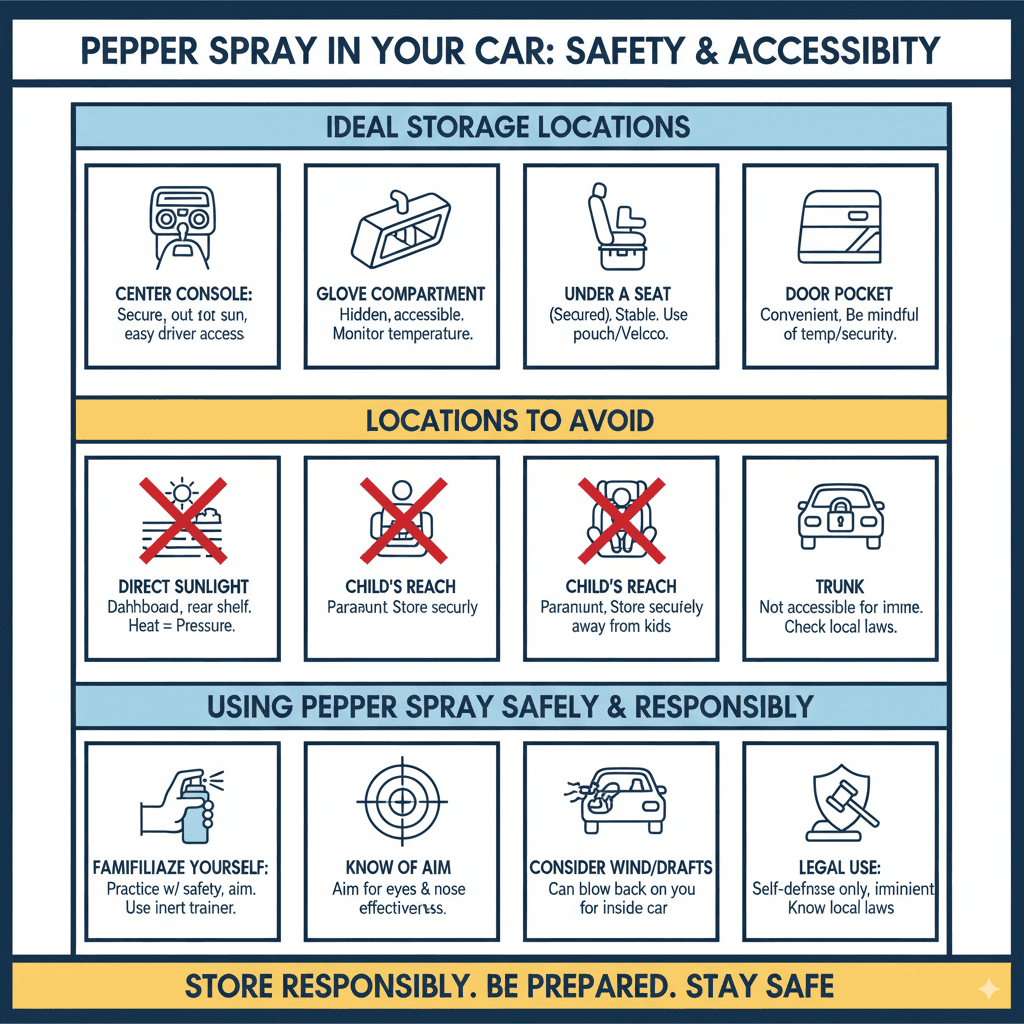
Ideal Storage Locations
Consider these spots within your vehicle:
Center Console: This is a common and relatively secure location. It’s usually out of direct sunlight and can be easily accessed by the driver. Ensure it’s not overstuffed, which could prevent you from closing it properly or accessing the spray quickly.
Glove Compartment: Similar to the center console, the glove compartment offers a hidden and accessible spot. However, be mindful of its temperature, as it can become very hot or cold depending on external conditions and whether the heating/cooling system is running.
Under a Seat (Secured): If you choose to store it under a seat, make sure it is secured so it doesn’t roll around or get kicked. Some people use small pouches or Velcro straps. This location generally offers more stable temperatures than the dashboard or console.
Door Pocket: While convenient, door pockets can be prone to temperature extremes and may not be the most secure option if the door is hit.
Locations to Avoid
Certain areas are not suitable for storing pepper spray:
Direct Sunlight: Never leave pepper spray in a spot that will be exposed to direct sunlight for extended periods, such as on the dashboard or rear window shelf. This significantly increases the risk of heat damage and pressure buildup.
Child’s Reach: This is paramount. Ensure the pepper spray is stored where children in the car cannot easily access it. Most pepper sprays have safety mechanisms, but accidental discharge can still occur.
Trunk (unless legally required): While the trunk offers the most stable temperatures, it’s generally not considered accessible for immediate self-defense. If the law in your area requires it to be in a non-accessible location, check those specific regulations.
Overstuffed Compartments: If your storage area is so full that the pepper spray cannot be properly contained or accessed, find a better spot.
Using Pepper Spray Safely and Responsibly
Pepper spray is a tool for self-defense, and its use carries responsibilities. Understanding how to use it correctly is crucial for your safety and the safety of others.
Familiarize Yourself: Before you ever need to use it, take your pepper spray out of its packaging and practice disengaging the safety mechanism. Understand how to aim and spray. It’s recommended to practice with an inert training unit if available.
Know Your Aim: Pepper spray is most effective when aimed at the attacker’s face, specifically the eyes and nose.
Consider Wind/Drafts: If using it in a car, be aware that the spray can easily blow back on you due to the enclosed space and potential drafts from windows or ventilation.
Legal Use: Use pepper spray only in situations where you reasonably fear for your safety and are in imminent danger. Misuse can lead to legal consequences.
Types of Pepper Spray and How They Differ
Not all pepper sprays are created equal. They come in various forms, concentrations, and delivery systems, each with its pros and cons, especially within the context of a car.
Delivery Systems
Stream: Shoots a concentrated stream of OC. This is often preferred for outdoor use as it’s less likely to be affected by wind and offers a greater range. In a car, it can be effective against a specific target but still requires careful aim to avoid blowback.
Cone/Fog: Sprays a wider mist, covering a larger area. This is very effective in crowded situations or against multiple attackers but is highly susceptible to crosswinds and is generally a poor choice for use inside a vehicle due to the high risk of self-contamination.
Foam: Similar to fog, but the OC is delivered as a foam that sticks to the target’s face. It’s less likely to drift than fog but can still be affected by internal air currents.
Gel: A thick, sticky substance that can adhere to the attacker’s face and eyes. It’s less prone to airborne dispersion than foam or fog, making it a potentially better option for enclosed spaces like a car.
Balls/Gels (less common for personal carry): Some defense sprays shoot small projectiles filled with OC. These are less common for personal defense within a vehicle.
For car storage and potential use, stream or gel-based pepper sprays are often recommended due to their reduced susceptibility to blowback in an enclosed space.
OC Concentration and Heat Units (SHU)
Pepper sprays are measured by their percentage of Oleoresin Capsicum (OC) and their Scoville Heat Units (SHU). Higher percentages and SHUs generally mean a stronger, more effective spray.
OC Percentage: This refers to the concentration of the active ingredient. Common percentages range from 5% to 10%.
Scoville Heat Units (SHU): The Scoville scale measures the pungency of chili peppers. For pepper spray, it indicates the intensity of the capsaicinoids. Higher SHU values mean a more potent spray.
When purchasing pepper spray, look for products specifically designed for self-defense. Many tactical or law enforcement-grade sprays will clearly list their OC percentage and SHU.
Table: Comparing Pepper Spray Types for Car Storage
Here’s a quick look at how different types might perform in a vehicle:
| Spray Type | Pros for Car Use | Cons for Car Use | Best Storage Recommendation |
| :——— | :—————————————————– | :—————————————————————————- | :———————————————————————— |
| Stream | Precise aim, less blowback than fog/cone | Limited spray pattern, may not cover a wide area | Center console, glove compartment |
| Gel | Sticks to target, less airborne, good containment | Can be messy, requires good aim | Center console, glove compartment, secured door pocket |
| Foam | Wider coverage than stream, adheres to target | Can still be affected by air currents, potential for self-contamination | Center console, glove compartment (with caution) |
| Cone/Fog | Wide area coverage (usually for outdoor/crowds) | HIGHLY NOT RECOMMENDED for cars due to extreme blowback risk | Avoid using inside a car; store securely if legally required to carry |
Car Pepper Spray Kits and Accessories
Beyond the pepper spray itself, there are accessories that can enhance its usability and safety in your vehicle.
Mounting Solutions
Velcro Straps/Holders: Many effective solutions use heavy-duty Velcro to secure a pepper spray canister to the side of the center console, under the dashboard, or in the door panel. This keeps it from shifting and ensures it’s immediately accessible.
Custom Mounts: Some companies offer specialized mounts designed to hold pepper spray canisters securely within the car, often near the driver’s seat.
Practice Canisters
Inert Training Units: These look and feel like real pepper spray but contain no active agent. They are invaluable for practicing drawing the canister, disengaging the safety, and aiming without the risk of actually incapacitating yourself or others. You can find these from reputable self-defense product retailers.
Car Safety Lights and Alarms
While not directly related to pepper spray, consider combining your personal safety preparedness with other tools:
Personal Safety Alarms: These small devices emit a loud siren when activated, drawing attention and startling potential attackers. They are battery-powered and can be easily clipped to a keychain or stored in a secure car pouch.
Bright LED Flashlights: A powerful flashlight can be used to disorient an attacker or to help you see in dark situations.
Important Safety Tips for Car Occupants
Car safety extends beyond just having a defense tool. It’s about awareness and proactive measures.
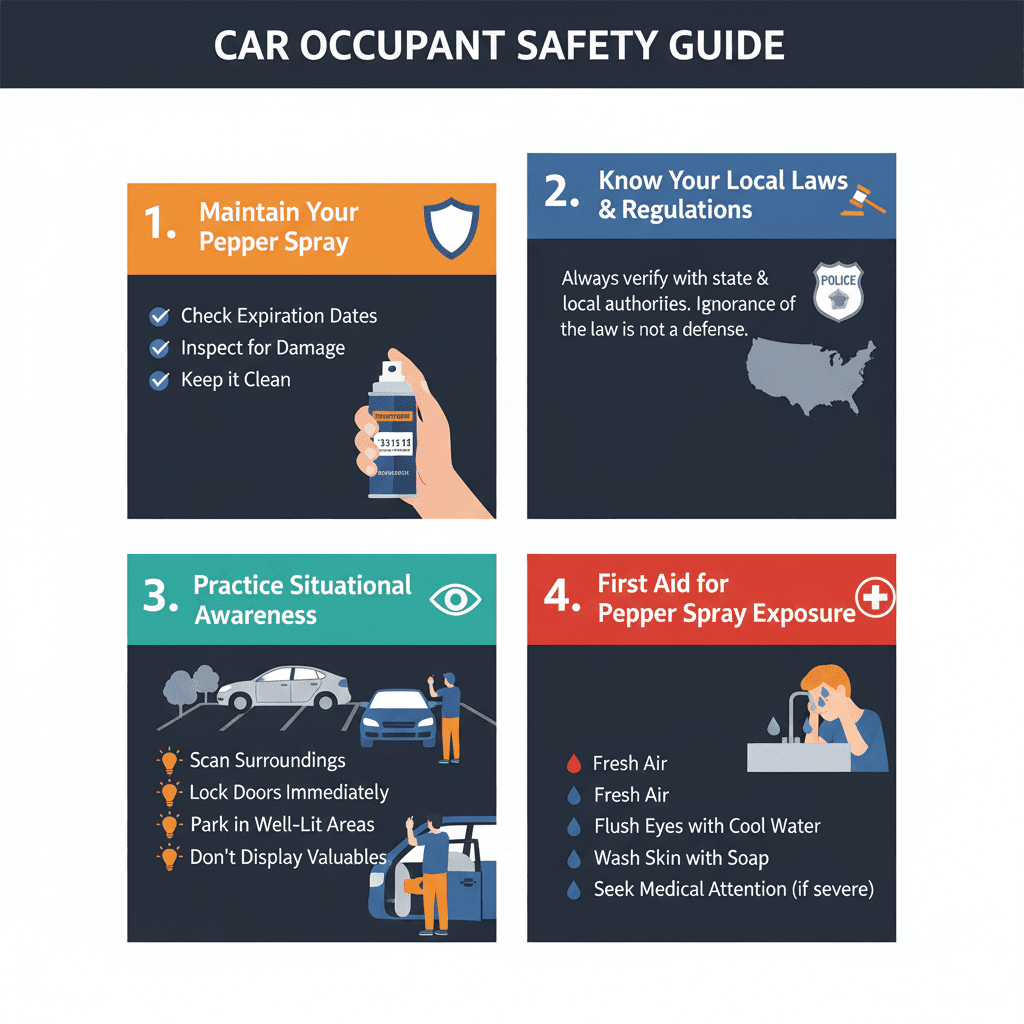
Maintain Your Pepper Spray
Check Expiration Dates: Pepper spray has an expiration date, usually found on the canister. The propellant can degrade over time, making it less effective. Replace it before it expires.
Inspect for Damage: Periodically check the canister for any signs of damage, rust, or leakage.
Keep it Clean: Ensure the nozzle is clear of debris.
Know Your Local Laws & Regulations
As mentioned earlier, this is non-negotiable. Ignorance of the law is not a defense. Always verify with your state and local authorities. Many police departments offer information on self-defense tools.
Practice Situational Awareness
Be Aware of Your Surroundings: Before getting into your car, scan the area. If you see something suspicious, don’t ignore it.
Lock Your Doors: Always lock your doors as soon as you get into your vehicle.
Park in Well-Lit Areas: When possible, choose parking spots that are well-lit and have good visibility.
Don’t Display Valuables: Keep the interior of your car clean and free of tempting valuables that could attract break-ins.
First Aid for Pepper Spray Exposure
If you or someone else is accidentally sprayed:
Fresh Air: Get to fresh air immediately.
Eyes: Flush eyes with cool, clean water. Do not rub your eyes. Blink frequently. Some sources recommend milk or saline solution for flushing.
Skin: Wash affected skin with soap and cool water.
Breathing: If breathing is difficult, seek medical attention.
* Decontamination: For vehicles, ventilate the car thoroughly. If the spray is on surfaces, they may need to be cleaned with soap and water or specialized decontamination solutions.
FAQ: Common Questions About Pepper Spray in Cars
Here are some answers to frequently asked questions about keeping pepper spray in your vehicle.
Q1: Is it legal to keep pepper spray in my car everywhere in the US?
A1: No, it is not legal everywhere. Laws vary significantly by state, and some cities or counties might have their own regulations. Always check your specific state’s laws. For example, America.gov provides general information about pepper spray legality and use for self-defense.
Q2: How do I know if my pepper spray is still good?
A2: Check the expiration date printed on the canister. If it’s expired, or if you notice any signs of leakage or damage, it’s time to replace it.
Q3: Can extreme heat or cold in my car damage my pepper spray?
A3: Yes, extreme temperatures can affect pepper spray. Heat can increase pressure in the canister, risking leakage or explosion, and can degrade the active ingredients. Cold can make the propellant less effective. Store it in a location with moderate temperatures.
Q4: What is the best type of pepper spray to keep in a car?
A4: For car use, stream, gel, or foam delivery systems are generally recommended over fog or cone sprays. These types are less likely to blow back and incapacitate you in the confined space of a vehicle.
Q5: Can I keep pepper spray in my glove compartment or center console?
A5: Yes, these are common and often suitable locations, provided they are not exposed to extreme temperatures for prolonged periods and are kept out of reach of children.
Q6: What if I accidentally spray myself or someone else in the car?
A6: Get to fresh air immediately, flush affected eyes and skin with cool water, and seek medical attention if breathing is difficult. Ventilate the car thoroughly.
Q7: Are there age restrictions for carrying pepper spray in a car?
A7: Many states have age restrictions, typically requiring individuals to be 18 years or older to possess pepper spray. Always verify this with your local laws.
Conclusion
Keeping pepper spray in your car can be a smart personal safety choice, but it comes with responsibilities. Understanding the laws in your area is the first and most crucial step. You need to know if it’s legal to possess and carry it in your vehicle, and if there are any restrictions on type, size, or accessibility.
Beyond legality, protecting the pepper spray from extreme temperatures is vital to ensure it functions correctly when you need it most. Avoid direct sunlight and areas that get excessively hot or cold. Opt for storage locations that offer a balance of security, accessibility for the driver, and distance from children.
Choosing the right type of pepper spray, such as a stream or gel, can also make a significant difference in its effectiveness and safety within the confined space of a car. Remember that pepper spray is a tool for self-defense, and responsible ownership includes knowing how to use it correctly and legally. By staying informed and taking these precautions, you can enhance your sense of security while driving.
Your safety is paramount. Being prepared, understanding your options, and following these guidelines will help you make informed decisions about personal protection on the go. Drive safely!

Hi, I’m Melvin, an automobile engineer with extensive experience in automobile equipment. I currently work for a local automobile firm, where I specialize in the car parts industry. I’ve had the opportunity to collaborate with seasoned inspectors, gaining invaluable hands-on experience that goes beyond just theory.
My passion for automotive care started at a young age, which led me to create CarSpareCare. Through CarSpareCare, I share the knowledge and skills I’ve acquired over the years to help others navigate the world of car maintenance and repairs.
My goal is to provide practical tutorials, essential safety advice, and the latest industry insights so that anyone—whether a beginner or an expert—can confidently tackle their automotive projects.

