
Uneven brake pad wear usually comes from a sticking caliper or slide pins, a seized piston, bent hardware, rotor runout, or a pad fitment problem; if one pad is much thinner than the other on the same wheel, inspect the caliper first. Ignoring the wear can cut stopping power, overheat the brake, and damage rotors or the caliper. This guide shows how to read the wear pattern and match it to the most likely failed part.
Wear patterns and likely brake faults
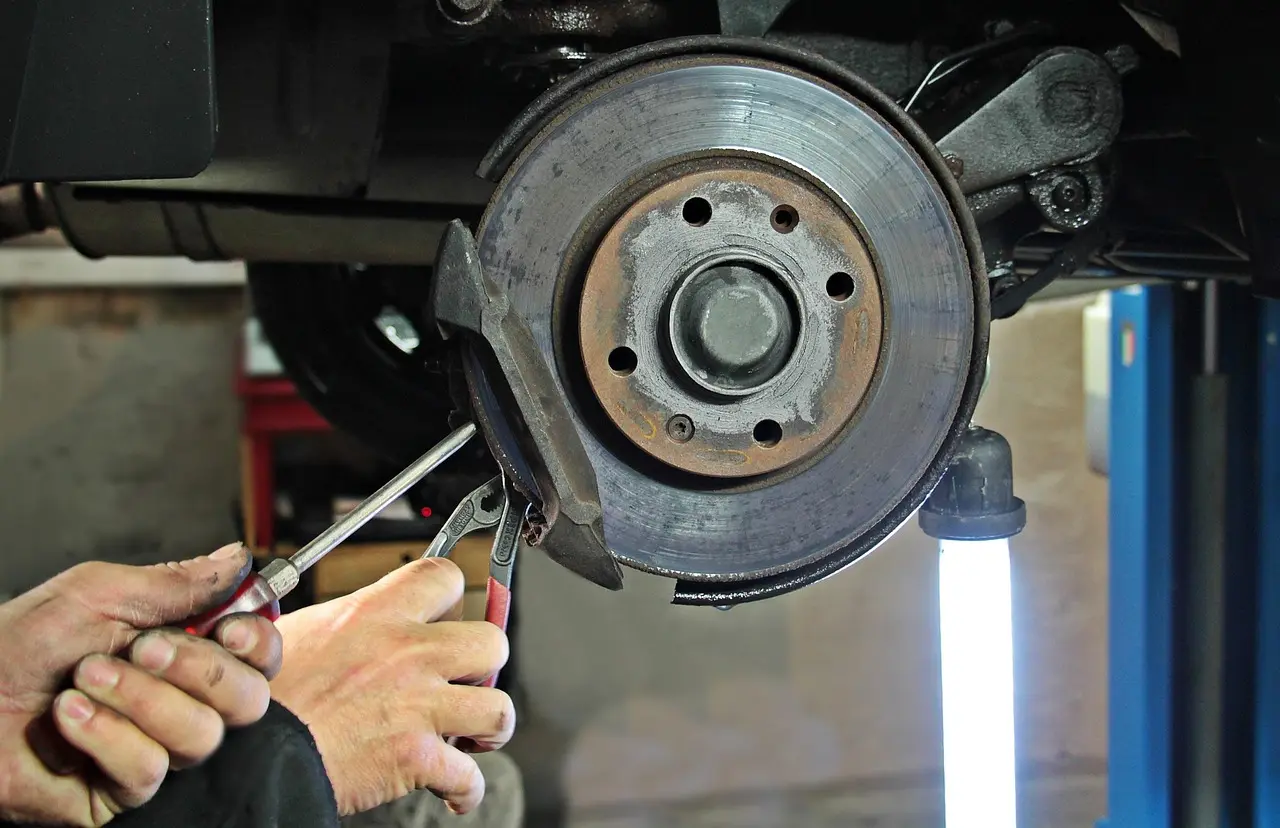


Uneven brake pad wear usually means one part of the brake is not moving, releasing, or supporting the pad the way it should. The wear pattern matters because inner-only, outer-only, tapered, and one-wheel-only wear can point to different faults, and those faults may not need the same repair order.
Uneven wear is not normal pad aging. A healthy brake system tends to wear both pads on a wheel at a similar rate, with only small differences from design or driving style.
Wear pattern decision table
| Observed wear pattern | Most likely cause | Fastest next inspection | Recommended repair order |
|---|---|---|---|
| Inner pad thinner than outer pad on one wheel | Sticking piston, dry slide pins, or collapsed hose trapping pressure | Check pin movement, boot condition, and whether the wheel drags after release | Service hardware and pins first; replace caliper or hose if movement stays uneven |
| Outer pad thinner than inner pad on one wheel | Seized or dry slide pins, bracket corrosion, or missing abutment clips | Look for frozen pins, rust buildup, and pads jammed in the bracket | Clean or replace hardware first; replace bracket or caliper if the pads still bind |
| Tapered pad wear | Pad cocked in the bracket, worn clips, damaged shims, or uneven caliper travel | Inspect pad backing plates and the clip seats for rust or missing hardware | Replace hardware and pads together; check rotor and caliper if taper returns |
| One wheel much hotter or dustier than the others | One-wheel brake drag from a hose, caliper, or parking brake problem | Compare wheel temperature and rotor drag after a short drive | Inspect hose and parking brake first; then caliper, rotor, and fluid condition |
| Both pads on one wheel worn fast | Rotor runout, thickness variation, or heavy corrosion on the bracket and pad seats | Measure rotor condition and inspect the rust ridge at the outer edge | Correct rotor and hardware issues before fitting new pads |
For example, a front left outer pad at about 3 mm and the inner pad at about 8 mm, with the other three pads close to 7 mm, can suggest a slide-pin or bracket problem. That points first to a slide-pin or bracket problem on that wheel, not a full set of pads. The fastest check is whether the caliper can move freely on its pins.
Why are inner and outer pads wearing differently?
Different wear between the inner and outer pads usually points to a caliper that is not sliding correctly, a piston that does not retract, or hardware that no longer centers the pad. A caliper can look normal outside and still hold one pad against the rotor after the pedal is released.
Sticking caliper symptoms
A sticking caliper often leaves one pad thinner, one rotor hotter, or one wheel dusty and reluctant to spin by hand. On many floating calipers, the piston pushes the inner pad and the caliper body must slide to pull the outer pad into contact; if that slide sticks, one pad does most of the work.
On fixed multi-piston calipers, both pads still need even piston movement and proper pad support. A piston with corrosion around the seal, or a caliper that does not release fully, can leave both pads worn unevenly or one wheel dragging after the stop.
Seized or dry slide pins
Caliper slide pins should move freely and evenly, with no rough spots and no torn boots full of rust or dried grease. A dry pin can bind just enough to tilt the caliper, which creates tapered pad wear or outer-pad wear on a floating caliper.
Look for pins that stay stuck in the bracket, boots split at the end, or reddish corrosion on the polished pin surface. If the pin will not slide by hand after cleaning, replacement is usually safer than re-lubing a damaged part.
Missing hardware or bad pad fit
Missing anti-rattle clips, worn abutment clips, or damaged shims can let the pad sit crooked in the bracket. That crooked fit can make one edge of the pad contact first, which creates a taper and can also cause brake noise.
Pad backing plates should sit flat against the shims and clips. If the ears on the backing plate are rusted, bent, or too tight in the bracket, the pad may not float back when the pedal is released.
What causes brake pads to wear on one side?
Uneven wear on one side of the vehicle often means the fault is at one wheel, not across the whole axle. The main causes are hydraulic restriction, bracket corrosion, rotor condition, or rear parking brake drag, and the wheel with the worse wear is the one to inspect first.
Brake hose restriction
A brake hose can fail internally even when the outside looks fine. A collapsed inner lining can trap fluid pressure in the caliper, which may leave the pad partially applied and lead to one-wheel drag, heat, and faster wear on that side.
A hose fault often shows up as a wheel that releases slowly after braking. If cracking the bleeder briefly frees the wheel, pressure may be trapped upstream or inside the hose, which points away from a simple pad issue.
Caliper bracket corrosion
Rust on the caliper bracket can build up at the abutment points and squeeze the pad ears. That makes the pad stick instead of slide, so one edge or one pad wears faster while the other side of the rotor sees less contact.
Road salt makes this worse. A bracket with heavy scale, swollen rust at the clip seats, or a ridge where the pad ears ride usually needs cleaning or replacement, not another set of pads alone.
Rotor runout and thickness variation
Rotor runout and thickness variation can push the pads back and forth as the wheel turns. That motion can create uneven contact, taper, or a pulsing brake feel, especially if the rotor also has scoring or a rust ridge at the outer edge.
Runout-related wear is often mistaken for a caliper fault because the pad still wears unevenly. If the rotor surface is grooved, bell-mouthed, or has a heavy rust lip, inspect the rotor and hub face before assuming the caliper is bad.
Rear brake causes to check
Rear brakes need their own check because parking brake parts and integrated rear calipers add extra failure points. Rear pad drag often comes from a sticking cable, a lever that does not return, or a rear caliper mechanism that binds after the parking brake is applied.
Rear hardware also corrodes quickly on salt-exposed vehicles. Seized abutment clips, rusted pad seats, or a lever that stays partly applied can make the rear pads wear faster on one side while the front brakes look normal.
How do you inspect the worn parts?
Inspect the pad, caliper, hardware, and rotor together so you do not replace one worn part while leaving the cause in place. The best order is simple: compare pad thickness, check pin movement, inspect the bracket and clips, then measure rotor condition.
-
Measure both pads.
Check inner and outer pad thickness at the same wheel, and compare left to right. Most manufacturers list a minimum pad thickness of about 2 to 3 mm, but the exact limit should be checked in the vehicle service information.
-
Inspect the pad backing plates.
Look for rust flaking, bent ears, heat spotting, or a lining that has separated from the backing plate. If a pad has come loose or the friction material is missing a section, replace the pads as soon as practical and inspect the caliper and bracket for damage.
-
Check slide pins and boots.
Pull the pins and see whether they move freely and evenly. A pin with torn boots, hardened grease, or orange corrosion needs cleaning or replacement before new pads go in.
-
Inspect clips and shims.
Verify that all anti-rattle clips, abutment clips, and shims are present and seated in the correct position. Missing or misinstalled hardware can make a new pad wear like the old one within a short time.
-
Check rotor condition.
Look for scoring, a heavy rust ridge, or a visible lip at the rotor edge. If the rotor has thickness variation or noticeable runout-related wear, replace or machine it according to the vehicle spec before fitting new pads.
Suppose the rear passenger-side brake shows an outer pad at 4 mm, an inner pad at 9 mm, and a parking brake lever that does not fully return. That combination points toward rear drag, often from the parking brake mechanism or a bracket that holds the pad crooked, not a random pad defect.
What should be replaced together?
What you replace depends on what failed first. If the wear came from simple hardware or pin issues, pads and hardware may be enough; if the rotor is damaged, or the caliper, hose, or parking brake mechanism is faulty, those parts should be addressed before the new pads go in.
Pads and hardware only
Replace pads together with clips, shims, and any worn abutment hardware when the rotor is still within spec and the caliper moves correctly. This is the right order when the old hardware is rusted, missing, or bent but the piston and pins are still serviceable.
Pads and rotors together
Replace pads and rotors together when the rotor has scoring, deep corrosion, thickness variation, or a severe rust ridge. New pads on a damaged rotor can wear unevenly again and may not seat correctly.
Calipers, hoses, and fluid service
Replace the caliper when the piston sticks, the body binds, or the slide pins are not salvageable. Replace the hose if it traps pressure or shows age-related cracking, and service the brake fluid if it is dark, contaminated, or overdue for the maintenance interval listed by the manufacturer.
Brake fluid condition matters because moisture and debris can contribute to poor piston return and internal corrosion. A neglected fluid change does not always cause uneven wear by itself, but it can help create the caliper problem that does.
Frequently asked questions
What causes uneven brake pad wear?
Uneven brake pad wear usually comes from a sticking caliper, seized or dry slide pins, missing hardware, rotor problems, or a hose that holds pressure. The wear pattern matters. Inner-only, outer-only, tapered, and one-wheel-only wear point to different faults and should be checked in that order.
What causes uneven brake pad wear on one side?
One-side wear usually points to a problem at one wheel, such as a dragging brake hose, a corroded caliper bracket, rotor runout, or rear parking brake drag. Compare that wheel to the others for heat, dust, and drag, then inspect the caliper, hose, and rotor together.
What causes uneven brake wear?
Uneven brake wear often happens when one pad cannot move or release normally. Common causes include rusted slide pins, worn clips, a seized piston, or a rotor with runout or thickness variation. Rear brakes can add parking brake issues and integrated caliper mechanisms to the list.
What causes brake pads to wear quickly?
Brake pads can wear quickly when the caliper drags, the hose traps pressure, the rotor is damaged, or the pad is not supported correctly in the bracket. Road salt, missing shims, and poor brake fluid condition can speed up the problem by promoting corrosion and poor return movement.
Why did my brake pad fall off?
A pad that falls off usually has a failed backing plate bond, severe rust damage, or missing hardware that let it shift and break free. That is a safety issue. Inspect the rotor, caliper, clips, and bracket before driving again, because the damage often goes beyond the pad itself.
What happens when brake pads wear out?
When pads wear out, braking distance can increase, noise may start, and the backing plate can contact the rotor. That can score the rotor, overheat the brake, and damage the caliper. Continued driving can turn a pad replacement into a rotor, hardware, or caliper repair.

Hi, I’m Melvin, an automobile engineer with extensive experience in automobile equipment. I currently work for a local automobile firm, where I specialize in the car parts industry. I’ve had the opportunity to collaborate with seasoned inspectors, gaining invaluable hands-on experience that goes beyond just theory.
My passion for automotive care started at a young age, which led me to create CarSpareCare. Through CarSpareCare, I share the knowledge and skills I’ve acquired over the years to help others navigate the world of car maintenance and repairs.
My goal is to provide practical tutorials, essential safety advice, and the latest industry insights so that anyone—whether a beginner or an expert—can confidently tackle their automotive projects.

