
If steering is stiff only for the first few minutes, then returns to normal, cold fluid viscosity is the usual cause. If it stays heavy, gets worse, or one direction feels harder, suspect low fluid, weak pump, low voltage, belt slip, or a binding joint. Ignoring it can turn a minor cold-start symptom into pump damage, uneven tire wear, or a steering failure risk. This guide shows how to separate normal cold viscosity from failing assist, electrical voltage issues, and mechanical binding.
This guide is part of our Power steering and brake problems series.
Why does steering feel stiff only when cold?
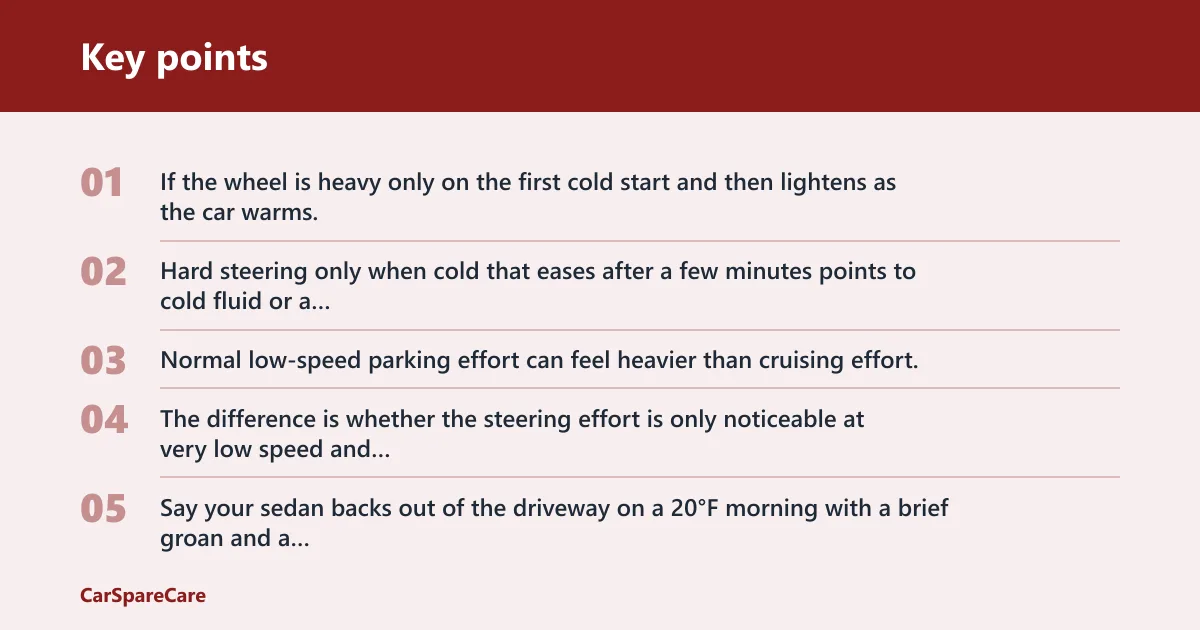


If the wheel is heavy only on the first cold start and then lightens as the car warms, the most likely explanation is a temperature-related change in the steering assist system. Hard steering only when cold that eases after a few minutes points to cold fluid or a cold-specific issue, but a persistent or one-sided problem needs diagnosis.
Normal low-speed parking effort can feel heavier than cruising effort. That is not the same as a fault. The difference is whether the steering effort is only noticeable at very low speed and disappears once you are rolling, or whether it stays heavy, gets noisy, or changes one turn direction more than the other.
Say your sedan backs out of the driveway on a 20°F morning with a brief groan and a heavy wheel, then feels normal after two blocks. That can fit cold-thickened fluid or a pump that is slow to build pressure. If the wheel still feels heavy after the engine bay warms, look deeper.
Normal cold-weather steering effort versus a fault
Some increase in steering effort is expected on cold mornings, especially during the first parking-lot maneuvers. That is most noticeable at low speed, where assist demand is highest. A fault is more likely when the wheel stays stiff after warm-up, the assist cuts in and out, or the steering feels uneven from left to right.
Why the wheel may ease up after a few minutes
Warm fluid flows easier, belts grip better after a brief run, and electrical voltage can recover after the battery and alternator settle. Any of those can make a borderline system feel normal after a few minutes. That recovery pattern is useful because it narrows the problem to cold fluid, weak assist, or a voltage-sensitive system.
Symptoms that point to a real assist problem
Watch for warning lights, whining or groaning noises that are worse cold, steering that is hard in only one direction, or a wheel that feels notchy instead of simply heavy. Those signs point away from normal cold drag and toward low fluid, pump wear, rack wear, belt slip, weak voltage, or mechanical binding.
Hydraulic, EPS, or EHPS?
Diagnosis depends on system type. Hydraulic power steering uses an engine-driven pump and fluid reservoir. Electric power steering uses an electric motor and may have no reservoir under the hood. Electro-hydraulic power steering combines a small reservoir with an electric pump, so it can fail from both fluid and electrical causes.
How hydraulic power steering works
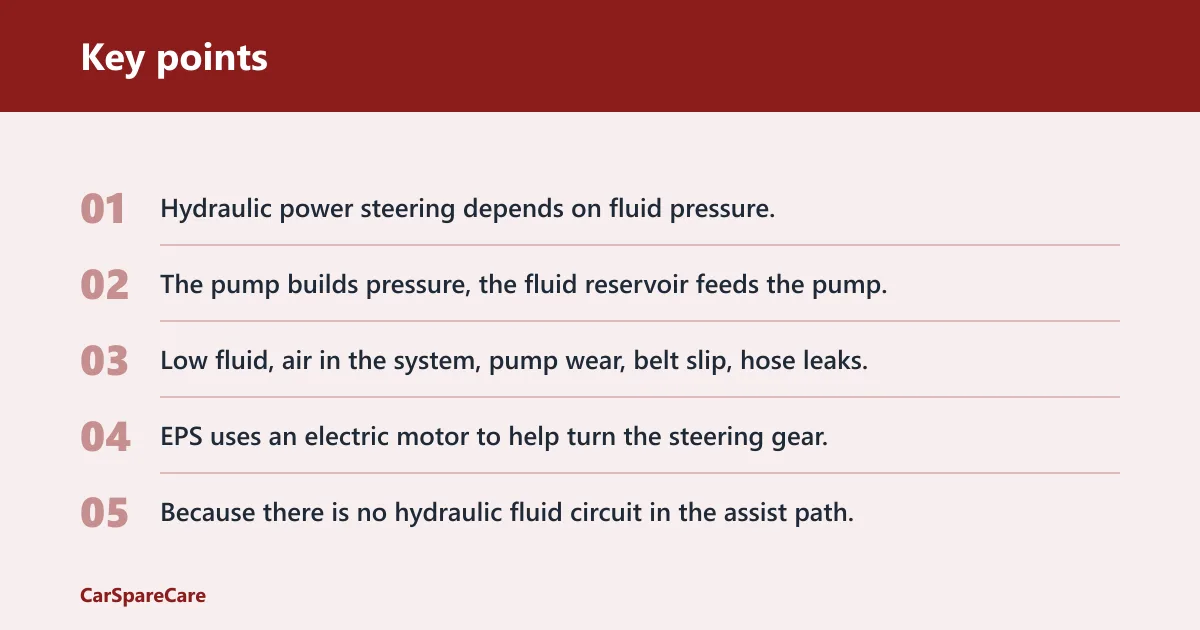
Hydraulic power steering depends on fluid pressure. The pump builds pressure, the fluid reservoir feeds the pump, and hoses carry fluid to the rack. Low fluid, air in the system, pump wear, belt slip, hose leaks, and rack wear can all make steering heavy, especially when cold.
How electric power steering works
EPS uses an electric motor to help turn the steering gear. Because there is no hydraulic fluid circuit in the assist path, a heavy cold-morning wheel on EPS often points to battery voltage, charging output, motor faults, torque sensor issues, fuse problems, or a mechanical binding problem in the steering hardware.
How electro-hydraulic systems fail differently
EHPS mixes electric control with hydraulic pressure, so both sides matter. A weak battery or charging fault can reduce pump output, while low fluid, contamination, or a leak can still create classic hydraulic symptoms. That is why a cold-morning diagnosis on EHPS should include fluid checks and voltage checks.
| Symptom pattern | Most likely system | First check |
|---|---|---|
| Heavy only at first start, then normal after a few minutes | Hydraulic or EHPS | Reservoir level, fluid condition, and belt condition |
| Whining, groaning, or foaming fluid when turning | Hydraulic or EHPS | Low fluid, aeration, leaks, and pump noise |
| Stiff steering with warning lights or a weak battery | EPS or EHPS | Battery voltage, charging output, fuses, and connectors |
| Binding, clunks, or notchiness at the wheels | Any system | Rack, tie rods, ball joints, and intermediate shaft |
| Hard steering only when parking at very low speed | Any system | Check whether effort is within normal low-speed limitation |
| Hard steering when turning one direction only | Hydraulic or mechanical | Asymmetric rack wear or a damaged tie rod |
What should you check first on hydraulic steering?
On hydraulic systems, check the reservoir level first. That is the fastest way to separate a simple fluid problem from a more expensive fault. Low power steering fluid is the most common cause of heavy steering on hydraulic systems, and the guide says to check the reservoir before anything else.
Fluid level and correct specification
Use the vehicle-specific fluid specification, not a guess based on color alone. Some systems need a specific power steering fluid, while others call for ATF or another approved fluid. Wrong fluid can change cold-flow behavior, increase noise, or damage seals over time.
Fluid condition, color, and aeration
Check for dark, burnt, milky, or foamy fluid. Foaming or aeration usually means air is in the system, often from a leak, low fluid, or a suction-side issue. A reddish or amber puddle under the front of the car can point to a hydraulic leak, which should be treated as a sign of trouble rather than a normal drip.
Leaks, belt slip, and pump noise
Look at the pump area, hose fittings, rack boots, and the ground under the engine bay. A slipping or cracked serpentine belt can reduce pump speed or, in some cases, stop assist altogether on many hydraulic systems. Whine or groan when turning, especially when it is worse cold, often points to low or foaming fluid or a failing pump.
Suppose a compact SUV starts with a stiff wheel, then emits a cold whine only while backing out. If the reservoir sits below the marked level and the belt has visible cracks, the next step is not guessing at the rack. Top up with the correct fluid only if the manual allows it, then find the leak or belt fault.
Why battery voltage matters on EPS and EHPS?
Cold mornings can make weak batteries and poor charging output more noticeable. EPS and some EHPS systems depend on stable voltage, so a battery that seems fine in mild weather may sag enough in the cold to reduce assist. That can make the wheel feel stiff before the engine and charging system recover.
Cold-start voltage drop and assist reduction
As temperature falls, battery output falls too. If the voltage drops during cranking or sits low after start, EPS may limit motor assist, and EHPS pumps may slow down. The result can feel like heavy steering with no hydraulic leak at all.
Battery state of charge and alternator output
Check battery age, resting state of charge, and charging output if the wheel is stiff on cold starts. A weak battery may show up first on the steering system before other accessories complain. A charging problem can do the same, especially if the symptom improves after a long drive.
Fuses, connectors, and warning lights
If the steering warning light is on, check the related fuse and the main connectors at the steering control unit or pump, as these are common starting points. Corrosion, a loose terminal, or a poor ground can cause intermittent assist loss. If the wheel goes heavy or assist cuts in and out with a warning light, stop and diagnose before driving farther.
Could the rack or linkage be binding?
Yes. Mechanical binding can make steering hard even when fluid level and voltage are fine. Rack and pinion wear, seal drag, tie rod resistance, ball joints, and the intermediate shaft can all add friction. That kind of problem often feels notchy, uneven, or hard in only one direction.
Rack and pinion wear or seal drag
Inside the rack, worn teeth, damaged seals, or internal corrosion can create drag. The wheel may feel heavy at center, then suddenly easier, then heavy again. Hard steering when turning one direction only is a sign of asymmetric rack wear or a damaged tie rod, not a simple cold-fluid issue.
Tie rods, ball joints, and intermediate shaft resistance
Any part that binds between the steering wheel and the tires can add resistance. Dry or worn ball joints, seized tie rod ends, or a sticky intermediate shaft can mimic a bad power steering system. If the steering feels stiff with the front end lifted and the assist system checks out, mechanical resistance moves up the list.
Signs that the steering feels notchy or uneven
Notchy steering feels like the wheel moves in steps rather than in one smooth arc. Uneven effort from left to right, clunks over small bumps, or a wheel that recenters poorly also points toward linkage or rack wear. These symptoms are different from simple cold thickening, which usually eases as the vehicle warms.
Is it safe to drive or should you stop?
Light, temporary stiffness at very low speed may allow cautious driving to a nearby repair point, especially if the steering becomes normal after a few minutes. Sudden heavy steering, a warning light, or assist that cuts in and out needs immediate attention. If control changes unexpectedly, stop driving and inspect before continuing.
Safe to drive: steering is only mildly heavy at parking speeds, the wheel returns to normal after warm-up, there are no warning lights, and you can keep control without fighting the wheel.
Stop driving: the wheel suddenly goes heavy, assist drops out while turning, one side binds badly, the steering warning light stays on, or the car feels unsafe to place in traffic.
What should you check first when steering is stiff only in the morning?
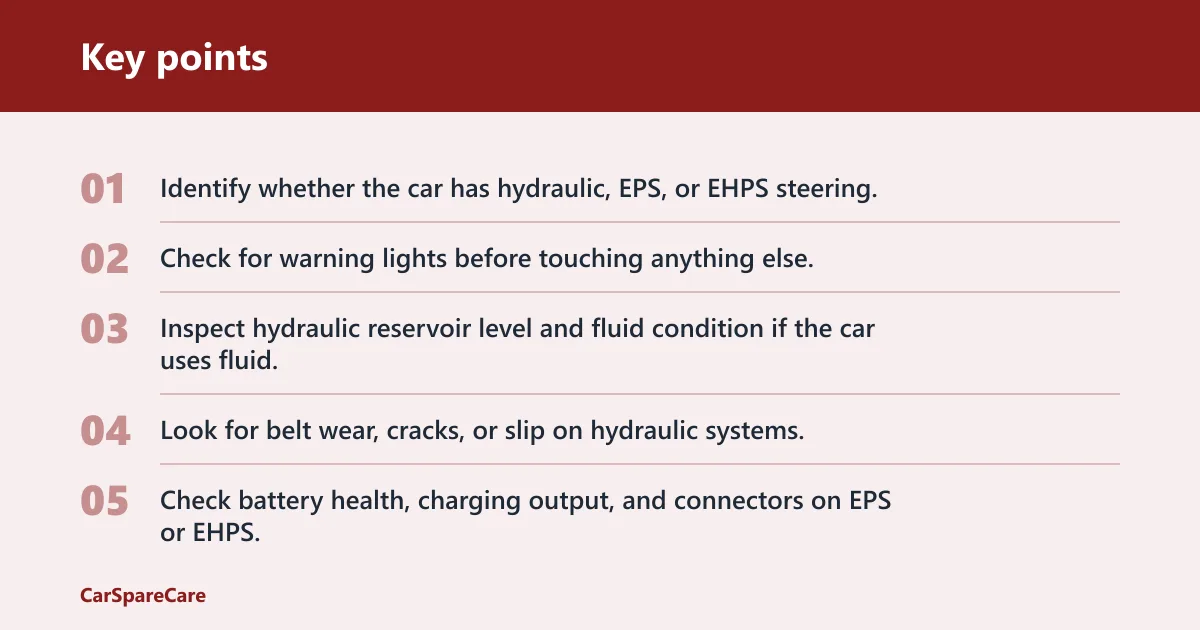
Start with the system type, then the most likely first check for that system. Hydraulic steering gets a fluid level and belt inspection first. EPS gets battery voltage, charging output, and warning lights first. EHPS needs both fluid checks and electrical checks because either side can cause the cold-morning symptom.
- Identify whether the car has hydraulic, EPS, or EHPS steering.
- Check for warning lights before touching anything else.
- Inspect hydraulic reservoir level and fluid condition if the car uses fluid.
- Look for belt wear, cracks, or slip on hydraulic systems.
- Check battery health, charging output, and connectors on EPS or EHPS.
Cold steering stiff only inspection checklist
- Confirm whether the car has a hydraulic reservoir under the hood.
- Check fluid level on a cold engine and compare it with the vehicle spec.
- Look at fluid color, cloudiness, and any foam in the reservoir.
- Inspect the serpentine belt for cracks, glazing, or obvious slack.
- Check for warning lights, weak cranking, and loose battery terminals.
Frequently asked questions
What causes the steering to get stiff?
The most common causes are low fluid on hydraulic systems, pump wear, belt slip, low voltage on EPS or EHPS, and binding in the rack or linkage. If the stiffness appears only when cold and then fades, cold fluid or a cold-specific issue is more likely than a constant mechanical fault.
Why is my steering wheel stiff?
A stiff wheel usually means assist is being reduced or friction is being added somewhere in the steering path. On hydraulic cars, check fluid and belt condition first. On EPS cars, check battery voltage, charging output, and warning lights first. If the wheel also feels notchy, inspect the rack and linkage.
Why does my steering wheel feel stiff?
The wheel feels stiff when the steering system cannot add enough help or when parts resist movement. Cold weather can thicken hydraulic fluid and make a borderline system feel worse for a few minutes. If the wheel stays heavy after warm-up, the cause is more likely low fluid, weak assist, or binding hardware.
What causes power steering to be stiff?
Low fluid, air in the system, pump wear, belt slip, rack wear, and linkage resistance are the main causes on hydraulic systems. On EPS, the usual causes are low voltage, a failing motor or sensor, a fuse issue, or a bad connector. EHPS can have either hydraulic or electrical faults.
Why is my steering wheel hard to turn when cold?
Cold weather can thicken hydraulic fluid and make the pump work harder at first start. That can create brief heavy steering that improves after a few minutes. If the problem stays in place, one direction feels worse, or you hear whining or groaning noises, suspect a fault rather than normal cold behavior.
How do I tell if it is hydraulic or electric power steering?
Look for a fluid reservoir and pump drive belt. Hydraulic systems use an engine-driven pump and fluid reservoir. EPS uses an electric motor and may have no under-hood reservoir at all. EHPS has a small reservoir plus an electric pump, so it sits between the two and can fail in either system.

Hi, I’m Melvin, an automobile engineer with extensive experience in automobile equipment. I currently work for a local automobile firm, where I specialize in the car parts industry. I’ve had the opportunity to collaborate with seasoned inspectors, gaining invaluable hands-on experience that goes beyond just theory.
My passion for automotive care started at a young age, which led me to create CarSpareCare. Through CarSpareCare, I share the knowledge and skills I’ve acquired over the years to help others navigate the world of car maintenance and repairs.
My goal is to provide practical tutorials, essential safety advice, and the latest industry insights so that anyone—whether a beginner or an expert—can confidently tackle their automotive projects.

