
Dry the car within about 10 minutes. Use a drying aid or filtered rinse, and treat spots that wipe off as deposits; if they do not move with gentle cleaning, stop and polish. Mineral water on hot paint can leave etched marks that need machine polishing to remove. This guide shows how to spot the source, choose the least aggressive fix, and prevent new water spots after washing, rinsing, or sprinkler exposure.
What causes water spots and etching


Water spots form when water evaporates and leaves minerals behind, most often calcium, magnesium, iron, and manganese traces. Fresh spots usually sit on top of the clear coat, while older spots can etch into it. Heat speeds evaporation, so warm panels and direct sun make spotting worse.
Hard water often leaves white rings or a powdery haze. If the surface feels rough or gritty, the deposit is usually sitting on top. If it feels smooth but stays visible, the clear coat may already be marked.
Surface deposit or etched spot?
A raised feel means you may be able to remove the mark with careful cleaning, a spot remover, or light clay on the right surface. A smooth, unchanged mark points to etching, which is a different problem. Clear coat has limited material for correction, so stop early instead of scrubbing harder.
Why heat makes spotting worse
Warm panels make droplets evaporate faster, which gives minerals less time to rinse away. That is why spots often appear right after washing, especially on hoods, roofs, mirror caps, and black trim. Cool paint and shade slow evaporation and give you more working time.
What you’ll need
- pH-balanced car shampoo
- Two buckets with grit guards
- Wash mitt
- Clean, soft microfiber drying towel
- Microfiber drying aid or filtered rinse setup
- Dedicated water spot remover safe for paint, glass, chrome, and trim
- White vinegar and distilled water for light, fresh spotting only
- Clay bar or synthetic clay mitt with clay lubricant
- Ceramic coating or other paint protection for future prevention
- Soft detailing cloths for badges, trim edges, and mirrors
Water spot prevention decision matrix
Water Spot Prevention Decision Matrix
| Scenario | Best prevention method | What to avoid | First product or tool to use | Stop and switch when |
|---|---|---|---|---|
| Fresh wash water | Wash on cool panels, then dry immediately with a clean microfiber towel | Air-drying on paint or washing in direct sun | pH-balanced car shampoo and a soft microfiber drying towel | Marks still remain after one gentle wash-and-dry cycle |
| Hard tap water | Use filtered or deionized rinse water, then dry panel by panel | Letting rinse water dry on the surface | Water spot remover as the first chemical step on the affected area | Deposits feel smooth but stay visible, which points to etching |
| Sprinkler spotting | Rinse off immediately, then dry and inspect glass, badges, and trim | Waiting until the next day or rubbing dry mineral rings | Dedicated water spot remover, then a clay bar only on fresh bonded residue | Spots return after cleaning or leave a dull mark in the clear coat |
| Recurring etched spots | Protect the paint after correction with ceramic coating or similar protection | More vinegar, more scrubbing, or repeated clay on clear coat damage | Polishing or professional paint correction | The spot feels smooth but remains visible after careful cleaning |
How do you wash and dry a car without water spots?
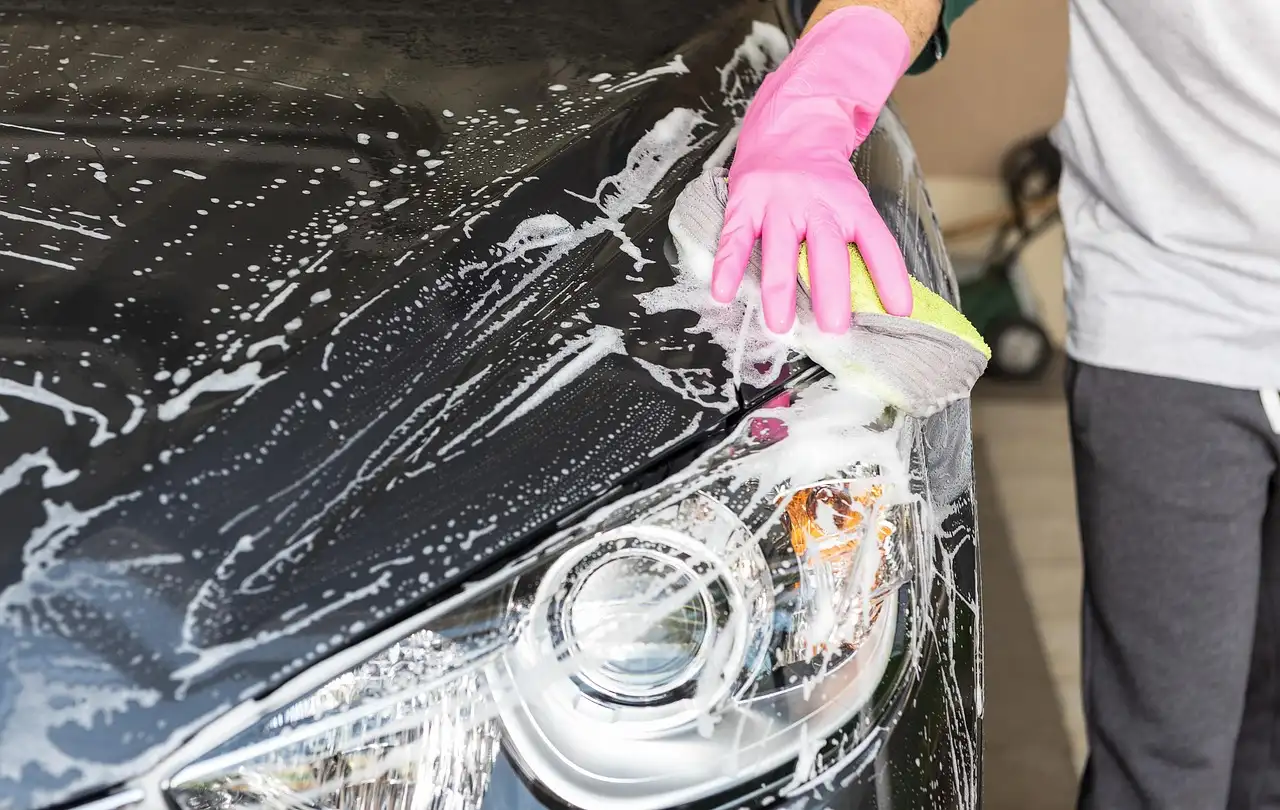
Wash on cool paint, in shade, with a pH-balanced car shampoo and the two-bucket method. Then dry every panel right away with a clean, soft microfiber towel. The goal is to stop evaporation before minerals settle, especially on warm metal, glass, chrome, and textured trim.
- Rinse the surface first. Remove loose grit before touching the paint. A clean pre-rinse lowers the chance of dragging minerals or dirt across the clear coat.
- Wash with shampoo. Use a pH-balanced car shampoo in a two-bucket wash on cool panels. That keeps the wash safe on paint while reducing the chance of adding more residue.
- Dry panel by panel. Use a clean microfiber drying towel immediately after rinsing each section. Do not let water sit on the hood, roof, or mirrors long enough to evaporate.
- Check traps and edges. Wipe around badges, mirror housings, window trim, and chrome accents. These areas often hold water after the main panel looks dry.
- Use a drying aid. If needed, apply a product that can be sprayed on as a drying aid, then wipe before it dries on the surface. That helps reduce drag and spotting during the final pass.
Say your roof is clean but the mirror cap keeps spotting. Dry the mirror first, then move to the larger panel around it. Smaller parts cool and dry faster, so they often need the earliest attention.
What to do first if spots appear after washing
If spots show up right after the wash, treat them as deposits before assuming damage. Try a dedicated water spot remover on the affected area, keep it wet for the label time, and wipe before it dries. If the mark is still rough, move to the next step rather than scrubbing harder.
Can ceramic coating reduce water spots?
Ceramic coating can reduce contamination bonding and improve water behavior, which may make drying easier and may lower spotting risk. It does not make paint spot-proof. Minerals can still dry on the surface, especially on hot panels or when hard water sits too long.
The author recommends protecting paint with a ceramic coating to help prevent hard water spots. Protection helps, but it is not a substitute for quick drying, filtered rinse water, or regular inspection of trim and glass.
What coating can do
A coated surface often sheds water faster, so fewer droplets sit behind after rinsing. That helps during routine washing and short rain exposure. It also buys you more time before minerals bond.
What coating cannot do
Coating cannot fix etched clear coat and it cannot cancel out hard water. If the paint is already marked, you still need the right removal step first. A protection layer goes on after the surface is clean and corrected.
What if the spots have already etched the clear coat?
If a spot feels smooth but remains visible, the minerals may have etched into the clear coat. At that point, cleaning alone will not remove it. You may need polishing, and deeper damage may need professional paint correction because the clear coat only has limited material to work with.
- Inspect under bright light. Wash the panel first, then check the spot from an angle. If it no longer feels gritty but still shows a ring, assume etching.
- Try spot remover first. Use a dedicated water spot remover on paint, glass, chrome, or trim. Do not let it dry on the vehicle, and rinse or wipe off promptly.
- Use clay only for bonded residue. If the mark is fresh and the surface still feels contaminated, a clay bar or synthetic clay mitt can remove bonded material with proper lubrication. It is not a fix for etched spots and may leave light marring if used carelessly.
- Polish if the mark remains. If the spot is still visible after safe cleaning, stop and move to polishing or professional help. More wiping will not restore lost clear coat.
Suppose a white ring on the hood stays visible after wash, spot remover, and a light clay pass, but the panel feels smooth. That is the point to stop cleaning and start thinking about correction. More rubbing can create a bigger repair than the original stain.
Common mistakes
Most repeat spotting problems come from drying too slowly, using the wrong chemical, or treating every mark as if it came from the same source. These mistakes waste time and can make the paint look worse.
- Letting rinse water air-dry on hot paint.
- Using household abrasives or scrub pads on clear coat.
- Relying on vinegar for every spot type.
- Using clay on etched damage instead of bonded contamination.
- Skipping glass, chrome, badges, and mirror housings.
- Applying spot remover and letting it dry on the surface.
A diluted white vinegar solution can help with light, fresh spotting only. Mix about equal parts white vinegar and distilled water, apply it to the affected area, then rinse it off. It may strip wax or other protection, so keep it for limited use.
Frequently asked questions
Why does my car get water spots after washing?
Water spots form when water evaporates and leaves minerals behind. If the panel is warm, evaporation happens faster and leaves more residue behind. Hard water can leave white rings or a powdery haze, especially if the car sits wet after the final rinse.
How do I stop hard water spots on car paint?
Use filtered or deionized rinse water when possible, dry panel by panel, and keep the car out of direct sun. If hard water has already left marks, start with a dedicated water spot remover. If the spot stays visible but feels smooth, switch to polishing.
Can I use vinegar to remove water spots from car paint?
Yes, but only for light, fresh spotting. Use equal parts white vinegar and distilled water, apply briefly, and rinse it off after use because it can strip wax or protectants. Do not rely on vinegar for etched clear coat or stubborn mineral buildup.
Do ceramic coatings prevent water spots?
No. Ceramic coating can reduce bonding and improve how water behaves, which helps during drying and maintenance. It still needs quick drying and clean rinse water. Minerals can still dry on coated paint, glass, trim, and badges if they are left too long.
Is it safe to clay bar water spots off car paint?
Only when the spot is fresh and the problem is bonded contamination rather than etching. Clay bar or a synthetic clay mitt needs good lubrication and can leave light marring if used poorly. It is not the right fix for a spot that feels smooth but remains visible.

Hi, I’m Melvin, an automobile engineer with extensive experience in automobile equipment. I currently work for a local automobile firm, where I specialize in the car parts industry. I’ve had the opportunity to collaborate with seasoned inspectors, gaining invaluable hands-on experience that goes beyond just theory.
My passion for automotive care started at a young age, which led me to create CarSpareCare. Through CarSpareCare, I share the knowledge and skills I’ve acquired over the years to help others navigate the world of car maintenance and repairs.
My goal is to provide practical tutorials, essential safety advice, and the latest industry insights so that anyone—whether a beginner or an expert—can confidently tackle their automotive projects.

