If a car battery reads around 12.6 volts fully charged, around 12.4 volts partly charged, and under 12.0 volts discharged, it is often considered discharged; if it cannot hold a charge after charging, it may be bad. Misreading the cause can leave you stranded, waste money on the wrong part, or hide an alternator problem. This guide shows the checks that separate a weak battery, a failed battery, and a charging-system fault.
Common signs of battery trouble


Start with the symptom, then match it to a quick test. Slow cranking, rapid clicking, dim lights, and a battery warning light can all point to battery trouble, but the same clues can also come from loose terminals, a weak alternator, a starter problem, or a parasitic draw that drains the battery while the car sits.
Slow cranking and no-start behavior
Slow engine cranking means the starter turns sluggishly instead of firing quickly. It is one of the earliest signs of battery trouble, but corroded terminals and starter issues can create the same feeling.
Rapid clicking and weak starter response
Rapid clicking often means the battery cannot supply enough current for the starter, or the connection is poor. One click usually points more toward a starter or connection issue than a flat battery, but the full test sequence matters.
Dim headlights and dash lights
Dim headlights with the engine off, or lights that fade at idle, often point to low battery output or a charging problem. If the headlights brighten when you rev the engine, the charging system may be straining.
Battery warning light
The battery warning light on the dash is tied to charging-system faults. It can point to the alternator, wiring, a loose cable, or the battery itself, so it should be checked promptly rather than ignored.
Corrosion and loose terminals
Whitish or greenish buildup on the battery terminals can increase resistance. Loose, dirty, or corroded connections can look like a dead battery even when the battery itself is still usable.
Swollen or leaking case
A swollen or leaking battery case signals overheating or internal damage. That battery needs replacement, and it should be handled carefully because a damaged case can be unsafe.
Bad battery or just dead?
The fastest way to separate a dead battery from a bad one is to check voltage in three states: at rest, during cranking, and with the engine running. A healthy resting battery should be about 12.6 volts, a weak one around 12.4 volts, and 12.0 volts or below is nearly flat. Cranking voltage should generally stay above 9.6 volts.
-
Check resting voltage.
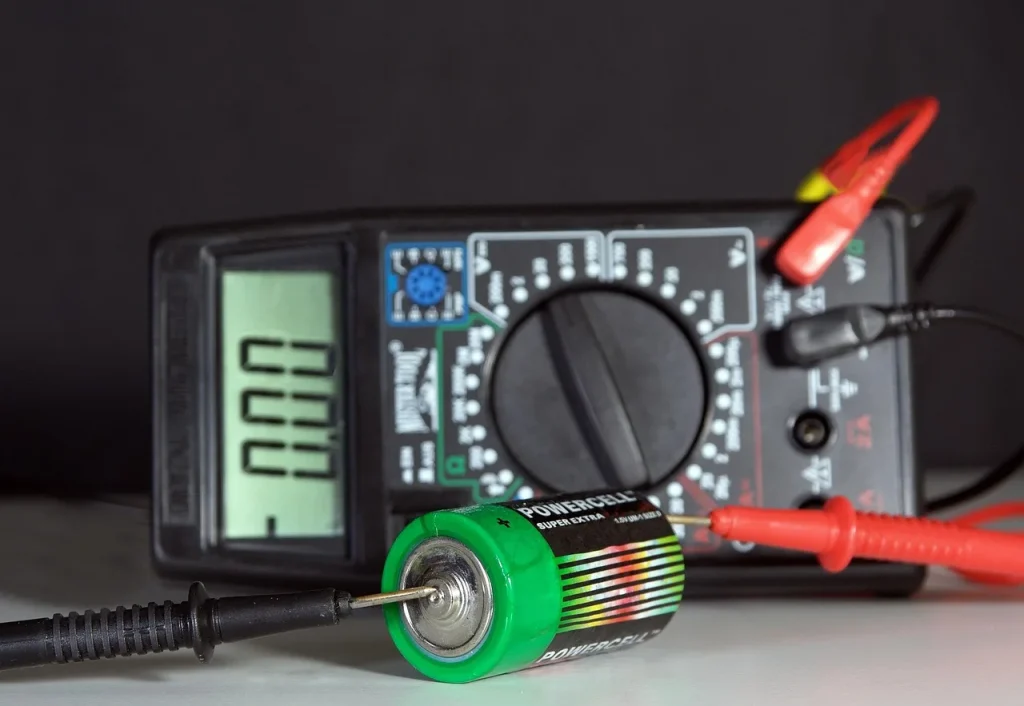
Turn the car off, let it sit long enough for surface charge to settle, then measure across the battery posts with a multimeter. Around 12.6 volts points to a healthy charge, while 12.4 volts suggests weakness and 12.0 volts or below means the battery is nearly flat. -
Watch voltage while cranking.
Have someone start the car while you watch the meter. If cranking voltage sags well below 9.6 volts, the battery may be failing chemically or cannot support the starter load. -
Measure running voltage.
With the engine running, check the charging system at the battery. A healthy system usually reads 13.7 to 14.7 volts, which shows the alternator is charging the battery after startup. -
Match the pattern.
A low resting reading that improves after charging suggests the battery may just be discharged. A battery that charges, starts the car, then quickly drops again is more likely bad or being drained by another fault.
Say your car sits for three days and then cranks slowly. If the battery reads 12.1 volts at rest, jumps to 12.6 volts after charging, and then falls flat again overnight, the battery may be old or a parasitic draw may be present. The voltage pattern matters more than one reading.
How to check battery voltage at home
You do not need a shop visit to separate the first clues. A simple multimeter can tell you whether the battery is low, whether cranking voltage collapses, and whether the alternator is charging within the 13.7 to 14.7 volt window.
-
Set up the meter.
Use a digital multimeter on DC volts, then place the probes on the positive and negative battery posts. Touch the posts themselves, not the cable clamps, so corrosion on the connection does not distort the reading. -
Read the car off.
Record the resting voltage first. A reading near 12.6 volts is normal for a healthy, fully charged 12-volt battery, while 12.4 volts is weak and 12.0 volts or below is nearly flat. -
Read during cranking.
Keep the meter on the battery and start the engine. If the voltage falls well below 9.6 volts, the battery may be unable to deliver enough current under load. -
Read with engine running.
Start the car and check again at idle, then switch on headlights and the blower if needed. A healthy charging system should stay in the 13.7 to 14.7 volt range; a lower reading can point to undercharging.
A common first-timer mistake is treating one good reading as the whole answer. A battery can show 12.6 volts at rest and still fail under load, and an alternator can mask a weak battery by keeping the car running once it starts.
How can you tell if the problem is the battery or the alternator?
Check the battery first, then the charging system. If the engine starts with a jump but dies again after a short drive, or if the battery light comes on after startup, the alternator or wiring may be involved. Low running voltage is the key clue.
Battery light on after starting
If the warning light stays on after the engine starts, do not assume the battery is the only problem. That light can indicate alternator, wiring, loose cable, or battery issues, and it should be checked promptly.
Lights brighten when you rev the engine
If headlights are dim at idle and brighten when you raise engine speed, the charging system may be struggling to keep up. That can happen with a weak alternator, poor wiring, or a battery that is forcing the system to work harder than normal.
Low running voltage
Measure voltage with the engine running. If the reading stays below the 13.7 to 14.7 volt window, the alternator may be undercharging. If the battery still cannot hold a charge after the charging system is repaired, the battery may also need replacement.
Why does the battery keep dying?
A battery that keeps going flat is often being drained, not simply worn out. Parasitic current draw can flatten a healthy battery overnight, and short trips can leave the battery undercharged. Heat, cold, and repeated jump-starts also shorten service life.
Parasitic current draw
Something may be staying on after the car is off, such as a module, light, relay, or accessory. That drain can empty a good battery overnight, so repeated dead starts do not always mean the battery is the root cause.
Short trips and infrequent driving
Frequent short drives do not always give the alternator enough time to restore the battery after startup. If the car sits for days and then only makes brief trips, the battery may never return to full charge.
Cold weather and heat damage
Cold weather reduces available cranking power, while heat speeds internal wear. Both conditions shorten battery life, especially on batteries already near the end of their service window.
Repeated jump-starts
A battery that repeatedly needs jump-starts or recharging may be beyond recovery. If it starts only with outside help and then fails again after charging, the plates may no longer hold enough charge to be useful.
When should you replace the battery?
Replace the battery when the case is swollen, leaking, damaged, or when testing shows it cannot hold charge after a proper recharge. Age matters too: many 12-volt batteries last three to five years, and Les Schwab says the average 12-volt battery can last three years.
Age and service life
A battery older than about three years deserves closer attention, especially in hot or cold climates. Age alone does not prove failure, but it raises the odds that the battery is nearing the end of its service life.
AGM and stop-start batteries
Vehicles with AGM or stop-start systems may need the correct replacement type. Some vehicles also need battery registration after replacement so the charging system can manage the new battery correctly.
Swollen, leaking, or damaged cases
A swollen or leaking battery case is not a recharge candidate. Handle it carefully, keep sparks and heat away, and replace it rather than trying to recover it.
Battery diagnosis table
| Symptom | Quick home test | Likely cause | Next action |
|---|---|---|---|
| Slow crank after sitting | Yes: battery reads near 12.0 volts or below after resting; no: voltage stays near 12.6 volts | Discharged battery, aging battery, or loose connection | Recharge first, then retest; clean terminals if voltage jumps after wiggling cables |
| Rapid clicking | Yes: lights stay weak and the starter chatters; no: one solid click only | Low battery output or poor connection | Clean and tighten terminals, then retest battery voltage and cranking voltage |
| Dim headlights | Yes: lights are dim with engine off or at idle; no: lights stay bright | Weak battery or charging-system strain | Check resting voltage and running voltage; test alternator if lights brighten with revs |
| Starts after a jump | Yes: engine starts with external help; no: it still will not start | Battery may be discharged, but alternator or starter may also be involved | Do not assume the battery is good; recharge and test, then check charging voltage |
| Dies again after short drive | Yes: it runs briefly, then restarts poorly or not at all; no: it keeps starting normally | Undercharging, alternator fault, or parasitic draw | Measure running voltage and look for drain; test the alternator under electrical load |
| Corrosion present | Yes: whitish or greenish buildup on terminals; no: clean, tight terminals | High resistance at the connection | Clean terminals, tighten clamps, then repeat the voltage test before replacing parts |
| Battery light on | Yes: light stays on after starting; no: light goes out normally | Charging-system fault, wiring issue, loose cable, or battery problem | Check charging voltage promptly and inspect cables and alternator output |
| Swollen case | Yes: case is bulged, cracked, or leaking; no: case is flat and dry | Internal damage or overheating | Replace battery now and handle it carefully |
Frequently asked questions
How do you know if your car battery is going dead?
A battery that is going dead often gives early warning signs: slow cranking, dim lights, and weak starts after sitting. A healthy resting battery is about 12.6 volts, while 12.4 volts is weak and 12.0 volts or below is nearly flat. Recheck after charging to see if it holds.
How do you know when you have a dead car battery?
A dead battery usually will not crank the engine or will only click weakly. If the car starts with a jump but fails again soon after, the battery may be discharged or failing. Cranking voltage that drops well below 9.6 volts is a strong warning sign.
How long does a car battery last before it dies?
Many batteries last three to five years, and Les Schwab says the average 12-volt battery can last three years. Heat, cold, short trips, and undercharging can shorten that life. Age matters, but a younger battery can still fail and an older one can still test okay.
How do you tell if you have a bad battery?
Look for a battery that will charge but cannot hold charge, cranks poorly even after a full charge, or fails a load test. Swollen or leaking cases are clear replacement signs. If the running voltage is normal but the battery still dies quickly, a parasitic draw may be involved.
What happens when you have a bad car battery?
A bad battery can cause slow cranking, clicking, dim lights, repeated jump-starts, and no-starts. It can also hide a charging problem or make the starter work harder than it should. If the battery case is swollen or leaking, replace it and handle it carefully.
Can a dead battery just need a recharge instead of replacement?
Yes, if the battery was simply discharged and still holds charge after recharging. A battery that returns to normal voltage and starts the car reliably may be fine. If it drops back to 12.0 volts or below quickly, or fails under cranking load, replacement is more likely.

Hi, I’m Melvin, an automobile engineer with extensive experience in automobile equipment. I currently work for a local automobile firm, where I specialize in the car parts industry. I’ve had the opportunity to collaborate with seasoned inspectors, gaining invaluable hands-on experience that goes beyond just theory.
My passion for automotive care started at a young age, which led me to create CarSpareCare. Through CarSpareCare, I share the knowledge and skills I’ve acquired over the years to help others navigate the world of car maintenance and repairs.
My goal is to provide practical tutorials, essential safety advice, and the latest industry insights so that anyone—whether a beginner or an expert—can confidently tackle their automotive projects.