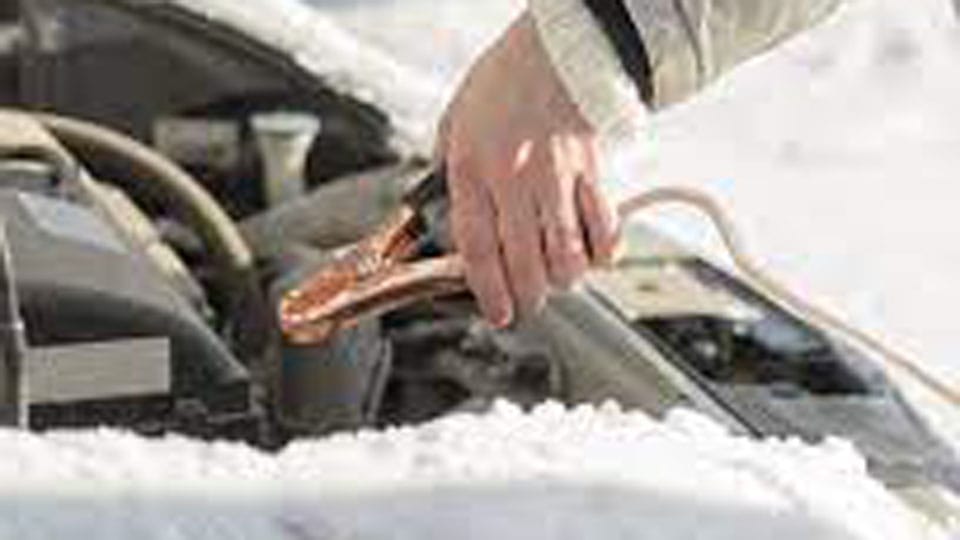
Take a dead 12-volt car battery to a battery retailer, parts store, scrapyard, or civic recycling site; if it leaks, cracks, or is swollen, keep it upright and call ahead before moving it. I have seen acid eat through a boot liner in minutes, and a dropped battery can split open on impact. Mishandling can spill sulfuric acid, burn skin, corrode your car, and leave you with a disposal fine. This guide shows how to choose the safest legal route, pack and transport the battery, and find local acceptance.
What you’ll need before you move the battery
- Gloves and eye protection
- Electrical tape or terminal covers for the posts
- A storage container or tray that keeps the battery upright
- Cardboard, plastic, or another secondary containment layer
- A cargo area that stays flat and does not let the battery slide
- Your local waste rules or the drop-off site’s acceptance policy
- The battery type and condition confirmed before transport
How to dispose of or recycle a car battery
Start by identifying the battery, then match the route to its condition. A lead-acid car battery is not household trash and should stay upright during storage and transport. Check your city or county rules before moving it, because state and municipal rules can change acceptance, fees, and transport requirements.
Step 1: Identify the battery type and condition
- Confirm that it is a lead-acid car battery, often the common 12-volt starter battery type.
- Inspect the case for leaks, swelling, cracks, corrosion, frost damage, or a damaged top.
- Treat any unknown battery type as separate from a lead-acid car battery until a site confirms acceptance.
Use an auto parts retailer or battery recycling facility for an intact used battery when they accept it. Use a hazardous waste collection site for a leaking, swollen, cracked, or corroded battery. If the battery is old but intact, the route is usually simpler and lower risk.
Step 2: Prepare the battery for transport
- Keep the battery upright and stable in a storage container or tray.
- Cover the terminals with tape so metal tools or other batteries cannot bridge the posts.
- Place the container in cardboard or plastic secondary containment.
- Keep the battery away from heat, loose tools, and passenger space.
A dead battery still can hold charge, so transport should assume electrical and acid risk. Batteries should be stored carefully before disposal. I treat a flat battery the same way I treat one that still starts a car, because both can short or spill if they tip.
Step 3: Choose the best drop-off route
- Take an intact battery to an auto parts retailer, battery recycling facility, or other approved drop-off site.
- Use a hazardous waste collection site if the case leaks, bulges, cracks, or shows heavy corrosion.
- Call the site first if the battery type is unknown or the site’s rules are unclear.
- Bring photo ID, the battery, and proof of local acceptance if the site requires it.
When a retailer accepts the battery, the return can follow two different paths. A core-charge return may pay you or cancel a deposit. Free recycling drop-off usually means no cash back, just proper disposal. Acceptance and payment can differ by chain, store, and battery condition.

One-page disposal decision checklist
| Battery condition | What to bring | Where to take it | Choose hazardous waste when |
|---|---|---|---|
| Intact lead-acid car battery | Gloves, tape on terminals, upright tray, local acceptance note | Auto parts retailer or battery recycling facility | The retailer refuses the battery, or local rules require another route |
| Leaking, cracked, swollen, corroded, or frozen battery | Gloves, eye protection, taped terminals, rigid secondary containment | Hazardous waste collection site | There is any acid leak, case damage, or visible corrosion |
| Unknown battery type | Battery photo, dimensions, labels, and site contact info | Call a local waste site or recycling center first | When you cannot confirm whether it is lead-acid or another chemistry |
Where can I recycle an old car battery near me?
Look first to an auto parts retailer, battery recycling facility, or hazardous waste collection site. Local waste regulations affect the answer, because state and municipal rules can change who may accept the battery and how it must be packaged. A call ahead prevents a wasted trip.
Auto parts retailer drop-off
Auto parts retailers may accept used car batteries, including chain stores such as AutoZone or Home Depot in some locations. Some retailers accept dead batteries for recycling at no charge. Others only accept batteries tied to a core return, so ask whether the store wants the old battery with a receipt or return code.
Battery recycling facility
A battery recycling facility is the cleanest option for a normal, intact lead-acid battery. These sites keep heavy metals out of landfill and incinerator streams. Some are municipal, some are private, and some accept only certain battery types or business accounts.
Hazardous waste collection site
A hazardous waste collection site is the safer route for damaged or contaminated batteries. That matters when acid leak or corrosion risk is present. If the battery case is compromised, do not assume a retail counter will accept it.
What do I do if a car battery is leaking acid?
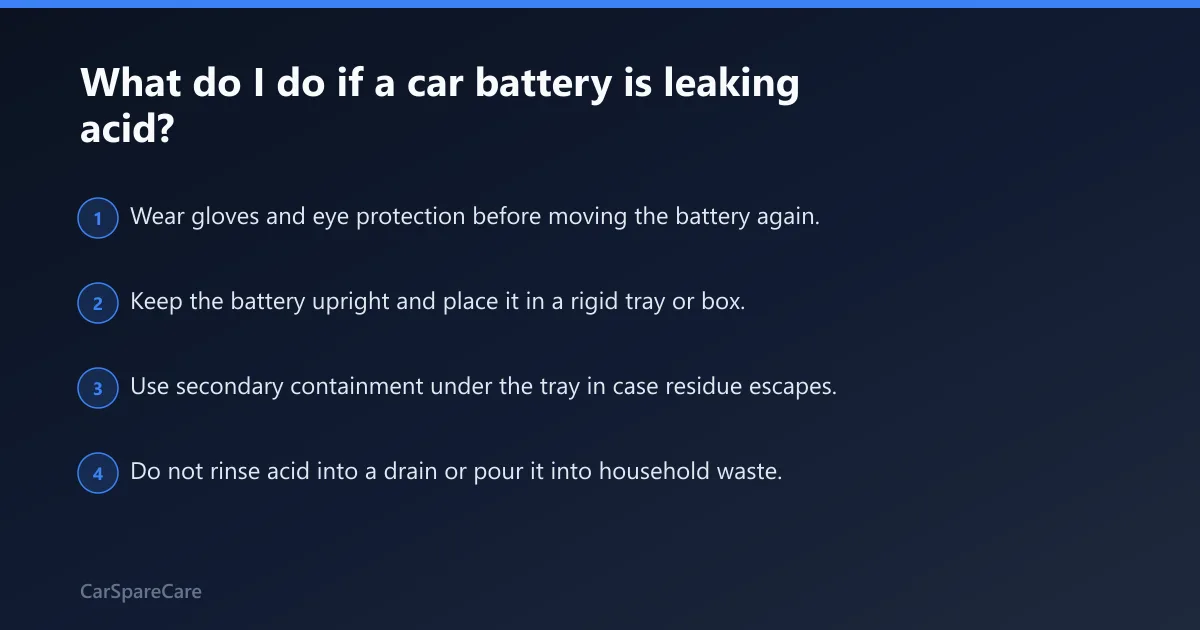
Stop handling it like a normal used battery and switch to hazardous waste handling. A leaking battery should stay upright, kept isolated, and transported outside the car cabin if possible. Call the drop-off site first, because many retail counters will refuse damaged batteries even when they accept intact ones.
How to contain a damaged battery before transport
- Wear gloves and eye protection before moving the battery again.
- Keep the battery upright and place it in a rigid tray or box.
- Use secondary containment under the tray in case residue escapes.
- Do not rinse acid into a drain or pour it into household waste.
If the leak is active, the case is cracked, or white-green corrosion is spreading, stop and call the local site first. That route is safer than guessing. Some facilities will give specific drop-off instructions or direct you to a hazardous waste appointment.
Can I throw a car battery in the trash?
No. Car batteries can’t be thrown in the trash, and they also can’t go in regular recycling. Batteries can create environmental hazards if landfilled or incinerated. Lead-acid batteries need special handling, so check local rules and use an accepted drop-off path instead. (wikihow.com)
Why trash disposal is the wrong route
Lead acid can leak if the case breaks, and the metals inside belong in a controlled recycling stream. Household bins and curbside carts are not built for that job. If a local rule seems to allow disposal, verify it directly with the municipality before moving the battery.
Do auto parts stores take old car batteries?
Often, yes. Auto parts retailers may accept used car batteries, but the answer depends on the store and the battery condition. Some locations take only intact lead-acid batteries. Others offer a core return program, while some provide free recycling drop-off with no payment.
What to ask before you drive over
- Do you accept dead lead-acid car batteries?
- Do you require a core return, receipt, or ID?
- Will you take a battery with corrosion or minor leakage?
- Do you want the battery upright in a tray?
Do not assume every chain store follows the same rules. A location that accepts a normal starter battery may refuse one with a swollen case or leaking terminals. Call the specific store, not the brand name.
Should I store a dead car battery before recycling it?
Yes. Store it upright, protected from leaks, and away from metal tools until you can move it. Batteries should be stored carefully before disposal, especially if the battery is old, partially charged, or dirty around the posts. A dead battery can still shock or short if handled carelessly.
Safe short-term storage
- Place the battery on a flat surface in a plastic tray or rigid box.
- Keep the terminals taped or capped.
- Store it in a cool, dry place away from children and pets.
- Move it only when the drop-off site is ready to accept it.
If the battery is freezing, bulging, or damp around the case, skip normal storage and move straight to a hazardous waste option or site guidance. Damaged batteries should not sit loose in a garage.
Are car batteries hazardous waste?
They can be handled as hazardous waste when damaged, leaking, or otherwise unsafe to transport normally. A lead-acid car battery may still be regulated in many places because it contains hazardous materials. The route depends on condition, site acceptance, and local waste rules.
Lead-acid batteries are not the same as other rechargeable batteries
Do not mix a car battery with rechargeable battery chemistry like nickel-cadmium. Those batteries may need approved drop-off routes that differ from lead-acid car batteries. A site that accepts one type may refuse the other, so confirm chemistry before you carry it in.
Can I get paid for returning a used car battery?
Sometimes. Free recycling drop-off usually does not pay cash, though a core-charge return may give money back or reduce a fee. Payment depends on the retailer, the battery type, and whether the battery is intact enough to accept. Ask about the return terms before you leave home.
When payment is most likely
- You bought a replacement battery and still have the core charge paperwork.
- The retailer has a stated return program for used lead-acid batteries.
- The battery is intact and matches the store’s accepted type.
If the battery is damaged, pay less attention to cash and more to route. Hazardous waste collection may be the correct answer even when no payment is offered.
Common mistakes
These are the errors that create leaks, refusals, or fines. Most problems come from treating every battery the same. The safe route depends on condition, chemistry, and local acceptance.
- Throwing the battery in household trash or a curbside bin.
- Mixing a lead-acid car battery with household recyclables.
- Transporting it loose in a trunk or back seat.
- Skipping the call-ahead step on retailer acceptance.
- Handling a leaking battery like an intact one.
- Forgetting that a dead battery can still hold charge.
- Using the wrong drop-off route for nickel-cadmium or other rechargeable batteries.
Prevention: Keep the old battery in a taped, upright tray the moment it comes out of the car, then confirm the drop-off site before the same day’s transport.
Frequently asked questions
How do I dispose of a car battery safely?
Confirm that it is a lead-acid car battery, tape the terminals, keep it upright in a tray, and take it to an accepted drop-off point. Use an auto parts retailer or recycling facility for intact batteries, and switch to hazardous waste handling if the case is damaged or leaking.

Hi, I’m Melvin, an automobile engineer with extensive experience in automobile equipment. I currently work for a local automobile firm, where I specialize in the car parts industry. I’ve had the opportunity to collaborate with seasoned inspectors, gaining invaluable hands-on experience that goes beyond just theory.
My passion for automotive care started at a young age, which led me to create CarSpareCare. Through CarSpareCare, I share the knowledge and skills I’ve acquired over the years to help others navigate the world of car maintenance and repairs.
My goal is to provide practical tutorials, essential safety advice, and the latest industry insights so that anyone—whether a beginner or an expert—can confidently tackle their automotive projects.