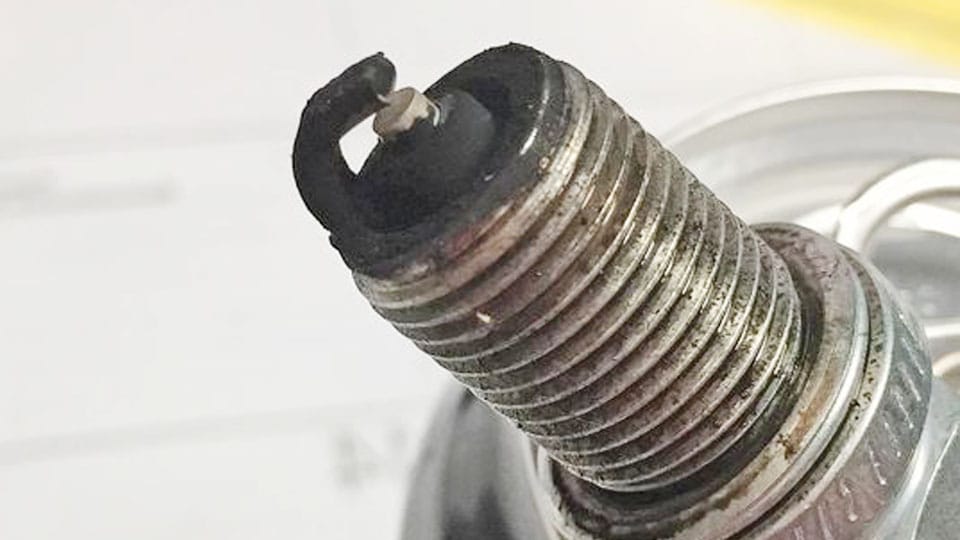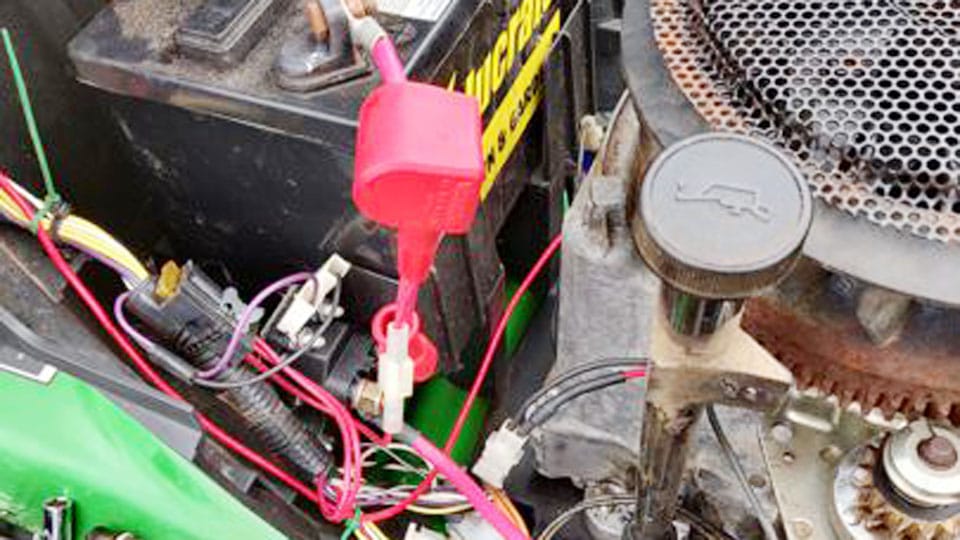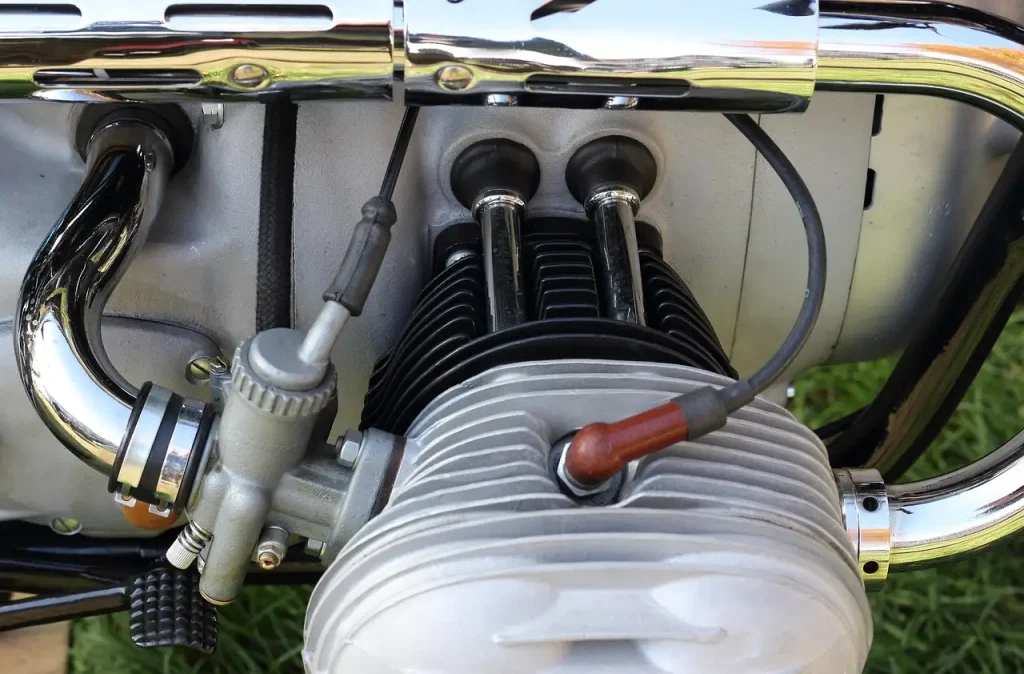
Replace spark plug wires with spark plugs only if the wires are old, cracked, swollen, oil-soaked, or tied to a misfire; otherwise inspect them first and leave them alone. Bad wires can waste money on plugs that will not fix the fault and keep the misfire alive. This guide shows the signs, the test order, and when wire replacement makes sense during spark plug service.
Do you even have spark plug wires?
The answer depends on the ignition layout. Older distributor-based engines typically use long plug wires that carry high-voltage current from the ignition coil to the spark plugs. Many modern engines use coil-on-plug systems instead, where short boots sit on each plug and there may be no long wire set to replace. (Wikipedia)
Older distributor-based engines with wire sets
If your engine has a distributor or a remote coil feeding several cylinders through long leads, you likely have spark plug wires. Those wires wear from heat, vibration, and contamination. As insulation ages and cracks, resistance can climb enough to trigger misfires.
Coil-on-plug engines and short boots
Coil-on-plug layouts usually put an ignition coil directly above each plug. In that setup, the service part is often the boot, not a long wire. That changes the decision completely: there may be no wire set to replace when you change plugs.
Why the ignition layout changes the answer
Do not assume plug service always includes wires. If the vehicle uses coil-on-plug, the right question is whether the boots, coils, plugs, or routing are worn. On older wire-equipped engines, the question is whether the wire set still passes a visual check and a basic ignition test.
Spark wire decision matrix
Use this table to separate three decisions: replace now, inspect first, or leave them alone. The best choice depends on vehicle type, age, visible condition, and symptom pattern. Mileage alone is not enough if the wires are visibly healthy, and a symptom alone is not enough if the fault points elsewhere.
| Vehicle type | Wire age/mileage | Visible damage | Symptom pattern | Recommended action |
|---|---|---|---|---|
| Older distributor-based car | Over 60,000 miles | Cracking and hardening | Rough idle and stumble | Replace wires now with plugs |
| Older truck with long wire set | More than five years old | Corrosion at terminals | Hard starting in damp weather | Replace wires now |
| High-mileage daily driver | 60,000 to 100,000 miles | Fading insulation | Hesitation during acceleration | Inspect first, then replace if faults appear |
| Recent wire replacement | Under 30,000 miles | No damage found | New plugs did not fix a miss | Leave wires alone; inspect coil and plug gap |
| Modern coil-on-plug engine | No long wire set | Boot wear only | Single-cylinder misfire | Inspect boot and coil, not plug wires |
| Plug-only service case | Recent wire replacement within 30,000 miles | Boots intact | No symptoms | Replace plugs only |
| Vehicle with oil leaks on valve cover | Any age | Oil-soaked boots or wires | Misfire after rain or wash | Replace damaged parts and fix the leak source |
| Engine with persistent misfire after plug change | Unknown or mixed history | No visible wire damage | Same misfire code remains | Inspect coil, wires, routing, and plug gap first |
When should spark plug wires be replaced?
Replace wires when age, mileage, or condition points to wear. Many manufacturers recommend inspecting wires every 30,000 miles. Some guides cite wire lifespan of 60,000 to 100,000 miles, and one guide recommends replacing wires if they are over 60,000 miles or more than five years old.
Heat age and mileage clues
Heat is a major enemy. Repeated engine-bay heat can harden the insulation, and age can make the jacket brittle. If the set is old enough that removal risks cracking insulation or damaged boots, replacement during spark plug service is often the cleaner choice.
Visible damage and arcing marks
Look for cracks, faded insulation, melted insulation, burn marks, corrosion, and arcing marks. Spark plug wires can also fail at the boots, where moisture and dirt collect. A wire that looks scuffed but still passes inspection may only need cleaning and re-routing.
Misfire patterns that point to wires
Misfires, rough idling, hesitation, or stumble during acceleration are warning signs. Hard starting can also point to worn spark plug wires, especially in damp or cold conditions. If those symptoms show up after rain or under load, the wire set deserves close inspection before any part swap.
Say your 1998 sedan has a distributor and 84,000 miles on the original wire set. The engine starts missing at idle after a wet morning, and one boot shows a carbon track. That is a replace-now case, because the symptom pattern and visible damage both point at the wires.
Should you replace plugs and wires together?
Sometimes yes, but not always. Replacing plugs and wires together can save labor when the wire set is already old or damaged. If the wires are recent, intact, and not part of the fault, plug-only service is the smarter buy.
When the wire set is old enough to justify both
If the wire set is near the upper end of its service life, replacing both parts together can avoid repeat labor. That is most useful on engines where plug access is time-consuming. A fresh plug in an old wire set can still miss if the insulation is weak or a boot is leaking spark.
When plug service alone is the smarter buy
Recent wire replacement within 30,000 miles can justify replacing plugs only. That keeps cost down when the wires have already been addressed and the symptom points to worn plugs instead. Worn spark plugs can cause misfires, poor fuel economy, and hard starts even when the wires are fine.
How labor time affects the decision
If the same access work has to be done either way, the labor savings from doing both parts at once can be real. But the savings only matter when the wire set actually needs it. Avoid replacing good wires just because the plugs are out.
How do you tell wires are bad?
Start with a visual check, then use a multimeter or spark tester if the diagnosis is unclear. Spark plug wires should pass the eye test, the resistance check, and the symptom check. If they fail any of those, replacement becomes more defensible than guesswork.
Visual inspection for cracks, burns, and corrosion
Inspect each wire for cracks, burns, corrosion, boot damage, and arcing marks. Look closely at both ends. Damage near the boot often matters as much as damage in the middle of the lead, because that is where the spark can leak under load.
Multimeter resistance checks
A multimeter helps measure wire resistance and spot excessive resistance or leakage. Compare the reading across matching cylinders or against the vehicle specification if one is listed. A wire that measures far outside the others deserves replacement, even if it still looks acceptable from the outside.
Spark tester checks for weak or inconsistent spark
A spark tester checks whether the ignition system is producing strong spark. That matters because the problem may not be the wire at all. If the spark is weak or inconsistent, the ignition coil, the boot, the plug gap, or the routing may be the real source.
What else can cause the same symptoms?
Bad wires are only one possible cause of a misfire. The ignition coil can cause the same symptoms as bad wires or plugs, and worn spark plugs can also do it. Boot problems, damaged routing, or incorrect plug gap can leave you chasing the wrong part.
Ignition coil faults
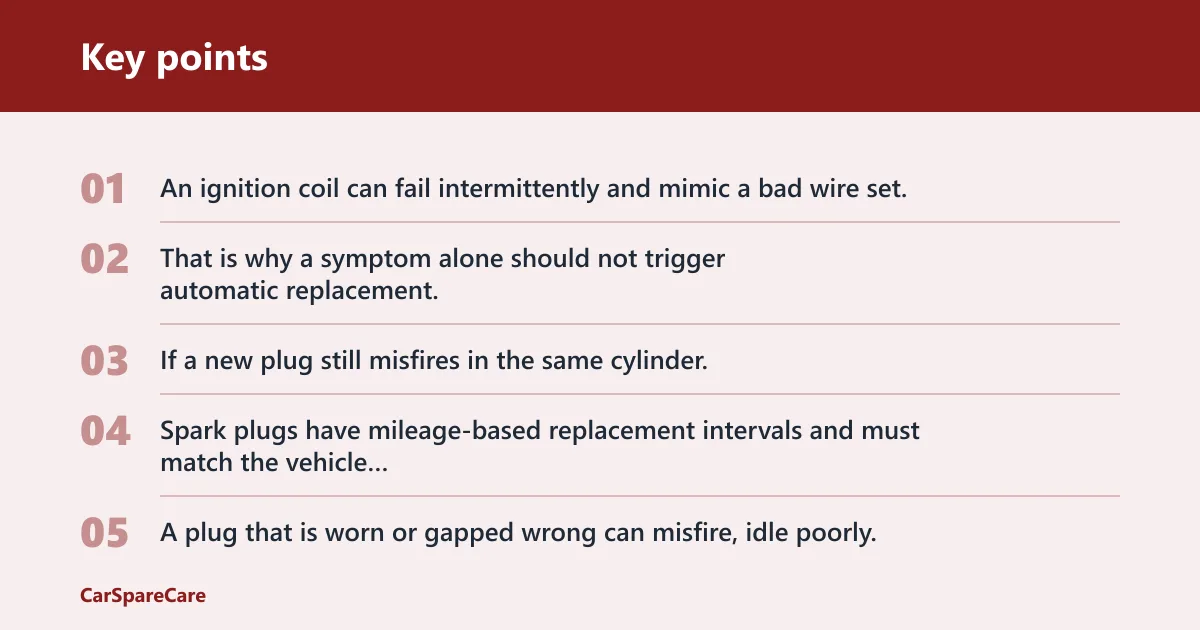
An ignition coil can fail intermittently and mimic a bad wire set. That is why a symptom alone should not trigger automatic replacement. If a new plug still misfires in the same cylinder, inspect the coil and the path between coil and plug before buying more parts.
Worn plugs or incorrect gap
Spark plugs have mileage-based replacement intervals and must match the vehicle specification and gap. A plug that is worn or gapped wrong can misfire, idle poorly, and start hard even with good wires. Always check the plug spec before assuming the wire is the problem.
Routing and boot problems
Crossed routing, damaged separators, and loose boots can all create new problems after service. If a wire is routed too close to a hot exhaust part, heat damage can return fast. A boot that is not seated fully can leak spark and mimic a failed wire.
Suppose a compact car with coil-on-plug ignition gets new plugs, then still misfires on one cylinder. A vehicle with coil-on-plug ignition may have no long wire set at all. In that case, the better next step is coil and boot inspection, not another parts swap.
Replacing spark plugs and wires correctly
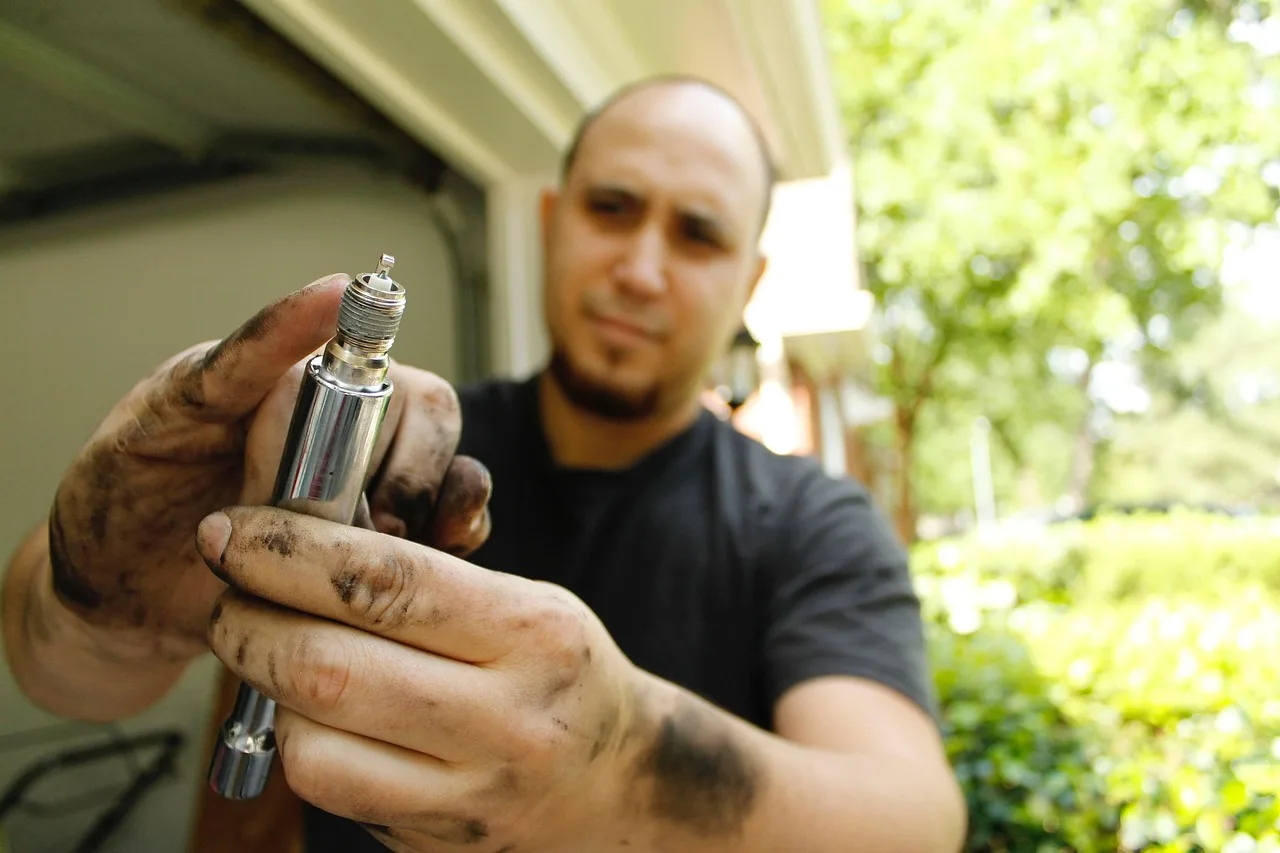
Use the owner’s manual first. It is the best source for vehicle-specific replacement intervals and ignition guidance. Then install the correct plugs and wire or boot parts, because matching the wrong plug heat range or gap can create a new misfire.
Use the owner manual for the right parts and interval
The owner’s manual should guide both interval and part choice. It can also tell you whether the engine uses long wires, short boots, or coil-on-plug ignition. That matters more than a generic mileage rule taken from a different engine family.
Apply dielectric grease to boots where specified
Dielectric grease is recommended for boot installation. Use it on the boot interior where the service procedure calls for it, since it helps seal the connection and makes later removal easier. Do not smear it on contact surfaces unless the procedure specifically says to do so.
Keep wire routing and separation correct
When a wire set is reused or replaced, keep the routing correct and separate from hot or moving parts. Pull old wires from the boot, not the wire, during removal. A practical DIY workflow also includes disconnecting the battery before replacement.
- Check the owner’s manual for the correct plug type, gap, and any ignition service notes.
- Inspect each wire or boot for cracking, burns, corrosion, arcing, and boot damage.
- If symptoms remain, test spark quality with a spark tester.
- Use a multimeter to compare wire resistance when the vehicle uses long wires.
- Replace only the parts that show wear, unless the wire set is old enough that both jobs make sense together.
- Install new parts carefully, use dielectric grease on boots where specified, and keep routing clear of heat.
Frequently asked questions
Should you replace spark plug wires with spark plugs?
Only if the wires are worn, damaged, or linked to a misfire. If they pass inspection and are within a sensible service window, leave them alone and spend the money on the part that actually needs it. Plug-only service is often the better choice on recent wire sets.
Do you need to replace spark plug wires with spark plugs?
No. You do not need to replace wires every time you change plugs. Check the wire set first, especially for cracking, hardening, corrosion, arcing, or oil damage. Replace them together only when the wire condition or mileage makes that a better value.
Can you change spark plug wires without changing spark plugs?
Yes, if the plugs are still within spec and not near their service limit. That can make sense when the wires are failing but the plugs were replaced recently. Just confirm the plug gap and condition so a worn plug does not keep the misfire going.
Do you have to replace spark plug wires when changing spark plugs?
No, not automatically. The right decision depends on age, mileage, condition, and symptoms. A good wire set can stay in service, especially on engines where the plugs are due sooner than the wires. Replace only what inspection and diagnosis support.
How do you know if spark plug wires are bad?
Look for rough idle, hesitation, stumble during acceleration, or hard starting, then inspect the wire set for visual damage. A multimeter can reveal excessive resistance, and a spark tester can confirm whether the ignition system is producing strong spark. If those checks fail, the wires are suspect.

Hi, I’m Melvin, an automobile engineer with extensive experience in automobile equipment. I currently work for a local automobile firm, where I specialize in the car parts industry. I’ve had the opportunity to collaborate with seasoned inspectors, gaining invaluable hands-on experience that goes beyond just theory.
My passion for automotive care started at a young age, which led me to create CarSpareCare. Through CarSpareCare, I share the knowledge and skills I’ve acquired over the years to help others navigate the world of car maintenance and repairs.
My goal is to provide practical tutorials, essential safety advice, and the latest industry insights so that anyone—whether a beginner or an expert—can confidently tackle their automotive projects.