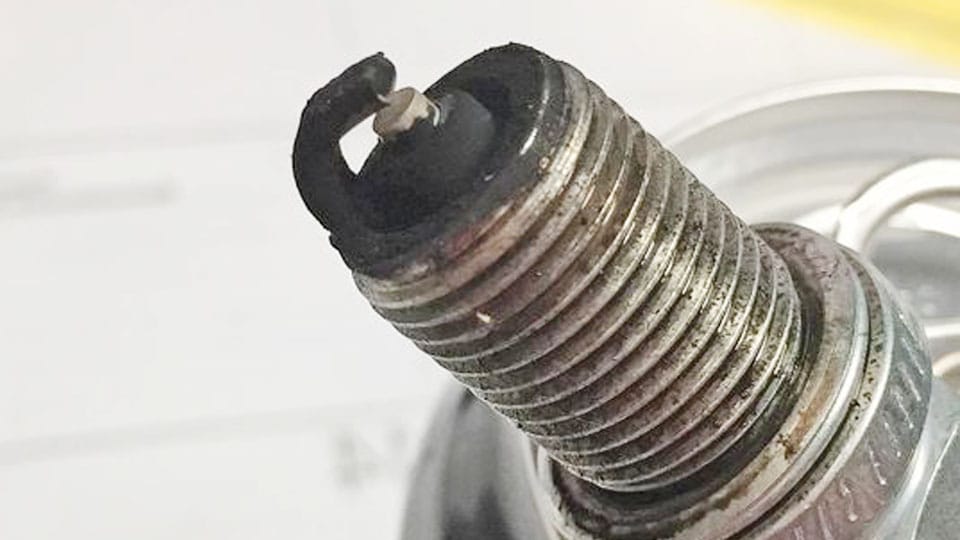
Store spare spark plugs in the original box or a sealed individual bag, dry and clean, with the gap protected and the threaded end capped or wrapped; if the plug comes with a manufacturer thread protector, leave it in place until installation. Replace any plug with visible corrosion, dirt, or bent electrodes. Poor storage can corrode the shell, dirty the insulator nose, and damage threads or the preset gap, which leads to misfires and hard starting. If kept dry and protected, spark plugs can be stored for a long time, but they should still be inspected before use rather than assumed good indefinitely. This guide covers how to clean, package, label, and store spare spark plugs so they stay ready to install.
Spark plug storage checklist
Use this checklist before a plug goes back on the shelf. The aim is simple: keep the firing end, threads, and gap unchanged until installation. That means separate storage, dry packaging, and a clear keep-or-discard call based on visible condition.
| Plug condition | Packaging state | Moisture risk | Thread protection | Gap verified | Label added | Discard decision |
|---|---|---|---|---|---|---|
| New-in-box plug | Factory box intact | Low if box stays dry and closed | Yes, if box keeps the threads isolated | Not usually needed until install, unless box has been opened or handled | Yes, if moved from the original carton or mixed with other plugs | Keep if shell, insulator, and electrodes are clean and undamaged |
| Cleaned reusable plug | Individual slot or sealed bag | Moderate unless fully dried and boxed with a desiccant packet | Yes, with a cap, sleeve, or separate compartment | Yes, after cleaning and again before reinstalling if it sat for months | Yes, by cylinder, engine, and part number | Keep only if electrodes, ceramic, and threads are sound |
| Plug removed from a fouled engine | Loose or contaminated packaging | High if oil, carbon, or rust is present | Only after proper cleaning and full drying | Yes, but only after inspection and cleaning if reuse is still plausible | Yes, with source cylinder and fault note | Discard if the insulator is cracked, the electrode is bent, or the threads are damaged |
How should you store spare spark plugs?
Store spark plugs dry, clean, and separated so the electrode, insulator nose, and threads do not pick up moisture, grit, or impact damage. The original box works for new plugs if it stays closed and dry; a purpose-built storage container is better for mixed leftovers because each plug needs its own space.
Keep the firing end off hard surfaces
The firing end should not rest directly against metal, concrete, or other plugs. Even a small knock can chip ceramic, bend the ground electrode, or bruise the fine thread starts. A spark plug socket helps with safe handling and removal, especially the common 5/8 inch or 13/16 inch sizes attached to a ratchet with an extension.
Use separate compartments for each plug
A spark plug storage container with separate compartments stops tip contact and thread damage. It also keeps mixed sets from being shuffled together. Label each slot by cylinder, engine, and part number so you do not fit the wrong heat range or mix plugs from different engines.
Store them in a dry, stable place
A shelf inside the house or a climate-controlled cabinet is better than a damp shed, boot, or open toolbox. Stable temperature matters because repeated warm-to-cool swings encourage condensation inside packaging. If the storage area is humid, a desiccant packet in the closed box helps control moisture.
Picture a set of iridium plugs left in a toolbox tray beside a steel pry bar. The plug shell may look fine, but one sharp jolt can nick the thread lead-in or crack the ceramic nose. The damage is easy to miss and hard to forgive at installation.
Can you keep spark plugs in the box?
Yes, if the factory box is intact, dry, and appears to match the correct engine or part number. That works best for new-in-box plugs that have not been rattled around or exposed to damp air. If the box is torn, crushed, or opened, move the plug to a better container with a separate slot.
When the factory box is enough
The original packaging is usually fine for short- or medium-term storage if the plug stays untouched and the package stays dry and closed. It already separates the electrode from hard surfaces and helps protect the threads. New copper, platinum, and iridium plugs can all stay in their boxes if the box remains clean and dry.
When to move plugs to a better container
If you have leftover plugs from a service job, use a sealed container with dividers rather than loose packaging. Open boxes lose protection once they are handled repeatedly. A marked tray is also better when you have several sets on hand and need to keep cylinder positions straight.
Add a desiccant packet for humid storage
If plugs sit in a garage, shed, or trunk storage bin, add a desiccant packet to the closed box. That is a simple moisture control step, not a cure for poor packaging. Do not let the packet touch the electrode ends if the packaging is already fragile or torn.
What can damage stored spark plugs?
Toolbox contact, loose handling, and damp air are the main storage hazards. Threads can scuff, the electrode can bend, and the ceramic insulator can chip. Fingerprints also matter because skin oils can hold dirt and moisture against the plug surface, especially around the insulator nose and shell.
Tip contact in a toolbox
Loose plugs can strike sockets, pliers, or other steel tools every time the box moves. That impact can deform the ground electrode or crack the porcelain tip. A plug may still look usable, but a damaged firing end is not worth gambling on when a clean one is available.
Thread nicks from loose handling
Thread damage often starts with a small nick on the first turn of the shell. Once the thread lead-in is bruised, it can catch during installation and encourage cross-threading. That is why a stored plug should be capped, sleeved, or kept in a slot that keeps the threads isolated.
Moisture, fingerprints, and contaminated packaging
Moisture can corrode the shell and darken the threads. Fingerprints can leave residue on the insulator and metal body, which is a poor starting point for long storage. If the packaging already contains oil, grit, or rust dust, transfer the plug to a clean holder before shelving it.
Cleaning and gap checks before storage
Clean only reusable plugs, and only if you can dry them fully afterward. A non-metallic spark plug brush can remove deposits without aggressive abrasion, but it should not damage the electrode. Use only a cleaning method approved by the plug or vehicle manufacturer, and make sure the plug is fully dry before storage.
When a brush is acceptable
A non-metallic brush is the safer choice for light deposits. Use it to clear dry carbon or loose dirt from the shell and electrode area, not to reshape worn metal. Heavy scraping can alter the electrode edge or scratch the insulator, which defeats the point of cleaning.
When a cleaner is appropriate
If a plug is being reused, follow the plug maker’s instructions or the vehicle manufacturer’s instructions for cleaning, then dry it fully. Any cleaning method must leave no residue on the insulator or electrodes before the plug is stored.
Check the gap before you put them away
A spark plug gap gauge helps check and adjust the gap during maintenance. Manufacturer gap specifications still govern the setting, because the gap must match the engine’s requirement. If a plug has been handled, dropped, or cleaned, recheck it before storage so you do not leave a changed gap unnoticed. Follow the plug maker’s instructions before regapping or adjusting any plug, especially fine-wire platinum or iridium types.
Suppose a platinum plug comes out of an engine with light carbon on the firing end and no visible crack. Clean it, dry it completely, check the gap, then store it in a labeled slot. If the same plug had oil baked onto the insulator and a chipped edge, discard it instead of trying to save it.
When to store, clean, or discard
The decision depends on condition, not just mileage. New-in-box plugs can usually be stored as-is. Cleaned reusable plugs need full drying and clear labeling. Plugs from a fouled engine need a stricter check, because carbon, oil, and rust can hide damage that affects future ignition.
New-in-box plugs
Store them in the original box if the packaging is clean and dry. Label the box if it is no longer tied to one vehicle or if you have several heat ranges on hand. Copper, platinum, and iridium plugs all deserve the same protection from moisture and impact.
Cleaned reusable plugs
Keep only the plugs that still have sound threads, a straight ground electrode, and an intact ceramic nose. After cleaning, allow the plug to dry completely before sealing it away. If it will sit for months, recheck it before installation because handling and storage can change it.
Plugs from a fouled engine
Carbon fouling may be recoverable if the plug is otherwise intact. Oil fouling is more suspect because it can point to an engine problem and leave residue that is harder to remove cleanly. Rust, bent electrodes, cracked ceramic, or stripped threads are discard signs, not storage candidates.
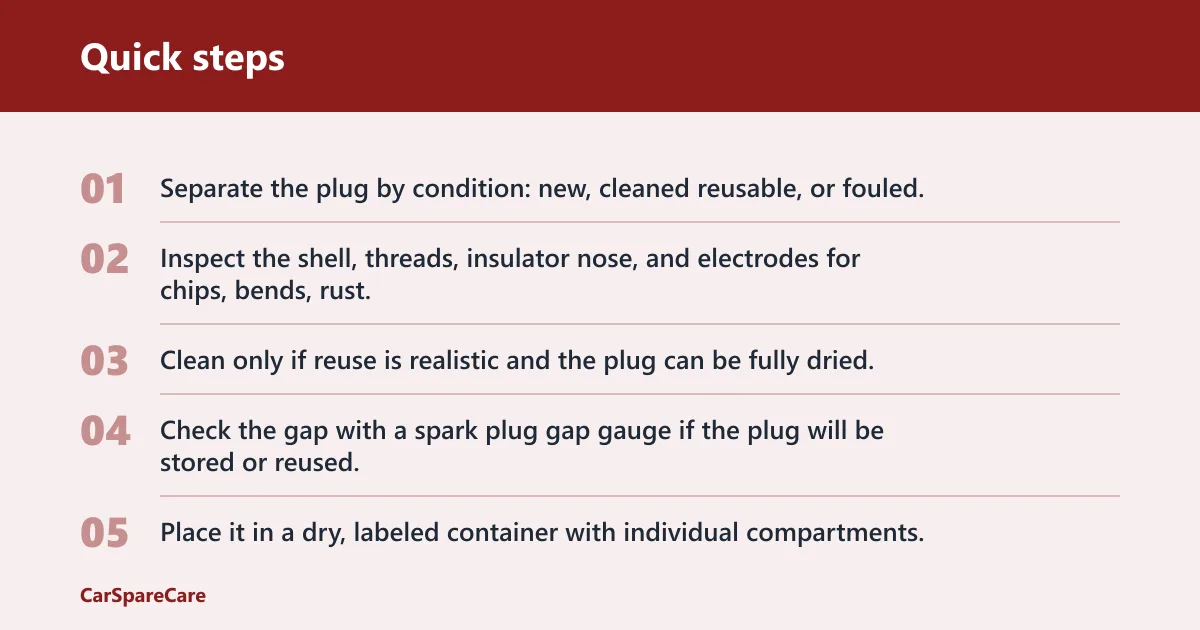
- Separate the plug by condition: new, cleaned reusable, or fouled.
- Inspect the shell, threads, insulator nose, and electrodes for chips, bends, rust, or scuffing.
- Clean only if reuse is realistic and the plug can be fully dried.
- Check the gap with a spark plug gap gauge if the plug will be stored or reused.
- Place it in a dry, labeled container with individual compartments.
- Add a desiccant packet if the storage area is humid.
- Discard any plug with visible physical damage or thread defects.
How do you fit spark plugs after storage?
Before fitting stored plugs, recheck the gap, inspect the threads, and confirm the plug matches the engine specification. Spark plugs should be hand-threaded before tightening to avoid thread damage. A torque wrench is then used to tighten them to the specified value, because manufacturer torque spec still matters at installation. Follow the plug maker’s instructions before adjusting the gap, especially for plugs that should not be regapped in the usual way.
Use the right socket and start by hand
A spark plug socket helps with safe handling and installation, and a ratchet with an extension can make access easier. Start each plug by hand so the threads engage cleanly. If it does not turn smoothly, stop and inspect it rather than forcing it into the head.
Set the final torque correctly
Do not rely on feel alone. The plug should be tightened to the manufacturer’s specified value with a torque wrench. Overtightening can damage threads or distort the shell, while undertightening can allow poor sealing and heat transfer.
Frequently asked questions
How should I store spare spark plugs so they don’t corrode?
Keep them dry, sealed, and separated in their original boxes or a clean storage container with individual compartments. Add a desiccant packet if the area is humid. Corrosion usually starts when moisture reaches the shell or threads, so packaging quality matters as much as the room they sit in.
Can I keep spark plugs in the box they came in?
Yes, if the box is intact and the plug is still clean. The factory box is often enough for new plugs because it keeps the electrode and threads isolated from knocks. If the box is torn, wet, or mixed with other parts, move the plug to a better container.
Do spark plugs need to be stored dry or oiled?
Store them dry. Do not oil spark plugs for storage, because oil can contaminate the insulator nose, trap dirt, and complicate installation. If a plug was cleaned before storage, let it dry fully first, then seal it in a clean container with moisture control if needed.
What temperature is best for storing spark plugs?
A stable, moderate temperature is best. The main issue is not a special number; it is avoiding damp sheds, hot boots, and places with repeated temperature swings that cause condensation. A cool, dry indoor shelf is usually safer than a garage corner that breathes with the weather.
Can spare spark plugs get damaged in a toolbox?
Yes. Toolboxes invite impact, rubbing, and contamination from other metal tools. A plug can pick up thread nicks, chip the ceramic tip, or bend the electrode if it knocks against sockets or pliers. Use a container with separate compartments instead of loose storage.
Should I check the gap before storing spark plugs?
Yes, especially for reused plugs or plugs that have been handled a lot. A spark plug gap gauge checks the electrode spacing, and the gap should match the manufacturer’s specifications. New plugs in sealed boxes generally do not need a pre-storage gap check unless the manufacturer says otherwise, and any regapping should follow the plug maker’s instructions. Recheck it before installation after long storage as well, because handling can change it.
How do I recycle or dispose of old spark plugs?
If a plug is cracked, heavily fouled, or thread-damaged, discard it rather than store it. Metal and ceramic disposal rules vary by location, so check local recycling or waste guidance. Keep the old plugs separate from reusable stock so they do not end up back on the shelf by mistake.

Hi, I’m Melvin, an automobile engineer with extensive experience in automobile equipment. I currently work for a local automobile firm, where I specialize in the car parts industry. I’ve had the opportunity to collaborate with seasoned inspectors, gaining invaluable hands-on experience that goes beyond just theory.
My passion for automotive care started at a young age, which led me to create CarSpareCare. Through CarSpareCare, I share the knowledge and skills I’ve acquired over the years to help others navigate the world of car maintenance and repairs.
My goal is to provide practical tutorials, essential safety advice, and the latest industry insights so that anyone—whether a beginner or an expert—can confidently tackle their automotive projects.