Dry, powdery corrosion can often be cleaned, but wet residue, a rotten-egg smell, or a swollen case means a real acid leak and the battery should be removed and replaced. Ignore it, and acid will eat cables, ruin the tray, and strand you. This guide shows how I tell corrosion from a leak, clean it safely, test charging, and decide when replacement is the right call.
What you’ll need
- Chemical-resistant gloves
- Eye protection
- Old clothing
- Good ventilation
- Baking soda solution
- Disposable towels
- Clean water for surface rinse
- Battery terminal brush
- Multimeter
- Compatible battery charger
What a leaking car battery looks like
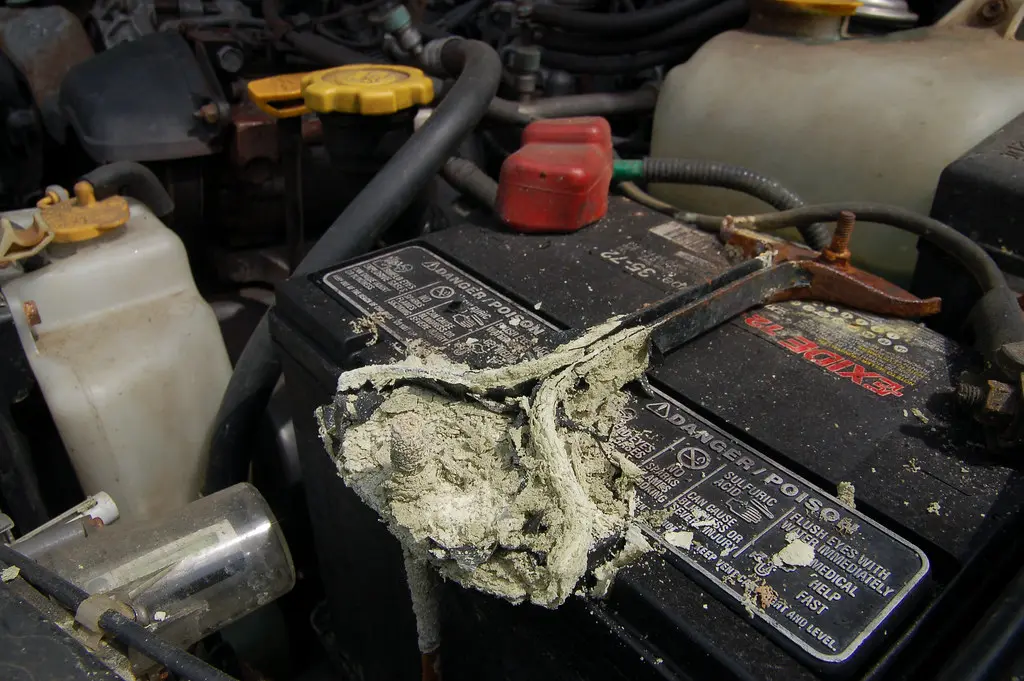
In a lead-acid car battery, the electrolyte is typically a mix of sulfuric acid and water. A true leak usually leaves wetness at the seams, around the bottom, or on the case. White or blue-green crust by itself is often terminal corrosion, not an open acid spill.
Sulfur smell, heat, swelling, or damp residue mean more than cosmetic mess. The electrolyte is corrosive to skin, paint, and metal. A flooded battery can vent vapor or overflow. A sealed battery can still leak if the case cracks, the vents fail, or charging pushes it beyond normal limits.
Signs that point to corrosion, venting, or a true leak
| Visible symptom | Likely source | Exact next action |
|---|---|---|
| White or blue-green crust on posts | Terminal corrosion | Clean the terminals and recheck |
| Wet film on the case or seams | Venting or cracked case | Stop driving and replace if the case is damaged |
| Bulging sides or top | Overcharge | Test charging voltage before reuse |
| Liquid near the bottom of the battery | Cracked case or bottom seepage | Stop driving and replace |
| Sulfur smell with warmth or hissing | Venting, often from overcharge | Disconnect charger and test charging system |
What you’ll need before you touch it
Put on gloves, eye protection, and old clothing first. Open the hood in fresh air. Keep match flames, lighter sparks, and cigarette ends far from the battery. A lead-acid battery can give off irritating vapors, and even a small splash can burn skin or ruin paint fast.
Have baking soda solution, towels, and a terminal brush ready. Keep a multimeter close for later charging checks. If a smart battery charger is connected, unplug it before you inspect anything unsafe. A smart charger automatically stops charging when full, but it should not stay in the circuit during a leak check.
Step 1: Make it safe first
- Switch the engine off and remove the key.
- Keep flames, sparks, and cigarettes away from the battery area.
- Avoid leaning over the battery; vapors and mist can irritate eyes and skin.
- If the case is cracked, swollen, or visibly wet, it is usually wise to stop using it and plan for replacement.
Step 2: Triage the leak by location
Use location first. Corrosion at the posts usually points to a cleanup job. Wet seams, a split housing, or liquid pooling at the bottom points to a real leak. Overcharging can force venting or swelling, so hissing or repeated residue means the charging system needs checking, not just a wipe-down.
- Inspect the top posts for white or blue-green crust.
- Check the seams, corners, and bottom edge for dampness.
- Look for swelling, a warped lid, or a cracked battery case.
- Smell for sulfur near the vents and note any hissing.
- Match the symptom to the table above and follow the exact next action.
What should you clean, test, or replace?
Clean only surface corrosion when the battery case is intact and dry. Test charging voltage when the battery shows venting, heat, or repeated corrosion without a visible crack. Replace the battery when the case is cracked, swollen, or wet with electrolyte. A cracked housing is not a repair item; the battery case contains the chemicals.
If that didn’t work, try this next
- If cleaning does not stop the residue, measure the charging voltage with a multimeter at the battery posts.
- If voltage is high or unstable, inspect the alternator and voltage regulator for overcharging.
- If the battery is old, swollen, or leaking from the bottom, remove it from service and fit a replacement battery with the correct group size and terminal layout.
Step 3: Clean the terminals and spill residue
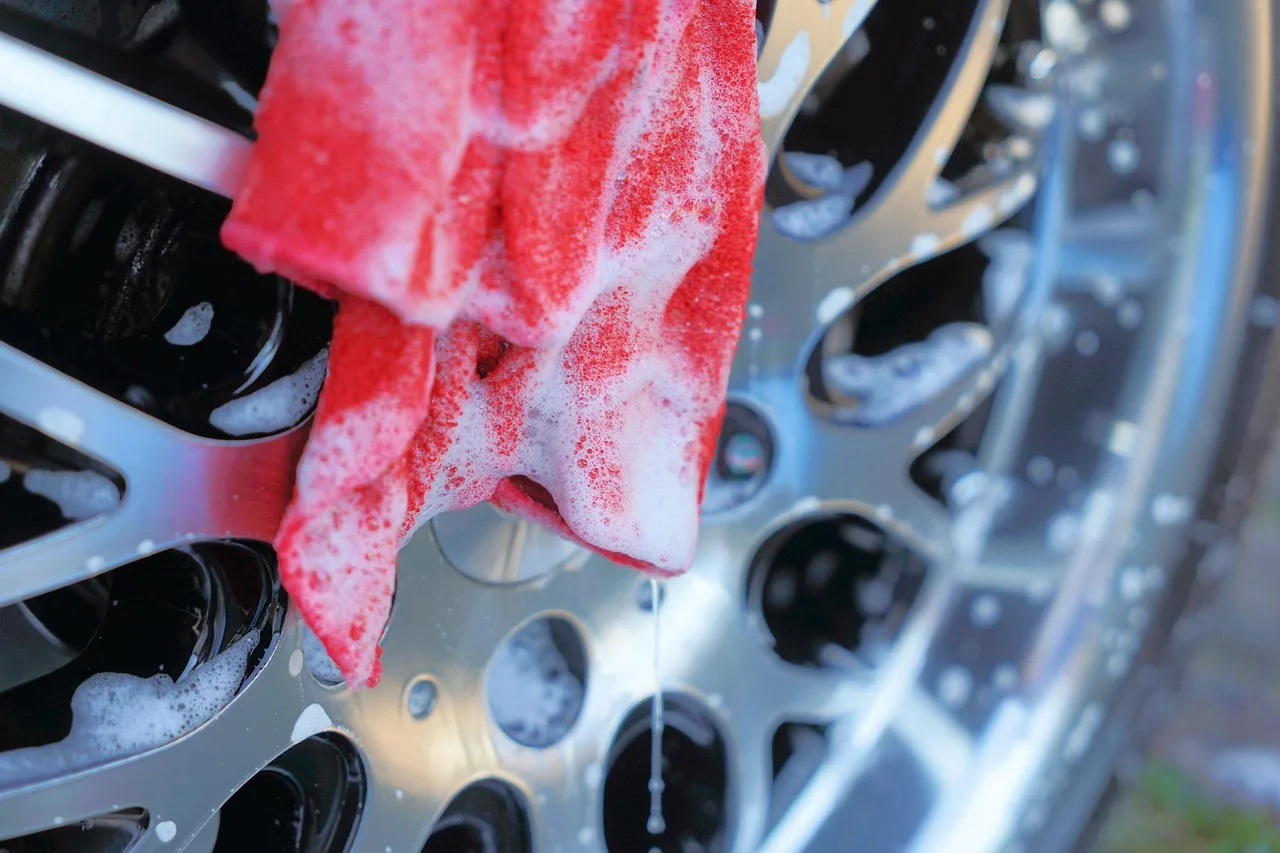
Brush baking soda solution onto the outside crust and wet residue. Let it fizz on contact, then wipe it away with disposable towels and rinse the area with clean water. Do not pour neutralizer into the battery cells. That can create a mess inside the battery and does nothing useful.
Scrub the posts, cable ends, and nearby tray until dry. If residue has reached paint, rinse that area promptly and dry it. If it has touched clothing, remove the clothing and wash it separately after the battery area is safe. Replace badly eaten cables rather than reusing them.
Step 4: Check for the root cause
Overcharging is a common cause of leakage. A bad alternator or voltage regulator can drive the battery too hard, force venting, and make the case swell. Extreme cold weather can also contribute to leakage, and vibration or impact can crack the case or open a weak seam.
Test charging voltage with a multimeter across the battery posts. If the numbers are abnormal or the battery gets hot while driving, inspect the charging system before fitting another battery. If a compatible battery charger is in use, disconnect it during diagnosis and reconnect only after the battery is judged safe.
Safety precautions and warnings
Battery electrolyte is sulfuric acid and water. It can burn skin, sting eyes, and pit metal. Wet residue is more serious than dry crust. A strong sulfur smell usually means vented gas, and that is a sign to keep the hood open, step back, and inspect the charging system before going any further.
A sealed battery is not immune. If it is swollen, cracked, or leaking from the case or bottom, stop driving and replace it. A flooded battery can vent from overfill or overcharge; a sealed battery can vent or fail if the regulator is overvolting. Either way, a damaged case is a replacement job.
Is it safe to drive with a leaking battery?
Driving is unsafe when the battery is wet, swollen, hissing, or giving off a sulfur smell. Those signs point to active leakage or venting, and the battery can fail suddenly. If it is only dry terminal crust and the case is sound, short-distance driving after cleanup is usually the safer path.
Do not keep using a battery with visible liquid on the housing or bottom. That can worsen quickly and damage the tray, cables, and nearby parts. If the battery is the starter battery for a 12V vehicle system and the leak is active, plan to replace it before the next trip.
Should I replace the battery or just clean the corrosion?
Clean the corrosion when the leak is only at the terminals and the case is dry and intact. Replace the battery when the case is cracked, swollen, or wet with electrolyte. If the battery is near the end of its usual life expectancy of four to six years, replacement is often the better call.
Match the replacement battery to the correct group size and terminal layout, then recycle the old unit properly. Cleaning a cracked or swollen battery is a temporary disguise, not a fix. If the tray is soaked, rinse it, dry it, and check nearby metal for corrosion damage.
Common mistakes
Do not treat every white crust as a leak. Post corrosion can coexist with a leak, but it is not the same thing. Check the seams and bottom first. Do not put baking soda inside the cells. Clean the outside only.
Do not keep driving if the battery is swollen, hot, or wet. Do not ignore the charging system when leakage keeps returning. If overcharging is the cause, the new battery can fail the same way. Do not reuse a cracked case. Replace it.
Prevention
Check battery hold-downs, keep the terminals clean, and have charging voltage tested when the battery gets hot, smells like sulfur, or keeps corroding. A smart charger is the better choice for storage charging because it stops automatically when full.
Frequently asked questions
What happens when car battery acid leaks?
Leakage sends sulfuric acid onto the case, tray, cables, or nearby metal. It can burn skin, damage paint, and corrode connectors. If the battery is wet at the seams or bottom, remove it from service and replace it rather than trying to keep driving.
What does it mean when battery acid leaks?
It usually means the battery’s electrolyte is escaping because of a cracked case, venting, overflow, or overcharge. Dry crust by itself is often terminal corrosion. Wet residue, swelling, or a sulfur smell points to a real leak and needs immediate attention.
Why does battery acid leak?
Common causes can include overcharging, impact damage, vibration, cold-weather stress, and age. A lead-acid battery that is overfilled or stressed by charging can vent electrolyte. If the housing is damaged, the battery case can split and leak from the bottom or seam.
Why is my car battery leaking acid?
Check for a cracked case, bulging sides, wet seams, or residue at the bottom. If the battery is hot after driving, test the charging system next. A bad alternator or voltage regulator can force overcharge and make the battery vent or swell.
Is it safe to drive with a leaking battery?
Only dry terminal corrosion is sometimes manageable for a short trip after cleanup. Active wet leakage, swelling, or a strong sulfur smell is a no-drive condition. Stop, disconnect any charger, and replace the battery before using the vehicle again.
How do I clean up car battery acid safely?
Wear gloves and eye protection, open the area to fresh air, then apply baking soda solution to outside residue. Wipe, rinse, and dry the surface. Do not pour neutralizer into the battery cells. If the spill reached paint or clothing, rinse or wash those items separately.
Can a leaking battery still be used?
If the battery is only corroded at the posts and the case is dry, it may still be usable after cleaning and a charging check. If the case is cracked, swollen, or wet, it should be removed and replaced. Recycling the old battery is the proper next step.
How do I tell if the leak is from the case or the terminals?
Terminal corrosion may appear around the posts and cable ends as white or blue-green crust. Case leakage may show up as wet seams, damp spots on the housing, or liquid at the bottom. If the battery is swollen or hissing, treat it as a charging or case problem, not simple corrosion.
What causes a car battery to overcharge and leak?
A fault in the alternator or voltage regulator is the usual charging-system problem. That can push the battery too hard, create gas, and force venting or swelling. A multimeter check at the battery posts is the fastest way to confirm the need for a charging-system inspection.
Should I replace the battery or just clean the corrosion?
Clean the terminals if the case is intact and dry. Replace the battery if there is a crack, swelling, or liquid on the housing or bottom. If the battery is already near the end of its normal service life, replacement is usually the better decision.
what happens when car battery acid leaks
It creates a corrosive spill that can burn skin, damage paint, and eat metal around the battery. Dry crust at the terminals is different from active electrolyte loss. Wet residue, swelling, or sulfur odor means remove the battery and replace it.
what does it mean when battery acid leaks
It means the battery’s sulfuric acid electrolyte is escaping through the case, vents, or seams. That can happen from overcharge, impact, age, or cold-weather stress. The correct response is to clean only surface residue, then replace the battery if the case is damaged.

Hi, I’m Melvin, an automobile engineer with extensive experience in automobile equipment. I currently work for a local automobile firm, where I specialize in the car parts industry. I’ve had the opportunity to collaborate with seasoned inspectors, gaining invaluable hands-on experience that goes beyond just theory.
My passion for automotive care started at a young age, which led me to create CarSpareCare. Through CarSpareCare, I share the knowledge and skills I’ve acquired over the years to help others navigate the world of car maintenance and repairs.
My goal is to provide practical tutorials, essential safety advice, and the latest industry insights so that anyone—whether a beginner or an expert—can confidently tackle their automotive projects.