

Replace windshield wipers when they streak, chatter, leave missed arcs, or split; they often last around a year, but harsh sun, ice, road grit, and constant outdoor parking can shorten that considerably. I have seen torn blades drag dirt across glass and leave fine scratches. This guide shows how to tell blade wear from dirt, ice, fitment mistakes, and service-position issues on modern cars, EVs, and rear wipers.
How to tell if your wipers are worn out
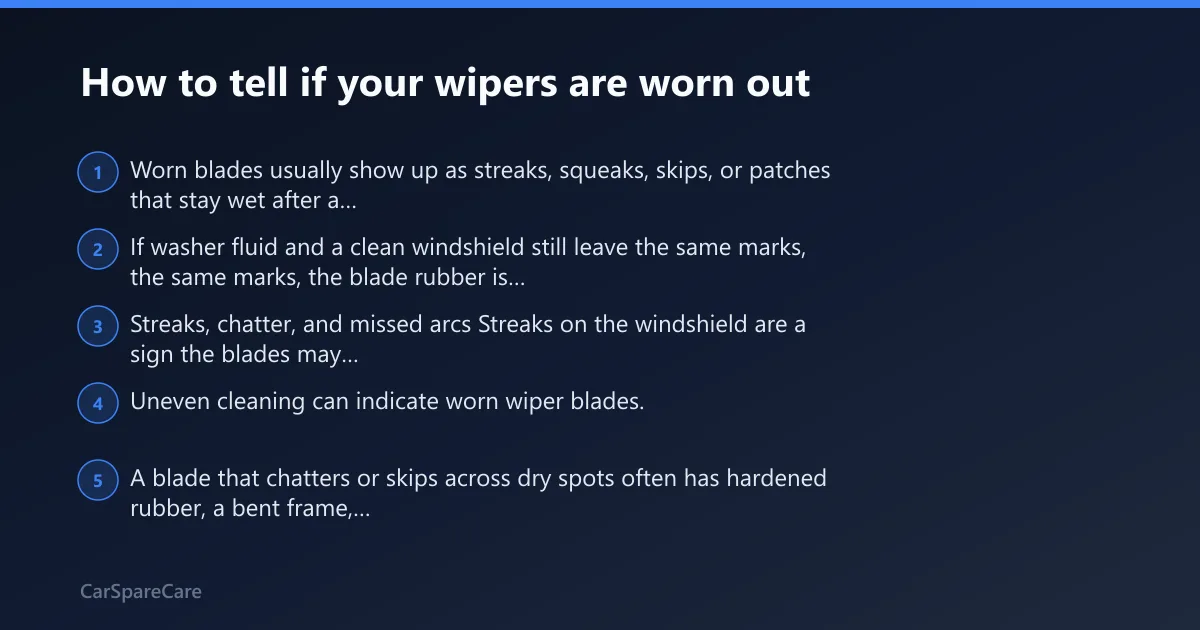
Worn blades usually show up as streaks, squeaks, skips, or patches that stay wet after a pass. If washer fluid and a clean windshield still leave the same marks, the blade rubber is often the problem rather than the glass or fluid.
Streaks, chatter, and missed arcs
Streaks on the windshield are a sign the blades may need replacing. Uneven cleaning can indicate worn wiper blades. A blade that chatters or skips across dry spots often has hardened rubber, a bent frame, or a connector that is not sitting square on the arm.
What clean glass should look like during a spray test
Spray windshield washer fluid, then run the wipers on a wet windshield. A healthy blade should clear the glass in one smooth sweep with no film of grime, dirt, or water left behind. If the same haze appears on each pass, the blade edge is losing contact.
When dirt or ice is the real problem
Dirty glass, frozen windshield edges, and packed ice on the blade can mimic wear. If a quick wash and a de-ice cycle solve the issue, replacement is not the fix yet. A torn blade, hard rubber, or split edge will still fail after the glass is clean.
According to How to change windshield wiper blades — The replacement process described can take about 10 minutes.
When should you replace windshield wipers?
Replace windshield wipers when the rubber is worn, the cleaning pattern is uneven, or the blade has hardened from heat and weather. The usual interval is 6 to 12 months, but climate, parking habits, and winter use can shorten that, especially on vehicles parked outside.
The 6 to 12 month rule, and why it varies
Wiper blades are typically replaced every 6 to 12 months. That rule is a starting point, not a guarantee. Sun exposure, road grime, and frequent use wear the rubber faster, while garage storage can stretch life a little if the blades stay flexible and clean.
Winter salt, summer heat, UV, and car wash wear
Winter salt dries the rubber edge and leaves abrasive residue on the glass. Summer heat and UV harden the squeegee edge and crack the coating. Repeated car washes can also attack the blade surface, especially when harsh cleaners or wax residue build up on the rubber.
When one blade can stay and the other should go
Replace one blade only when the other still passes the spray test and shows even contact. Replace both when wear is similar, the car lives outdoors, or both sides see the same sun and road spray. Front blades often age together, but not always.

Use this diagnostic table before you buy new blades
Start with the symptom, then test the glass with washer fluid before ordering parts. That avoids replacing good blades when the real issue is dirt, ice, a poor connector fit, or a vehicle that needs service position before the arm can be lifted.
| Symptom | Likely cause | Quick test | Replacement decision |
|---|---|---|---|
| Streaks after a wet sweep | Blade wear or dirty glass | Wash the glass, spray washer fluid, repeat the sweep | Replace if streaks stay after cleaning |
| Squeaking or dragging | Hard rubber, dry glass, or contamination | Wet the windshield and check again | Replace if the noise stays on a wet windshield |
| Uneven cleaning on one side | Twisted blade frame or worn edge | Inspect blade angle against the glass | Replace the weak blade, or both if both are uneven |
| Rear window still hazy | Rear blade wear or hatch dirt buildup | Clean the glass and retest with washer fluid | Replace the rear blade if haze remains |
| Blade will not seat on the arm | Wrong connector or poor fitment | Check the lock tab or release button | Do not force it; buy the correct connector type |
| Arm cannot be lifted on a modern car | Hidden arm or service position required | Check the menu or owner’s manual | Use service position before replacement |
when to replace rear windshield wiper
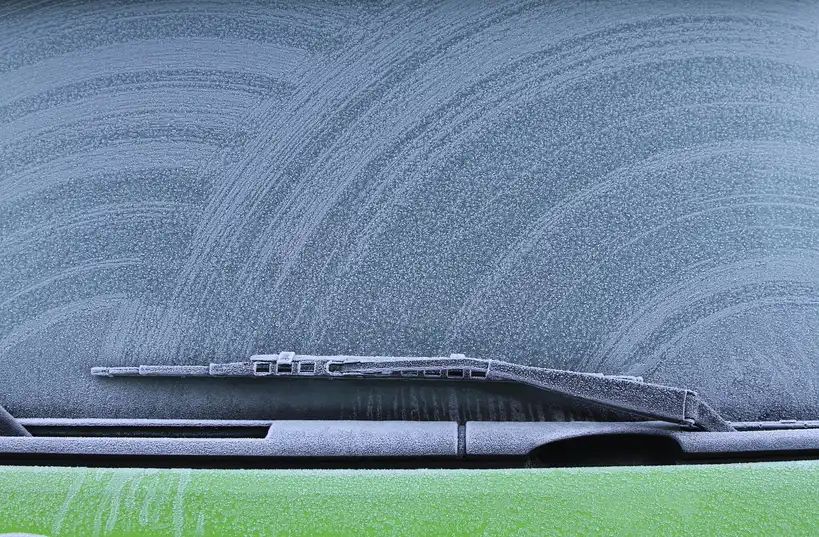
Rear wipers often wear differently from the front pair, so they may need replacement on a different schedule. Hatchbacks, SUVs, and wagons expose the rear blade to dust, road spray, and dry wiping, which can wear the edge even when the front blades still look fine.
Why rear blades often fail later or differently
The rear blade usually runs less often than the front pair, so it can last longer. It also wipes a smaller area and may stay tucked against the glass longer, which means dirt can bake onto the edge and create streaks before the front blades show trouble.
Signs the rear blade, not the front pair, is the problem
If the rear window smears, skips, or leaves a narrow wet trail while the front wipers still clean well, the rear blade is the likely failure point. A rear blade that chatters after a wash is also worth replacing, especially if the hatch gathers grime and salt.
What to check before buying replacement blades
Check blade length, connector type, and mounting style before you buy anything. Blade lengths vary, so random blades will not fit every car. The owner’s manual is a recommended source for blade information, and an auto parts store can help find suitable wiper blades.
Blade length and connector type
A blade that is too long can hit trim or cross over the other blade. A blade that is too short may miss the outer edge of the glass. The connector must match the arm style and click securely into place; if it does not click, it is not installed correctly.
Owner’s manual fitment notes
The owner’s manual may list front and rear lengths, connector style, and any service-position steps. That matters on cars with mixed blade sizes or unusual arm shapes. It is also the fastest way to avoid buying the wrong adapter for a specific model year.
Using an auto parts store fitment lookup
An auto parts store fitment lookup can narrow the options by vehicle, trim, and body style. Manufacturer websites like Bosch, Michelin, and PIAA are suggested fitment references as well. These tools help prevent a common mistake: buying the right length with the wrong connector.
How service position changes the replacement job
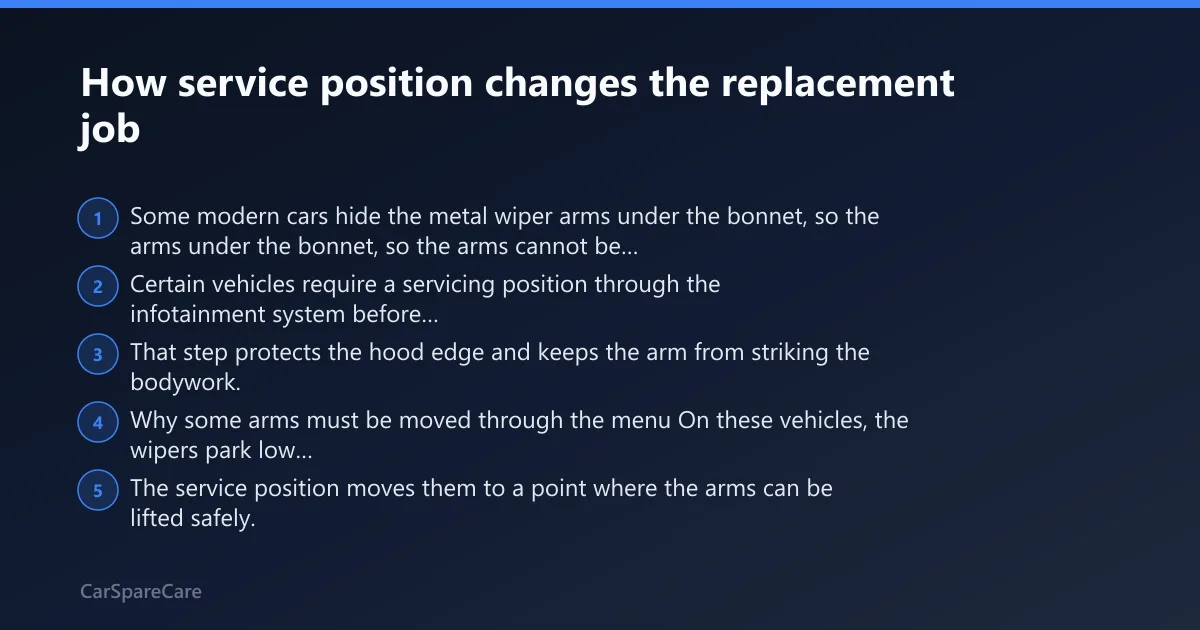
Some modern cars hide the metal wiper arms under the bonnet, so the arms cannot be lifted normally. Certain vehicles require a servicing position through the infotainment system before blade replacement. That step protects the hood edge and keeps the arm from striking the bodywork.
Why some arms must be moved through the menu
On these vehicles, the wipers park low under the hood line for styling and aerodynamics. The service position moves them to a point where the arms can be lifted safely. If the manual calls for this step, forcing the arm up can damage paint, glass, or the linkage.
Safe ways to lift a wiper arm
Lift the arm only after confirming the car allows it in that position. Support the arm so it does not snap back onto the glass. If the arm style makes the blade hard to reach, or the arm feels trapped by the hood, stop and check the manual before proceeding.
What to do when the arm is hidden under the hood line
Use the service menu or the manual’s sequence to move the wipers out of the hidden position first. On many cars, this is reached through the infotainment system, not by pulling the stalk alone. Once the arm is exposed, the blade swap is usually straightforward.
DIY replacement vs shop replacement costs
DIY replacement often costs less because you are mainly paying for the blades. A shop adds labor, but that can be worth it on vehicles with hidden arms, unusual connectors, or rear blades tucked under trim. The replacement process described can take about 10 minutes when fitment is simple.
What you pay for blades only
Blade price depends on size, connector, and whether you buy front, rear, or a matched set. A straightforward DIY job usually means the cost of the parts only, plus a little time. If the old blade is stubborn or the connector is unusual, expect extra effort rather than extra parts.
What a shop may charge for labor
A shop may charge labor on top of the blades, especially if service position is needed or the car uses a hidden arm. That makes sense when access is awkward, the owner’s manual is unclear, or the blade mount is unfamiliar. It is less useful for a simple clip-in blade.
When paying for install makes sense
Pay for install when the arm is hidden, the connector is confusing, or the rear wiper sits high on a hatch. It also makes sense if the vehicle needs service position and the owner would rather avoid menu steps or the risk of scratching paint.
when to replace windshield wipers tesla
Tesla wipers can be replaced using the same symptom-based checks used on other modern cars, with extra attention to service position and hidden arms. The key is fitment and access, not the badge. Check the manual first, then confirm the blade length and connector before buying.
Hidden arms and service position on EVs
Some EVs use hidden wiper arms and require a menu-based service position before the blades can be lifted. That matters because the arm may sit close to the hood line. If the manual calls for a service step, follow it before trying to remove the blade.
Fitment matters more than brand names
For Tesla and other EVs, a correct connector and blade length matter more than a guess based on appearance. The wrong adapter can look close enough to clip on, then loosen or wipe poorly. A secure click into the connector is the sign that the fit is right.
when to replace windshield wiper fluid
Washer fluid should be replaced when it is contaminated, frozen, weak, or simply not cleaning well. If spraying fluid does not help diagnose streaks, the issue may be in the blade or on the glass. Fresh fluid also helps separate dirt from true blade wear.
when to change windshield wiper fluid
Change washer fluid when it leaves residue, smells stale, or does not cut road film. In cold weather, use fluid suited to the forecast so the spray system keeps working. If the reservoir contains dirty mix or diluted fluid, it can hide the real cause of a bad wipe.
Frequently asked questions
when to replace windshield wiper blades
Replace windshield wiper blades when they streak, squeak, skip, or leave wet patches after a spray test. The usual interval is 6 to 12 months, but sun, ice, salt, and frequent use can shorten that. One bad blade can usually be replaced on its own if the other still cleans well.
how often do wiper blades need to be replaced
Wiper blades are typically replaced every 6 to 12 months. That timing can move sooner in hot climates, snowy regions, or on cars parked outside. The best check is still visual and functional: clean glass, spray washer fluid, and look for streaks or missed areas.
how to tell when to replace windshield wipers
Replace them when the blade leaves streaks, makes squeaking or dragging noises, or leaves a film of grime, dirt, or water after wiping. If cleaning the glass and using washer fluid does not fix the result, the rubber edge is usually worn out.
what are the best wiper blades
The best wiper blades are the ones that match the vehicle’s length, connector, and arm style, then clean the glass without chatter. A premium blade is not useful if the fitment is wrong. Check the owner’s manual or an auto parts store lookup before buying.
best time of year to replace windshield wipers
The best time of year to replace windshield wipers is before the season that stresses them most. Replace them before winter if salt and ice are coming, or before summer if heat and UV are hard on the car. Spring and fall can be practical check points.

Hi, I’m Melvin, an automobile engineer with extensive experience in automobile equipment. I currently work for a local automobile firm, where I specialize in the car parts industry. I’ve had the opportunity to collaborate with seasoned inspectors, gaining invaluable hands-on experience that goes beyond just theory.
My passion for automotive care started at a young age, which led me to create CarSpareCare. Through CarSpareCare, I share the knowledge and skills I’ve acquired over the years to help others navigate the world of car maintenance and repairs.
My goal is to provide practical tutorials, essential safety advice, and the latest industry insights so that anyone—whether a beginner or an expert—can confidently tackle their automotive projects.

