
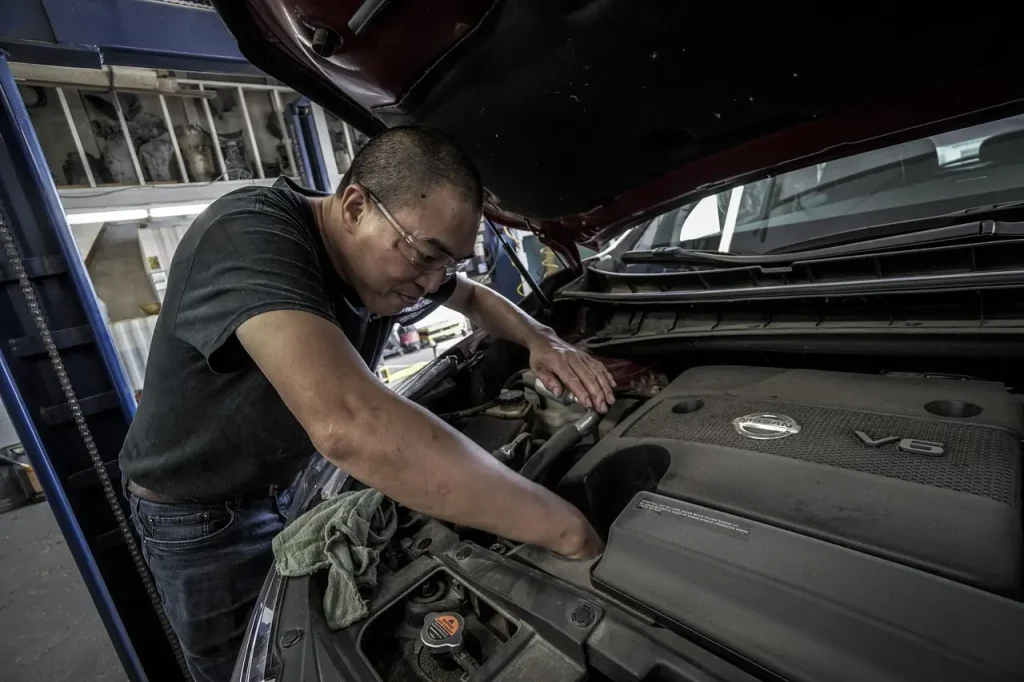
Before a long road trip, inspect tires and the spare, check fluid levels, test lights and wipers, and make sure the battery starts cleanly. Book overdue service now, and leave cosmetic fixes for after the trip. Skipping these basic checks raises the odds of a breakdown, a tow, or a lost travel day. This guide ranks what you can inspect yourself, what belongs in a shop, and what can wait.
Car maintenance before a long road trip: what to handle first
Start with the parts most likely to leave you stranded: tires, brakes, battery, cooling, and the spare. Then move to visibility, steering, suspension, and the load you plan to carry. Firestone recommends five important maintenance services before a long drive, and that order fits because a road trip puts weak parts under far more miles than a normal commute.
Split checks into self-check, shop check, and can-wait items
Use three buckets. Self-check items are the ones you can inspect in the driveway, such as tire pressure, tread, fluid levels, lights, and the spare. Shop checks cover brakes, alignment clues, exhaust, and any leak or warning light. Can-wait items are mostly appearance work and non-urgent repairs that do not affect reliability.
- Check tires and the spare first.
- Check fluid levels, wipers, lights, and battery starting behavior.
- Book brake, alignment, suspension, or exhaust inspection if anything looks off.
- Confirm roadside assistance and pack a safety kit.
Which car checks can you do yourself before leaving?
You can handle the most useful first pass yourself: tire pressure, tread, visible damage, fluid levels, wipers, lights, and a basic battery check. These inspections do not replace a mechanic, but they catch the obvious problems that most often turn into roadside delays before the car leaves the driveway.
Tires and spare tire: pressure, tread, wear, and visible damage
Check tire pressure on all tires, including the spare. Firestone includes tire pressure in a tire inspection, and warns that under- or overinflated tires can increase overheating and blowout risk. Les Schwab also checks tire air pressure on all tires including the spare. Inspect tread with the penny test, look for cracks, bulges, punctures, and uneven wear, and make sure the spare is properly inflated with a jack and lug wrench in the vehicle.
Uneven wear can point to alignment or suspension issues. If the inner or outer edge of a tire wears faster than the center, or if the steering wheel shakes at speed, a shop check is wiser than another tank of fuel. Rotation can wait if the tires are still wearing evenly, but a trip is not the time to ignore a tire that is close to the wear bars.
Fluids and visibility: oil, coolant, washer fluid, wipers, and lights
Check engine oil, coolant, and windshield washer fluid before departure. Firestone says technicians can check engine oil and coolant levels as part of general maintenance, and Les Schwab advises topping off washer fluid, antifreeze, brake fluid, power-steering fluid, transmission fluid, and oil. Replace wiper blades if they streak, split, or chatter. Verify headlights, taillights, backup lights, license plate lights, and windshield wipers work.
Say your washer reservoir is nearly empty and the route includes a bug-heavy interstate at dusk. That is a small issue at home and a visibility problem by the second hour. Low washer fluid is easy to fix now. A torn blade or a dead bulb is just as simple, but much less forgiving in rain or at night.
Battery basics and simple starting checks
Watch for slow cranking, dim interior lights, or repeated jump starts. Those signs mean the battery may not survive repeated starts, hot parking lots, or a long stop with accessories running. A fully charged jump-starter belongs in the road-trip safety kit, and it is a practical backup even if the battery seems fine today.
For EVs, the battery discussion changes. You still need a reliable 12-volt system, but you also need a charging plan, plug access at overnight stops, and a conservative range buffer. A route that looks easy on paper can become stressful if chargers are sparse or out of service.
What should a mechanic inspect before a long drive?
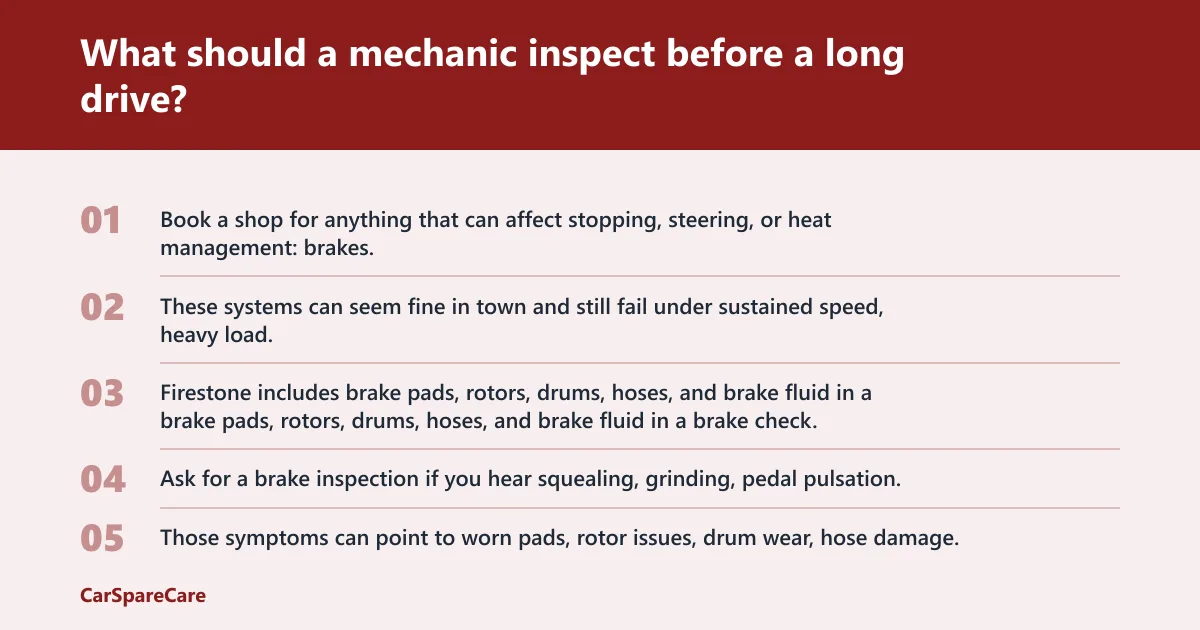
Book a shop for anything that can affect stopping, steering, or heat management: brakes, alignment clues, suspension noise, and exhaust leaks. These systems can seem fine in town and still fail under sustained speed, heavy load, or mountain driving. Firestone includes brake pads, rotors, drums, hoses, and brake fluid in a brake check.
Brakes: pads, rotors, drums, hoses, and brake fluid
Ask for a brake inspection if you hear squealing, grinding, pedal pulsation, a soft pedal, or a pull to one side. Those symptoms can point to worn pads, rotor issues, drum wear, hose damage, or brake fluid problems. Do not treat brake warning lights as a routine checkup item. They need attention before departure.
Steering, suspension, and alignment clues
Inspecting steering and suspension matters because worn shocks, struts, and bushings can reduce ride control and accelerate tire wear. Common clues include nose dive under braking, bouncing after bumps, clunks over rough pavement, or a vehicle that drifts without input. If the steering wheel is off-center or the car pulls, alignment should be checked before a long run.
Exhaust system checks and noise or leak symptoms
Firestone says vehicles 5 or more years old should have exhaust systems checked yearly or every two years. Listen for louder-than-normal exhaust noise, ticking at start-up, or fumes near the cabin or rear of the vehicle. Exhaust issues are a safety concern, not just a noise complaint, because they can affect venting and occupant exposure. (firestonecompleteautocare.com)
Do you need service before the trip or can it wait?
Use symptoms, mileage, and trip length to decide. Anything tied to stopping, cooling, charging, or steering should be fixed before departure. Cosmetic work, minor rattles, and non-urgent maintenance can usually wait if there are no warning signs. Remember that Les Schwab notes cross-country trips can add hundreds or even thousands of miles.
Cases that should be fixed before departure
Book service before the trip if you have low tire tread, an underinflated spare, a weak battery, brake noise, a coolant leak, an active warning light, an exhaust smell, or steering problems. If the car already needs an oil change, do it before leaving rather than during the trip, especially when the route adds hundreds or even thousands of miles.
Items that can wait until after the trip
Postpone cosmetic repairs, trim noise, and non-urgent accessories that do not affect driving safety. A slightly stained seat, a faded plastic panel, or a minor rattle is not the same as a brake warning or tire damage. If the only issue is convenience, finishing the trip first is usually the better use of time.
How should the checklist change for towing, high mileage, gas cars, and EVs?
Heavy loads, older vehicles, and EVs all need different prep. Towing increases tire, brake, and transmission stress. High-mileage vehicles deserve extra attention to cooling, exhaust, and suspension. EVs need route and charging planning, plus a check of the 12-volt system and backup charging options if the route is remote.
Extra load and towing checks
Read the door jamb label and stay within the stated occupants-plus-cargo limit. Overloading raises tire temperatures, lengthens stopping distances, and can worsen handling. If you are towing, verify hitch equipment, trailer lights, tire pressures on both vehicle and trailer, and braking capacity before you leave.
High-mileage vehicle priorities
On an older vehicle, prioritize tires, brakes, coolant, battery, hoses, and exhaust. High mileage makes heat and vibration more likely to expose a weak part. Firestone’s guidance on yearly or two-year exhaust checks for vehicles 5 or more years old is especially relevant when the car has already seen many seasons of road salt and heat cycles.
EV-specific charging, range, and roadside planning
For an EV, confirm charger locations, plug compatibility, payment setup, and nighttime charging at your stops. Keep a larger range buffer than you would for a gasoline car, especially in hot weather, cold weather, or hilly terrain. Roadside assistance should also include EV support, because a tow to the nearest compatible charger may matter more than a jump start.
48-hour vs 2-week road trip maintenance timeline
Give yourself a couple of weeks if possible. That window leaves time for parts, a shop slot, and a second visit if something else turns up. The last couple of days should be for final checks, topping off fluids, packing the kit, and confirming coverage. Waiting until the day before leaves no room for surprise repairs.
What to do two weeks before departure
- Schedule brake, tire, alignment, suspension, or exhaust inspection if any symptom is present.
- Book an oil change if it is due or if the trip mileage will push it past the service interval.
- Confirm roadside assistance policy status and save the phone number in the phone and on paper.
- Check tire wear, spare condition, and the door jamb load label before packing decisions are made.
What to do in the last 48 hours
- Set tire pressures cold, including the spare.
- Top off oil, coolant, and washer fluid if needed.
- Check lights and wipers at night or in low light.
- Test starting behavior and pack the jump-starter, jack, lug wrench, gloves, flashlight, and water.
- Recheck cargo so the vehicle stays within its load limit.
What to pack after the maintenance check
A road-trip safety kit should include a fully charged jump-starter, phone charger, flashlight, reflective triangle or vest if available, basic tools, gloves, water, and copies of roadside assistance details. Les Schwab specifically recommends a fully charged jump-starter as part of a road-trip safety kit.
Risk-ranked pre-road-trip checklist
| Item | Self-check vs shop check | Why it matters for stranding risk |
|---|---|---|
| Tire pressure and tread depth | Self-check first; shop if wear is uneven or tread is low | Under- or overinflation raises overheating and blowout risk; worn tread reduces grip in rain and lengthens stopping distance. |
| Spare tire condition | Self-check | A flat or dry spare turns a puncture into a tow. Verify inflation, jack, and lug wrench. |
| Brakes: pads, rotors, drums, hoses, fluid | Shop check | Brake failure rarely gives a second chance. Noise, vibration, soft pedal, or warning lights should be fixed before departure. |
| Engine oil level and service interval | Self-check for level; shop if due | Low oil or overdue service increases wear, and a long trip adds mileage fast. |
| Coolant / antifreeze level | Self-check only when engine is cool; shop if low or leaking | Low coolant raises overheating risk, which can end a trip quickly. |
| Battery charge state | Self-check for symptoms; shop test if weak | A weak battery can fail after a fuel stop, hotel stop, or short rest break. |
| Wipers and washer fluid | Self-check | Visibility problems become safety problems in rain, spray, bugs, and road grime. |
| Steering and suspension | Shop check | Poor ride control and alignment issues can damage tires and make the car harder to manage at speed. |
| Exhaust system | Shop check | Noise, fumes, or leaks can signal a safety issue, especially on older vehicles. |
| Roadside assistance coverage | Self-check | A current policy and saved number matter when a tow or tire change is needed fast. |
| Vehicle load capacity | Self-check | Overloading hurts braking, handling, and tire life, and it can trigger heat-related failures. |
What to do to your car before a long road trip
Do the high-risk items first: tires, brakes, cooling, battery, and the spare. Then confirm oil level, wipers, lights, and roadside coverage. If anything gives a warning sign, move it from the self-check list to a shop visit before departure. That order prevents most roadside delays.
How to prepare for a long road trip
Prepare by separating urgent repairs from simple checks. Two weeks out is for service appointments and parts. The last 48 hours are for pressure checks, fluid top-offs, packing the kit, and confirming load limits. This keeps the trip from starting with a repair queue.
How to prep car for long road trip
Prep the car by checking tires, fluids, lights, battery, brakes, wipers, and the spare, then booking any overdue service. Make sure cargo stays within the vehicle’s load label and keep roadside assistance details handy. If the car has any unusual noise, pull, leak, or warning light, handle it before leaving.
How often should i stop on a long road trip
A practical rule is to stop every few hours or roughly every hundred miles or so, then adjust for fatigue, weather, traffic, and passengers. The point is not a fixed number. It is to break up driving before concentration drops and before small vehicle issues go unnoticed.
What fluids should i check before a road trip
Check engine oil, coolant / antifreeze, windshield washer fluid, brake fluid, power-steering fluid if your vehicle uses it, and transmission fluid if it is accessible and the vehicle’s maintenance schedule calls for a check. Low fluid levels, visible leaks, or fresh puddles make a pre-trip service more urgent.
Should i change oil before a long road trip
Change the oil before departure if it is due by time or mileage, or if the trip will add enough miles to push it past the service interval. Les Schwab notes that cross-country trips can add hundreds or even thousands of miles, so a service that looks “almost due” may become overdue mid-trip.
How do i check my spare tire before a trip
Check the spare’s inflation, condition, and accessibility. Make sure the tire is not cracked or dry-rotted, and confirm the jack and lug wrench are in the car. If your vehicle uses a compact temporary spare, confirm you understand its speed and distance limits before the trip starts.
What should be in a road trip safety kit
A road trip safety kit should include a fully charged jump-starter, flashlight, phone charger, water, basic tools, gloves, reflective warning gear if available, and roadside assistance details. Add a tire pressure gauge and a small first-aid kit. Keep the kit where you can reach it without unloading luggage.
Do i need a brake check before a road trip
Yes, if the brakes squeal, grind, pulse, feel soft, or make the car pull to one side. Firestone includes pads, rotors, drums, hoses, and brake fluid in a brake check. A long highway drive and a fully loaded car increase the consequences of ignoring a brake problem.
Should i inspect tires before a long drive
Yes. Check pressure, tread, sidewall damage, and uneven wear, and do not forget the spare. Firestone warns that under- or overinflated tires can increase overheating and blowout risk. If tread is low, wear is uneven, or the car pulls, book a tire or alignment check before departure.

Hi, I’m Melvin, an automobile engineer with extensive experience in automobile equipment. I currently work for a local automobile firm, where I specialize in the car parts industry. I’ve had the opportunity to collaborate with seasoned inspectors, gaining invaluable hands-on experience that goes beyond just theory.
My passion for automotive care started at a young age, which led me to create CarSpareCare. Through CarSpareCare, I share the knowledge and skills I’ve acquired over the years to help others navigate the world of car maintenance and repairs.
My goal is to provide practical tutorials, essential safety advice, and the latest industry insights so that anyone—whether a beginner or an expert—can confidently tackle their automotive projects.

