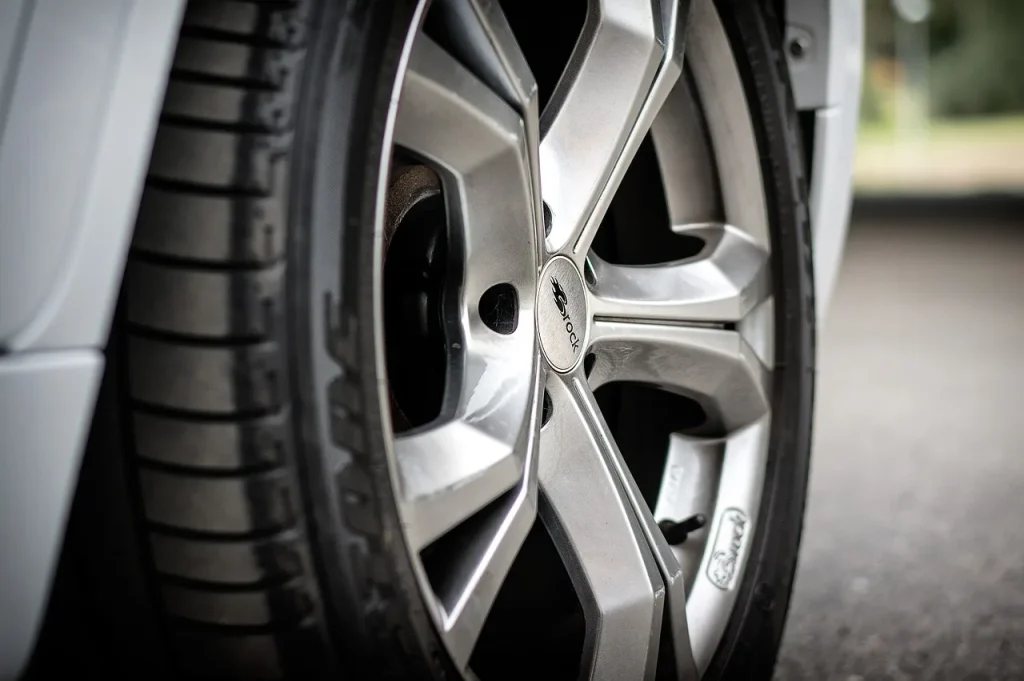
Wash wheels about every 1 to 2 weeks during salt season, rinse the inner barrels too, and inspect chips, lug seats, and valve stems after each wash to catch corrosion early. Salt residue, brake dust, and chipped coating can pit the finish, seize hardware, and turn cosmetic damage into repair work. University extension and OEM service guidance consistently emphasize prompt rinsing, proper cleaners, and correct wheel service practices.
Road salt is usually sodium chloride or similar de-icer that clings to spray, slush, and grime. Because salty moisture stays in wheel wells, lug recesses, and barrel edges, the contamination keeps working after the drive ends and can dry into deposits that hold moisture against paint, clear coat, or bare metal.
How winter salt attacks wheels
Why alloy and steel wheels fail differently
Alloy wheels usually carry a clear coat or painted finish. When that finish chips, the exposed metal can pit and develop visible white corrosion, especially around spoke edges, lug seats, and curb rash. Steel wheels usually rust at chips and scratches in paint or powder coat, but the damage is sometimes hidden by wheel covers.
Brake dust makes the problem worse because it is a hot metallic residue that can embed in moisture and salt, then stain, etch, or accelerate corrosion on neglected finishes.
Where corrosion starts first
The first weak points are usually the spots that see the most impact and the least wash action: spoke edges, the inner barrel, lug holes, the valve stem area, and the edge of the clear coat. Wheel wells also matter because they collect salty slush and can throw contamination back onto the wheel face.
What you’ll need
- pH-neutral wheel cleaner for routine washing
- Wheel brush and soft wash mitt
- Microfiber towels and a drying cloth
- Wheel sealant or wax for winter protection
- Access to rinse water or a touch-free wash
Which wheel type needs what winter care?
The right routine depends on finish, exposure, and where the vehicle sleeps. Bare steel tolerates abuse better than cosmetic finishes, but it rusts fast once paint breaks. Painted alloy and machined or clear-coated alloy need the most careful cleaning because salt, brake dust, and scratched edges can spread under the finish. Storage outside usually requires tighter wash intervals than garage-kept use.
| Wheel type | Outdoor storage | Garage-kept storage | Best winter approach |
|---|---|---|---|
| Bare steel | Wash weekly if salted roads are frequent; dry thoroughly and touch up chips quickly | Wash every 2 to 4 weeks if exposure is light; keep lug holes and seam edges clean | Use pH-neutral cleaner, then protect with wax or sealant over intact paint or powder coat |
| Painted steel | Wash every 1 to 2 weeks; salt tends to attack chips and wheel-cover contact points | Wash every 2 to 4 weeks, sooner after storms or slush driving | Focus on chip repair, avoid harsh acids, and inspect for rust at scratches and bead edges |
| Painted alloy | Wash weekly if driven daily on salted roads; protect spoke edges and lug seats | Wash every 2 weeks if driven in storms, less often only if contamination is minimal | Use gentle cleaner and sealant; repair exposed metal as soon as white corrosion appears |
| Machined/clear-coated alloy | Wash weekly and dry fully; these finishes show etching and peeling quickly once damaged | Wash every 1 to 2 weeks if winter use is regular; inspect for lifting clear coat | Use only finish-safe cleaners, avoid aggressive brushing, and address peeling clear coat immediately |
For any finish, outdoor storage means more condensation, longer wet time, and more contamination rebound from wheel wells. Garage-kept storage helps, but it does not remove salt already on the wheel. The critical difference is how long the residue sits wet before the next rinse.
Winter wheel protection checklist
| Driving frequency | Wash interval | Protection step |
|---|---|---|
| Daily commuter in salted roads | Every 1 week | Rinse first, use pH-neutral cleaner, then reapply spray sealant after drying |
| Weekend driver with storm exposure | Every 2 weeks, or after a major storm | Wash wheels and wheel wells, inspect chips, then refresh sealant on clean, dry wheels |
| Garage-kept vehicle with light winter use | Every 2 to 4 weeks | Rinse off salt residue before storage and inspect the inner barrel and lug holes |
Inspection points after each wash: inner barrel, spoke edges, lug holes, valve stem, and wheel-well liner seams.
How should you wash wheels during salt season?
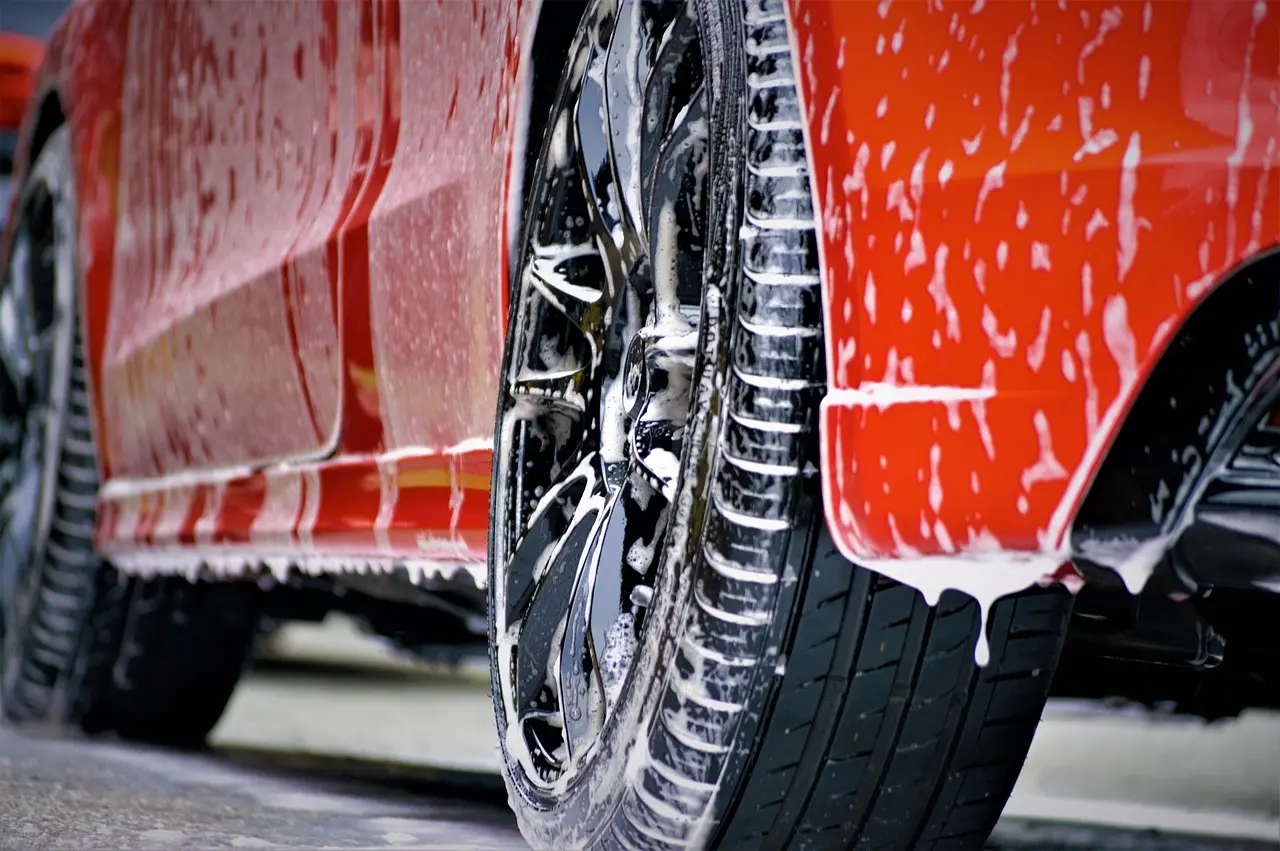
Start with a rinse and use a finish-safe cleaner on cool wheels so you are loosening grit instead of grinding it. That is the routine most OEMs and wheel-care manufacturers support: pre-rinse, short dwell, soft agitation, and full rinse-off. Avoid letting cleaner dry on the surface, especially on clear-coated or machined wheels.
- Rinse the wheel face, barrel edge, and wheel well with strong water flow.
- Spray wheel cleaner onto one wheel at a time and let it dwell only as long as the label allows.
- Agitate spokes, lug holes, and the inner barrel with a soft brush.
- Rinse until no cleaner or brown runoff remains.
- Dry the wheel and wheel-well liner edges with microfiber towels.
If you drive through slushy roads on Monday and Tuesday, then park outside overnight, the salt film on the inner barrel can stay wet longer than the face. Skipping that area leaves the most active residue in place, which is why the inner barrel often degrades before the visible front face.
How often should I wash my wheels in winter salt?
Many drivers need a wheel wash about every 1 to 2 weeks during salt season. If you drive daily on salted roads, wash weekly. If you drive less often but go through several storms, wash after each major storm or any time the wheels stay coated with slush for more than a day.
Parking in a garage slows drying damage, but it does not remove salt. If the wheel comes back in wet and dirty, the residue still sits on the finish until you rinse it off.
How do you protect the finish before more salt lands?
Apply a protective layer before winter begins, using wheel sealant or wax to add a sacrificial barrier that makes salt and brake dust less likely to bond. It works best on clean, dry wheels. Spray sealants are faster to apply than paste wax, and both need reapplication during winter because repeated washing strips protection.
- Apply sealant or wax after the wheel is fully clean and dry.
- Cover spoke edges, the barrel lip, and the area around lug holes.
- Let the product cure for the time listed on the label.
- Reapply after every 2 to 4 winter washes, or sooner if water no longer beads.
Protective layers reduce buildup. They do not make a wheel salt-proof. The goal is to slow adhesion so the next rinse removes more residue with less scrubbing. In practice, that means less embedded brake dust, fewer stains at the barrel edge, and lower risk of finish failure in the spots that get the most spray.
How do you handle chips, curb rash, and white corrosion?
Repair exposed metal as soon as you see it. Tiny finish chips often become the first corrosion point because salt gets under the clear coat, then spreads into bubbling, pitting, and white staining on alloy wheels or rust on steel wheels. The earlier you seal the defect, the less likely the damage is to spread.
- Clean the damaged area and dry it fully.
- Touch up small chips with a finish that matches the wheel type.
- Reseal the repaired area after it cures.
- Check again after the next wash for lifting edges or new staining.
A common first-timer mistake is ignoring a roughly 5 mm chip near a spoke edge because it looks cosmetic. After about two wet, salty weeks, that spot can show white corrosion on alloy or orange rust on steel, and the repair can become harder to hide.
If the finish is flaking around the lug holes, the inner barrel shows pitting, or corrosion keeps returning after cleaning, wheel replacement may be the safer call. Structural damage and deep metal loss are not good candidates for repeated touch-up.
What common winter wheel mistakes make corrosion worse?
Letting salty slush dry on the wheel is the biggest one. Once residue hardens, you need more brushing, more runoff, and more risk of scratching the finish. OEM service guidance also warns against altering lug-hardware friction with anti-seize unless the maker explicitly calls for it, because changed lubrication can affect clamp load at the specified torque.
- Using harsh acidic cleaner on an unknown finish. Check compatibility first; pH-neutral cleaner is safer for routine use.
- Ignoring the inner barrel and lug holes. Those areas hold salt longest.
- Cleaning the wheels but skipping the wheel wells. Liner edges and seams can drip contaminated spray back onto the wheel.
- Using anti-seize on lug hardware without checking the vehicle maker’s instructions. Lug threads should stay clean and dry unless the maker says otherwise.
- Forgetting to re-torque lug nuts after wheel removal. Proper torque matters after service.
Picture a garage-kept sedan that only sees one snowy commute each week. If the wheels get a quick rinse but the lug seats stay dirty, the visible face may look fine while corrosion starts in the hidden hardware area. That hidden contamination is why the wheel can look acceptable while the fasteners and seating surfaces are already at risk.
Frequently asked questions
How do I stop salt from corroding my wheels in winter?
Rinse salt off within a few days, wash with a pH-neutral wheel cleaner, dry the wheel, and keep a sealant or wax on the finish. The key is to remove salty film before it dries into the barrel, lug holes, and spoke edges.
Does wheel cleaner remove road salt?
Yes, if you use it on a pre-rinsed wheel and rinse it off completely. A pH-neutral wheel cleaner loosens brake dust and road film, but it is the water rinse that carries away the salt residue from the inner barrel and wheel well.
Are alloy wheels more likely to corrode than steel wheels?
Alloy wheels usually show corrosion sooner because clear coat damage is easier to see and pitting is more obvious on the finish. Steel wheels can rust too, but the damage often starts under paint or powder coat and may hide behind wheel covers.
What causes white corrosion on alloy wheels?
White corrosion usually starts where clear coat chips, curb rash, or chipped spoke edges expose the base metal. Salt, moisture, and brake dust sit in those spots, then oxidation builds under the finish and leaves a chalky or pitted appearance.
Can I use wax or sealant on wheels for winter protection?
Yes. A wheel sealant or wax helps keep salt and brake dust from sticking as hard, especially on clean, dry wheels. Spray sealants are quicker to refresh during winter, while paste wax usually lasts longer between applications if the wheel stays clean.
Should I wash my car before or after a snowstorm?
Wash after the storm, as soon as practical, especially if the roads were salted and slushy. If you can only do a quick step before full washing, a touch-free rinse of the wheels, wheel wells, and lower body is better than waiting for the residue to dry.
How do I protect wheels if I cannot wash the car often?
Use a touch-free rinse after salted driving, then keep a winter sealant on the wheels so residue releases more easily at the next wash. Focus on the inner barrel, spoke edges, and lug holes, because those areas trap contamination longest.
What parts of the wheel are most vulnerable to salt damage?
The inner barrel, spoke edges, lug holes, lug seats, and valve stem area are the main trouble spots. Those are the places where spray collects, drainage is poor, and finish damage tends to start first.
When should I repair curb rash or chipped clear coat to prevent corrosion?
Repair it as soon as you notice bare metal, peeling clear coat, or fresh white staining. Waiting lets salt creep under the finish, which makes the damaged area grow and raises the chance of pitting or bubbling after repeated winter washes.
Sources
Road-salt chemistry and corrosion guidance are consistent with university extension and corrosion-engineering references that describe chloride de-icers, moisture retention, and accelerated oxidation on exposed metals. Wheel-cleaning best practices align with OEM care guidance: use a cleaner that matches the finish, avoid hot wheels, and rinse thoroughly. Lug-nut torque and anti-seize cautions reflect OEM/service-manual procedures that require clean mating surfaces and specified torque values.
For a repair decision, the practical rule is simple: if corrosion is only in the coating, clean, seal, and touch up; if pitting is deep, the finish is lifting at the lug area, or structural material loss is visible, replacement or professional inspection is safer than repeated cosmetic repair.

Hi, I’m Melvin, an automobile engineer with extensive experience in automobile equipment. I currently work for a local automobile firm, where I specialize in the car parts industry. I’ve had the opportunity to collaborate with seasoned inspectors, gaining invaluable hands-on experience that goes beyond just theory.
My passion for automotive care started at a young age, which led me to create CarSpareCare. Through CarSpareCare, I share the knowledge and skills I’ve acquired over the years to help others navigate the world of car maintenance and repairs.
My goal is to provide practical tutorials, essential safety advice, and the latest industry insights so that anyone—whether a beginner or an expert—can confidently tackle their automotive projects.