
Remove bird droppings from car paint by triaging first: blot fresh deposits with damp microfiber, soften dried ones before wiping, and treat any etching as a polish job, not a wipe-off. Leave them alone, and they can etch clear coat fast and leave stains that need polishing or repainting. This guide shows the safest method for paint, glass, and protected finishes, plus what to avoid at each stage.
Bird dropping damage basics
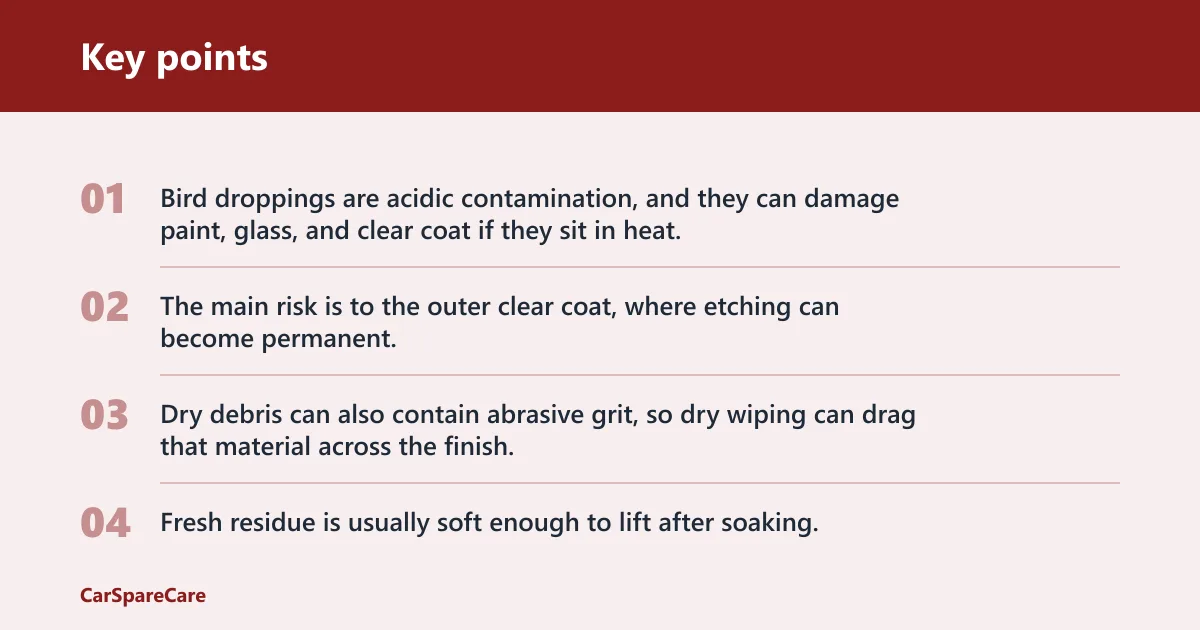


Bird droppings are acidic contamination, and they can damage paint, glass, and clear coat if they sit in heat. The main risk is to the outer clear coat, where etching can become permanent. Dry debris can also contain abrasive grit, so dry wiping can drag that material across the finish.
Uric acid is commonly cited as a primary acidic component in bird droppings, and the residue is often described as acidic enough to attack automotive finishes when it stays in place. Heat and sun speed the damage. In strong summer sun, visible etching may appear within a few hours; in cooler shade, the window can be longer, but the exact timing depends on heat, dwell time, finish condition, and any existing protection.
Fresh residue is usually soft enough to lift after soaking. Dried residue needs rehydration. If the surface already looks stained after the mess is removed, that may be residue or it may be etching in the clear coat. Those are not the same thing.
What you’ll need
- Two to four clean microfiber towels, soft and plush
- Warm water or lukewarm water in a spray bottle
- Dedicated bird dropping remover
- Quick detailer as a lubricant fallback
- Clean water for final rinse
- Disposable gloves
- A zip bag for used towels and waste
- Optional: soft wash mitt for larger soaked areas
Bird dropping removal triage
| Surface type | Deposit age | Safe first move | Safe tools | Escalation trigger | When to stop and seek paint correction |
|---|---|---|---|---|---|
| Paint | Fresh | Blot after soaking with lukewarm water or remover | Microfiber towel, spray bottle | Color or film remains after one lift | Visible dull spot, ring, or texture change remains |
| Paint | Dried | Soak, wait, then lift in passes | Microfiber towel, dedicated remover, quick detailer | Deposit stays hard after two soak cycles | Surface still looks stained after residue is gone |
| Glass | Fresh or dried | Soak and wipe lightly in straight passes | Microfiber towel, water, glass-safe cleaner if needed | Grit is still dragging under the towel | Scratch marks or haze remain after cleaning |
| Moonroof | Fresh or dried | Use the same gentle soak-and-lift method | Microfiber towel, lukewarm water | Residue resists without softening | Any visible scratch or pitting on the panel |
| Matte paint | Fresh | Blot only; do not rub | Soft microfiber, water, matte-safe cleaner | Color transfer continues after gentle blotting | Stop before polishing; finish changes are hard to reverse |
| Waxed paint | Fresh or dried | Soak first, then wipe lightly | Microfiber towel, quick detailer | Residue remains after first pass | Stain stays after cleaning and drying |
| Sealant | Fresh or dried | Use the mildest remover that lifts the deposit | Microfiber towel, remover, water | Spot looks etched after cleaning | Seek correction if the mark does not level out |
| Ceramic-coated paint | Fresh or dried | Rinse, soak, then gently lift | Microfiber towel, water, quick detailer | Water beading does not free the residue | Do not keep rubbing; inspect for coating wear or etching |
How do you remove fresh bird droppings?
Fresh droppings are usually easiest to remove if you keep the spot wet and avoid rubbing. The goal is to lift contamination before it dries into the clear coat or leaves grit marks. On paint, glass, and protected finishes, the method is the same at first: soak, soften, and blot.
-
Wet the spot first.
Spray warm or lukewarm water until the deposit is fully damp. If you have a dedicated bird dropping remover, use that instead of plain water because it softens faster. -
Let it sit briefly.
Wait about one to two minutes, then re-wet if the surface starts to dry. Some detailers recommend a longer dwell on stubborn residue, but the safer rule is to keep the spot damp rather than let it dry again. -
Lift, do not scrub.
Fold a clean microfiber towel and dab the area with light pressure. Let the towel rest on the deposit and soften it before removal instead of rubbing it across the paint. -
Repeat only as needed.
If residue remains, add more water or quick detailer and do another gentle lift. Use a fresh towel section each pass so grit is not dragged back across the finish.
Fresh droppings on paint
Paint is where caution matters most because the clear coat is the outer layer most at risk. Use a plush microfiber towel, dampened enough to glide, and stop as soon as the residue lifts. If you can still feel roughness after cleaning, do not keep rubbing.
Fresh droppings on glass and moonroof
Glass is harder than paint, but it is not scratch-proof. Use the same soft microfiber and soak-first method, then wipe in straight passes. Moonroofs should get the same treatment because the panel can still pick up micro-scratches from grit.
Fresh droppings on protected finishes
Wax, sealant, and ceramic coating can slow bonding and make cleanup easier, but they do not make the car immune. A coated panel still needs a wet, gentle lift. If the deposit resists, use a little more lubricant rather than more pressure.
What if bird droppings are dried or stuck on?
Dried droppings need rehydration before removal. If you try to wipe them off dry, you can grind abrasive material into the finish. A common warning from detailers is that dry wiping is like dragging sandpaper across the clear coat.
-
Soak the deposit again.
Saturate the spot with lukewarm water or bird dropping remover and leave it wet for several minutes. If needed, repeat the soak rather than increasing pressure. -
Use a soft wipe only.
Press a damp microfiber towel onto the deposit and let it soften under the cloth. Then lift straight up or wipe lightly in one direction. -
Add lubrication if needed.
If residue is still clinging, spray quick detailer and re-dab with a clean towel section. It helps as a lubricant, but it is a fallback, not a substitute for soaking. -
If residue is still attached after about two soak-and-lift cycles, the advice is to seek a detailer.
If the spot is still attached after two soak-and-lift cycles, leave it and seek a detailer rather than scrubbing harder. More force raises the chance of haze and scratches.
Dried droppings on matte paint
Matte paint needs extra caution because polishing or aggressive rubbing can alter the finish. Use water, a matte-safe cleaner if available, and a blotting motion only. If the residue does not release easily, stop early and let a professional handle it.
When etching may already be present
If the droppings are gone but a dull outline, stain, or etched ring remains, the problem has moved from removal to correction. Bird droppings can damage paint and glass badly, and once the clear coat is etched, wiping will not fix it. At that point, polishing or paint correction may be needed.
If a hood sits in direct summer sun and the dropping has already left a faint ring after cleaning, that is the point to stop scrubbing. More passes may remove loose residue, but they will not level etched clear coat.
How can you protect paint from future droppings?
Protection helps, but it is maintenance protection rather than a cure. Wax, sealant, and ceramic coatings can reduce how fast residue bonds and may buy you time, yet they do not prevent every stain or etch. Shade and quick removal still matter most.
Wax, sealant, and ceramic coating compared
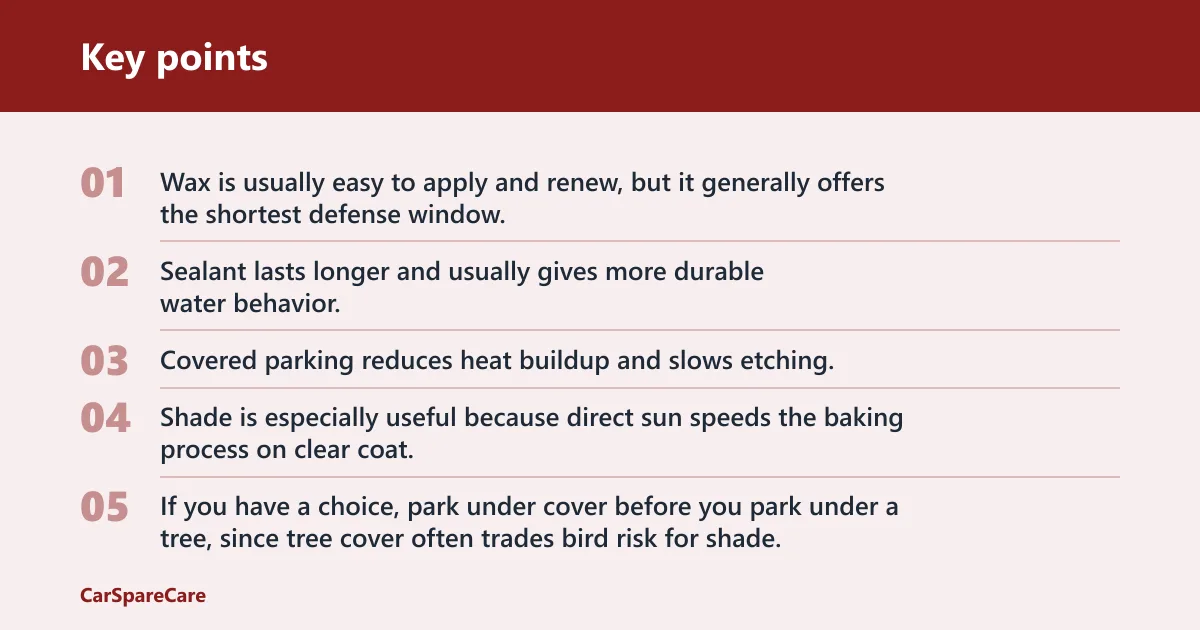
Wax is usually easy to apply and renew, but it generally offers the shortest defense window. Sealant lasts longer and usually gives more durable water behavior. Ceramic coatings tend to resist contamination best of the three, but they still need prompt cleaning if a dropping lands on the panel.
Parking shade and covered spots
Covered parking reduces heat buildup and slows etching. Shade is especially useful because direct sun speeds the baking process on clear coat. If you have a choice, park under cover before you park under a tree, since tree cover often trades bird risk for shade.
Emergency kit for the car
Keep a simple kit in the trunk or console so you can act away from home. A practical kit includes two microfiber towels, a spray bottle with water, a small bird dropping remover, a travel quick detailer, and disposable gloves. Add a zip bag for the used towels so contaminated residue does not touch other items.
Picture a road trip stop where a dropping lands on the roof and dries while you eat lunch. With a bottle of lukewarm water and a microfiber towel, you can soften it before it hardens further. Without those items, the safest move is to wait and rehydrate it before any wiping.
Common mistakes
- Wiping dry residue. That is the fastest way to drag grit across the clear coat.
- Using paper towels or abrasive pads. They can leave fine scratches and lint.
- Rubbing harder when the deposit resists. More pressure does not fix etched paint.
- Using household cleaners or improvised solvents. They can strip protection and leave their own marks.
- Ignoring the spot in direct sun. Heat speeds baking and shortens the safe window.
- Forgetting to change towel sections. A dirty fold can reapply grit you already lifted.
WD-40 should not be a first choice here, and Torque News explicitly says never to use it on exterior surfaces for this problem. If you need a lubricated lift, use water, a bird dropping remover, or a quick detailer made for paint.
Frequently asked questions
Does bird droppings damage car paint?
Yes. Bird droppings are acidic contamination and can damage paint if they sit long enough, especially in heat and sun. The clear coat is the outer layer most at risk, and etching can become permanent. Quick soaking and gentle removal are the safest response.
How long can bird droppings sit on car paint?
Not long in hot conditions. Bird droppings can etch clear coat within hours in heat, and noticeable etching can show up faster in direct sun than in shade. The exact window varies with heat, dwell time, finish condition, and protection, so sooner is always safer.
What is the safest thing to use on bird poop on car paint?
The safest first choice is lukewarm water plus a clean microfiber towel. A dedicated bird dropping remover is also a good option because it softens the deposit before wiping. Quick detailer can help as a lubricant if some residue remains.
Can bird poop permanently damage clear coat?
Yes. Clear coat can etch permanently if the dropping is left on long enough, especially in direct sun. If cleaning removes the residue but leaves a dull ring or stain, that is a sign the damage may already be in the clear coat and may need polishing.
What should I do if bird droppings dried on my car?
Re-wet the spot and let it soften before touching it. Use warm water or a dedicated remover, then dab with microfiber instead of scrubbing. If the deposit stays hard after two soak cycles, stop and have the area checked rather than forcing it off.
Can I use WD-40 to remove bird poop from a car?
No, not as a first choice. Torque News explicitly says never to use WD-40 on exterior surfaces for this problem. Use water, a bird dropping remover, or quick detailer instead, because those options are safer for paint and trim.
Is bird poop bad for moonroof glass?
Yes. Moonroof glass should be treated the same way as other exterior glass: soak first, then wipe gently with microfiber. Glass is harder than paint, but it can still pick up micro-scratches if grit is dragged across it.

Hi, I’m Melvin, an automobile engineer with extensive experience in automobile equipment. I currently work for a local automobile firm, where I specialize in the car parts industry. I’ve had the opportunity to collaborate with seasoned inspectors, gaining invaluable hands-on experience that goes beyond just theory.
My passion for automotive care started at a young age, which led me to create CarSpareCare. Through CarSpareCare, I share the knowledge and skills I’ve acquired over the years to help others navigate the world of car maintenance and repairs.
My goal is to provide practical tutorials, essential safety advice, and the latest industry insights so that anyone—whether a beginner or an expert—can confidently tackle their automotive projects.

