

Use a pH-neutral, sprayable quick detailer on light dust only; if you feel grit or see mud, wash first. Wiping dirty paint can scratch clear coat, especially on black cars and ceramic-coated finishes. This guide helps you choose between a quick detailer, waterless wash, or full wash based on contamination, paint type, and protection.
This guide is part of our Automotive paint care guide series.
Quick picks
Top pick for light dust and everyday maintenance: Meguiar’s Quik Detailer. It is a simple spray-and-wipe option with light lubrication, and the pH-neutral formula helps preserve wax during between-wash cleanups.
Best for ceramic-coated cars: Meguiar’s Ultimate Quik Detailer. The hydrophobic polymer approach suits coated maintenance when you want fast cleanup and water behavior that supports the coating look.
Best for dark paint and streak control: Griot’s Garage Speed Shine. It is described as streak-free, and that matters most when dark paint or glass shows residue in direct light.
Best budget option for maintenance detailing: Chemical Guys Speed Wipe. It gives a simple spray-and-wipe format at a lower listed price, with broad surface use for fast touch-ups and show preparation.
Quick comparison
| Product | Badge | Best for | Price | ||
|---|---|---|---|---|---|
 | Meguiar’s Quik DetailerMeguiar’s | Our pick | 32 oz ·, · spray | $12.99 Price as of 5 Nov 2026 | View |
 | Meguiar’s Ultimate Quik DetailerMeguiar’s | Upgrade pick | 24 oz ·, · 2 pack | $19.94 Price as of 5 Nov 2026 | View |
 | Griot’s Garage Speed Shine for Car DetailingGriot’s Garage | Also great | 22 oz ·, · quick detailer | $12.99 Price as of 5 Nov 2026 | View |
 | Chemical Guys, Speed Wipe Quick Detailer Spray, High GlossChemical Guys | Budget pick | 16 oz ·, · spray-and-wipe | $10.97 Price as of 5 Nov 2026 | View |
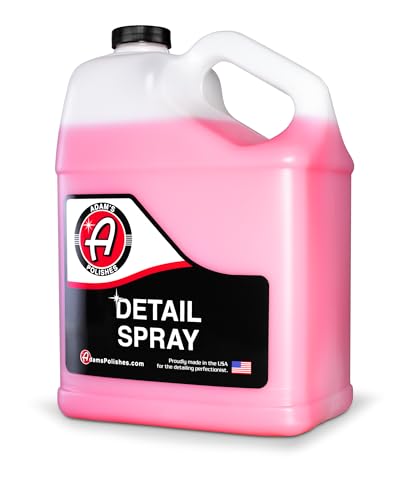 | Adam’s Polishes Detail SprayAdam’s Polishes | Pair with it | , ·, · detail spray | $42.49 Price as of 5 Nov 2026 | View |
Use the table to match contamination level and finish type before you reach for a bottle. The wrong pick usually fails for one of three reasons: too little lubrication, too much residue on hot panels, or using a detail spray where a wash is the safer move.
How we chose
This list is built around four buying checks: lubricity for safer wiping, residue and streak risk, compatibility with wax or ceramic coatings, and ease of use on hot panels or in bright light. We compared the product details and published claims, then separated them by the kind of cleanup each one fits best.
That matters because “best” changes with the panel in front of you. A light dusting on a hood is one job. A fingerprint on a black door in sunlight is another.
Meguiar’s Quik Detailer: best for light dust and daily use
This is the safest general pick if you want a classic quick detailer for light dust, fingerprints, and a gloss refresh between washes. The manufacturer describes it as pH-neutral, and the formula is meant to preserve wax while giving light lubrication for a spray-on, wipe-off cleanup.
It fits clear coat well because the goal is gentle maintenance, not heavy cleaning. If your paint already has wax on it, this type of detail spray is often the simplest way to keep that finish looking fresh without stripping protection.
The drawback is also its strength: it is for light contamination. If the panel feels gritty, or the car has road film, salt, or mud, this is the wrong tool and a wash is the safer call.
Meguiar’s Ultimate Quik Detailer: best for ceramic-coated cars
This is the better fit when you want a maintenance spray that supports a coated vehicle. The hydrophobic polymer chemistry is aimed at fast exterior cleanup while helping water behavior stay strong, which makes it a practical match for ceramic-coated cars between washes.
It is useful when you want a quicker wipe-down after dust or fingerprints and you want to avoid dulling the coating look with heavy residue. On a coated car, that balance matters more than raw shine.
The tradeoff is that hydrophobic behavior can be less forgiving if you overapply it. Too much product on hot paint can leave smears, so work in small sections and buff fully with a clean microfiber towel.
Griot’s Garage Speed Shine: best for dark paint and streak control
This is the strongest match if streaking is your main concern. It is described as streak-free and safe on all exterior surfaces, and that makes it especially useful on dark paint, glass, trim, chrome, rubber, and wheels when you want one bottle for touch-up work.
It also works as a clay-lube, which adds value if you occasionally need extra lubrication during clay work. That does not make it a clay substitute, but it does give the bottle a second role beyond between-wash dust removal.
The drawback is that all-surface flexibility can tempt people to use it everywhere, even when the panel is dirty enough to need a wash. Use it for light dust and light fingerprints, not for caked contamination.
Chemical Guys Speed Wipe: best budget option for maintenance detailing
This is the budget-friendly pick for quick maintenance work. It is a spray-and-wipe detailer with a stated streak-free gloss approach, and it is marked as safe on paint, glass, wheels, and trim, which makes it practical for one-bottle upkeep.
It suits owners who want a quick cleaner for dust, fingerprints, and smudges without paying for a more specialized coating-focused formula. For routine use, that lower listed price can matter more than extra chemistry.
The drawback is that “high gloss” formulas can leave visible residue if the panel is hot or the towel is already loaded. Keep the application light and do not chase shine with too many passes.
Adam’s Detail Spray: best for clay lube and flexible use
This is the most flexible pick when you want one spray that can support detailing tasks beyond a simple wipe-down. It is described as a clay lubricant, and it also aims for streak-free shine on paint and other surfaces with easy spray-and-wipe use.
That makes it a smart choice if you occasionally clay the car and want one bottle to cover maintenance detailing in between. It is also a good fit for owners who want a detail spray that can do more than one job without changing products.
The drawback is cost. The listed price is higher than the others here, so it makes less sense if your only goal is occasional light-dust cleanup.
Quick detailer decision matrix
| Contamination level | Paint type | Coating or wax status | Sun and heat risk | Streak risk | Recommended product category |
|---|---|---|---|---|---|
| Very light dust | Clear coat | Wax or sealant present | Low if panel is cool | Low to moderate | General quick detailer with light lubrication |
| Fingerprints and smudges | Dark paint | Wax, sealant, or coating | Moderate to high in direct sun | High | Streak-control quick detailer used in shade |
| Light dust on coated paint | Clear coat with ceramic coating | Ceramic coating | Moderate if panel is warm | Moderate | Coating-friendly quick detailer with low residue |
| Light dust plus occasional clay work | Paint and trim | Wax or sealant | Low if shaded | Moderate | Detail spray that is also a clay lubricant |
| Grit, mud, road film, or salt | Any exterior finish | Any protection system | Any | High | Stop and wash instead of wiping |
If the panel is warm and the car is dark, the streak risk rises fast. If the dust is heavier than a fine film, the marring risk rises even faster.
Best quick detailer for dusty paint
Paint lubricity matters most here because it lowers the chance that a light wipe drags grit across the clear coat. A quick detailer is meant to lift stray dust without scratching, but that only holds when the contamination level is low and the towel stays clean.
Use one clean microfiber towel to spread the spray and a second towel to finish the buff. Work one panel at a time, fold the towel often, and stop if the surface starts feeling grabby.
Say your hood has a thin layer of dust after a dry commute, and the car sits in shade. A light spray, a gentle pass, and a fresh towel can work. If the same hood has gritty specks, that is the point to wash instead.
How to wipe without dragging grit
- Check the surface with a light touch. If you feel grit, do not wipe it dry.
- Spray the detailer onto a microfiber towel or lightly onto the panel, depending on the label.
- Wipe in straight, light passes. Do not press hard.
- Flip to a clean towel side before buffing the same area.
- Move to the next small section only after the first one is fully clean.
When dust becomes too much
Light dust is acceptable. Heavy dust is not. If you can see visible grit, road film, or a dirty edge near the lower panels, quick detailer is the wrong choice because the wipe can turn abrasive fast.
A common first-timer mistake is using a premium spray on a car that has sat under a tree after rain. The surface may look “just dusty,” but sticky debris on the towel can still mar the clear coat.
Best quick detailer for coated cars
Ceramic-coated cars need a product that cleans between washes without leaving a film that fights the coating. A quick detailer can be safe on ceramic coatings, but only if it is used lightly and wiped fully so residue does not build up on hydrophobic paint.
For coated cars, the best choice is usually a maintenance detail spray that leaves minimal haze and does not overpower the coating’s water behavior. Too much product can mute the finish or make the surface feel slick in a way that attracts dust.
That is why the coated-car decision is less about maximum shine and more about clean release. You want quick cleanup, low residue, and no heavy film.
Avoiding residue and build-up
- Use less product than you think you need.
- Wipe in a shaded area if possible.
- Do not layer detail spray over visible grime.
- Use a second towel to finish the panel cleanly.
- Stop if the coating starts looking smeared instead of crisp.
Suppose a ceramic-coated sedan has light pollen on the roof and the panel is cool. A coating-friendly quick detailer can handle that in minutes. If the same roof sits in full sun and the spray flashes too fast, switch to shade before wiping or wait for a cooler panel.
Best quick detailer for gloss and streak control
Dark paint and glass show residue more clearly than light paint. That is why a streak-free formula matters most on black, navy, or deep gray finishes, especially when the car sits in sunlight and any leftover film shows immediately.
Gloss alone is not the point here. The better formula is the one that flashes cleanly, wipes evenly, and does not leave a cloudy patch when the angle changes.
Griot’s Garage Speed Shine is the strongest fit in this group for that job because it is described as streak-free and safe on all exterior surfaces. That does not mean every pass will be perfect in every condition, but it gives you the best odds when visibility is harsh.
When anti-streak claims matter most
They matter most on black paint, on glass, and on warm panels. They matter less on light paint in shade, where small residue errors are harder to see.
If you are detailing before a meet, a show, or a photo session, the finishing behavior matters more than the scent, the bottle shape, or the word gloss on the label.
Start with contamination level. If the car only has dust and fingerprints, a quick detailer is the right category. If there is mud, salt, or gritty film, use a wash instead. That decision matters more than brand name or shine claims.
Next, match the product to the finish. Dark paint and glass need low streak risk. Clear coat needs gentle wipe safety. Coated paint benefits from low residue so the protection system stays clean and visible.
Then check the compatibility claims you actually need. Wax-preserving formulas are useful if you want to protect an existing layer. A ceramic-friendly formula is the better fit if the car is coated. Multi-surface use is helpful, but only trust it where the label states it.
Finally, judge cost per use. A larger bottle can be the better value if you detail often. A smaller bottle can still be smart if you only need occasional touch-ups and want the least residue possible. Spray efficiency matters too; if a product needs heavy application to wipe clean, it is not saving time.
Failure cases that should stop the wipe
- The paint feels gritty instead of smooth.
- You see mud, salt, or road film.
- The towel starts collecting visible dirt fast.
- The panel is hot and the product flashes unevenly.
- The finish turns smeared after two light passes.
- You are trying to clean lower panels caked with debris.
Which one should you buy?
Choose by dust level first. For light dust and fingerprints, Meguiar’s Quik Detailer is the safest all-around maintenance pick. For coating-friendly upkeep, choose Meguiar’s Ultimate Quik Detailer. For dark paint, glass, and the lowest streak risk, Griot’s Garage Speed Shine is the clearest fit.
Choose by finish type next. If your car is black or shows smears easily, prioritize streak control over shine claims. If your car is ceramic coated, prioritize low residue and quick clean release. If your car is waxed and you want to preserve that layer, use a gentle, wax-friendly spray.
Choose by budget and frequency last. Chemical Guys Speed Wipe is the budget option here, while Adam’s Detail Spray makes more sense if you also want a clay lubricant. If you only need a maintenance bottle for light dust, do not pay for features you will not use.
Frequently asked questions
What is the best quick detailer for car paint between washes?
For most owners, Meguiar’s Quik Detailer is the safest general pick because it is pH-neutral, sprayable, and aimed at light dust and gloss maintenance. If the car is ceramic coated, Meguiar’s Ultimate Quik Detailer is the better fit. If streak control matters most, Griot’s Garage Speed Shine is stronger.
Can I use a quick detailer on dusty paint without scratching it?
Yes, but only when the dust is light and the panel is not gritty. Quick detailers provide light lubrication and can lift stray dust without scratching, but that stops being true once the surface has grit, road film, or salt. If the towel drags, stop and wash.
Is quick detailer safe on ceramic-coated cars?
It can be, especially when the formula is made for maintenance use and leaves little residue. The key is to avoid heavy application and build-up. On coated cars, quick detailer should support the finish, not sit on top of it like a thick film.
What’s the difference between quick detailer and waterless wash?
A quick detailer is mainly for light dust, fingerprints, and gloss refresh between washes. A waterless wash is built to clean a dirtier surface with more cleaning strength and more towel work. If the car is only lightly dusty, quick detailer is the lighter, safer choice.
Can quick detailer remove light dust and fingerprints?
Yes. That is the core use case. It is designed as a spray-and-wipe maintenance product for light dust, fingerprints, and smudges, and it works best when the surface contamination is minor. It is not meant for heavy mud, caked grime, or gritty road film.
Can I use quick detailer on glass, trim, and wheels?
Some products are labeled for those surfaces and some are not. Griot’s Garage Speed Shine and Chemical Guys Speed Wipe list broader exterior use, while other formulas are more paint-focused. Check the stated compatibility before using any spray on glass, trim, wheels, rubber, or chrome.
Does quick detailer strip wax or sealant?
Most quick detailers are meant to preserve existing protection, not strip it. Meguiar’s Quik Detailer is described as pH-neutral and wax-friendly, which is the kind of behavior you want between washes. Still, use a light hand and avoid harsh scrubbing that can wear protection faster.

Hi, I’m Melvin, an automobile engineer with extensive experience in automobile equipment. I currently work for a local automobile firm, where I specialize in the car parts industry. I’ve had the opportunity to collaborate with seasoned inspectors, gaining invaluable hands-on experience that goes beyond just theory.
My passion for automotive care started at a young age, which led me to create CarSpareCare. Through CarSpareCare, I share the knowledge and skills I’ve acquired over the years to help others navigate the world of car maintenance and repairs.
My goal is to provide practical tutorials, essential safety advice, and the latest industry insights so that anyone—whether a beginner or an expert—can confidently tackle their automotive projects.

