
Start with a wash, then match protection to the parking environment: use wax or spray sealant for short-term exposure, a ceramic coating or quality cover for long-term outdoor parking, and extra defenses against trees, sun, or salt where needed. Leave it alone, and you risk oxidation, water spots, sap etching, bird-dropping stains, and faded clear coat. UV exposure is a key driver of clear-coat aging, while bird droppings and mineral deposits can become etched into the finish if they sit too long; hard-water spotting is commonly caused by dissolved minerals left behind after evaporation. See PPG’s clearcoat UV-resistance guidance, BMW owner-care guidance, and EPA water-hardness basics. This guide shows how to choose the right protection stack for sun, rain, dust, trees, sprinklers, and coastal parking.
What outdoor parking damages first?
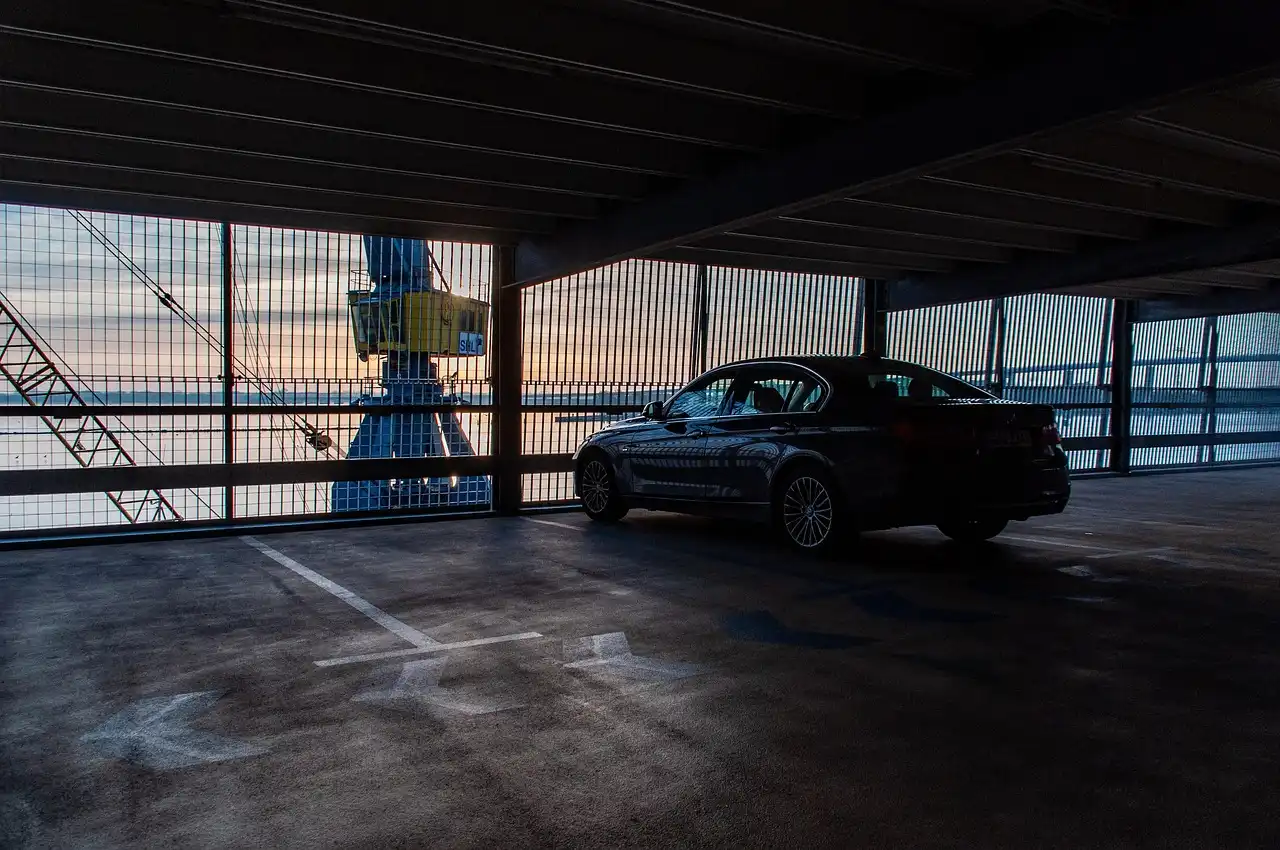


UV exposure is commonly reported to wear on clear coat first, especially on horizontal panels such as the hood, roof, and trunk. Bird droppings, tree sap, and mineral deposits from rain or sprinklers then add contamination that can stain or etch the surface. Dust and road film make later cleaning riskier because they raise the chance of swirl marks.
Why UV is the main paint threat
Sunlight is the main driver of clear-coat wear because ultraviolet energy breaks down the protective top layer over time. Full-sun parking speeds that process, and flat surfaces get more direct exposure than vertical panels. If a car sits outside every day, the roof and hood often age first. Automotive coating manufacturers and OEM care guidance consistently treat UV as a long-term finish-aging factor, not just a cosmetic issue.
How droppings, sap, and water spots cause damage
Bird droppings are often acidic and can etch if they sit on paint. Tree sap can bond to clear coat and may get harder to remove as it cures. Water spots commonly come from minerals left behind by rain or sprinklers, and heat can make those deposits tougher to lift later. BMW’s owner-care guidance warns to remove bird droppings and tree sap promptly, and EPA water-hardness information explains why mineral residue is left behind as water evaporates.
A common first-timer mistake is letting a sprinkler mist dry on the hood in afternoon heat. The result is often mineral spotting that takes more work to remove than a quick rinse would have taken.
Why dust and road film matter
Dust does more than dull paint. It also raises the risk of micro-scratches during washing or wiping because loose grit drags across the surface. That is why paint-safe wash tools matter even when the car already has wax, sealant, or a coating.
Parking protection decision matrix
Match the protection stack to the exposure first. The best choice for a car under a carport is not the same as the best choice for a daily driver in full sun or a storage car under trees. Use the table below to choose the first layer, then add contamination control where needed.
| Parking condition | Recommended stack | Why this stack fits | What to add if exposure is severe |
|---|---|---|---|
| Full sun | Ceramic coating or durable sealant, then shaded parking when possible | Helps slow UV-driven aging on horizontal panels and keeps wash maintenance easier | Use a carport or shade sail; inspect hood and roof more often |
| Under trees | Sealant or coating, plus a quick-removal plan for sap and droppings | Reduces contamination bonding while making cleanup less risky | Avoid parking directly under drippy branches; use a cover only on a clean car |
| Near sprinklers | Sealant or coating with prompt drying after any wetting | Gives a better chance of resisting spotting than bare clear coat | Relocate the car or change sprinkler timing if possible |
| Coastal humidity | Sealant or coating with regular wash-and-dry cycles | Helps manage salt film and moisture that can linger on the finish | Increase wash frequency after windy or salty conditions |
| Weekly driving | Easy-apply sealant or wax, with scheduled washing | Balances protection with a realistic upkeep burden | Top up sooner if the car is exposed to sun, rain, or road film |
| Storage | Outdoor-rated breathable cover over a clean car; coating or sealant underneath helps | Best for long sits where dust, debris, and droppings are the main risk | Use tie-downs and inspect the cover for grit or trapped moisture |
For a daily driver parked outside, a durable sealant or a ceramic coating usually gives better value than wax alone because the exposure repeats every day. For storage, a cover becomes more useful, but only if the cover fits well and the car is clean before it goes on.
Wax, sealant, or ceramic coating?
Wax, sealant, and ceramic coating solve different parts of the problem. Wax is a sacrificial layer that is easy to apply by hand but wears sooner. Sealant is a synthetic layer that usually lasts longer than wax. Ceramic coating is the most durable of the three, but it needs proper prep and more care before application.
What wax is good
Car wax is simple to apply by hand and gives a sacrificial layer between the clear coat and the environment. It can help with beading and short-term gloss, but it usually needs regular reapplication because it does not last as long as a good sealant or coating. Wax makes sense when you want easy upkeep and modest protection.
When a paint sealant fits better
Paint sealant is a synthetic protection layer made for longer outdoor exposure than wax alone. It often comes in spray or liquid form, which helps if you want faster application on a car that sees frequent weather, dust, or road film. For many outside-parked cars, sealant is the practical middle ground.
When ceramic coating is worth the prep
Ceramic coating is a high-durability protective layer with hydrophobic behavior, so water tends to bead and move off more easily. It is worth the prep when the vehicle stays outside a lot, especially in full sun or salty air. Consumer versions can work well, but the paint needs clean, corrected, and fully prepped surfaces first.
Suppose a sedan sits in full sun during the workweek and gets washed every other weekend. In that case, a coating or long-lasting sealant usually makes more sense than waxing it every few weeks, because the exposure is constant and the reapplication burden rises fast.
Maintenance intervals and recheck windows
Use exposure as the main schedule driver, then confirm with beading, slickness, and how easily dirt releases. In practice, wax often needs checking every 4 to 8 weeks on a car parked outside, sealants commonly run about 3 to 6 months depending on formula and exposure, and ceramic coatings are often maintained on a 6 to 12 month inspection cycle with topper or booster products used as needed. Heavier sun, sprinklers, trees, and coastal air usually shorten those windows; garage storage or limited use can stretch them. Manufacturer directions and coating-system guidance vary, so the safest interval is the shortest one the product maker allows.
General product guidance from detailing chemistry and OEM care sources tends to place wax at the shortest duration, synthetic sealants in the middle, and ceramic coatings at the longest interval. The exact result depends on prep quality, wash method, weather, and how often contamination sits on the finish.
Warning signs protection is failing
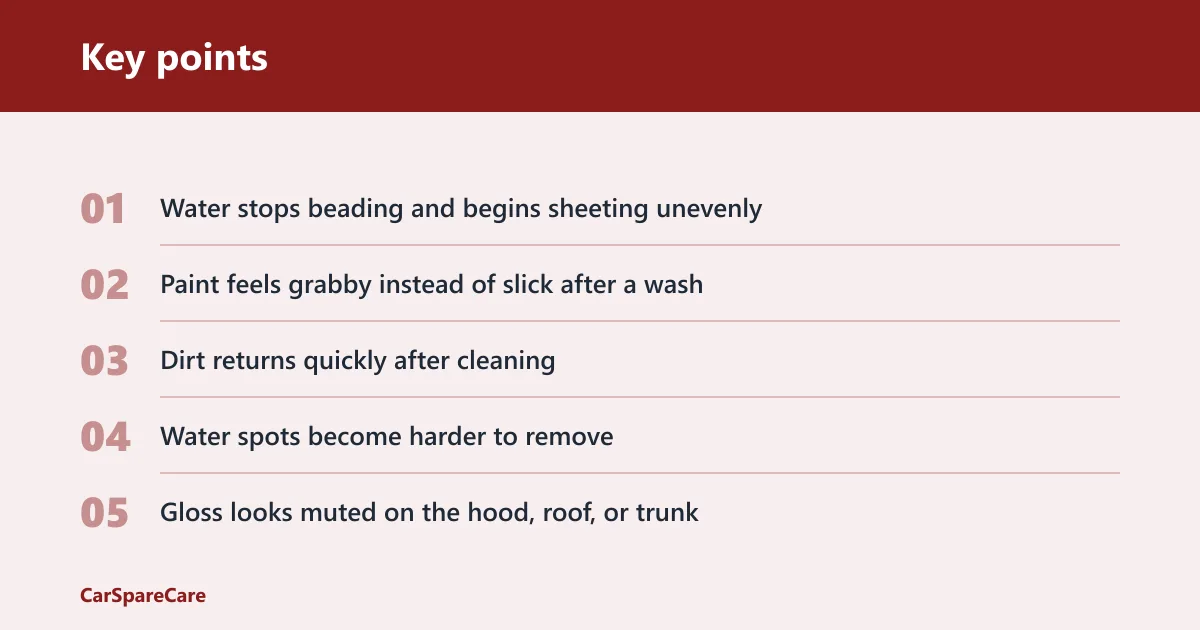
- Water stops beading and begins sheeting unevenly
- Paint feels grabby instead of slick after a wash
- Dirt returns quickly after cleaning
- Water spots become harder to remove
- Gloss looks muted on the hood, roof, or trunk
- Bird droppings or sap leave marks after removal
Do not look only at the bottle price. A wax that lasts a short time may seem cheap, but frequent reapplication adds time and product use. A sealant or coating can cost more up front and still be cheaper over a month of outdoor parking if it reduces how often you need to redo the protection.
| Option | Best use | Limits | Upkeep burden | When to combine |
|---|---|---|---|---|
| Wax | Short-term gloss and easy hand application | Shortest protection window; less resilient in constant outdoor exposure | Highest reapplication frequency | Use as a top-up over other protection when you want extra gloss |
| Paint sealant | Daily outdoor parking and moderate weather exposure | Usually shorter-lived than a ceramic coating | Moderate | Use as a stand-alone base layer on well-prepped paint or as a maintenance layer |
| Ceramic coating | Long-term exposure, especially full sun or coastal air | Prep-sensitive; not a substitute for washing or prompt spot removal | Lower routine reapplication burden, but careful maintenance still matters | Use with regular washes; maintenance toppers can extend hydrophobic behavior |
| Car cover | Long sits, storage, or overnight outdoor parking | Can trap grit if used on a dirty car; fit and breathability matter | Inspect and clean the cover itself | Combine with a sealant or coating underneath for a cleaner surface and easier washing |
Do car covers scratch paint?
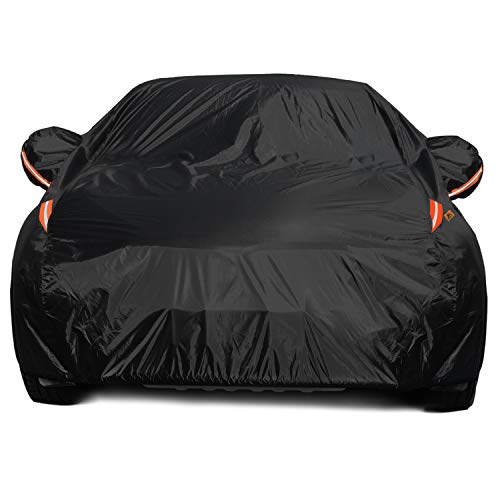
A car cover can help outdoor storage, but only when it is meant for outdoor use, fits the vehicle well, and has a secure tie-down system. A dirty car cover or a dusty car can trap grit and cause damage from movement. Used the wrong way, a cover can do more harm than good.
When a cover helps
A cover is most useful when a vehicle sits outside for long periods and needs defense from dust, bird droppings, sap, and pollen. Breathability matters because trapped moisture can linger under the fabric. A good fit matters too, because loose fabric can rub the paint when wind moves it.
When a cover causes problems
Do not place a cover over a dusty car and assume it is safe. Grit between the cover and paint can act like sandpaper as the cover shifts. An outdoor-rated cover should also have tie-downs or a secure fastening system so it does not flap across the body panels.
Picture a hatchback parked outside for two weeks under a tree. A fitted, breathable cover can cut down on sap and droppings, but only if the car is washed first. If the surface is dusty, the cover can hold that grit against the clear coat.
How do you stop bird droppings and sap?
Remove bird droppings as soon as you can, because stain risk rises with time and heat. Tree sap should be softened and lifted with a paint-safe method rather than rubbed dry. In both cases, a quick response matters more than any single protectant because contamination can still etch through good paint care.
Fast removal for bird droppings
Use a damp microfiber towel, detailing spray, or a safe rinse as soon as possible. Let the spot soften first if needed, then lift it away with light pressure. Do not scrub a dry spot, because that can scratch the clear coat or spread the contamination. OEM care guidance and detailing chemistry sources both stress prompt removal because the longer droppings remain, the greater the risk of marking or etching.
Safe removal for tree sap
Tree sap often needs a gentle softening step before removal. A safe, paint-friendly cleaner or detail product can help loosen it so you can lift it with microfiber rather than scrape it off. If sap has hardened, repeated gentle passes are better than one aggressive one.
Why rubbing dry is a bad idea
Dry rubbing is risky because both droppings and sap can bond to the finish. Once they start to dry, they behave more like stuck-on contamination than surface dust. The goal is to loosen, lift, and inspect the spot, then wash the area afterward.
Paint-safe wash routine
Use pH-balanced car shampoo, microfiber wash media, and clean drying towels. Those three choices reduce swirl mark risk compared with harsh soaps, old sponges, or dirty towels. A proper wash also keeps wax, sealant, or coating working longer because it removes contamination before it hardens.
Wash order that reduces swirls
- Rinse loose dirt from the panels first.
- Wash from the top down with a pH-balanced shampoo.
- Use a clean microfiber wash media and rinse it often.
- Rinse thoroughly so residue does not dry on the paint.
- Dry with a clean microfiber drying towel.
- Inspect for spots, sap, or droppings and address them right away.
How often to reapply protection
The schedule should follow exposure, not just product label language. A daily driver parked in full sun or near sprinklers will need attention sooner than a car that sleeps in a garage. As a practical rule, wax needs the shortest interval, sealant lasts longer, and ceramic coating usually stretches the interval the most.
Outdoor parking alternatives
If the parking spot can change, location-based protection often beats any product choice. A carport, shade sail, or even a simple window sunshade can lower heat load and UV exposure. These changes reduce the damage rate before you add wax, sealant, coating, or a cover.
Use the spot, not just the product
A carport helps with sun and falling debris. A shade sail can reduce direct UV on a driveway space. A window sunshade helps the cabin, which matters because heat buildup often tracks with overall sun exposure. If a better parking spot is available, use it before buying another bottle.
When moving the car is the better fix
If sprinklers hit the vehicle every morning, moving the car is better than relying on spot removal later. If a tree drops sap daily, a different space is safer than repeated cleanup. Product choice matters, but the parking location often decides how hard the paint is working.
Frequently asked questions
What is the best way to protect a car parked outside?
The best setup depends on the exposure. For daily outdoor parking, a sealant or ceramic coating is usually the better base layer, with regular washing and drying. For long-term storage, add an outdoor-rated, breathable cover with a secure fit. The wrong cover on a dirty car can cause its own damage.
Do car covers scratch paint: they can?
They can, if the car is dirty, the cover traps grit, or the fit is loose enough to move in the wind. A breathable cover with a good tie-down system lowers that risk. Clean the car first, and do not use a cover as a way to hide contamination under it.
Is wax enough for a car parked outdoors?
Wax can help, but it is usually not enough on its own for long outdoor parking. It is a sacrificial layer with shorter durability than a sealant or ceramic coating, so it needs frequent reapplication. For a car that sits outside every day, a sealant or coating is usually the better choice.
Should I use a ceramic coating or sealant for outdoor parking?
Use sealant if you want easier application and a strong middle-ground option. Use ceramic coating if the car sees heavy sun, frequent weather, or long-term outdoor parking and you can do the prep correctly. Both are better than wax alone for repeated exposure, but coating usually lasts longer.
How often should I reapply paint protection on an outside parked car?
Use the exposure level as the guide. A full-sun car needs protection checks sooner than one under cover, and a vehicle near sprinklers or trees needs more frequent attention because contamination and spotting build faster. Wax needs the shortest interval, sealant longer, and coating the longest.
How do I protect car paint from bird droppings and tree sap?
Do two things: reduce exposure and remove contamination fast. Avoid parking under messy branches when possible. If droppings or sap land on the car, soften and lift them with a paint-safe method instead of rubbing dry. Heat makes both problems harder, so quick action matters.
What is the best car cover for outdoor parking?
Choose an outdoor-rated, breathable cover with a fit that stays close to the body and a tie-down system that keeps it from flapping. It should go over a clean car, not a dusty one. If the vehicle sits outside often, a cover works best as part of a broader protection stack, not as the only step.
What is the best paint protection for a daily driver parked outside?
For a daily driver, a durable sealant or a ceramic coating is usually the best base layer, because both handle repeated exposure better than wax. Add regular washing with pH-balanced shampoo and clean drying towels. If the car also faces trees, sprinklers, or coastal air, adjust the routine to match that exposure.

Hi, I’m Melvin, an automobile engineer with extensive experience in automobile equipment. I currently work for a local automobile firm, where I specialize in the car parts industry. I’ve had the opportunity to collaborate with seasoned inspectors, gaining invaluable hands-on experience that goes beyond just theory.
My passion for automotive care started at a young age, which led me to create CarSpareCare. Through CarSpareCare, I share the knowledge and skills I’ve acquired over the years to help others navigate the world of car maintenance and repairs.
My goal is to provide practical tutorials, essential safety advice, and the latest industry insights so that anyone—whether a beginner or an expert—can confidently tackle their automotive projects.

