
If the brakes are grinding, the pedal sinks, or stopping distance has changed, do not keep driving; damage can begin very quickly, and the car should be towed. Ignoring that warning can ruin rotors, calipers, and brake fluid, then turn a repair into a much larger bill. This guide turns common brake symptoms into a drive, stop, or tow decision, with separate advice for worn pads, overheating, and hydraulic red flags.
Bad brakes: what changes first
Bad brakes are a safety issue, not routine wear to ignore. There is no single mileage number that fits every car, because pad wear, rotor condition, route, traffic, weather, and load all change the risk. If braking still feels normal enough to control the car safely, a very short trip to a shop may be reasonable. If it does not, stop driving.
Brake pads lose friction material in stages. Early on, you may hear an occasional squeal. Later, the pad gets thin enough that service is due soon at about 1/4 inch remaining, and around 1/8 inch means replace them now. If the pad wears through, the metal backing plate can contact the rotor.
Common early symptoms
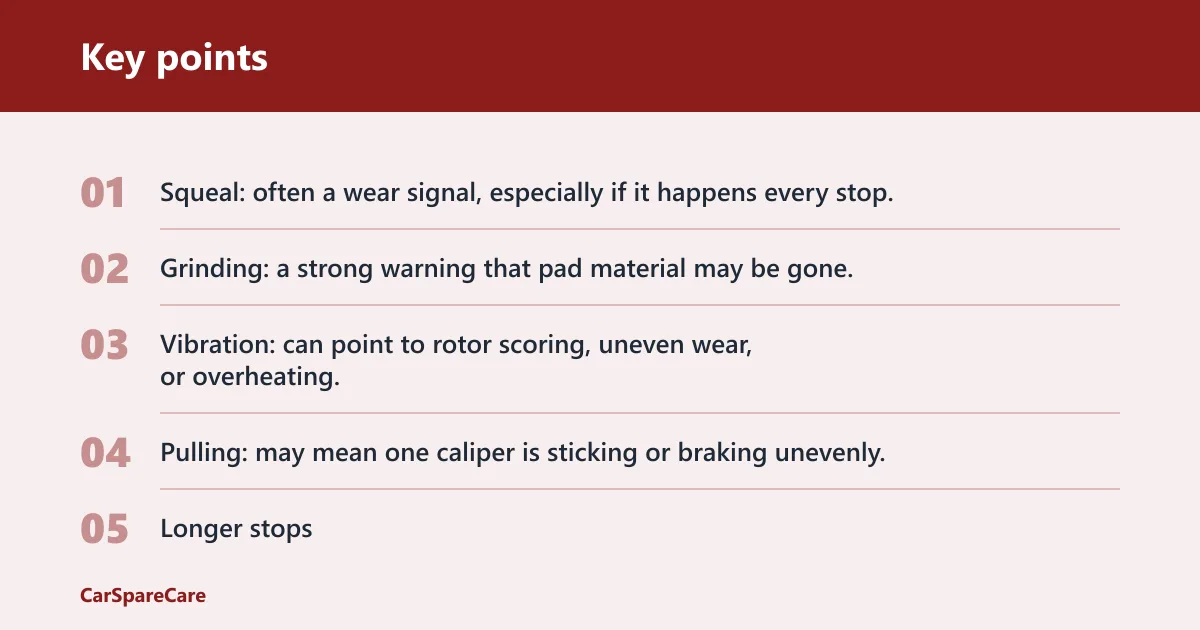
- Squeal: often a wear signal, especially if it happens every stop.
- Grinding: a strong warning that pad material may be gone.
- Vibration: can point to rotor scoring, uneven wear, or overheating.
- Pulling: may mean one caliper is sticking or braking unevenly.
- Longer stops: means the car needs more road to slow down.
- Warning light: can point to pad wear, a fault, or a hydraulic issue.
Stopping distance grows as pad friction drops and as speed rises. A 10 mph miss in town may still be manageable, while the same loss at highway speed or in wet traffic can turn into a crash risk fast. Load matters too. So do hills, snow, rain, and towing.
What a brake warning light means depends on the vehicle. On some cars it is a pad wear or sensor alert. On others it can point to low fluid, an electronic fault, or another braking problem. If the light appears with a changed pedal feel, a pull, or grinding, the decision changes from “watch it” to “stop and inspect.”
Brake risk decision matrix
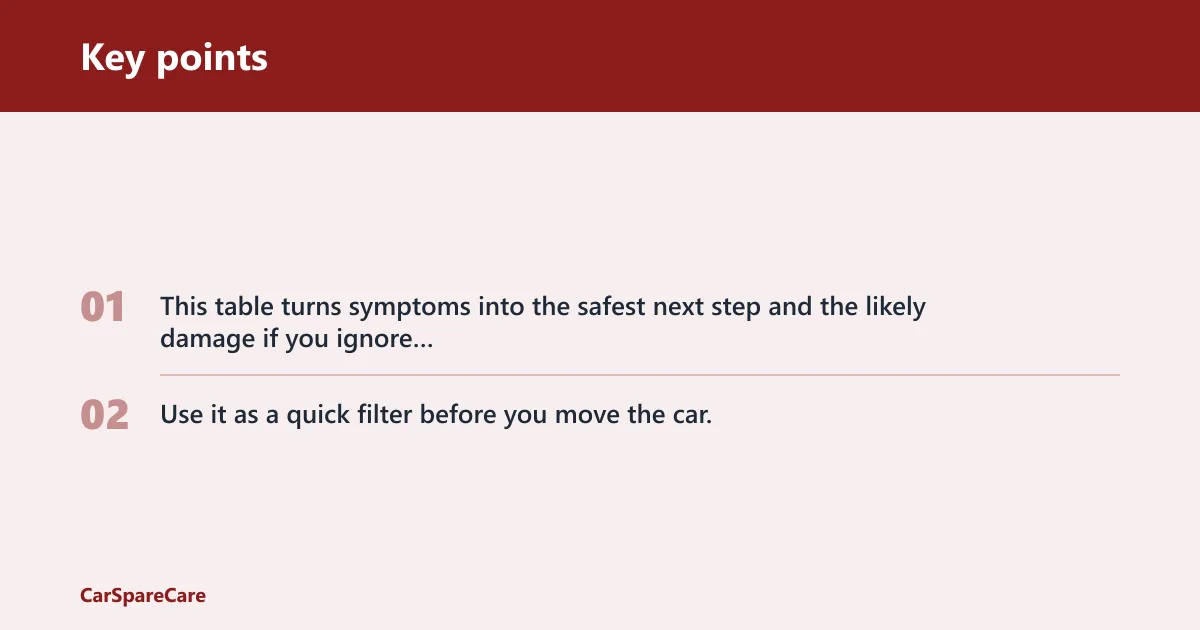
This table turns symptoms into the safest next step and the likely damage if you ignore them. Use it as a quick filter before you move the car.
| Symptom | Safest action | Likely damage if ignored |
|---|---|---|
| Occasional light squeal, braking still normal | Short shop drive only | Pad wear continues and may shorten rotor life |
| Repeated squeal plus visible thin pads | Drive only to repair shop, straight there | Pad material wears out faster; rotor scoring risk rises |
| Grinding at the wheel | Tow | Pad material may be gone; metal backing plate contact can damage rotors |
| Longer stopping distance | Tow if severe; otherwise short shop drive only if braking remains predictable | Rear-end crash risk and added heat wear |
| Vibration when braking | Short shop drive only if pedal and stopping remain normal | Rotor scoring, heat spots, uneven braking |
| Car pulls left or right under braking | Short shop drive only if mild; tow if strong pull | Uneven braking, caliper problems, extra rotor wear |
| Soft, sinking, or pump-needed pedal | Tow | Hydraulic loss, dangerous stopping failure |
| Burning smell near a wheel | Stop driving and inspect | Overheating, brake fade, rotor damage, fluid damage |
| Smoke from a wheel | Stop driving now; tow | Severe overheating, possible fire risk, warped or damaged parts |
| Brake warning light with normal pedal and no other symptoms | Short shop drive if the car still brakes normally | Sensor fault or wear issue may worsen unnoticed |
| Brake warning light with soft pedal or pulling | Tow | Hydraulic or electronic braking fault can get worse quickly |
| Condition | Tow or short shop drive? |
|---|---|
| Grinding, smoke, or a sinking pedal | Tow |
| Burning smell after braking | Tow if the smell is strong or persistent; otherwise stop and inspect before moving |
| Light squeal, normal pedal, no pull | Short shop drive |
| Vibration or light pull, but stopping still feels controlled | Short shop drive, local roads only |
Can you drive a short distance safely?
Yes, sometimes, but only if braking still feels normal enough to control the car safely. The best-case scenario is a short, cautious trip straight to a repair shop. Take local roads and keep the route simple, with no highway speeds, no heavy traffic, and no steep hills. If the pedal feels soft, the car grinds, or the brakes smell hot, do not try to nurse it there.
What “short distance” means in practice
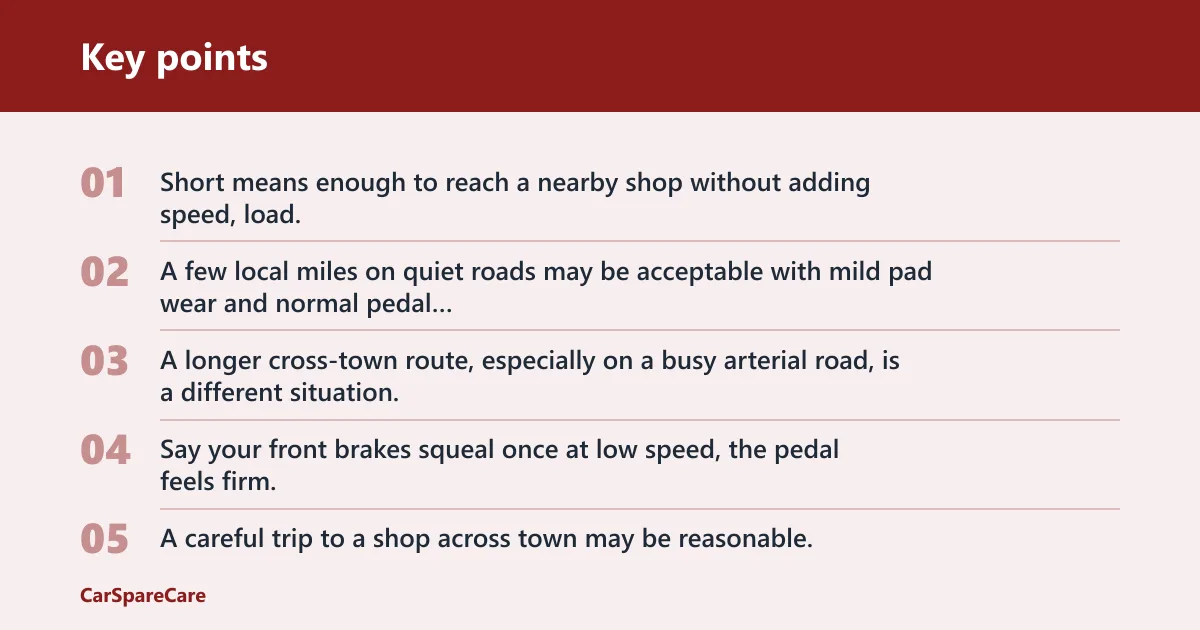
Short means enough to reach a nearby shop without adding speed, load, or delays that raise the risk. A few local miles on quiet roads may be acceptable with mild pad wear and normal pedal feel. A longer cross-town route, especially on a busy arterial road, is a different situation.
Say your front brakes squeal once at low speed, the pedal feels firm, and the car stops straight. A careful trip to a shop across town may be reasonable. Suppose the same car has a soft pedal and the squeal turns into grinding. That is no longer a shop-drive situation.
Why some routes are poor ideas
Highway use, steep descents, towing, and heavy traffic all make a marginal brake system worse. Speed stretches stopping distance. Hills create heat. Traffic forces repeated braking. Towing adds weight and can trigger brake fade, which is a heat-related loss of braking power.
Brake fade matters because overheated pads and rotors may feel normal for a moment, then stop working as expected. Long downhill grades are a common trigger. So are loaded vehicles and trailer use, where the brakes work harder for longer.
What damage happens if you keep going?
Keeping worn pads in service can move the repair from pad replacement to rotor damage, caliper damage, and higher labor time. Once friction material gets thin, heat rises faster, stopping performance drops, and the metal backing plate can touch the rotor. That contact is what turns wear into deeper damage.
Pad wear stages and rotor damage
Brake pads begin with friction material bonded to a backing plate. As the friction material thins, the pad runs hotter and loses more material. Below about 1/4 inch, service is due soon. Around 1/8 inch, replace them now. If you keep driving past that point, the backing plate can scrape the rotor.
Rotor damage can show up as scoring, heat checking, or warping-like vibration. Scoring means grooves in the rotor face. Heat damage may leave uneven contact or hard spots. Once the rotor surface is damaged enough, resurfacing may not be enough, and rotor replacement becomes more likely.
Can bad brake pads damage calipers too?
Yes. Bad pads can push calipers into harder work, especially if one side wears faster or a caliper already drags. A sticking caliper can overheat the wheel end, wear pads unevenly, and overextend the piston as the pads disappear. That adds heat damage and can raise the repair cost fast.
Think of the cost chain this way: a pad job is usually far smaller than a pad-plus-rotor job, and that is usually far smaller than a pad-plus-rotor-plus-caliper repair. Delaying the first repair often creates the second and third.
Soft pedal, burning smell, or smoke?
A soft, sinking, or pump-needed pedal is unsafe to keep driving. It can mean hydraulic loss, air in the brake system, or another fault that reduces braking force. A burning smell near a wheel points to overheating brakes or a dragging brake. Smoke from a wheel is a strong warning sign; stop driving and get the car inspected as soon as possible.
Hydraulic red flags
- Soft pedal: feels spongy and does not build pressure normally.
- Sinking pedal: drops toward the floor while held.
- Needs pumping: braking improves only after repeated pedal presses.
Those symptoms are not pad wear alone. They point to a hydraulic problem, a leak, or another fault that can reduce braking without much warning. If the brake pedal changes in this way, do not try a normal drive to the shop.
Overheating and dragging brakes
A dragging brake can stay partly applied and cook the rotor, pad, and caliper. You may notice a hot wheel, a strong smell, or smoke. Brake fade can follow, especially after a long descent or while towing. Once that heat builds, the car may stop worse even if the pedal still moves.
How far is too far on bad brakes?
There is no safe universal distance answer; the risk depends on the condition of the brakes and the driving situation. The right decision depends on the symptom, road speed, weather, traffic, vehicle load, and terrain. A one-mile move on a quiet side street can be low risk with mild pad wear and normal pedal feel, while a five-mile route on a rainy highway is not.
City, highway, mountain, and towing
City traffic: frequent stops raise heat and stress. Keep the move very short if you drive at all.
Highway: avoid it when brakes are compromised. Speed leaves less margin for stopping distance.
Mountain roads: avoid them. Long descents can trigger brake fade and overheating.
Towing or heavy load: do not do it with questionable brakes. Added weight magnifies the problem.
A common first-timer mistake is thinking low speed makes bad brakes safe for any route. A 20 mph street with lights and crossings can still demand sudden stops. If the brakes already feel wrong, route choice matters as much as distance.
Visual check before moving the car
- Look through the wheel spokes for pad thickness if visible.
- Check for pads near 1/4 inch or thinner.
- Watch for brake fluid leaks near the wheel or under the car.
- Look for obvious rotor grooves, blue heat marks, or missing hardware.
- Check whether one wheel is much hotter than the others.
- Confirm whether the brake warning light is on.
- Press the pedal gently before moving; stop if it sinks, feels soft, or needs pumping.
Tow or short drive?
Use the symptom first, not the distance to the shop. If the brakes grind, smoke, sink, or need pumping, choose a tow. If the pedal feels normal and the issue is limited to light squeal or mild vibration, a short drive straight to a nearby shop can be reasonable. Skip highways either way.
When the shop is close but the route includes steep grades, fast roads, or heavy traffic, proximity does not make the drive wise. A shorter trip can still be the wrong trip. If the brake warning light appears with any change in pedal feel, treat it as more than a simple reminder.
Frequently asked questions
How long can I drive on bad brakes before they damage the rotors?
There is no universal mileage answer. Rotor damage can start very quickly once pad material gets low enough for the backing plate to touch. If braking still feels normal and the issue is only light squeal, a short shop drive may be enough. Grinding changes the answer to tow.
Can I drive a short distance if my brakes are grinding?
Usually no. Grinding is a strong warning that pad material may be gone, and metal backing plate contact can damage the rotor on the next stop. If you hear grinding, the safer move is to stop driving and arrange a tow instead of trying to limp it to a shop.
What damage happens if I keep driving with worn brake pads?
Thin pads can overheat, lose braking force, and wear through to the backing plate. That can score the rotor, raise stopping distance, and stress the caliper. Ignoring the wear often turns a pad-only job into rotor replacement and sometimes caliper work too, which raises the repair bill.
Is it safe to drive if the brake pedal feels soft or weak?
No. A soft, sinking, or pump-needed pedal is an unsafe sign that points to a hydraulic problem or another serious brake fault. Do not treat it like normal wear. If the pedal changes in that way, the car should be towed rather than driven normally.
How do I know if my bad brakes are dangerous right now?
If you have grinding, smoke, a burning smell, a soft pedal, a sinking pedal, or braking that feels weaker or less predictable, the brakes are dangerous now. A warning light plus any pedal change is another bad sign. When stopping ability changes, stop driving and inspect before moving again.
Should I drive the car to a shop or tow it when brakes are bad?
Drive only if the brakes still feel normal enough to control the car safely, the symptom is mild, and the route is short and local. Tow it if the pedal is soft, braking is changing, there is grinding, smoke, or a hot smell. Avoid highway speeds, heavy traffic, and steep hills.

Hi, I’m Melvin, an automobile engineer with extensive experience in automobile equipment. I currently work for a local automobile firm, where I specialize in the car parts industry. I’ve had the opportunity to collaborate with seasoned inspectors, gaining invaluable hands-on experience that goes beyond just theory.
My passion for automotive care started at a young age, which led me to create CarSpareCare. Through CarSpareCare, I share the knowledge and skills I’ve acquired over the years to help others navigate the world of car maintenance and repairs.
My goal is to provide practical tutorials, essential safety advice, and the latest industry insights so that anyone—whether a beginner or an expert—can confidently tackle their automotive projects.

