
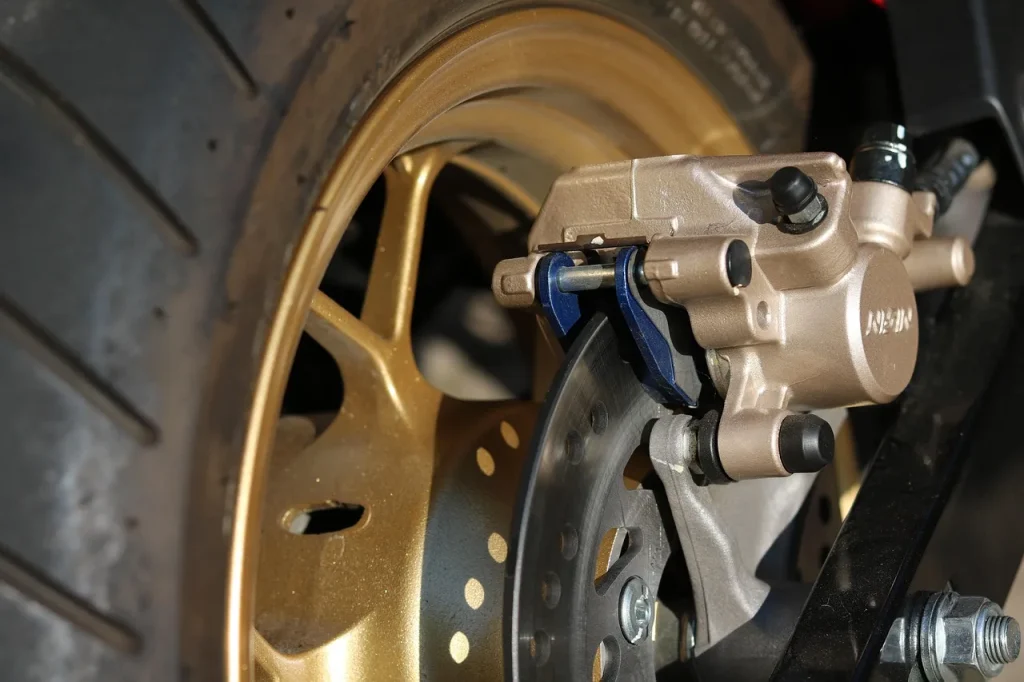
Sudden brake grab often comes from uneven friction or from a hydraulic or parking-brake part that sticks. If it started after service, check for contaminated pads or shoes, sticking caliper slides, rear-drum hardware issues, and possible ABS faults first. Left alone, it can lengthen stopping distances, pull the car, lock a rear wheel, and wear rotors, drums, tires, and pads quickly. This guide separates grab from drag, pull, pulsation, and bind, then shows which parts to check first.
What does it mean when brakes grab suddenly?
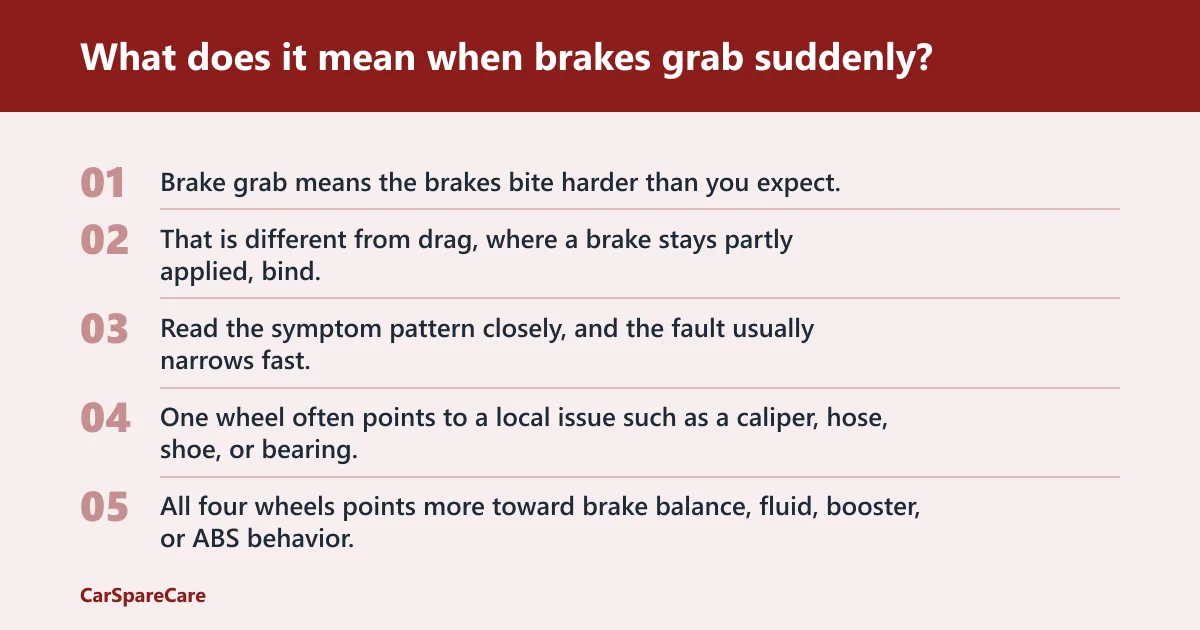
Brake grab means the brakes bite harder than you expect, often with a jerky or abrupt stop. That is different from drag, where a brake stays partly applied, bind, where movement feels restricted, pull, where the car drifts to one side, and pulsation, where pedal or steering shake is felt.
Read the symptom pattern closely, and the fault usually narrows fast. One wheel often points to a local issue such as a caliper, hose, shoe, or bearing. All four wheels points more toward brake balance, fluid, booster, or ABS behavior.
Use the symptom pattern to narrow the fault
Hot-only grab often points to expansion, a hose trapping pressure, or a part that sticks as clearances shrink. Cold-only grab can point to rust on a rotor or drum, a pad that is not bedding evenly, or a parking brake that releases poorly after sitting overnight.
After brake service, first suspects are contaminated friction material, wrong hardware setup, over-lubed slide pins, or a parking brake cable left partly applied. After a long drive, heat-related drag and fluid issues move higher on the list.
What causes front disc brakes to grab?
Front disc brakes usually grab when one pad applies or releases differently from the other side. Common causes include a sticking caliper piston, seized slide pins, pad contamination, glazed pads, or rotor condition problems such as thickness variation, rust, glaze, or runout-related pulsation.
Caliper problems
A sticking caliper piston or seized slide pins keeps one pad engaged longer than the other. That uneven release can feel like a sharp bite at the start of braking, or a pull to one side after a few stops. Uneven pad wear on one wheel is a strong clue.
If the slide pins were over-lubricated, dry, or assembled with torn boots, the caliper may not float freely. That can mimic a bad pad or rotor because the brake grabs, then frees, then grabs again as the wheel turns.
Pad and rotor problems
Brake pads can grab when contaminated by grease, brake fluid, axle grease, or road chemicals. Glazed pads can also bite unevenly, especially after repeated light stops. Uneven wear points to hardware issues, caliper drag, or a rotor surface that is not contacting the pad evenly.
Rotor thickness variation, rust, glaze, and runout usually create a pulsation or shudder, but they can feel like a grab if one section of the rotor bites harder. A rotor with surface rust after sitting overnight may grab for the first stop, then improve.
Hypothetical example
Say your sedan pulls hard on the first stop after a rainy night, then feels normal after two blocks. That pattern often fits rotor rust or a pad that has picked up moisture, not a seized master cylinder. If the same wheel also smells hot, look closer at caliper release or hose restriction.
What causes rear brakes to grab?
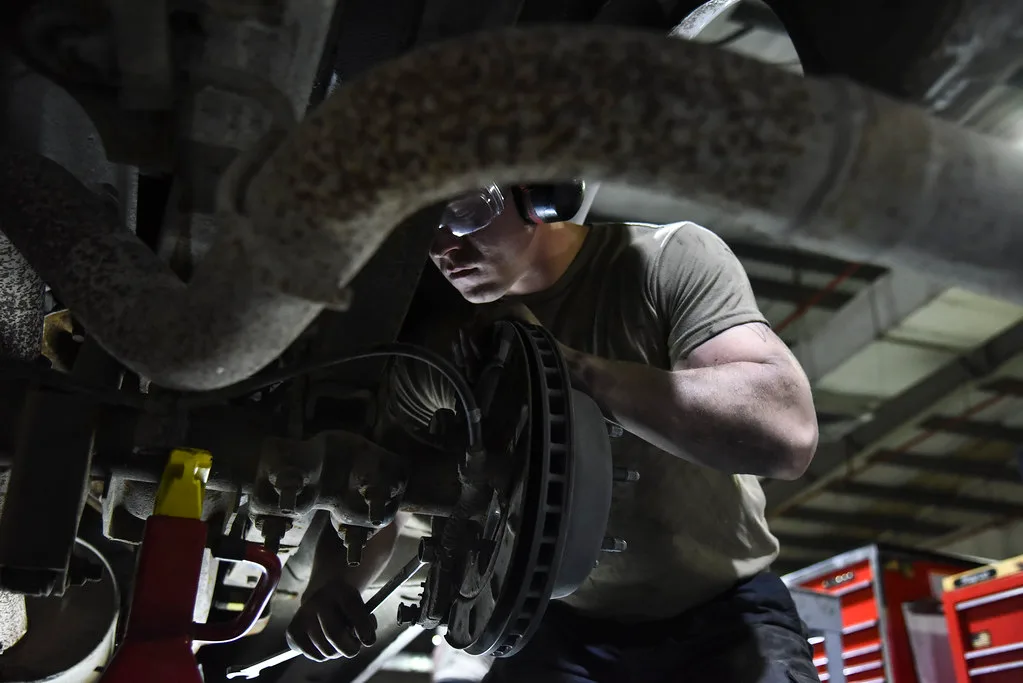
Rear brakes grab when the rear axle applies too fast or releases too slowly. On drum brakes, self-adjuster issues, sticking wheel cylinders, and shoe-to-drum contact are common. A partial parking-brake release or a binding cable can make the rear brakes bite hard without a clear warning light.
Drum brake faults
What causes drum brakes to grab? Often it is a self-adjuster that set the shoes too close, a wheel cylinder that does not move smoothly, or a shoe lining contaminated or worn unevenly. Drums can feel grabby because the leading shoe can dig in as soon as it contacts the drum.
Rear drum issues can also feel worse in reverse or after the car sits. If the rear wheels are hot, the drums may be dragging rather than only grabbing. That distinction matters because a dragging drum can overheat before the pedal feel makes it obvious.
Parking brake and rear drag
Parking brake problems are easy to miss. A cable that does not return fully, frozen equalizer hardware, or a partly released lever can leave the rear brakes slightly applied. That can create a sudden bite at low speed, then a hot wheel after a short drive.
Rear brake drag may feel like the car is reluctant to roll, especially on a slight hill. If the symptom is strongest after parking overnight, inspect the parking brake release path before blaming the front brakes.
Could brake fluid, hoses, or the master cylinder be the cause?
Yes. Brake fluid, hoses, and the master cylinder can all create grab, drag, or odd pedal feel. Moisture contamination and old fluid can change heat behavior. An internally collapsed hose can trap pressure at one wheel. A master cylinder or booster fault is less common, but it can affect the whole system.
Brake fluid and hose faults
Old brake fluid absorbs moisture over time, and that lowers the boiling point. When fluid boils or expands under heat, brake feel can become inconsistent, with a pedal that changes as the system warms. This is more likely to show up after repeated stops or long downhill braking.
An internally collapsed brake hose can sometimes act like a one-way valve. Pressure reaches the caliper, but release is delayed. That creates single-wheel drag, heat, and a grabby stop that comes and goes. If cracking a bleeder relieves the wheel, hose trapping becomes a strong suspect.
Master cylinder and booster clues
What causes brakes to go out, or seem to, can include master-cylinder internal bypassing or a booster fault, but these are less common than pad, caliper, or hose problems. A soft pedal that sinks under steady pressure points more toward hydraulic leak or bypass than a simple grab issue.
A hard pedal with poor assist can point to a booster or vacuum supply problem. If the pedal feel changes across the same drive and all four brakes act oddly at once, a hydraulic imbalance deserves attention before individual wheel parts are replaced.
Can ABS cause brakes to feel grabby?
Yes. ABS can make brakes feel grabby when a wheel-speed sensor faults, a tone ring signal drops out, or the system intervenes unexpectedly on a rough surface. ABS behavior usually feels different from a single mechanical brake fault because the sensation comes through the pedal, not just one wheel.
Unexpected ABS intervention
During a traction event, loose gravel, wet paint, or a bumpy stop can trigger ABS or traction control. The pedal may pulse and the car may feel as if braking power comes and goes. That is usually not a single-wheel grab; it is the system modulating pressure.
If the odd feel happens with no warning lamp and only at low speed, ABS is possible but not automatic. A mechanical issue is more likely when the same wheel is hot, noisy, or visibly wearing differently.
When ABS is less likely
ABS is less likely when the grab started right after pad, rotor, shoe, or caliper work. It is also less likely if the symptom is isolated to one wheel or one axle. A diagnostic scan can help, but the best first clue is whether the problem repeats under normal dry-road stops.
What else can mimic brake grab?
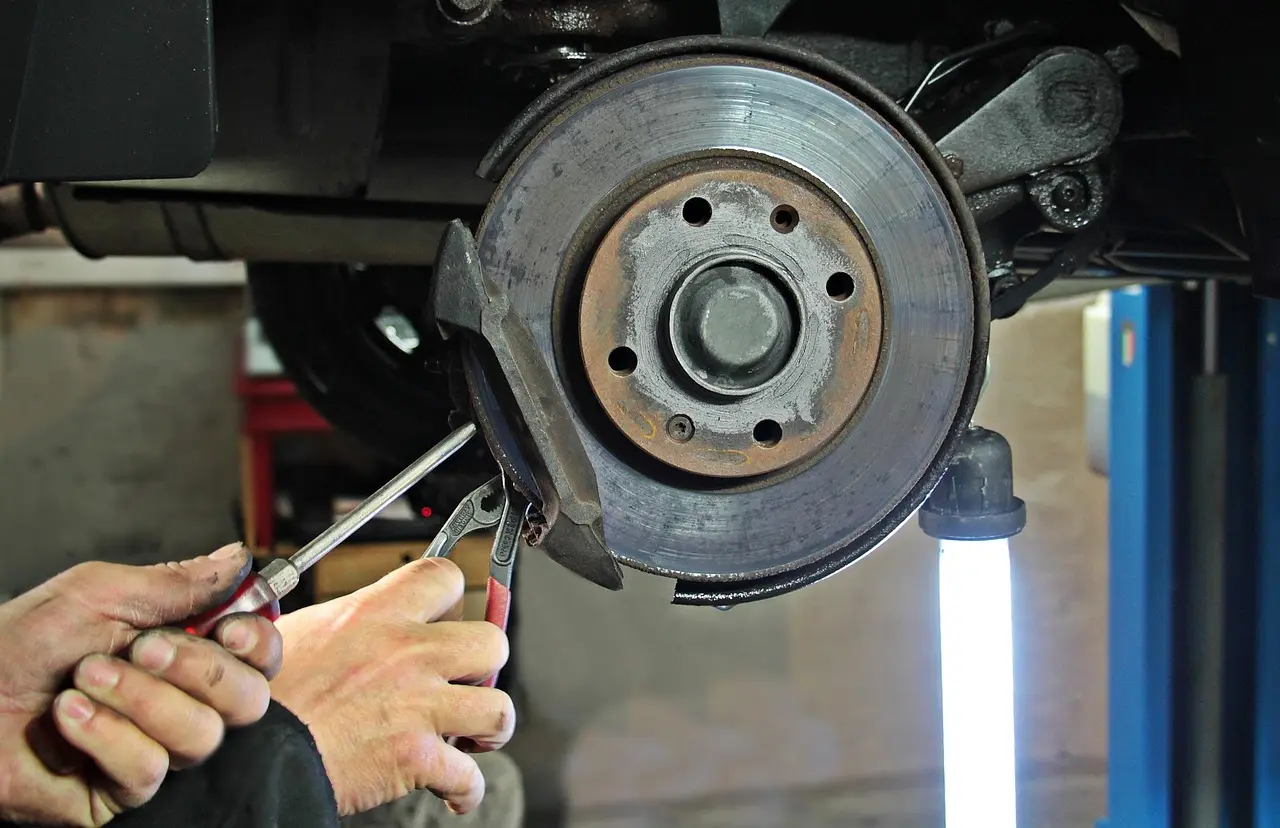
Wheel bearing overheating, bad brake hardware installation, and post-service contamination can all mimic brake grab. A hot hub can make a wheel feel sticky, and incorrect hardware can stop the pad from sliding cleanly. These faults often overlap with brake drag, pull, and pulsation.
Wheel bearing and hub drag
A failing wheel bearing can overheat and create drag that feels like a brake problem. Noise, heat at the hub, and roughness when the wheel is spun by hand are useful clues. If the rotor or drum is blamed but the hub is the hot component, the bearing deserves inspection.
Post-service issues
After brake work, contamination from grease, anti-seize, or fluid can change friction on the pad or shoe. A missing clip, incorrect spring placement, or poorly seated pad hardware can make one side bite harder. Wrong bedding can also leave a patchy friction surface that grabs in the first few stops.
A common first-timer mistake is replacing rotors and pads while leaving a sticky slide pin or a partially applied parking brake untouched. The new parts can still grab because the fault was never in the friction material alone.
Symptom-to-cause decision table
Use the pattern below to separate brake grab by location, temperature, and service history. It is a fast triage tool, not a final diagnosis, but it can keep you from replacing the wrong parts first.
| Symptom pattern | Most likely cause | Why it fits | Best first check |
|---|---|---|---|
| Grab at one front wheel | Sticking caliper piston or seized slide pins | One side applies or releases differently | Check pad wear, slide pin movement, and wheel temperature |
| Grab at one rear wheel after parking | Parking brake partial release or cable binding | Rear brake stays slightly applied overnight | Inspect cable return and rear wheel heat |
| Grab only when hot | Brake hose pressure trapping or fluid expansion | Heat changes clearance and fluid behavior | Check for a wheel that frees after cracking the bleeder |
| Grab only on first stop after sitting overnight | Rotor rust, drum rust, pad glaze, or shoe contact | Surface rust or moisture changes the first bite | Inspect friction surfaces after the car sits |
| Grab after recent brake work | Contamination, wrong hardware setup, over-lubed pins | Fault began with service timing | Recheck assembly, lubrication, and bedding |
| Grab at all four wheels or odd pedal pulse | ABS, fluid, booster, or master cylinder issue | System-wide behavior, not one corner | Scan for codes and assess pedal feel |
Failure-order checklist
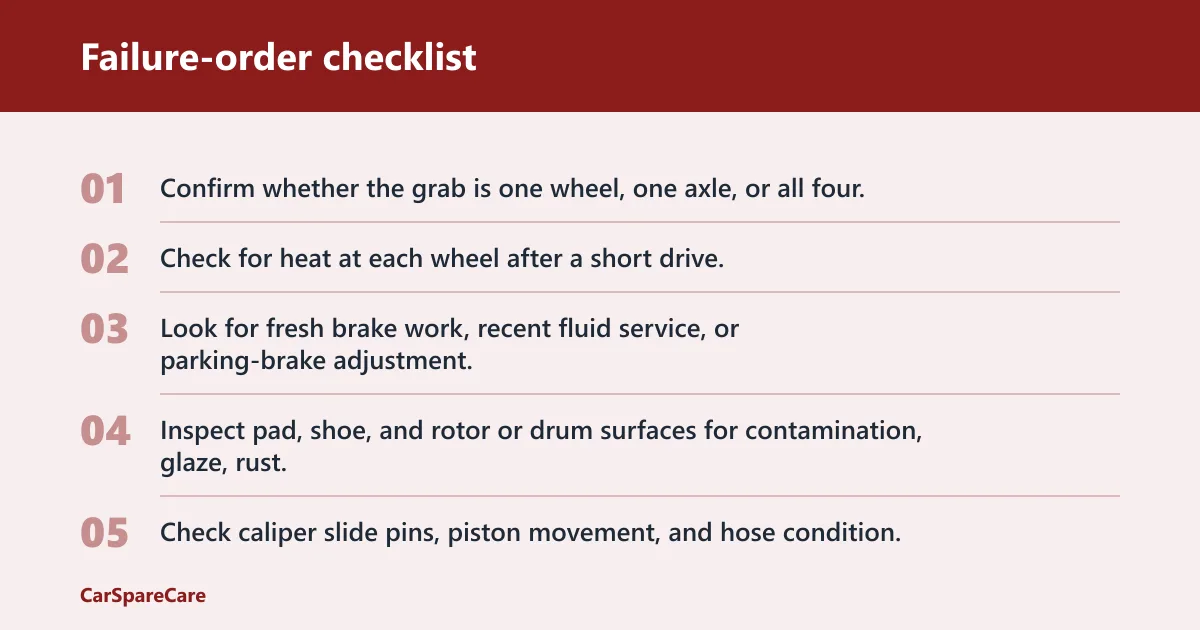
Start with the fastest, cheapest checks first. That order saves time and avoids replacing parts that are only reacting to a different fault. If any step shows a clear problem, stop and correct that item before moving deeper.
- Confirm whether the grab is one wheel, one axle, or all four.
- Check for heat at each wheel after a short drive.
- Look for fresh brake work, recent fluid service, or parking-brake adjustment.
- Inspect pad, shoe, and rotor or drum surfaces for contamination, glaze, rust, or uneven wear.
- Check caliper slide pins, piston movement, and hose condition.
- Inspect rear self-adjusters, wheel cylinders, and parking-brake cable return.
- Scan ABS faults if the symptom affects pedal pulse or traction-event behavior.
- Evaluate wheel bearings, hubs, booster, and master cylinder if the first checks do not explain the symptom.
Frequently asked questions
what causes brakes to grab when stopping
Sudden grabbing during a stop usually comes from uneven pad or shoe friction, a sticking caliper, rear drum contact, or a parking brake that is not fully releasing. If it happens after service, contamination, poor bedding, or incorrect hardware setup should be near the top of the list.
why are my brakes grabbing
Brakes grab when one side applies harder or sooner than the rest of the system. That can come from seized slide pins, a sticking wheel cylinder, rotor rust, glazed pads, trapped pressure in a hose, or ABS intervention on a rough or slippery surface.
what causes drum brakes to grab
Drum brakes often grab because the shoes are set too close, the self-adjuster is off, the wheel cylinder sticks, or the linings are contaminated. Drum systems can also bite abruptly if the parking brake cable does not release fully or if the drum surface is rusty.
what does it mean when brakes grab
It means the brakes are applying more suddenly than expected, often at one wheel or one axle. That points to uneven friction or a part that is not releasing correctly. It is different from pulsation, which usually signals rotor or drum surface variation.
what causes brake drag
Brake drag is often caused by a caliper that does not release, a hose that traps pressure, a parking brake cable that sticks, or rear hardware that is out of adjustment. Heat at one wheel after a short drive is one of the best clues.
what causes brakes to seize
Brakes can seize when corrosion locks caliper slides, a piston sticks, a wheel cylinder fails, or a hose traps hydraulic pressure. Severe rust, contaminated hardware, and long periods of inactivity make these faults more likely, especially on rear brakes and parking-brake systems.

Hi, I’m Melvin, an automobile engineer with extensive experience in automobile equipment. I currently work for a local automobile firm, where I specialize in the car parts industry. I’ve had the opportunity to collaborate with seasoned inspectors, gaining invaluable hands-on experience that goes beyond just theory.
My passion for automotive care started at a young age, which led me to create CarSpareCare. Through CarSpareCare, I share the knowledge and skills I’ve acquired over the years to help others navigate the world of car maintenance and repairs.
My goal is to provide practical tutorials, essential safety advice, and the latest industry insights so that anyone—whether a beginner or an expert—can confidently tackle their automotive projects.

