
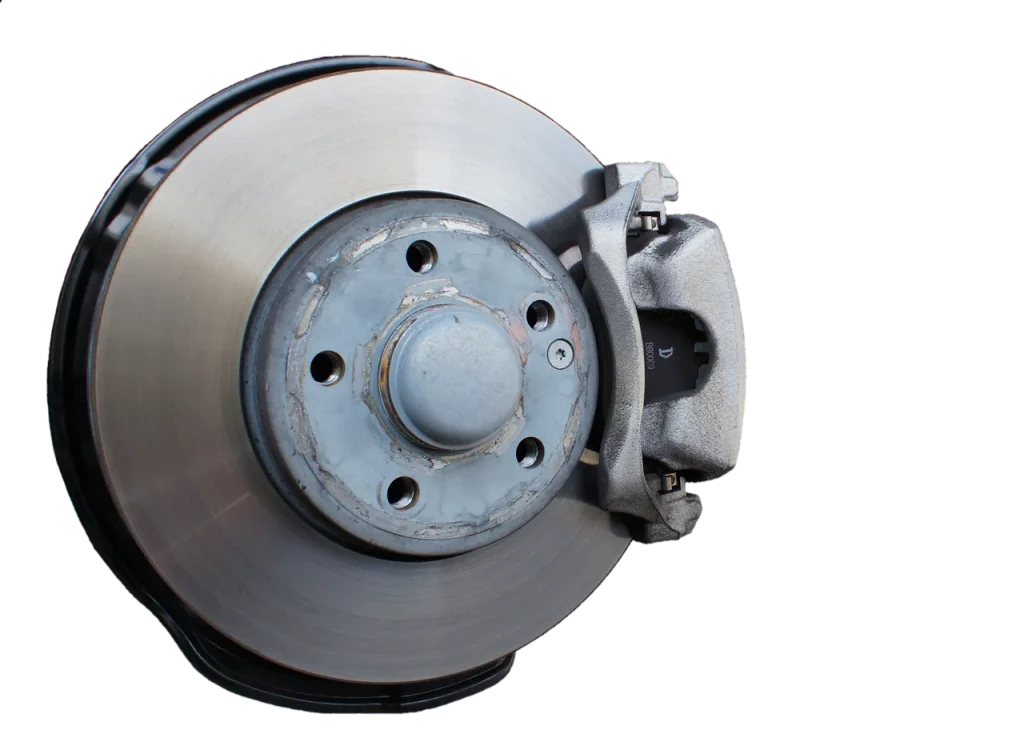
Brake noise from the front usually changes when you steer, turn, or brake harder; rear brake noise more often changes with parking brake use, light pedal pressure, or added weight in the trunk. Guessing wrong can waste money on the wrong axle and let a worn pad, rotor, shoe, or caliper keep wearing parts down. This guide shows the symptom patterns, wheel-load checks, and likely front-versus-rear components so you can pinpoint the source before paying for repairs.
What you’ll need
- Flat empty road or parking lot for a low-speed road test
- Flashlight
- Gloves
- Wheel chocks
- Jack and jack stands if you need to inspect one wheel safely
- Paper or a phone note to record when the noise happens
Start with the simplest clue: when the noise appears
- Drive at a slow, steady pace in a quiet lot or empty road, then note whether the noise starts before braking, only while braking, or after pedal release.
- Make one first stop of the day, then repeat after a few minutes; a cold-start squeal often points to surface rust, glazed pads, or rear parking brake hardware.
- Make one light stop, then a firmer stop if traffic and road conditions allow; a noise that grows with pedal pressure usually points to pad-to-rotor contact, hardware clips, or a rotor issue.
- Record whether the sound comes from one wheel, one axle, or both sides; that pattern matters more than the noise pitch.
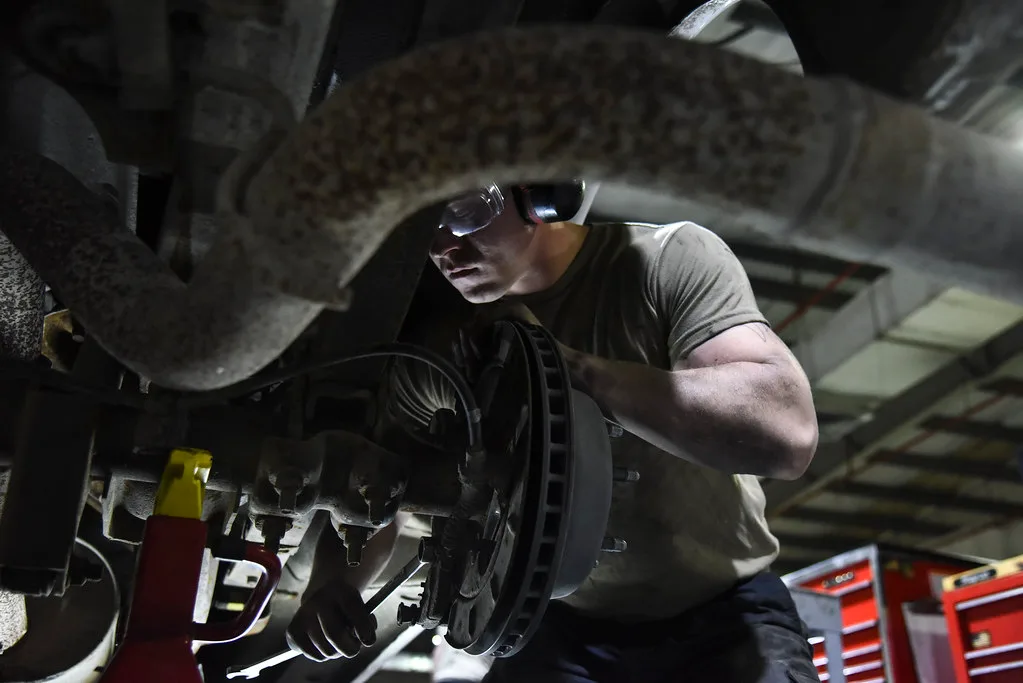
How can I tell if the front brakes are making the noise or the rear brakes?
Front brake noise usually tracks with steering input, nose dive under braking, or a shake you can feel in the wheel or pedal. Rear brake noise more often stays present with light pedal pressure, changes with reverse or first move-off, or comes from parking brake parts and shields.
Front brakes usually do more of the stopping work, so wear and hardware issues may show up there more often. Rear noise deserves separate checking because rear brake hardware and backing plates can sometimes make a sound that feels like a pad problem.
Step 1: Confirm when the noise starts
- Repeat the same route and mark whether the noise happens on the first stop, during every stop, or only after several stops.
- Lift off the pedal at the exact moment the sound stops and note if the noise disappears instantly or lingers for one wheel rotation.
- Pay attention to heat; if one wheel is noticeably hotter after a short drive, it may point to a dragging caliper or parking brake part.
Step 2: Use steering load to separate front from rear
- At low speed, make a gentle left turn, then a gentle right turn, and listen for any change in the sound.
- If the noise changes with steering, put the front axle and wheel bearing higher on the list.
- If the noise stays the same through left and right turns, keep the rear axle and parking brake hardware in play.
Step 3: Test light brake pressure versus hard brake pressure
- Press the brake pedal lightly first, then press harder if traffic and road conditions allow.
- A squeal that appears with light pressure can point to pads, clips, shims, or a dust shield touching the rotor.
- A groan or shudder that gets worse with harder braking can point to rotor variation, pad material transfer, or a sticking caliper.
Step 4: Check forward, reverse, and first-move-off noise
- Repeat the same low-speed test in reverse as well.
- Listen for a scrape or chirp as the car first rolls backward or first moves off after parking; rear parking brake shoes and drum-in-hat parts often speak up here.
- If reverse is noisy but forward is quiet, check the rear brake hardware before buying pads or rotors.
Step 5: Inspect the likely wheel and parts
- Check pad thickness on both sides of the rotor; an inner pad worn much faster than the outer pad often points to a sticking slide pin or piston.
- Look for grooves, lips, blue spots, or heavy surface rust on the rotor face.
- Inspect the dust shield or backing plate for shiny rub marks, bends, or contact lines.
- Check for missing clips, loose shims, or hardware that can let the pad rattle and chirp.
- After a short drive, check each wheel carefully; if one wheel is much hotter than the others, it should be checked before more driving.
What does a brake squeal from the front sound like compared with the rear?
Front squeal is more likely to change with steering, hard stops, or a nose-down weight shift. Rear squeal is more likely to stay tied to light braking, reverse, or parking brake use. The pitch can be similar, so the trigger matters more than the sound alone.
Front brake assemblies use pads, rotors, and calipers that do most of the work during stopping. Rear brake assemblies may use the same parts, but many vehicles also hide parking brake shoes or drum-in-hat hardware inside the rear rotor, and those parts can squeal when rusty or out of place.
Can I test which wheel is noisy without taking anything apart?
Yes. A careful road test can narrow the wheel, axle, and trigger before any disassembly. The best clues are speed dependence, turn load, pedal pressure, and whether the sound changes in reverse. A wheel bearing rumble will often change with steering load even when you are not braking.
Use a quiet lot, keep speeds low, and note one side at a time. If the sound is tied to a single wheel and that wheel feels hotter than the others, a drag issue or a shield contact is more likely than a normal pad squeal.
Does brake noise only happen when braking mean pads or rotors are bad?
No. Noise only during braking can come from pads, rotors, caliper hardware, missing shims, or a bent dust shield. Surface rust on rotors can scrape for the first stop of the day, and a worn wear indicator can chirp when pad material gets low.
Pad material can glaze and squeal without being fully worn out. Rotors with grooves or runout can make the pad contact unevenly and create a noise that appears only as the pedal load increases. Rear parking brake parts can also make a braking-only sound on some vehicles.
Why does the noise change when I lightly press the brake pedal?
Light pedal pressure changes how the pad touches the rotor, so it can wake up a squealer tab, loose clip, or slightly bent shield. A noise that appears at the first touch of the pedal often points to hardware or pad contact rather than a major rotor fault.
That same pattern can show up with rear drum-in-hat parking brake parts, especially if the shoes drag lightly inside the rotor hat. If the sound disappears when you press harder, check for pad glaze, loose anti-rattle hardware, and shield clearance first.
Can parking brake parts cause a rear brake noise?
Yes. Parking brake hardware is rear-only and can make scraping, chirping, or dragging noises when the shoes, cables, or return springs are rusty or out of place. Drum-in-hat designs are especially prone to noise on the first move-off or during reverse.
If the rear noise appears after the car has sat overnight, then fades after a few stops, suspect rust on the shoes, a weak spring, or the shoe lining touching the drum surface inside the rotor hat. A rear backing plate can also touch the rotor and sound similar.
What if the noise happens only at low speed or while reversing?
Low-speed or reverse-only noise often points to rear parking brake parts, backing plate contact, or rotor surface rust rather than a major brake failure. A wheel bearing usually changes with speed and steering load, not just with reverse. The trigger tells you where to look first.
Run the same test forward and backward at low speed. If reverse is noisy and forward is not, inspect the rear rotor hat, parking brake shoe hardware, and dust shield before condemning pads or calipers. If the sound follows wheel rotation, look for shield rub marks.
Front versus rear brake-noise decision table
Use this table as a printable decision path. Match the symptom pattern first, then inspect the listed parts instead of replacing parts at random.
| Symptom pattern | More likely axle | Most likely parts | Next inspection step |
|---|---|---|---|
| Noise changes when turning left or right | Front | Wheel bearing, front caliper slides, front dust shield | Check for shield rub marks and wheel play |
| Squeal appears with very light pedal pressure | Either, but often front | Pad wear tabs, shims, clips, rotor surface rust | Inspect pads and anti-rattle hardware |
| Noise is worse on the first stop of the day | Rear or front | Surface rust, glazed pads, rear parking brake hardware | Check rotor face and rear shoe contact |
| Noise shows up in reverse more than forward | Rear | Parking brake shoes, drum-in-hat parts, backing plate | Inspect rear rotor hat and parking brake parts |
| One wheel is much hotter after a short drive | That wheel | Sticking caliper piston, slide pins, parking brake drag | Compare pad wear and caliper movement |
| Rumble changes with speed, not pedal pressure | Front or rear wheel | Wheel bearing, tire issue, rotor rub from shield contact | Separate braking noise from non-brake noise |
Common mistakes
One common mistake is treating every squeal as pad wear. Pads can be fine while a clip, shim, shield, or parking brake shoe is the real source.
Another mistake is checking only the front axle. Front brakes do more work, but rear noise often comes from parking brake hardware or backing plate contact. A third mistake is confusing a wheel bearing rumble with brake noise; if the sound changes with steering load and not pedal pressure, look beyond the brakes.
If that didn’t work, try this next

- Inspect the noisy wheel only, starting with pad thickness, rotor condition, and missing clips.
- Check caliper slide pins for free movement and uneven pad wear.
- Inspect rear parking brake hardware if the sound is rear-only, reverse-only, or strongest on the first move-off.
- Replace the faulty hardware or caliper parts before fitting new pads and rotors, since a sticking part can ruin new friction material fast.
Prevention: During pad service, replace clips and shims, clean the caliper bracket contact points, and check the dust shield for clearance before the wheel goes back on.
Is it safe to keep driving if I can’t tell where the brake noise is coming from?
Short trips to a repair bay are usually acceptable if braking feels normal, the pedal stays firm, and the noise is only a light squeal. Stop driving and arrange towing if braking distance grows, the pedal sinks, a wheel gets very hot, or the sound turns into grinding.
If the noise changes with pedal effort or one wheel is dragging, treat it as urgent. A worn pad can chew up a rotor fast, and a sticking caliper or parking brake part can overheat a wheel.
Frequently asked questions
How can I tell if the front brakes are making the noise or the rear brakes?
Watch the trigger. Front brake noise usually shifts with steering, hard stops, or nose dive, while rear noise more often shows up with light pedal pressure, reverse, or parking brake use. A short road test and a hot-wheel check narrow it fast.
What does a brake squeal from the front sound like compared with the rear?
Front squeal often changes as weight moves onto the nose during braking and may come with steering-wheel shake. Rear squeal is more likely to repeat at low speed, in reverse, or on the first stop after sitting. The trigger matters more than pitch.
Does brake noise only happen when braking mean pads or rotors are bad?
No. It can also come from clips, shims, a bent dust shield, caliper slides, or rear parking brake hardware. Start with pad thickness, rotor grooves, and shield clearance before replacing parts.
Can I test which wheel is noisy without taking anything apart?
Yes. Drive slowly, brake lightly, then more firmly, and repeat in reverse. Add gentle left and right turns. If one wheel is hotter after the test, that wheel deserves inspection first.
Can parking brake parts cause a rear brake noise?
Yes. Rear parking brake shoes, cables, springs, and drum-in-hat hardware can scrape or chirp, especially on first move-off or in reverse. Inspect the rear rotor hat and backing plate if the noise is rear-only.
Is it safe to keep driving if I can’t tell where the brake noise is coming from?
If braking feels normal and the sound is only a light squeal, a short trip to a shop is usually reasonable. Stop driving if the pedal changes, the car pulls, the sound becomes grinding, or one wheel gets much hotter than the others.

Hi, I’m Melvin, an automobile engineer with extensive experience in automobile equipment. I currently work for a local automobile firm, where I specialize in the car parts industry. I’ve had the opportunity to collaborate with seasoned inspectors, gaining invaluable hands-on experience that goes beyond just theory.
My passion for automotive care started at a young age, which led me to create CarSpareCare. Through CarSpareCare, I share the knowledge and skills I’ve acquired over the years to help others navigate the world of car maintenance and repairs.
My goal is to provide practical tutorials, essential safety advice, and the latest industry insights so that anyone—whether a beginner or an expert—can confidently tackle their automotive projects.

