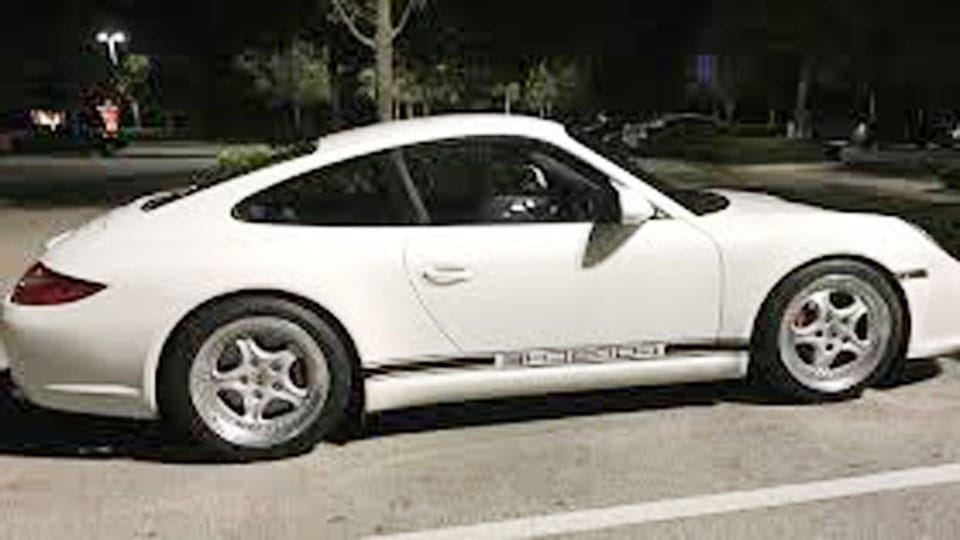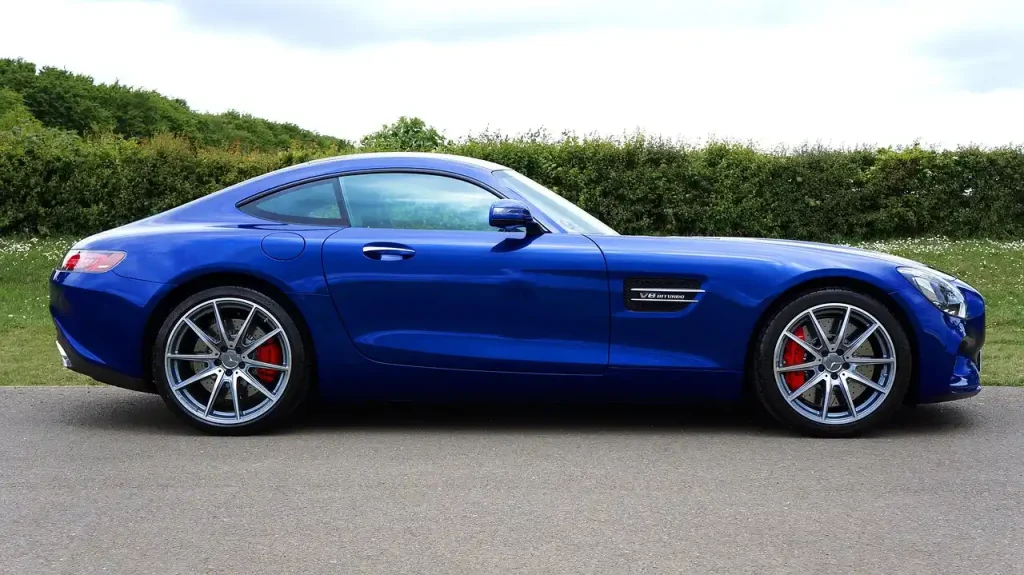
Measure wheel width from bead seat to bead seat, not from outer lip to outer lip; an 8.0-inch wheel measures about 9.0 inches across the outside. Get this wrong and you can buy tires or rims that fit poorly, rub, or miss the brake and fender clearance you expected. This guide shows the bead-seat method, how to tie that number to tire fitment and offset, and the mistakes that cause bad readings.
Wheel width basics
Wheel width is the distance between the bead seats, usually shown in inches. Wheel diameter is also measured at the bead seat, and it must match the tire size suffix such as R17. The outer flange adds extra visible width, so the stamped number is not the same as the outside lip-to-lip measurement.
The bead seat is the inner shelf where the tire beads sit. That shelf is the reference for both width and diameter. Use the outer lip only as a visual check, never as the actual width number.
Width matters because it changes how a tire sits on the rim. Too narrow or too wide for the tire section width, and the sidewall shape changes. Clearance to the suspension and fender changes too.
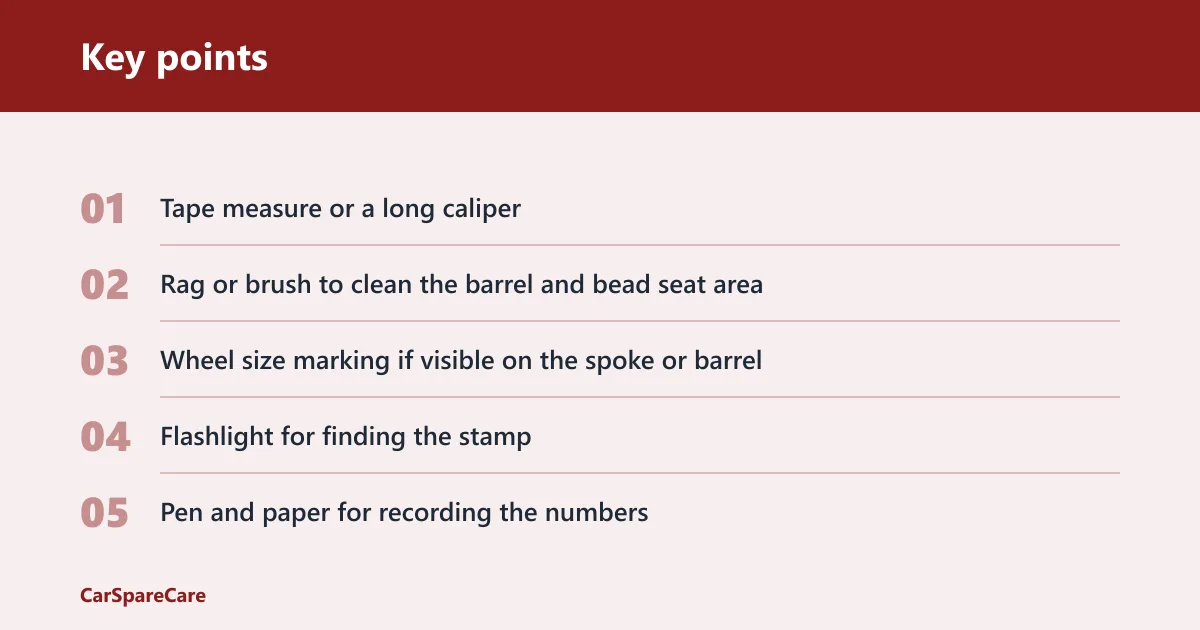
What you’ll need
- Tape measure or a long caliper
- Rag or brush to clean the barrel and bead seat area
- Wheel size marking if visible on the spoke or barrel
- Flashlight for finding the stamp
- Pen and paper for recording the numbers
How to read the wheel marking
Start with the stamp if you can find it. The marking is often on the back of a spoke or inside the barrel, and it may read something like 17×7.5J ET45 5×114.3 CB60.1. That gives you diameter, width, offset, bolt pattern, and center bore in one line.
In that example, 17×7.5 means 17 inches in diameter and 7.5 inches wide. ET45 is the offset in millimeters. 5×114.3 is the bolt pattern, and CB60.1 is the center bore in millimeters.
Record the stamped size before you measure anything. If the stamp and the tape reading disagree, the stamp usually tells you the nominal size, while the tape tells you whether you are measuring the outside flange by mistake.
How to read 17×7.5J ET45 5×114.3 CB60.1
- 17 = wheel diameter in inches
- 7.5 = wheel width in inches at the bead seats
- J = flange profile marking
- ET45 = offset of 45 mm
- 5×114.3 = 5-stud bolt pattern
- CB60.1 = 60.1 mm center bore
How do you measure wheel width?
Measure from bead seat to bead seat with the tire removed. Do not measure across the outer lips. The lips add about 1 inch to the stated width, so a stamped 7.5-inch wheel will measure about 8.5 inches outside-to-outside.
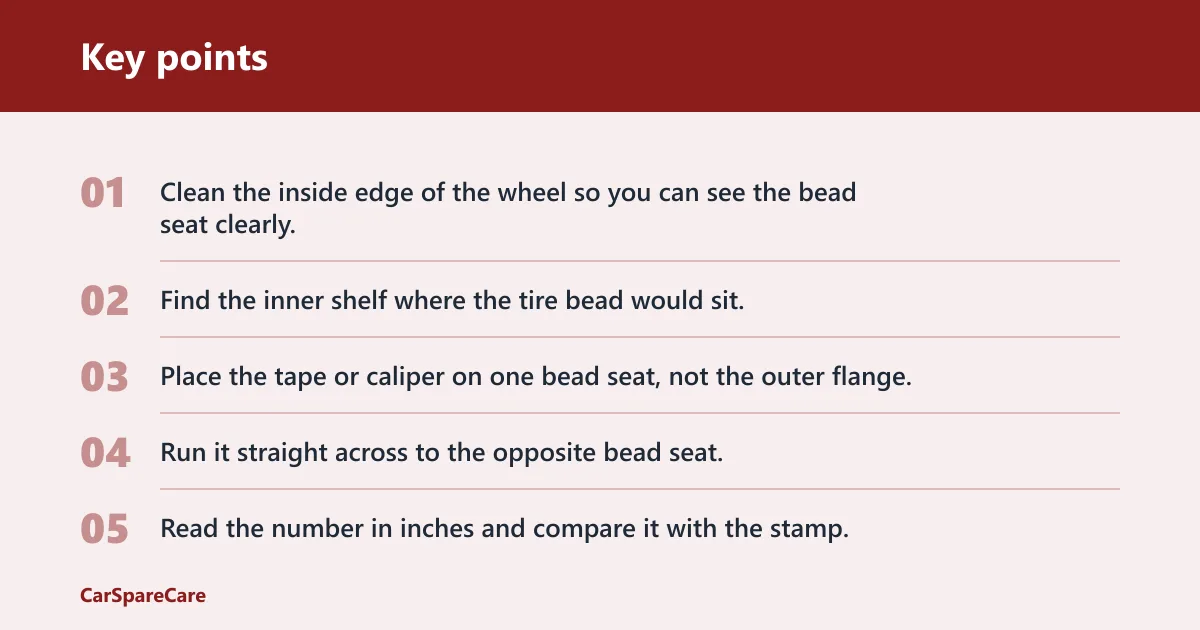
Measure bead seat to bead seat
- Clean the inside edge of the wheel so you can see the bead seat clearly.
- Find the inner shelf where the tire bead would sit.
- Place the tape or caliper on one bead seat, not the outer flange.
- Run it straight across to the opposite bead seat.
- Read the number in inches and compare it with the stamp.
If the wheel is already off the car, this is the cleanest method. If the tire is removed, the bead seat is visible and the reading is straightforward. That is the number to use for fitment, tire selection, and offset comparisons.
Why the outer lip is wrong
The outer lip includes the flanges that hold the tire in place. Those flanges are outside the bead-seat measurement, so they make the wheel look wider than its nominal size. A stamped 8.0-inch wheel will measure about 9.0 inches across the outside.
How to check a wheel with the tire removed
Place the ruler or caliper across the barrel at the bead seats. If you can touch both seats cleanly, you have the true width. If you touch the outer lips instead, the number will be too large by roughly 1 inch.
Can you measure it with the tire on?
Yes, but only as an estimate. A mounted tire covers the bead seats, so you are usually measuring the outside lips or estimating from the barrel opening. That can help you identify a likely size, but it is less accurate than measuring a bare wheel.
What you can estimate
With the tire on, you can usually confirm diameter from the tire size and verify the stamp if it is visible. You can also estimate outside width from the lip-to-lip span, then subtract roughly 1 inch to get a likely nominal width. That works only as a check, not as a final fitment number.
When to remove the tire instead
Remove the tire if you need an exact width for a new tire purchase, brake clearance check, or offset comparison. A wheel that looks like an 8.5-inch outside measurement may still be an 7.5-inch stamped wheel. That difference matters when you compare rim-safe ranges and inner clearance.
Wheel width measurement worksheet
| Field | What to record | Notes |
|---|---|---|
| Stamped size reading | Example: 17×7.5J ET45 5×114.3 CB60.1 | Take this from the spoke or barrel marking first |
| Bead-seat width | Example: 7.5 in | Measure bead seat to bead seat, not lip to lip |
| Outside-lip width | Example: about 8.5 in for a 7.5-in wheel | This is not the nominal wheel width |
| Fitment check notes | Example: tire size, brake clearance, offset, hub fit | Record anything that could change the final choice |
Wheel width way checklist
- On-car: read the stamp first; confirm bolt pattern and center bore; estimate outside width only if the tire blocks the bead seat
- Off-car: clean the barrel; measure bead seat to bead seat; compare the result with the stamped size
- Off-car: check the mounting face location before changing width assumptions
- On-car: check brake caliper, strut, and fender room before buying
Common width guide
- 7.0 in: often suited to narrower tires and a more upright sidewall
- 7.5 in: a frequent middle point for many daily-driver tire sizes
- 8.0 in: often used when stepping up tire section width
- 8.5 in: usually needs closer tire-to-rim matching and more clearance checking
How width affects fitment checks
Width changes the wheel centerline, so it changes the offset and backspacing check. Offset is measured in millimeters from the wheel’s centerline to the mounting face. Backspacing is measured in inches from the mounting face to the inner edge of the rim. Those are related, but they are not the same number.
A 7.5-inch wheel at ET45 has about 6.0 inches of backspacing. If you move to a wider wheel, the centerline shifts unless the offset changes with it. That is why width and offset must be checked together.
Offset and wheel centerline
Positive offset pulls the mounting face toward the outside of the wheel. Negative offset moves it inward. When width changes, the centerline changes too, so the same offset can produce different inner and outer clearance than before.
Backspacing and inner clearance
Backspacing helps you estimate how close the inner barrel will sit to suspension parts. If you are comparing stock and aftermarket wheels, use both width and backspacing. A wider wheel can hit the strut even when the offset number looks similar.
Bolt pattern and center bore checks
Width does not fix the hub fit. The bolt pattern must match the hub, such as 5×114.3 on many common cars and crossovers or 6×139.7 on some full-size pickups and SUVs. The center bore should match the hub pilot. If those are wrong, the wheel is not a fit, even if the width is right.
Tire size and rim-safe range
Width also needs to match the tire’s rim-safe range. A tire that is too wide for the rim can bulge more than intended, while one that is too narrow can pinch the sidewall. Check the tire size against the wheel width before you order either part.
Suppose you have a wheel marked 17×7.5J ET45 and want to move to a wider tire. The diameter still needs to match the tire suffix, such as R17, but the extra width also changes the offset and inner clearance check. If the new wheel is 8.5 inches wide, the same ET may place the inner edge closer to the strut than expected.
Picture a buyer who measures the outside lips of a wheel and thinks it is 8.5 inches when the stamp says 7.5. That one mistake can lead to choosing the wrong tire width and the wrong backspacing target. The wheel may bolt up, but the tire and clearance checks can fail.
Common mistakes
The most common error is reading outer-lip width and treating it as nominal width. That adds the flange into the measurement and usually makes the wheel seem about 1 inch wider than it really is.
Another common miss is checking width but skipping offset. A wheel can have the same diameter and bolt pattern as your old one and still sit differently because the mounting face moved relative to the centerline.
People also skip the hub checks. Width does not correct a wrong bolt pattern or a mismatched center bore.
- Read the stamp before measuring.
- Measure bead seat to bead seat, not lip to lip.
- Compare diameter to the tire suffix, such as R17.
- Check offset and backspacing after width is confirmed.
- Check bolt pattern and center bore before you buy.
Record the stamped size, the bead-seat width, and the hub specs in one note before ordering a wheel or tire. That cuts down on repeat measurements and mismatched parts.
Frequently asked questions
How do I measure wheel rim width?
Measure the distance between the two bead seats, not the outer lips. A tape or caliper should touch the inner shelf where the tire bead sits. If the tire is installed, remove it for the most accurate reading and compare the result to the stamped size on the wheel.
How do I determine wheel width on a car wheel?
Look for the size stamp on the back of a spoke or inside the barrel first. If the marking is hidden, measure the wheel at the bead seats after removing the tire. Then compare that number with the stamped width and check whether the wheel still matches the tire and hub specs.
How is wheel width measured?
Wheel width is measured bead seat to bead seat in inches. The outer flanges are not part of the nominal width. That is why a stamped 7.5-inch wheel measures wider across the outside than 7.5 inches.
How do you measure a wheel correctly?
Use the stamp if it is visible, then confirm with a bead-seat measurement. Clean the barrel, find the inner shelves, and measure straight across. After that, check diameter, offset, bolt pattern, and center bore before you decide the wheel fits.
How do I measure car wheel width without guessing?
Take the tire off and measure from bead seat to bead seat with a tape or caliper. If the tire stays on, treat the result as an estimate only. The safe approach is to verify the stamp, then confirm the physical width with the wheel exposed.
What’s the difference between wheel width and outer rim width?
Wheel width is the stamped bead-seat measurement. Outer rim width includes the flanges at the edges, so it is about 1 inch larger than the stated width. Use the bead-seat number for tire fitment and the outside number only as a visual check.

Hi, I’m Melvin, an automobile engineer with extensive experience in automobile equipment. I currently work for a local automobile firm, where I specialize in the car parts industry. I’ve had the opportunity to collaborate with seasoned inspectors, gaining invaluable hands-on experience that goes beyond just theory.
My passion for automotive care started at a young age, which led me to create CarSpareCare. Through CarSpareCare, I share the knowledge and skills I’ve acquired over the years to help others navigate the world of car maintenance and repairs.
My goal is to provide practical tutorials, essential safety advice, and the latest industry insights so that anyone—whether a beginner or an expert—can confidently tackle their automotive projects.